
Last Updated on July 25, 2026 by Daniel Globe
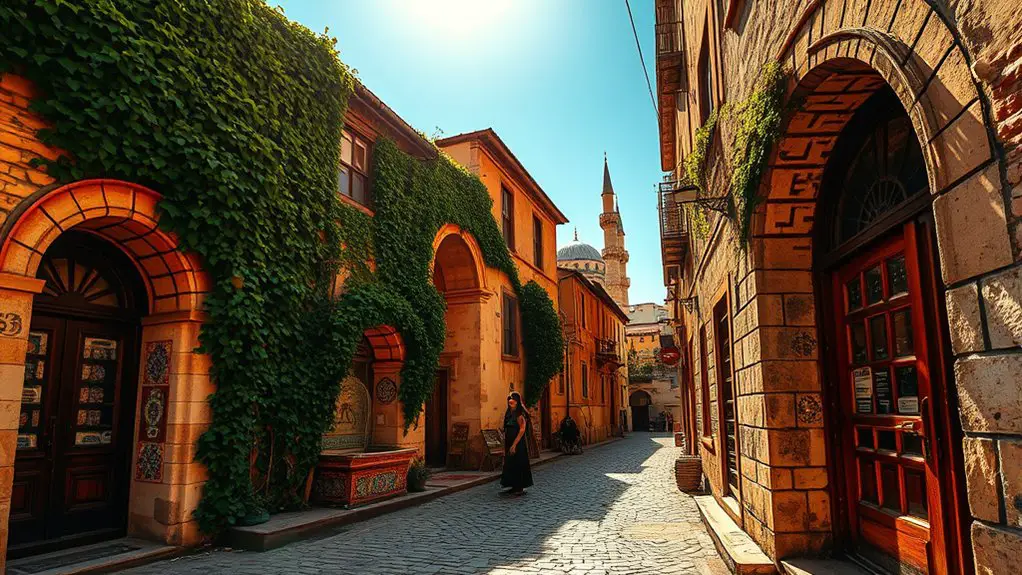
Fatih rewards travelers who look beyond Istanbul’s biggest headline sights. You can move from the Ottoman grandeur of Süleymaniye Mosque to the late Byzantine mosaics of Kariye Mosque, then wander the historic streets of Balat and Fener, shop at the Spice Bazaar and Çarşamba Pazarı, and visit the Tomb of Sultan Mahmud II. Pierre Loti Hill also makes a scenic add-on, but it is in neighboring Eyüpsultan rather than Fatih.
Quick Answer
The best hidden gems in Fatih mix Ottoman monuments, Byzantine art, neighborhood streets, markets, and Golden Horn views. Prioritize Süleymaniye, Kariye Mosque, Fener and Balat, Çarşamba Pazarı, the Tomb of Sultan Mahmud II, and Zeyrek. Pierre Loti Hill is worthwhile too, but it sits outside Fatih in Eyüpsultan.
Key Takeaways
- Kariye is no longer simply a “church” or museum: it reopened as Kariye Mosque in May 2024, while its famous mosaics and frescoes remain central to the visit.
- Fener and Balat are best explored slowly for historic houses, churches, synagogues, cafés, street details, and Golden Horn views.
- For a more local market experience, add Çarşamba Pazarı rather than treating “Fatih market” as a single unnamed attraction.
- The Tomb of Sultan Mahmud II is a separate mausoleum complex on Divanyolu, not a tomb inside a “Sultan Mahmud II Mosque.”
- Pierre Loti Hill is an easy Golden Horn extension, but geographically it belongs to Eyüpsultan, not Fatih.
Disclosure: As an Amazon Associate I earn from qualifying purchases. Some links on this page are affiliate links, at no extra cost to you.
Planning a Fatih Hidden-Gems Route
Fatih is large enough that a neighborhood-based plan works better than bouncing between individual sights. One practical sequence is to start around Eminönü and Süleymaniye, continue inland toward Divanyolu and Zeyrek, then devote a separate block of time to Fener, Balat, and Kariye near the Golden Horn and Edirnekapı.
Public transport can reduce the uphill walking. The T1 Kabataş-Bağcılar tram serves Eminönü, Sultanahmet, Çemberlitaş, Beyazıt, and other Historic Peninsula stops. The T5 Eminönü-Alibeyköy tram follows the Golden Horn and serves Fener and Balat; it also connects with the TF2 cable car at Eyüpsultan for the Pierre Loti detour.
Pro Tip: Wear shoes with good grip. Balat, Fener, Süleymaniye, and Zeyrek include steep slopes, uneven paving, and stairways, so a route that looks short on a map can feel much longer on foot.
The Enchanting Süleymaniye Mosque
The Süleymaniye Mosque is one of Fatih’s defining Ottoman landmarks. UNESCO identifies the Süleymaniye complex, designed by Mimar Sinan and built in the 16th century, as a major part of the Historic Areas of Istanbul World Heritage Site.
Approaching from the surrounding lanes gives you time to appreciate the mosque’s domes, minarets, courtyards, and position above the Golden Horn. Inside, stained glass, calligraphy, carpets, and restrained decoration create a calmer atmosphere than the scale of the exterior might suggest.
The site is more than a prayer hall. The larger complex historically included educational, charitable, medical, commercial, and funerary functions, and the imperial tombs help explain why this area was designed as a complete Ottoman social complex rather than a stand-alone monument.
Because Süleymaniye is an active mosque, visit respectfully and expect access to change around prayers or religious events. The Turkish Presidency of Religious Affairs advises visitors to remove shoes, dress modestly, keep noise down, and follow local photography instructions.
Discovering Kariye Mosque, Formerly the Chora Church
As you move toward Edirnekapı, one of Fatih’s most important art-historical stops is the former Church of the Holy Saviour in Chora, known today as Kariye Mosque. Calling it only “Chora Church” is now outdated for visitor guidance.
According to GoTürkiye’s Kariye guide, the building reopened for worship and visitors on May 6, 2024 after a multi-year restoration. Its surviving mosaics and frescoes remain among the strongest reasons to visit.
The late Byzantine decoration includes narrative scenes connected with Christ and the Virgin Mary, along with the celebrated Anastasis fresco in the parecclesion. These works make Kariye one of the clearest places in Istanbul to study the color, movement, storytelling, and theology of late Eastern Roman art at close range.
The atmosphere is very different from busier central monuments, but remember that Kariye now functions as a mosque. Visitor arrangements can change around worship, conservation work, and official rules, so check current information close to your visit rather than relying on an old museum-era schedule.
Strolling Through Balat’s Colorful Streets
Balat is often photographed for its bright facades, steep lanes, cafés, and creative details, but the neighborhood becomes more interesting when you look past the photo spots. Its historic houses and places of worship reflect the long presence of Jewish, Orthodox Christian, Armenian Christian, and Muslim communities in the wider Fener-Balat area.
The best approach is to wander slowly, notice the residential architecture, and treat the neighborhood as a lived-in place rather than an outdoor set. Keep doorways clear, ask before photographing people at close range, and remember that many of the most photogenic buildings are private homes.
Vibrant Street Art and Colorful Facades
You will see painted walls, murals, signs, colorful doors, and restored facades as you walk through Balat. Some pieces are temporary, so the street-art mix changes over time.
For a more durable visual landmark, look for the rows of historic houses and the steep streets highlighted in GoTürkiye’s Fener and Balat guide. Their bay windows, balconies, stairways, and narrow plots show more of the neighborhood’s architectural character than a single mural ever could.
Charming Historic Architecture
Balat’s surviving residential fabric is one of its biggest draws. Wooden and masonry houses, projecting bays, small courtyards, and tightly packed streets create a streetscape that feels very different from modern Istanbul.
The area’s heritage is also religious and multicultural. Nearby landmarks include the Ahrida Synagogue, Bulgarian Saint Stephen Church, and other historic places of worship. Access rules can vary, especially at active religious sites, so do not assume every interior will be open for casual walk-in visits.
Instead of describing every house as a direct mix of “Byzantine and Ottoman design,” it is more accurate to see Balat as a layered neighborhood whose buildings and institutions come from different periods and communities.
The Hidden Treasures of Fener
Fener sits beside Balat on the Golden Horn and deserves more than a quick photo stop. Its streets combine religious history, old houses, schools, cafés, local businesses, and waterfront space.
The district is especially valuable for travelers interested in Istanbul’s Greek Orthodox heritage and the way different communities shared the Historic Peninsula over centuries.
Historic Churches and Monuments
One of Fener’s key landmarks is the Church of St. George at the Ecumenical Patriarchate of Constantinople. Rather than reducing the church to a vague “blend of Byzantine and Ottoman styles,” focus on its continuing religious importance and the fact that it remains an active Orthodox site.
Nearby, Bulgarian Saint Stephen Church is widely known as the Iron Church because of its cast-iron construction. Its unusual material and position beside the Golden Horn make it one of the area’s most distinctive monuments.
Fener also rewards walkers who look up: historic houses, the imposing red silhouette of the Fener Greek High School, walls, stairways, and small religious buildings create a dense streetscape where the history is not confined to one attraction.
Scenic Golden Horn Waterfront Views
Fener’s waterfront is on the Golden Horn, not the open sea, so “seaside parks” is misleading. What you will find is a waterside promenade, green areas, transport stops, and long views across this historic inlet.
Late afternoon can be especially atmospheric as the light softens over the water. The promenade also gives your feet a break after the steep interior streets of Fener and Balat.
The strongest reason to explore Fener and Balat is not one “Instagram spot,” but the way houses, faith sites, markets, cafés, and the Golden Horn fit together within a still-lived neighborhood.
Local Shops, Crafts, and Small Finds
Small shops and boutiques add to the pleasure of walking through Fener, but inventories change too quickly to promise a fixed list of “local artisan” products. You may come across ceramics, textiles, rugs, artwork, jewelry, antiques, or handmade gifts, but ask where an item was produced before assuming it was made locally.
- Look for pottery or ceramics whose maker or workshop is clearly identified.
- Check textile and rug labels for origin and material rather than buying on appearance alone.
- Browse small galleries and print shops for neighborhood-focused artwork.
- Ask whether jewelry is handmade, locally designed, or mass-produced.
- Compare prices before buying higher-value crafts or antiques.
The point is not just to shop. Conversations with shopkeepers can add context to the neighborhood, but a respectful question is more reliable than assuming every souvenir has a direct link to a local artisan.
Exploring the Spice Bazaar
The Spice Bazaar, or Mısır Çarşısı, is one of Eminönü’s best-known markets. It is not exactly hidden, but it fits this route because its side streets and surrounding food shops connect the monumental Historic Peninsula with everyday commercial life.
GoTürkiye describes the 17th-century bazaar as part of the New Mosque complex and notes its long association with spices, tea, dried fruit, sweets, and other food products.
Inside, expect displays of pepper, saffron, tea, dried fruit, nuts, Turkish delight, spice blends, and packaged foods. Quality and origin vary by stall, so compare products and prices before buying expensive spices.
For the richest experience, treat the Spice Bazaar as the center of a wider food district: walk the surrounding Eminönü lanes, compare specialist shops, and sample rather than rushing straight through the covered market.
Friendly vendors may offer samples, and bargaining can be part of the shopping culture. Keep the tone light, confirm the final price and quantity, and do not feel pressured to buy after tasting something.
Relaxing at the Historic Cağaloğlu Hamam
The Cağaloğlu Hamam offers a very different kind of Fatih experience. Its official history states that the bath was built in 1741 as a double public hamam intended to generate revenue for the Sultan Mahmud I Library connected with Hagia Sophia.
The architecture, hot rooms, marble surfaces, washing ritual, and transition from heat to rest make the building itself part of the experience. Modern service packages may include kese scrubbing, foam washing, massage, refreshments, or other treatments, but the exact package and price can change.
Check the official Cağaloğlu Hamam website for current hours, services, age rules, reservations, and health restrictions before going.
Warning: Cağaloğlu Hamam’s own visitor information says pregnant guests are not allowed to use its services and advises against hamam use for some guests with heart disease, diabetes, or respiratory conditions. It also lists restrictions related to alcohol, eating, and young children. Review the current official policy and seek medical advice when your health makes heat exposure a concern.
The Vibrant Local Market at Fatih: Çarşamba Pazarı
For the article’s unnamed “local market,” the clearest real-world match is Çarşamba Pazarı, a long-running neighborhood market in Fatih. In February 2026, Fatih Municipality described it as one of the district’s established commercial areas and said it brings together thousands of people each week.
This is a better place than the tourist-focused bazaars to observe everyday shopping rhythms. Stalls and product mixes can change, but the market experience may include food, clothing, household goods, inexpensive accessories, and locally sold handmade items.
Go early if you prefer easier movement and more time to browse. Keep your bag closed in dense crowds, carry only what you need, and treat the market as a functioning neighborhood shopping area rather than a staged attraction.
Visiting the Tomb of Sultan Mahmud II
The Tomb of Sultan Mahmud II is worth visiting for 19th-century Ottoman history, but the original description places it incorrectly “within the historic grounds of the Sultan Mahmud II Mosque.” The mausoleum is a separate funerary complex on Divanyolu.
The scholarly TDV Encyclopaedia of Islam records that Mahmud II died in 1839 and was buried at the Divanyolu site; the mausoleum complex was then developed in the following period. The tomb is known for its 19th-century imperial style, white marble, and octagonal plan.
- Look at the mausoleum’s domed, octagonal form rather than expecting a mosque complex.
- Notice the marble work, inscriptions, and decorative details.
- Use the stop to place Mahmud II’s reform era in the wider story of the late Ottoman Empire.
- Explore nearby Divanyolu, Çemberlitaş, and Sultanahmet sights on the same walk.
- Photograph respectfully and follow any rules posted at the tomb.
The site adds a useful 19th-century layer to a Fatih itinerary that otherwise tends to focus on Byzantine monuments and the classical Ottoman period.
Unwinding at Pierre Loti Café
Pierre Loti Hill offers the panoramic Golden Horn view described in the original article, but it is not a Fatih attraction. It is in Eyüpsultan, farther northwest along the Golden Horn.
GoTürkiye notes that the hill is named for the French writer Pierre Loti and can be reached by cable car or on foot through the historic cemetery area. At the top, cafés and viewing areas look back over the Golden Horn.
This makes the hill a sensible optional extension after Fener, Balat, or Kariye rather than a core Fatih stop. The TF2 Eyüp-Piyer Loti cable car connects the lower Eyüpsultan area with the hill, and the T5 tram can help link the Golden Horn neighborhoods.
Note: Keep Pierre Loti in the itinerary if you want the view, but label it clearly as an Eyüpsultan detour. That small geographic correction prevents readers from planning the day around a false assumption that every stop is inside Fatih.
Two More Hidden Gems Worth Adding
Zeyrek Mosque and the Former Pantocrator Monastery
Zeyrek Mosque is one of the most important missing stops in the original article. UNESCO lists the Zeyrek area as one of the four components of the Historic Areas of Istanbul World Heritage property and identifies the mosque with the former Pantocrator monastic complex.
The site gives you another clear example of Istanbul’s layered religious history, where an Eastern Roman church complex later became an Ottoman mosque. Pair it with a walk through Zeyrek’s hilly streets and views toward the Golden Horn.
The Valens Aqueduct
The Valens Aqueduct adds Roman infrastructure to the day. GoTürkiye notes that the surviving aqueduct formed part of Constantinople’s vast water-supply system and that construction was completed during the reign of Emperor Valens in the 4th century.
It is easy to appreciate from street level while moving between the Historic Peninsula’s neighborhoods. Seeing it alongside Kariye, Zeyrek, and Ottoman monuments makes Fatih’s chronology much clearer: Roman engineering, Eastern Roman churches, Ottoman complexes, and later imperial architecture all survive within the same district.
Practical Etiquette for Religious and Historic Sites
Many of Fatih’s most important “attractions” are still places of worship. Treat them differently from museums. Follow posted instructions, keep voices low, avoid blocking worshippers, and never assume photography is allowed everywhere.
The Turkish Presidency of Religious Affairs mosque-visit guidance says visitors should remove shoes, wear modest clothing that covers shoulders, arms, and knees, and that female visitors should cover their heads. Local staff instructions always take priority.
Opening hours, worship arrangements, admission systems, and restoration closures can change. For Kariye, Süleymaniye, churches, synagogues, tombs, and hamams, check the official site or on-site notice close to the day you visit.
Frequently Asked Questions
What is the best time to visit Fatih for fewer crowds?
Weekday mornings are usually your best bet for quieter streets and major sights. Late fall and early spring can feel less intense than peak summer, but crowd levels vary with holidays, tour schedules, and religious events. For active mosques, plan around prayer times and follow on-site access instructions.
Are there any local dishes to try in Fatih?
Yes. Look for kuru fasulye with rice around Süleymaniye, along with simit, börek, döner, kebabs, pide, Turkish delight, baklava, and seasonal street snacks. Skip the unsupported claim that a specific percentage of Fatih restaurants serve “traditional recipes”; restaurant menus and business counts change constantly.
How can I get around Fatih efficiently?
Combine walking with rail transit. T1 is useful for the central Historic Peninsula and Eminönü, while T5 is especially helpful along the Golden Horn for Fener and Balat. Group nearby sights into the same part of the day instead of repeatedly crossing the district.
Is Fatih safe for solo travelers?
Do not treat any busy city district as guaranteed safe. Many solo travelers visit Fatih, but use normal urban precautions: secure valuables, stay alert in markets and transport hubs, avoid demonstrations, and use well-lit routes at night. Check the current official travel advisory for Türkiye before departure because security conditions can change.
Are there any guided tours available in Fatih?
Yes. Walking tours commonly focus on the Historic Peninsula, Fener and Balat, Byzantine heritage, Ottoman architecture, food, or photography. Compare the exact route, group size, language, duration, and whether admission fees are included before booking.
Is Pierre Loti Hill in Fatih?
No. Pierre Loti Hill is in Eyüpsultan. It works well as an extension of a Golden Horn day because T5 runs toward Eyüpsultan and the TF2 cable car climbs to the hill.
What should I wear when visiting mosques in Fatih?
Wear modest clothing that covers shoulders, arms, and knees. Shoes are removed before entering the prayer area, and female visitors should be prepared to cover their hair. Keep your phone quiet and follow any site-specific instructions from mosque staff.
Sources
- UNESCO World Heritage Centre — Historic Areas of Istanbul — backs the World Heritage context, Süleymaniye, Zeyrek, Kariye/Chora, and the Valens Aqueduct.
- GoTürkiye — Kariye Mosque (Chora) — backs the building’s current identity, 2024 reopening, and mosaic/fresco context.
- GoTürkiye — Fener and Balat Neighbourhoods — backs major faith sites, historic houses, and Golden Horn neighborhood context.
- GoTürkiye — Spice Bazaar — backs the bazaar’s history, setting, and typical products.
- Fatih Municipality — Çarşamba Pazarı — backs the market’s current role as a weekly neighborhood commercial hub.
- Metro Istanbul — backs the T1, T5, and TF2 transport connections used in the route guidance.
