
Last Updated on July 25, 2026 by Daniel Globe
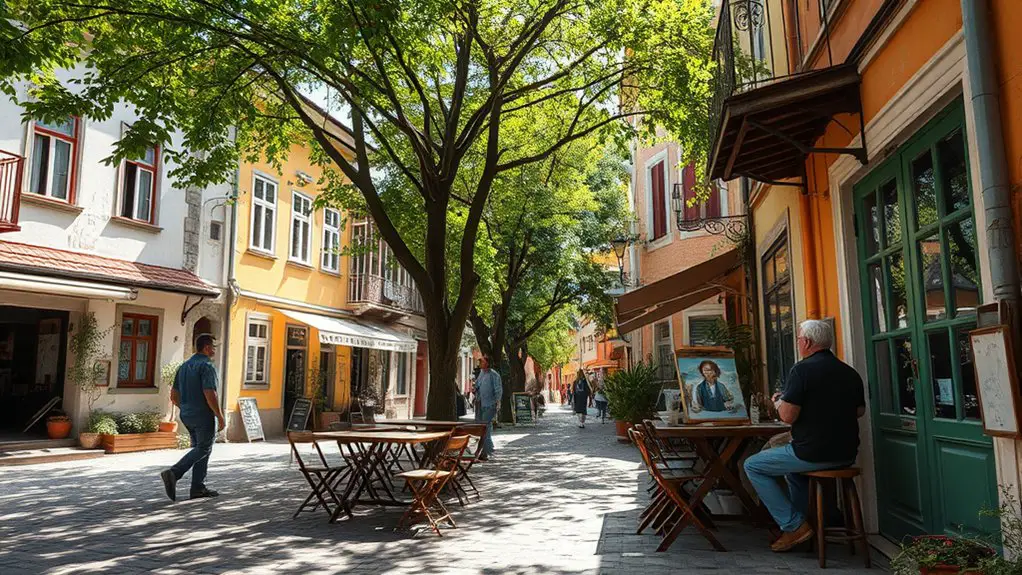
Balat rewards visitors who look beyond its famous colorful houses. Along the Golden Horn, narrow streets lead past historic synagogues, Orthodox landmarks, antique shops, cafés, old timber homes, and everyday neighborhood life. Many of the best stops are shared with neighboring Fener, so the most rewarding visit treats the two districts as one walk rather than searching for isolated tourist attractions.
Quick Answer
The best hidden gems around Balat include its historic side streets, Ahrida Synagogue, nearby St. Stephen Church and the Ecumenical Patriarchate in Fener, antique shops, quiet Golden Horn walks, and lesser-noticed architectural details. Allow about half a day, use the T5 tram, and remember that many houses and courtyards are private.
Key Takeaways
- Explore Balat and neighboring Fener together; many landmarks commonly described as “Balat attractions” are technically in Fener.
- Look for historic houses around streets such as Merdivenli Yokuş, but photograph homes and residents respectfully.
- Ahrida Synagogue, St. Stephen Church, St. George at the Ecumenical Patriarchate, and the Fener Greek High School are among the area’s most important heritage landmarks.
- Do not rely on descriptions of a dedicated “Balat fish market” or an operating historic Balat hammam; both claims need important context.
- The T5 Eminönü–Alibeyköy tram stops at both Fener and Balat, making the Golden Horn neighborhoods easy to reach without a taxi.
Note: Balat and Fener are neighboring districts in Fatih and are normally explored together. When a guide calls every sight in this area a “Balat attraction,” the geography can become confusing. This guide identifies the distinction where it matters while keeping the route practical.
Disclosure: As an Amazon Associate I earn from qualifying purchases. Some links on this page are affiliate links, at no extra cost to you.
The Colorful Streets of Balat’s Old Quarter
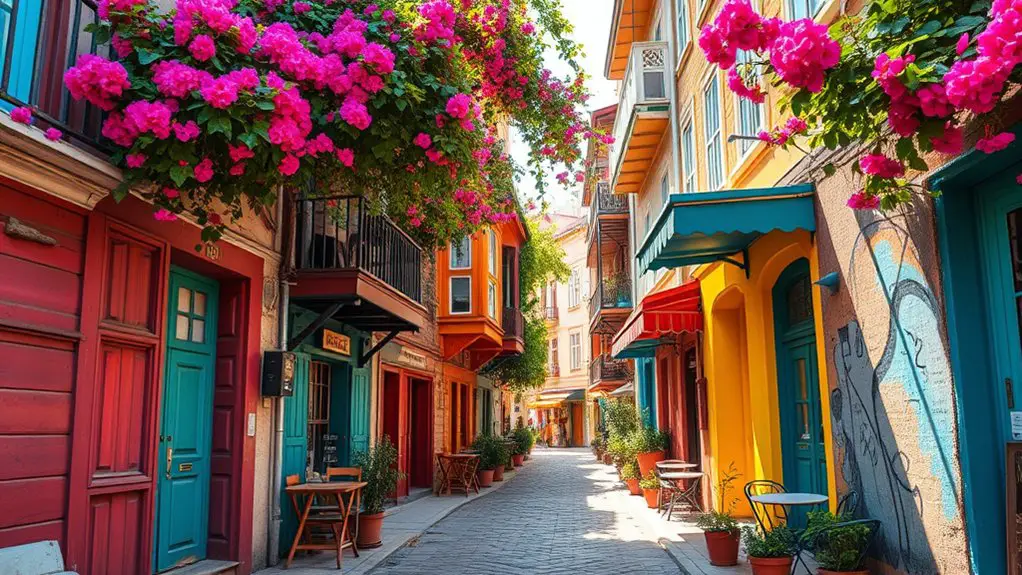
Balat’s best-known visual feature is its patchwork of historic houses, narrow lanes, projecting bay windows, steep slopes, and brightly painted façades. The attraction is not one single street. It is the way the neighborhood’s older residential fabric appears as you move uphill from the Golden Horn.
Merdivenli Yokuş, whose name refers to its stepped slope, is one of the streets specifically highlighted by Türkiye’s official tourism portal for its colorful houses. Nearby lanes reveal a mix of restored façades, weathered buildings, small businesses, laundry, balconies, and ordinary homes.
Balat is most rewarding when you treat its colorful houses as part of a living historic neighborhood, not as a staged photo set.
The winding layout encourages slow exploration, but remember that many of the most photographed buildings are private homes. Stay on public streets, avoid blocking doorways, and never enter a staircase, courtyard, balcony, or doorway simply to get a photograph.
Pro Tip: Visit on a weekday morning for easier walking and cleaner photographs. The neighborhood becomes busier around popular café streets and photo spots later in the day.
A Visit to the Fish Market and Local Eateries
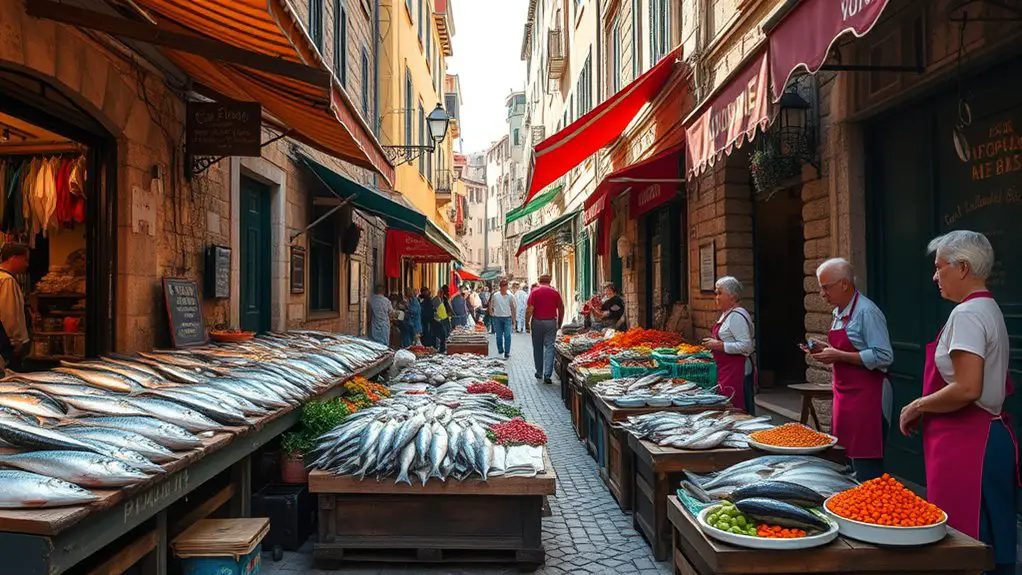
One point needs correcting before you plan a food stop: there is no well-documented destination known as a major Balat fish market comparable with Istanbul’s established fish-market areas elsewhere in the city. Descriptions of a bustling Balat market filled with fishermen displaying the day’s catch should therefore not be treated as a reliable attraction.
Balat and Fener do, however, have plenty of places to pause for food, coffee, tea, pastries, and simple Turkish dishes. Türkiye’s official Golden Horn guide highlights traditional flavors associated with the wider area, including lakerda, pilaki, kuru fasulye with rice, and pickles.
For visitors, the better strategy is to choose a café or restaurant that looks busy with local customers, check the posted menu and prices before ordering, and treat the meal as part of the neighborhood walk rather than hunting for a supposedly famous seafood market.
The streets around the more active parts of Fener and Balat contain a changing mix of cafés, bakeries, restaurants, antique shops, and small businesses. Because businesses change more quickly than monuments, a neighborhood guide is more reliable when it describes what to look for instead of pretending every café or food stall is permanent.
Hidden Churches and Synagogues With Rich Histories
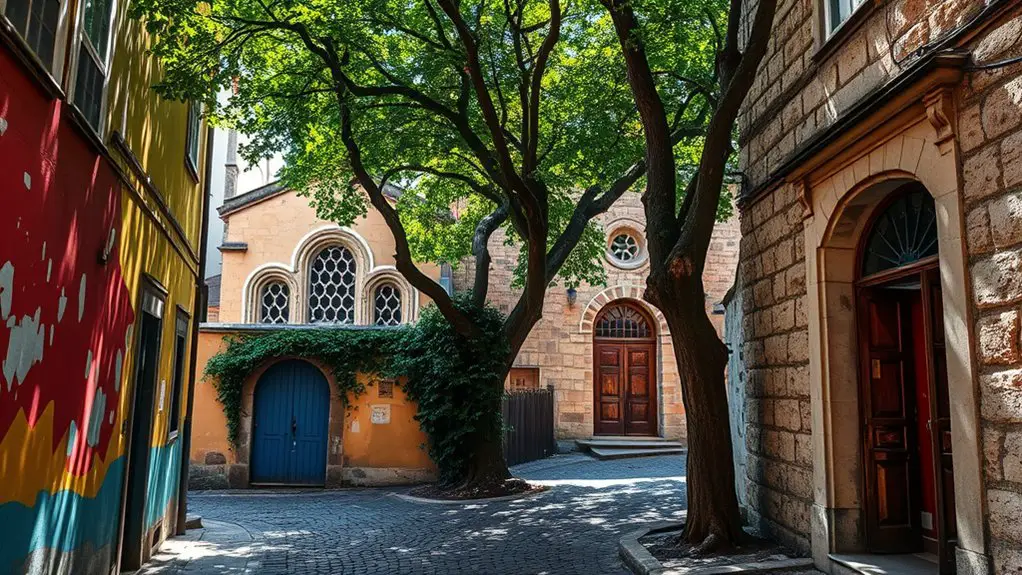
Balat and Fener preserve one of the most interesting concentrations of Jewish and Orthodox heritage around the Golden Horn. Rather than searching for anonymous “hidden churches,” focus on named sites whose histories can be verified.
Ancient Religious Sites
Ahrida Synagogue is one of Balat’s most important Jewish landmarks. The Turkish Jewish Community traces the synagogue to before the Ottoman conquest of Constantinople and explains that its name comes from Ohrid, the town associated with its founders. Its distinctive tevah, or Torah-reading platform, is often compared with the prow of a ship.
The meaning of that form is traditionally explained in more than one way. One interpretation associates it with Noah’s Ark, while another connects it symbolically with vessels that carried Sephardic Jews to Ottoman lands. These should be understood as traditions rather than settled architectural facts.
Yanbol Synagogue is another important name in Balat’s Jewish heritage. Synagogues are active or protected religious spaces, not ordinary walk-in tourist exhibits, so access should never be assumed.
Warning: Check synagogue access before making a special trip. The Turkish Jewish Community publishes visitor contact information for Balat synagogues, and security or religious observances can affect entry. Carry identification when instructed and follow all dress, photography, and security rules.
Architectural Marvels Hidden
Several major Christian landmarks sit in neighboring Fener and along the Golden Horn waterfront. The Bulgarian St. Stephen Church, commonly called the Iron Church, is one of the area’s most distinctive buildings because iron plays an unusually prominent role in its structure and exterior.
Farther into Fener, the Ecumenical Patriarchate of Constantinople has its headquarters on Dr. Sadık Ahmet Street. The compound includes the Patriarchal Church of St. George, an important living religious site rather than simply a museum.
The tall red-brick Fener Greek High School, often called the Red School, is another defining landmark on the hillside. It is still associated with an educational institution, so visitors should appreciate the building from public space rather than assuming tourist access to its interior.
Other Christian sites around the wider Fener–Balat area include Panagia Mouhliotissa and historic former churches represented today by mosques or museum spaces. Access conditions differ from building to building.
Note: The Ministry of Culture and Tourism currently lists Fethiye Museum, the historic Pammakaristos complex, as closed for renovation. Check its official museum page before adding it to your route because reopening information can change.
Stories of Faith
The real significance of these buildings lies in the communities connected with them. Balat has a long Jewish history, while neighboring Fener remains closely associated with the Greek Orthodox Patriarchate. Some buildings continue to serve religious functions today.
That makes visitor etiquette especially important. Dress respectfully, lower your voice during services, obey posted photography rules, and do not treat worshippers as part of the scenery.
Architecture here also spans different periods and traditions, so avoid treating every old building as “Byzantine” or assuming that all churches and synagogues share the same decorative style. Looking at each site individually tells a more accurate story than broad claims about a single architectural blend.
Artisan Shops and Handcrafted Souvenirs
Balat and Fener are good neighborhoods for slow browsing. Official tourism material notes the presence of craft shops, second-hand dealers, antique shops, designer boutiques, and traditional businesses alongside newer cafés.
Rather than expecting every shop to sell locally handmade goods, look closely at how an item is made and ask the seller about its origin. Interesting finds may include:
- Decorative ceramics and small household objects.
- Textiles, scarves, prints, and illustrated souvenirs.
- Vintage objects and second-hand household pieces.
- Jewelry, stationery, artwork, and small gifts from independent sellers.
Inventory changes constantly, which is part of the appeal. A small antique shop that is packed with objects on one visit may have a completely different selection several months later.
For a more meaningful souvenir, choose something because you like the workmanship or know its origin rather than assuming every decorative item is traditional or made in Balat.
Secret Courtyards and Peaceful Gardens
Balat does contain quiet passages, leafy doorways, small yards, and courtyards, but travelers should be careful with the phrase “secret courtyard.” Many picturesque spaces visible from the street belong to homes, schools, religious institutions, or businesses and are not public attractions.
You can still find a calmer side of the neighborhood by turning away from the busiest café streets, walking slowly through public lanes, and spending time along the Golden Horn waterfront.
The best quiet corners in Balat are often ordinary public streets rather than attractions hidden behind private gates.
Respect locked doors, gates, signs, and residents’ privacy. A photogenic entrance is not an invitation to enter.
For a genuine open-space break, the shore is usually a better choice than searching for undocumented “secret gardens.” It offers room to walk, sit, watch passing boats, and take in the opposite side of the Golden Horn.
Unique Cafés With Authentic Flavors
Modern café culture is now a visible part of Fener and Balat. Small coffee shops sit beside older tea gardens, neighborhood businesses, restaurants, and antique dealers, so it is easy to build a coffee break into a walking route.
Authentic Coffee Experiences
For a traditional option, order Turkish coffee, which is prepared from very finely ground coffee in a small pot called a cezve. The defining feature is the preparation method, not a claim that the beans themselves were grown locally.
You will also find espresso-based drinks and contemporary specialty cafés. Choosing between them depends on whether you want a traditional preparation or simply a comfortable stop during your walk.
One of the pleasures of Balat is that the atmosphere can change from one block to the next. A polished modern coffee bar may sit close to a simpler tea shop or long-established neighborhood business.
Traditional Turkish Delights
Turkish sweets can make an easy accompaniment to coffee or tea. Lokum comes in many flavors and textures, while pişmaniye has a fine, floss-like texture quite different from lokum.
Neither sweet is unique to Balat, so think of them as part of a wider Turkish food experience rather than a neighborhood invention. When buying packaged sweets, check the label, weight, ingredients, and price instead of assuming the most decorative box is the most traditional.
Small bakeries and dessert shops can also be worthwhile stops, but specific businesses and opening hours change. Check current information on the day of your visit rather than building an entire itinerary around an old café list.
Vintage Bookstores and Artistic Hubs
Balat’s creative reputation is better supported by its antique dealers, second-hand shops, craft businesses, studios, boutiques, and café culture than by any guaranteed network of permanent vintage bookstores.
You may still encounter books and old publications among second-hand stock, but the fun lies in browsing without expecting a fixed inventory.
In Balat, the most interesting vintage find may be a print, household object, old sign, record, book, or piece of furniture rather than a standard tourist souvenir.
Some shops double as creative spaces or display work by independent makers. Temporary exhibitions, workshops and pop-ups also appear from time to time, but these should be checked against current event listings rather than treated as permanent attractions.
Browsing slowly gives you a better sense of the neighborhood’s contemporary creative life without turning every shop into a historical claim.
Murals and Street Art With Cultural Significance
Street art adds another visual layer to Balat, appearing on shutters, walls, façades and smaller side streets. It can be playful, decorative, political, personal or commissioned.
What you should not do is assume that every mural documents a specific part of Balat’s history. Unless an artist, inscription, local project or reliable source explains the subject, the safest approach is to appreciate the work without inventing a story for it.
How to Read Balat’s Murals Carefully
Some artworks may reference local people, architecture, migration, religion or Istanbul history. Others may simply be contemporary illustrations.
Look for:
- An artist signature or social-media handle.
- A plaque identifying a commissioned project.
- Text incorporated into the artwork.
- Context supplied by a credible local guide, gallery, institution, or the artist.
Without that evidence, statements such as “this mural celebrates Jewish heritage” or “this painting shows an Ottoman hero” are interpretations rather than facts.
Art as Cultural Expression
Street art can still be valuable cultural expression even when its precise meaning is unknown. It shows how contemporary creativity occupies the same streets as historic houses, religious buildings, cafés and shops.
This contrast is one reason Balat feels visually layered. Older architecture has not frozen the neighborhood in the past; new businesses and art continue to change what visitors see.
Photographing public street art is generally straightforward, but murals on occupied homes or businesses should still be approached with normal courtesy.
Local Artists’ Creative Spirit
The strongest way to support creative work is to engage with artists and makers directly when their identity is clear. Buy from independent shops, visit a studio when it is genuinely open to the public, or attend a documented exhibition or workshop.
Avoid presenting anonymous murals as evidence of a particular community project without confirmation. Accurate attribution gives artists more credit than a dramatic but invented backstory.
Seen this way, Balat becomes a living gallery because old and new visual culture coexist in public space, not because every wall carries a documented historical message.
Traditional Bathhouses and Wellness Spots
The Fener–Balat area does contain an important historic hammam, but it should not be described as a current traditional bathing experience.
Küçük Mustafa Paşa Hamamı, near the Golden Horn in the wider Fener/Cibali area, dates to the 15th century. According to the venue’s own history, it functioned as a hammam until the mid-1990s, later underwent restoration, and was repurposed as a multipurpose cultural and event venue.
Its value today is therefore architectural and historical. Visitors should not arrive expecting attendants, scrubbing, massage, bathing pools, or “mineral-rich waters.” Access can also depend on exhibitions and events.
Note: A historic building called a hamam is not necessarily operating as a bathhouse today. Check the venue’s current program before visiting, especially when your goal is to see the interior.
Riverside Walks and Panoramic Views of the Golden Horn
The Golden Horn waterfront is one of the easiest places to slow down after Balat’s steep interior streets. The shore route gives you broader views, passing boats, open sky and a different perspective on the historic peninsula.
Official tourism information notes a shore promenade and cycle route around Fener. It also makes a useful transition between neighborhood sightseeing and public transport.
Good ways to enjoy the waterfront include:
- Walk between Fener and Balat: Use the shore as the flatter part of your route before climbing into the residential streets.
- Pause around the Fener waterfront: Look back toward the hillside architecture rather than rushing from one landmark to another.
- Visit near late afternoon: Lower light can make the Golden Horn and surrounding skyline especially photogenic.
- Continue toward neighboring districts: The T5 tram makes it easy to extend your Golden Horn itinerary toward Ayvansaray or Eyüpsultan.
The waterway itself is part of Istanbul’s historic geography. UNESCO describes the Golden Horn as the natural harbor forming the northern edge of the historic peninsula.
How to Get to Balat and Fener
For many visitors, the simplest public-transport option is the T5 Eminönü–Alibeyköy tram. Metro Istanbul lists separate Fener and Balat stations, so you can start at one and finish at the other instead of backtracking.
If you are coming from the historic center, reaching the T5 at Eminönü makes a straightforward approach. The line also connects with other transport services along the Golden Horn.
The T5 uses low-floor vehicles, and Metro Istanbul states that station entrances were designed with ramps suitable for disabled access. That makes the waterfront portion of the journey easier for many travelers, although it does not remove the steep gradients and uneven surfaces found inside the historic neighborhoods.
A Simple Balat Hidden-Gems Walking Route
A relaxed visit usually works better as a half-day walk than as a checklist of disconnected attractions. One practical sequence is:
- Get off at Fener on the T5. Begin near the Golden Horn rather than climbing immediately into Balat.
- See St. Stephen Church. Its waterfront setting makes it a natural first landmark.
- Walk toward the Ecumenical Patriarchate and St. George. Remember that this is an active religious institution.
- View the Fener Greek High School from the surrounding public streets. Its red-brick silhouette is one of the district’s strongest visual landmarks.
- Continue into Balat’s residential lanes. Look for colorful houses, bay windows, steps and details around Merdivenli Yokuş and neighboring streets.
- Pause for coffee or lunch. Choose a place based on current menus and atmosphere rather than an old “must-visit” list.
- Include Ahrida Synagogue only when access has been arranged or confirmed. Otherwise, respect the exterior and continue your walk.
- Browse antique and second-hand shops. Leave time for unplanned discoveries.
- Finish near Balat T5 station or return to the Golden Horn waterfront.
Two to four hours is a useful range for a first visit, depending on café stops, photography and whether you have confirmed entry to religious sites. Visitors who enjoy architecture, antiques or slow street photography can easily spend longer.
Best Time to Visit Balat
Spring and autumn are often comfortable seasons for walking because Istanbul generally avoids the strongest summer heat and coldest winter conditions during those periods. Weather varies, so check the forecast close to your visit.
For photographs and a quieter atmosphere, a weekday morning is usually more pleasant than the busiest part of a weekend afternoon. Late afternoon can be attractive for Golden Horn views, although narrow streets may lose direct light earlier than the waterfront.
Wear shoes with good grip. Balat and Fener include cobbled or uneven surfaces, steps and significant slopes.
Accessibility and Residential Etiquette
Accessibility varies sharply within the neighborhood. The T5 tram provides a relatively accessible approach to the waterfront, but the historic streets beyond it can be steep, narrow and uneven. Individual churches, synagogues, shops and older buildings may also have steps or thresholds.
Travelers with limited mobility should consider using the flatter waterfront as their main route and choosing individual sights only after checking their current entrance conditions.
Balat is also a residential district. To visit respectfully:
- Do not sit on residents’ doorsteps for photographs.
- Do not enter private courtyards, stairways or buildings without permission.
- Avoid photographing people closely without consent.
- Keep noise down on residential streets.
- Follow dress, security and photography rules at places of worship.
These simple habits make the visit more pleasant for both travelers and the people who live and worship here.
Frequently Asked Questions
What Are the Best Times of Year to Visit Balat?
Spring and autumn are popular choices for walking because temperatures are often more comfortable than during the hottest part of summer or cold winter periods. For fewer people, try a weekday morning and check the weather forecast shortly before your visit.
Are There Guided Tours Available for Balat’s Hidden Spots?
Yes. Fener and Balat are common walking-tour areas, especially for visitors interested in Jewish, Greek Orthodox and Ottoman-era neighborhood history. Choose a licensed or well-reviewed guide who identifies sources and distinguishes documented history from local legend.
How Accessible Are Balat’s Historical Sites for Disabled Visitors?
Accessibility is mixed. Metro Istanbul states that T5 stations use low-floor vehicles and ramped entrances designed for disabled access, but many historic streets are steep or uneven and older buildings may have steps. Check individual attractions before visiting and consider keeping more of your route along the flatter Golden Horn waterfront.
What Local Festivals or Events Take Place in Balat Annually?
There is no single annual “Balat festival” that travelers should assume will occur on fixed dates every year. Exhibitions, cultural programs, religious observances and neighborhood events vary. Check current Istanbul cultural calendars and the websites of specific venues before your trip.
Can I Find Authentic Balat Souvenirs Outside the Main Markets?
Yes. Balat and Fener contain antique dealers, second-hand shops, craft businesses and independent boutiques. Ask where an item was made if local production matters to you; not everything sold in a historic neighborhood is necessarily handmade there.
How Long Do You Need in Balat and Fener?
Allow roughly two to four hours for a relaxed first visit covering the waterfront, major heritage landmarks, colorful streets, a café stop and some browsing. Add more time if you have arranged entry to religious sites or enjoy slow photography.
What Is the Easiest Way to Get to Balat?
The T5 Eminönü–Alibeyköy tram is one of the easiest choices. It has both Fener and Balat stations, allowing you to start your walk in one neighborhood and finish in the other.
Can You Walk Into Ahrida Synagogue Without Planning Ahead?
Do not assume walk-in access. The Turkish Jewish Community provides visitor contact information for Balat synagogues, and entry can depend on security arrangements, religious observances and advance coordination. Confirm your visit before traveling specifically for the interior.
Conclusion
Balat’s real appeal is more interesting than a list of invented “secret” attractions. Its colorful residential streets, Jewish heritage, antique shops, cafés and Golden Horn setting connect naturally with the Orthodox landmarks of neighboring Fener. Walk slowly, verify access before entering religious sites, respect private homes, and leave room for unplanned discoveries. That approach reveals a neighborhood shaped by living communities as well as centuries of Istanbul history.
Sources
- GoTürkiye — Fener and Balat Neighbourhoods — historic houses, Ahrida and Yanbol synagogues, St. Stephen Church, the waterfront, cafés, antique shops and Merdivenli Yokuş.
- Turkish Jewish Community — Ahrida Synagogue — Ahrida’s history, name and distinctive Torah-reading platform.
- Metro Istanbul — T5 Eminönü–Alibeyköy Tram Line — Fener and Balat stations, connections and accessible station design.
- Ecumenical Patriarchate — official information for the Patriarchate headquartered in Fener.
- Küçük Mustafa Paşa Hamamı — history of the 15th-century hammam and its later conversion to a multipurpose cultural venue.
- Republic of Türkiye Ministry of Culture and Tourism — Fethiye Museum — history of the Pammakaristos complex and current museum-status information.
