
Last Updated on September 11, 2026 by Daniel Globe
Hotel incidentals are extra costs that can arise during a stay, while an incidental hold is a temporary card authorization used to cover those possible costs. The two are not the same. Knowing how the hotel calculates the hold, which services create real charges, and how long your bank may take to release unused funds can help you avoid a checkout surprise.
Quick Answer
You pay hotel incidentals only when you use or trigger an extra service, such as room service, parking, minibar items, or damage-related fees. A hotel may still require a temporary authorization hold at check-in. Unused funds are released after checkout, but your bank controls when they become available again.
Key Takeaways
- An incidental charge is money you owe; an incidental hold is a temporary reservation of funds.
- There is no universal hold amount or release time. The property sets the authorization, and the card issuer controls final release timing.
- Debit-card holds can restrict money in your bank account, so ask about the full authorization before check-in.
- Mandatory resort or destination fees are not optional incidentals and should be included in the displayed total price in the United States.
- Review the itemized folio before leaving and keep records if you need to dispute a wrong charge.
Disclosure: As an Amazon Associate I earn from qualifying purchases. Some links on this page are affiliate links, at no extra cost to you.
Hotel Incidentals vs. Holds, Deposits, and Mandatory Fees
Hotel billing terms often appear together, but they describe different things. Understanding the difference is the fastest way to know whether money is temporarily unavailable or has actually been charged.
| Term | What It Means | What Happens to Your Money |
|---|---|---|
| Incidental charge | A real fee for an extra service or a policy violation, such as room service, parking, minibar use, damage, or smoking. | The final amount posts to your account and becomes part of your hotel bill. |
| Authorization hold | A temporary approval for an estimated amount, often covering room, tax, and possible extras. | It reduces available credit or available bank funds but is not a completed charge. |
| Cash deposit | Money collected as security when a property accepts cash instead of a card. | The hotel returns the unused amount according to its inspection and refund policy. |
| Mandatory fee | A required resort, destination, service, or facility fee that applies whether or not you use the listed benefits. | It is part of the price you owe, not a refundable incidental hold. |
Note: Since May 12, 2025, the U.S. Federal Trade Commission’s fees rule has required short-term lodging sellers to display the total price with mandatory fees included. Optional extras may be disclosed later, but their nature and amount must be clear before payment.
What Are Hotel Incidentals?

Hotel incidentals are extra costs beyond the room rate, taxes, and any required fees already included in your booking total. You incur them when you choose an additional service or trigger a charge allowed by the hotel’s policy.
Common examples include room service, minibar items, valet or self-parking, premium internet, laundry, spa treatments, paid movies, pet fees, late checkout, and business-center services. Damage, smoking, excessive cleaning, or missing-item fees may also appear on the folio, although these are penalties or recovery charges rather than optional amenities.
There is no standard incidental amount across the hotel industry. One property may authorize a fixed amount per stay, while another may authorize an amount per night. The hotel may also include room and tax in the same authorization. Check the specific property’s policy rather than relying on a general dollar range.
Why Hotels Charge Incidentals
Hotels use incidental authorizations to confirm that a payment method can cover charges added to the room during the stay. The hold lets you sign meals, drinks, parking, or other eligible services to your room without paying separately each time. It also protects the property if a guest leaves with an unpaid balance or causes damage covered by the registration agreement.
Authorization Holds Explained
At check-in, the hotel sends an authorization request to your card issuer. The request may cover the expected room balance, taxes, mandatory fees, and an estimated amount for incidentals. Hilton explains that a hotel may authorize the anticipated amount owed, including estimated incidentals, while Marriott states that its participating properties may hold room, tax, applicable resort fees, and a daily incidental amount for the entire stay.
- The hold reserves spending capacity. It lowers your available credit or available bank balance.
- The hotel later submits the final charge. At checkout, the property settles the actual amount you owe.
- The unused authorization is released. The property releases it, but the card issuer determines when your available funds or credit fully update.
An authorization hold can limit the money you can use, even though it is not the final hotel charge.
Protecting Against Extra Charges
The best protection is to ask the property for the complete authorization formula before arrival. Confirm whether the amount is per night or per stay, whether room and tax are included, and whether the hotel will run additional authorizations during a long stay. Also ask which services can be charged to the room and which conduct can create damage or cleaning fees.
Photograph the minibar and room condition when you arrive if anything is missing, damaged, or already open. Report problems immediately so the hotel can note them before checkout. Keep receipts for parking, dining, deposits, and any cash payment.
Common Hotel Incidental Charges
The exact list depends on the property, destination, and rate plan. A service included at one hotel may cost extra at another.
- Food and drink: room service, minibar items, restaurant charges billed to the room, and gratuities.
- Transportation and access: valet parking, self-parking, shuttle fees, and premium lounge access.
- Connectivity and work: premium Wi-Fi, printing, copying, faxing, and meeting-room services.
- Personal services: laundry, dry cleaning, spa treatments, paid gym classes, and salon services.
- Convenience fees: pet charges, rollaway beds, late checkout, early check-in, package handling, and paid entertainment.
- Policy or damage charges: smoking, broken items, missing property, excessive cleaning, or unauthorized guests or pets.
Read the rate details carefully. Parking, breakfast, Wi-Fi, pet accommodation, or resort benefits may already be bundled into your package, which prevents double counting when you inspect the folio.
Which Hotel Incidentals Are Mandatory?
Optional incidentals are not mandatory because you choose whether to use them. However, the authorization hold itself may be a required condition of check-in. Many hotels require a valid credit or debit card and may refuse check-in if you cannot provide an accepted payment method or security deposit.
Mandatory resort, destination, facility, or service fees are different from incidentals. You owe them even if you do not use every listed benefit. In the United States, the FTC requires covered lodging sellers to show mandatory fees in the total advertised price. Government taxes can still be shown separately, and optional add-ons may be disclosed later before payment.
You should not assume that you can decline a required hold or replace it with a token amount. Ask the hotel whether it accepts cash deposits, debit cards, prepaid cards, third-party authorization forms, or a lower authorization after room and tax have been prepaid. Policies vary by property.
Warning: A prepaid reservation does not necessarily remove the incidental authorization. The hotel may still require a card at check-in for extras and possible damage.
How Hotel Incidental Holds Work
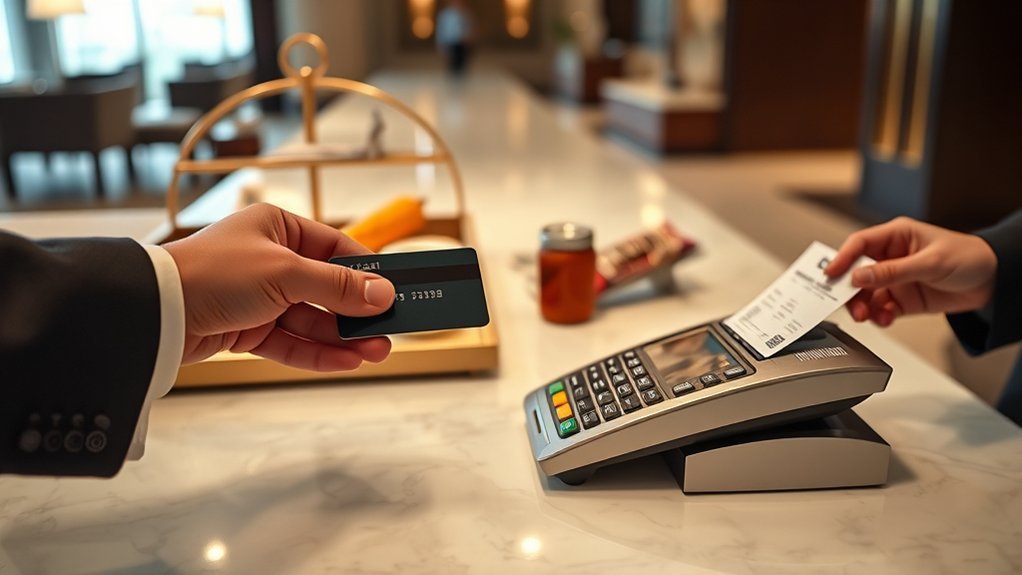
The authorization process usually follows these steps:
- Check-in: The hotel verifies your card and requests an estimated authorization.
- During the stay: Charges posted to your room reduce the unused portion of the authorization. A long stay or high spending may trigger another authorization.
- Checkout: The hotel calculates the final folio and submits the amount you actually owe.
- Release: The hotel releases the unused authorization. Your bank or card issuer then updates your available balance according to its processing schedule.
The pending authorization and the final charge may briefly appear at the same time. That does not always mean you were charged twice. Compare the status of each transaction and contact the hotel or issuer if both amounts post as completed charges.
Credit Card vs. Debit Card Holds
A credit-card hold reduces your available credit. A debit-card hold can make money in your checking account temporarily unavailable, which may affect rent, bills, meals, or other travel costs. Some hotel policies warn that debit-card authorizations can remain unavailable for several business days after checkout.
A credit card is often easier for the check-in authorization because it does not tie up cash in your bank account. You can ask whether the hotel allows you to use one card for the hold and another payment method for the final bill. Do not assume the property will accept prepaid cards or cash.
Pro Tip: Before handing over a debit card, ask, “What is the total authorization for my entire stay, and how long can my bank take to release the unused amount?”
How Long Do Hotel Holds Last?
Marriott says a bank hold connected with its digital-entry process may remain for up to five business days after departure, while individual Hyatt properties publish examples ranging from a few business days to 7–10 business days, with longer periods possible for some banks or international issuers. Marriott’s billing guidance also notes that some security-deposit releases may take 7–14 days depending on the financial institution.
Call the hotel first if the hold remains after the property’s stated release period. Ask the front desk or accounting team to confirm that the authorization was released and request written proof or an authorization-release reference if available. Then contact your card issuer, because the hotel cannot control the issuer’s posting schedule.
How Hotel Incidentals Affect Business Travel
Incidentals can complicate expense reports, reimbursement, and employee cash flow. A traveler may use a personal card for the hold even when the company prepaid room and tax. Charges that post after checkout can also miss the original expense-report period.
Business travelers should know which extras are reimbursable, which card to present, and whether the company’s authorization covers room and tax only or also covers incidentals. The traveler should still collect an itemized folio, because a corporate card or direct-bill agreement does not remove the need to document each charge.
How to Minimize Hotel Incidentals
You can reduce real incidental charges and avoid cash-flow problems by checking the policy before booking, choosing rates that include services you will use, and reviewing charges throughout the stay. You cannot always eliminate a required authorization hold, but you can plan for it.
Plan Ahead
- Contact the exact property. Ask about the hold amount, payment methods, parking, Wi-Fi, breakfast, pet fees, and release timing.
- Compare the total stay cost. A higher room rate that includes parking or breakfast may cost less than a cheaper rate with daily extras.
- Budget for unavailable funds. Leave enough credit or cash for meals, transportation, emergencies, and the hotel authorization.
- Decline services you do not need. Avoid opening the minibar, ordering paid entertainment, or using premium internet unless you accept the price.
- Check the folio before departure. Correcting an error at the front desk is usually easier than resolving it later.
Use Centralized Billing
For company travel, centralized billing can place approved room charges on a corporate account or consolidated invoice. It can simplify reconciliation, but it does not automatically cover every incidental or remove the traveler’s check-in authorization.
| Billing Setup | What It May Cover | What to Confirm |
|---|---|---|
| Room and tax only | Nightly rate and lodging taxes | Traveler may need a personal card for all incidentals |
| Selected incidentals | Approved items such as parking or meals | Excluded categories and spending limits |
| All charges | Most charges posted to the room | Damage, smoking, pet, or unauthorized charges may still be excluded |
| Direct bill | Charges listed in the hotel-company agreement | Credit approval, invoice timing, and traveler identification |
Set Clear Policies
Companies should tell travelers which expenses are allowed, which payment method to use, and what proof is required. A useful travel policy should address minibar purchases, room service, alcohol, parking, internet, laundry, tips, late checkout, upgrades, and damage-related charges.
- State whether employees may use a personal card for the hold.
- Explain how to submit a folio when the final charge posts after checkout.
- Provide a contact for urgent card-limit or reimbursement problems.
Direct Billing for Hotel Incidentals

Direct billing lets an approved company or organization receive an invoice for specified hotel charges. It is mainly a business-travel arrangement, not a standard option for individual leisure guests. The company and hotel agree in advance on which charges can be billed directly.
A third-party credit-card authorization is different. It allows another person or company to authorize a card for room and tax, incidentals, or all charges. Marriott advises guests to contact the hotel directly because not every property accepts these authorizations and processing may require advance time.
Neither method guarantees that the front desk will waive the traveler’s incidental hold. Confirm the arrangement in writing and bring the company name, confirmation number, and authorization details to check-in.
How to Dispute Wrong Hotel Charges
If a completed hotel charge is wrong, act quickly and keep a clear record. A pending authorization is not normally disputed the same way as a posted charge, so first confirm whether the transaction is pending or completed.
- Collect evidence. Save the reservation, cancellation terms, itemized folio, receipts, photographs, emails, and screenshots of the card activity.
- Contact the hotel. Identify the exact date, amount, and line item. Ask the front desk or accounting department to correct it and send an updated folio.
- Escalate within the hotel company. Use the brand’s billing-support channel if the property does not resolve the problem.
- Contact the card issuer. Explain the error and follow the issuer’s dispute process. Credit- and debit-card protections differ.
- Protect U.S. credit-card rights. The FTC advises sending a written billing-error notice to the issuer’s billing-inquiries address so it arrives within 60 days after the first statement containing the error. Keep copies and proof of delivery.
Do not send original receipts. Continue paying the undisputed part of the bill and follow the issuer’s instructions while the claim is reviewed.
How to Read Your Hotel Bill
Ask for an itemized folio rather than accepting a single total. Compare each line with your booking and what you used during the stay.
- Room rate: Confirm the nightly rate for every date, especially weekends or special-event nights.
- Taxes and mandatory fees: Check that the amounts match the booking disclosure.
- Incidentals: Review dining, minibar, parking, Wi-Fi, laundry, spa, pet, and entertainment entries.
- Credits and deposits: Make sure prepayments, gift cards, loyalty credits, or cash deposits were applied.
- Authorization vs. final charge: A pending hold may not appear on the folio because it is a card authorization, not a hotel sale.
Ask about duplicate room charges, unfamiliar restaurant names, minibar items you did not use, incorrect parking days, or fees already included in your package. Request a corrected folio before leaving whenever possible.
Frequently Asked Questions
Do you get charged for hotel incidentals?
You are charged when you use an extra service or trigger a valid policy fee. The hotel may also place a temporary authorization hold at check-in, but unused authorization is not part of the final amount you owe.
What is the 5-10 rule in a hotel?
The 10-and-5 rule is a guest-service guideline, not a billing rule. In common versions, hotel staff acknowledge a guest from about 10 feet away and offer a verbal greeting at about 5 feet. It does not set incidental charges at $5 or $10.
What are common hotel incidental charges?
Common charges include room service, minibar items, parking, premium Wi-Fi, laundry, spa services, paid entertainment, pet fees, late checkout, and business-center use. Damage, smoking, and excessive-cleaning fees may also be billed under the hotel’s policy.
How can you avoid hotel incidental charges?
Ask what is included, avoid paid extras you do not need, do not use the minibar, follow the property’s smoking and damage rules, and review the folio before checkout. You may still need to accept a temporary authorization hold.
Can a hotel require an incidental hold?
Yes. A hotel can make an accepted card or security deposit a condition of check-in, subject to its policy and applicable law. Contact the property before arrival if you need to use cash, a debit card, a prepaid card, or a third-party authorization.
How long does a hotel incidental hold take to disappear?
Timing varies by hotel and card issuer. Some holds clear within a few business days, while others take a week or longer. Debit cards and international issuers may take longer. Ask the property for its stated timeline, then contact your bank if the hold remains after that period.
Why does a pending hold appear beside the final hotel charge?
The final charge can post before the original authorization disappears. Check whether the first amount is still marked pending. Contact the hotel and card issuer if both transactions become completed charges.
Conclusion
Hotel incidentals do not have to become surprise costs. Separate the temporary hold from the final charge, ask the property for its exact authorization policy, and use a payment method that leaves enough funds for the rest of your trip. Before leaving, review the itemized folio and challenge errors promptly. Clear records and early action give you the best chance of resolving a billing problem quickly.
Sources
- Federal Trade Commission: Rule on Unfair or Deceptive Fees FAQs — mandatory lodging-fee and optional-add-on disclosure requirements.
- Federal Trade Commission: Using Credit Cards and Disputing Charges — U.S. credit-card billing-error rights and the 60-day written-notice deadline.
- Hilton Payment FAQs — check-in authorizations and estimated incidentals.
- Marriott Digital Entry Terms of Use — room, tax, resort-fee, and incidental authorization practices.
- Marriott Billing Issue Help — release timing and billing-support guidance.
- Hyatt Regency Miami Policies — a current property example of per-night authorizations and debit-card hold timing.
