
Last Updated on September 10, 2026 by Daniel Globe
Getting in shape for hiking is less about becoming a competitive athlete and more about preparing your legs, lungs, core, balance, and feet for the specific demands of the trail. A good hiking fitness plan gradually builds walking endurance, hill strength, stability, and confidence while giving your body enough time to recover between harder sessions.
Quick Answer
To get in shape for hiking, combine brisk walking or other cardio with two weekly strength sessions, regular hill or stair practice, balance work, and increasingly trail-specific hikes. Build duration, elevation, and backpack weight gradually. Train on terrain similar to your planned hike and leave enough recovery time between demanding workouts.
Key Takeaways
- Build aerobic endurance with brisk walking, hiking, cycling, swimming, or similar activities.
- Train your legs, hips, core, back, chest, shoulders, and arms at least twice a week.
- Practice hills, stairs, step-ups, and downhill walking because flat cardio alone does not fully prepare you for a steep trail.
- Gradually practice with the shoes, backpack, trekking poles, food, and water you plan to use on the hike.
- Recovery, hydration, weather preparation, altitude acclimatization, and the Ten Essentials are part of hiking fitness too.
At a Glance
| Time Required | Several weeks for most beginners; the sample plan below uses six weeks and can be extended if needed. |
| Difficulty | Beginner to intermediate; adjust volume and intensity to your current fitness. |
| Tools Needed | Walking or hiking shoes, backpack, hills or stairs; optional dumbbells, resistance bands, trekking poles, or treadmill. |
| Cost | Often $0 beyond gear you already own; a gym membership or extra training equipment is optional. |
Note: This article provides general fitness information, not individualized medical advice. If you have a heart or lung condition, chronic illness, significant joint problems, a current injury, are pregnant, or have been advised to limit exercise, discuss vigorous training or a demanding hike with a qualified healthcare professional.
Disclosure: As an Amazon Associate I earn from qualifying purchases. Some links on this page are affiliate links, at no extra cost to you.
Why Physical Fitness Matters for Hiking
Hiking can involve long periods of walking, steep climbs, uneven footing, descents, heat, cold, altitude, and the added weight of a backpack. Better conditioning makes those demands easier to manage and can help you maintain a controlled pace instead of becoming exhausted early in the trip.
Fitness also affects decision-making on the trail. When you are tired, it can become harder to pay attention to footing, weather, navigation, hydration, or the condition of other people in your group. The goal of training is therefore not simply to move faster. It is to leave enough physical reserve to hike safely and still respond well when the trail becomes harder than expected.
The CDC’s physical activity guidance recommends that adults get at least 150 minutes of moderate-intensity aerobic activity each week and perform muscle-strengthening activities on at least two days. Hiking preparation can build on that baseline by making some of the exercise more trail-specific.
The best hiking workout is not a single exercise. It is a gradual combination of endurance, strength, hills, balance, pack practice, and recovery.
Preparing Your Body for Hiking
Start by comparing your current fitness with the hike you want to complete. Look at the route’s distance, expected hiking time, elevation gain, surface, altitude, weather, and how much weight you expect to carry.
A flat five-mile walk and a five-mile hike that climbs 2,000 feet are very different physical challenges. Training should become increasingly similar to the actual trip as the date approaches.
Assess Your Starting Point
Before increasing your training, take an easy walk or local hike and pay attention to what limits you first. Your breathing may become uncomfortable on climbs, your legs may fatigue on stairs, your feet may develop hot spots, or your balance may feel uncertain on rocks and roots.
Use those observations to guide your training rather than jumping immediately into high-volume workouts.
Progress Gradually
If you are currently inactive, begin with shorter sessions and increase the workload over time. Do not increase distance, elevation, intensity, and backpack weight all at once. A slower progression gives your muscles, joints, feet, and cardiovascular system time to adapt.
Pro Tip: Make one weekly workout look like a smaller version of your target hike. Use similar hills or stairs, wear your planned footwear, and gradually practice with your backpack. This reveals gear and pacing problems before they become trail problems.
A Six-Week Hiking Fitness Plan
The following plan is a flexible example for a generally healthy beginner who already tolerates ordinary walking. Extend a week rather than progressing when a workout causes persistent pain, unusual exhaustion, or a noticeable loss of normal function.
| Week | Cardio / Walking | Strength | Trail-Specific Session |
|---|---|---|---|
| 1 | 3 easy-to-moderate walks of about 20–30 minutes | 2 full-body sessions | Short easy hill or stair session |
| 2 | 3 sessions of about 25–35 minutes | 2 full-body sessions | Add more continuous climbing |
| 3 | 3 sessions of about 30–45 minutes | 2 full-body sessions | Easy local hike with a light backpack |
| 4 | 2 shorter sessions plus one longer walk | 2 full-body sessions | Longer hills or stairs; practice controlled descents |
| 5 | Maintain regular cardio without making every session hard | 2 sessions, avoiding failure on every set | Longest practice hike on similar terrain with a realistic pack |
| 6 | Reduce overall workload | 1–2 lighter sessions early in the week | Easy walk or short hike; arrive at the main hike rested |
Include at least one easy or rest day after your hardest sessions. A six-week schedule is not a requirement; people starting from a lower fitness level or preparing for a strenuous backpacking trip may need substantially more time.
Choosing the Right Hiking Gear
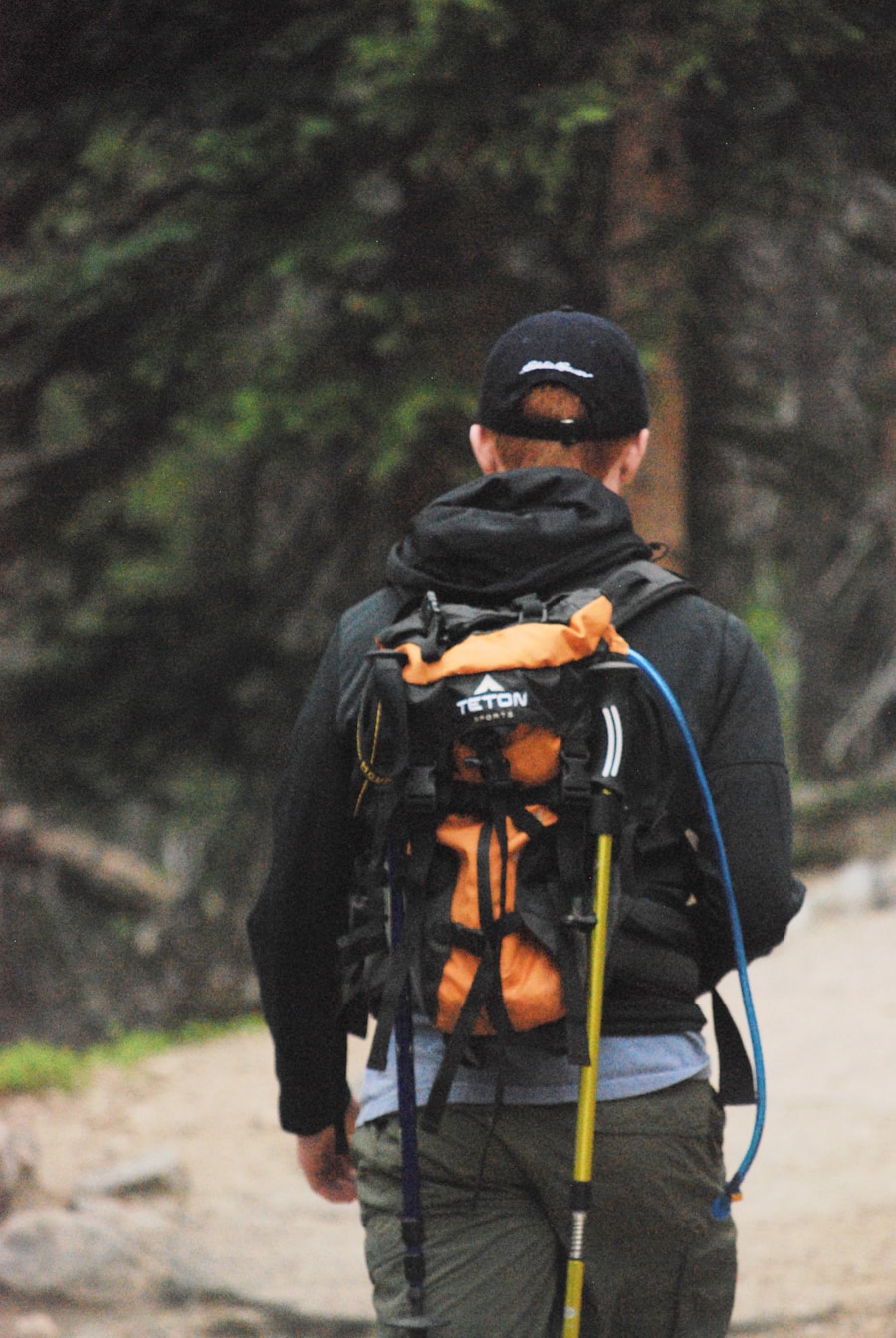
Your training is also the best time to test your hiking equipment. Shoes should fit well, grip the expected surface, and remain comfortable as your feet warm and swell during longer walks. Sturdy hiking footwear can make sense on rough dirt, gravel, or rocky terrain, while lighter footwear may be adequate on easier trails.
Do not save brand-new footwear for the main trip. Wear it during training so you can discover pressure points, rubbing, sock problems, or fit issues while you are still close to home.
Clothing should match the conditions. Moisture-managing base layers, insulating layers when needed, and rain or wind protection give you more flexibility when temperatures change.
The National Park Service’s Hike Smart guidance also recommends selecting equipment for the actual route and checking that you know how to use it before leaving.
Carry the Ten Essentials
Fitness does not replace emergency preparation. The National Park Service Ten Essentials cover:
- Navigation
- Sun protection
- Insulation
- Illumination
- First-aid supplies
- Fire
- Repair kit and tools
- Nutrition
- Hydration and water-treatment supplies
- Emergency shelter
What you actually carry should reflect the route, weather, season, remoteness, group, and expected duration.
Building Endurance and Strength
Hiking repeatedly asks your legs to raise and lower your body while your trunk keeps you stable and your upper body supports a backpack or trekking poles. That makes full-body strength useful even though your legs perform much of the visible work.
The CDC advises working all major muscle groups. For many adults, about 8–12 controlled repetitions per strength exercise is a reasonable general range, with at least one set and two or three sets offering additional training volume.
| Exercise | Target | Sets | Why It Helps |
|---|---|---|---|
| Push-ups | 8–12 controlled reps or an easier variation | 1–3 | Upper-body and trunk strength |
| Squats | 8–12 reps | 1–3 | Quads, glutes, and hip strength for climbing |
| Step-ups | 8–12 per side | 1–3 | Closely resembles uphill hiking |
| Reverse lunges | 8–12 per side | 1–3 | Single-leg strength and control |
| Calf raises | 8–15 reps | 1–3 | Calf and ankle endurance |
| Plank | 10–60 seconds with good form | 1–3 | Trunk stability under a backpack |
| Deadlifts or hip hinges | 8–12 reps using a manageable load | 1–3 | Glutes, hamstrings, back, and lifting mechanics |
| Rows | 8–12 reps | 1–3 | Upper-back strength for carrying a pack |
Use a resistance level that makes the final repetitions challenging while allowing you to maintain good technique. Beginners can use body weight, resistance bands, or light weights before adding heavier resistance.
Train for Downhill Hiking Too
Climbing receives most of the attention, but long descents can leave the front of your thighs extremely fatigued. Step-downs, split squats, controlled lunges, and actual downhill walking can help you practice absorbing force while maintaining balance.
Start with small steps and easy slopes. Downhill training should be controlled, not a race.
Practice Carrying Your Backpack
Once ordinary walking feels comfortable, add a light backpack to some sessions. Gradually move toward the amount of food, water, clothing, and equipment you expect to carry.
Avoid suddenly loading a heavy pack on your first long training hike. The additional weight changes the demand on your feet, legs, hips, back, and shoulders.
Incorporating Cardio into Your Fitness Routine
Aerobic fitness helps you sustain effort for hours instead of minutes. Brisk walking is one of the most useful starting points because the movement is specific to hiking and is easy to scale.
Other options include cycling, jogging, swimming, rowing, or an elliptical machine. They can build cardiovascular fitness while adding variety or reducing repetitive impact.
Use the Talk Test
For much of your aerobic training, aim for a pace that clearly raises your breathing but still allows you to speak in sentences. Harder intervals can be included if appropriate for your fitness, but they are not mandatory.
One simple hill session is to walk briskly uphill for a short period, recover on easier terrain, and repeat. You can do something similar on stairs or an inclined treadmill.
Do not make every cardio workout hard. Easier sessions help accumulate endurance without turning the entire week into one long recovery problem.
Warm Up and Cool Down
The American Heart Association recommends gradually warming up before moderate or vigorous exercise. Five to ten minutes of easier walking or another low-intensity version of the planned activity works well for many people.
At the end, gradually reduce your pace instead of stopping abruptly. Stretching can be added after the muscles are warm if it feels useful.
Flexibility and Balance Training
Flexibility for Range of Motion
Mobility helps you step over rocks, negotiate uneven ground, and move comfortably through a useful range of motion. Before a workout, use easy movement and dynamic drills such as controlled leg swings, ankle circles, marching, or bodyweight squats.
Longer static stretches generally fit better after activity or after a short warm-up rather than as the first thing you do with cold muscles.
Balance Training for Stability
Balance matters when footing is narrow, loose, wet, rocky, or uneven. Useful drills include single-leg stands, heel-to-toe walking, step-ups, controlled step-downs, and supported single-leg reaches.
Use a wall, railing, or sturdy chair when needed. The goal is controlled practice, not seeing how close you can come to falling.
Yoga for Flexibility and Balance
Yoga can combine mobility, balance, strength, and body awareness. Poses such as tree pose and supported warrior III can challenge single-leg stability, while other movements can improve hip and ankle mobility.
Yoga is optional rather than a requirement. Choose forms of mobility and balance work that you can perform consistently and comfortably.
Training for Hills, Stairs, and Uneven Terrain
Flat walking develops useful endurance, but a hilly hike adds a different challenge. Include some climbing as your training progresses.
- Stairs: useful when natural hills are unavailable.
- Inclined treadmill: lets you control grade and speed.
- Step-ups: provide hiking-specific leg work with little equipment.
- Local hills: train both climbing and descending.
- Uneven trails: build practical foot placement and balance once your base fitness is adequate.
Start slowly on technical terrain. Fitness does not protect you from a poor foot placement, loose rock, wet roots, or an unexpected drop.
Nutrition for Hiking
Nutrition supports both training and the hike itself. Regular meals that include carbohydrate-rich foods, protein foods, fruits or vegetables, and dietary fat provide energy and nutrients for an active routine.
Before a longer hike, eat familiar foods rather than experimenting with a completely new meal. During the hike, pack food that is easy to carry and eat. Trail mix, nuts, dried fruit, sandwiches, crackers, energy bars, and similar foods are common choices.
For especially long outings, bring extra food in case the trip takes longer than planned. The National Park Service specifically recommends considering the duration of the hike and packing nutritious food that does not require cooking.
Hydration
Carry enough water for the route and know whether reliable water is available. Backcountry water may need appropriate treatment before drinking.
Needs vary with temperature, humidity, altitude, body size, pace, duration, and sweat rate, so a single universal water amount is not suitable for every hike.
In hot conditions, the CDC advises people exercising outdoors to pace themselves, drink more water than usual, and avoid waiting until they are thirsty. During long, hot, sweaty outings, an electrolyte-containing drink or salty food may be useful for replacing some of the salt lost in sweat.
Warning: Faintness, unusual weakness, confusion, severe dizziness, or worsening heat-illness symptoms are not signs to “push through.” Stop the activity, move to a safer or cooler place, and seek appropriate medical help when symptoms are severe or do not improve.
Prepare for Heat and High Altitude
Hot-Weather Hiking
Heat makes a familiar route harder. Reduce pace, take breaks, wear appropriate clothing, carry enough fluids, and consider hiking earlier or later in the day when conditions are cooler.
Do not assume that finishing the same distance in cool weather means you will tolerate it equally well during extreme heat.
High-Altitude Hiking
Fitness does not prevent altitude illness. A highly conditioned person can still become sick after ascending too quickly.
The CDC Yellow Book recommends gradual acclimatization. Once above about 3,000 meters (9,800 feet), it advises limiting increases in sleeping altitude to about 500 meters (1,600–1,650 feet) per day and adding an extra acclimatization night for every additional 1,000 meters (3,300 feet) gained.
CDC also advises keeping exercise mild during the first 48 hours after arriving at high altitude. If a planned hike involves substantial elevation, build acclimatization time into the trip rather than expecting gym fitness to replace it.
Recovery and Rest for Hiking Fitness
Recovery is part of training, not time lost from it. Hard hiking sessions and strength workouts create fatigue that your body needs time to absorb.
Use easier walking, gentle mobility, or complete rest between demanding sessions depending on how you feel. Persistent joint pain, worsening swelling, limping, or pain that changes your normal movement is a reason to reduce the workload and address the problem rather than repeatedly training through it.
Prioritize Sleep
Most adults need at least seven hours of sleep per day, although individual needs vary by age. Consistent sleep supports general health, alertness, and recovery.
Foam rolling or massage can be used if you find them relaxing or helpful for temporary muscle tightness, but they are optional. They do not replace appropriate training progression, food, hydration, sleep, or rest.
How to Know When You Are Ready for Your Hike
There is no universal fitness test that guarantees you can complete every hiking route. A practical test is to complete a training hike that resembles the planned trip in terrain, elevation, footwear, and backpack load without developing concerning symptoms or excessive fatigue.
Before the main trip, ask yourself:
- Can I walk for a substantial portion of the expected hiking time without my form falling apart?
- Have I practiced sustained hills or stairs?
- Have I practiced descending as well as climbing?
- Have I worn my planned shoes and socks on a long outing?
- Have I carried a realistic backpack?
- Do I know how much food and water I need under similar conditions?
- Can I finish a training hike with enough reserve to make safe decisions afterward?
- Do I know the route, weather forecast, turnaround plan, and emergency options?
Pro Tip: Make your longest practice hike challenging enough to test your preparation, but do it before the final few days. Reduce training near the trip so you arrive rested instead of sore and depleted.
Other Useful Gear for Hiking and Travel
If you’re looking to get in shape for hiking, you may also want to consider useful gear for your outdoor adventures. A rechargeable hand warmer can add comfort during cold-weather trips, while a solar-powered camping lantern can provide campsite lighting. You can also use packing cubes to organize clothing and other travel items efficiently.
Love travel? Join Our Facebook Community For More Tips.
Frequently Asked Questions
What is the best way to get in shape for hiking?
Combine regular aerobic activity with strength training, hills or stairs, balance work, and increasingly realistic practice hikes. As the trip gets closer, train on terrain similar to the planned route and practice with the shoes and backpack you will actually use.
How often should I exercise to get in shape for hiking?
A useful baseline for adults is at least 150 minutes of moderate aerobic activity per week plus muscle-strengthening exercise on at least two days. Your hiking program can distribute that work across several days while leaving recovery time after demanding sessions.
What exercises are best for hiking?
Walking, hills, stairs, step-ups, squats, lunges, calf raises, hip hinges or deadlifts, rows, push-ups, core exercises, and single-leg balance work can all contribute. Actual hiking is especially valuable because it combines endurance, terrain, footwear, and balance in one activity.
How can I prevent injuries while getting in shape for hiking?
Build training gradually, warm up before harder exercise, use good technique, include recovery days, practice in your planned footwear, and avoid increasing several training variables at once. Reduce training when pain changes the way you walk or perform an exercise.
Are there specific dietary recommendations for hiking fitness?
Eat a varied diet that supplies enough energy for your activity level, with carbohydrate-rich foods, protein foods, fruits or vegetables, and dietary fat. For hikes, carry familiar foods that are easy to eat and enough water for the conditions. Longer, hotter outings may require more fluids, food, and attention to electrolytes.
How long does it take to get in hiking shape?
There is no universal timeline. Someone who already walks and exercises regularly may need only a few weeks of trail-specific preparation, while an inactive beginner or someone planning a strenuous backpacking trip may need much longer. Start early enough that you can progress without rushing.
Can walking alone prepare me for hiking?
Walking is an excellent foundation, especially if you gradually increase duration and add hills. For steep, rough, or backpacking routes, strength training, balance work, descending practice, and carrying a pack provide preparation that flat walking alone may not.
Sources
- Centers for Disease Control and Prevention — Physical Activity Recommendations — aerobic and muscle-strengthening guidance for adults.
- Centers for Disease Control and Prevention — What Counts as Physical Activity for Adults — strength-training repetitions, sets, and major muscle groups.
- National Park Service — Hike Smart — trail planning, gear, food, water, weather, and hiking-safety guidance.
- National Park Service — Ten Essentials — emergency and preparedness equipment for outdoor recreation.
- Centers for Disease Control and Prevention — Heat and Athletes — pacing, hydration, and heat-illness precautions.
- CDC Yellow Book — High-Altitude Travel and Altitude Illness — acclimatization and safe ascent guidance.

