
Last Updated on July 27, 2026 by Daniel Globe
Walking and hiking are closely related activities, but the experience can be very different. Walking often takes place on smoother, more predictable surfaces, while hiking usually involves natural trails, uneven ground, elevation changes, and more trip planning. Both can support physical and mental well-being, and either one can be adjusted to match your fitness level and goals.
Quick Answer
Walking and hiking use the same basic movement, but hiking usually takes place on natural trails with more uneven terrain, elevation change, route planning, and gear. Walking is often done on smoother, more predictable surfaces and is easier to fit into daily life. There is no universal distance or speed cutoff between the two.
Key Takeaways
- Walking usually involves more predictable surfaces, while hiking more often includes natural terrain, elevation changes, roots, rocks, mud, or other obstacles.
- Hiking is often more physically demanding, but a fast or steep walk can be harder than an easy hike.
- Walking may require little more than comfortable footwear, while longer or more remote hikes call for additional navigation, water, food, clothing, and emergency gear.
- Both activities can contribute to cardiovascular fitness, muscle endurance, stress reduction, and the weekly physical-activity goals recommended for adults.
- For hiking, choose a route based on distance, elevation gain, terrain, weather, your experience, and the abilities of everyone in your group.
Disclosure: As an Amazon Associate I earn from qualifying purchases. Some links on this page are affiliate links, at no extra cost to you.
Walking vs. Hiking: What Is the Difference?
The simplest distinction is that walking is the broad activity of traveling on foot, while hiking usually means walking for recreation on a trail or through a natural area where the terrain, elevation, distance, or remoteness may require more preparation. The boundary is not strict. A short paved nature path may reasonably be called either a walk or a hike, depending on the setting and local usage.
| Factor | Walking | Hiking |
|---|---|---|
| Typical surface | Sidewalks, roads, tracks, parks, beaches, greenways, or maintained paths | Natural or semi-maintained trails with dirt, rock, roots, mud, sand, or stream crossings |
| Elevation | Often modest, but can include hills or steep streets | Often more elevation gain and descent |
| Effort | Can range from easy strolling to vigorous brisk walking | Often moderate to strenuous because terrain and elevation add work |
| Duration | A few minutes to several hours | Anything from a short nature trail to a full-day or multi-day trip |
| Navigation | Often minimal on familiar or signed routes | May require a map, compass, GPS, offline map, or route-finding skills |
| Gear | Comfortable shoes and weather-appropriate clothing may be enough | Trail-appropriate footwear, water, layers, navigation, food, and emergency supplies become more important |
Distance alone does not define the activity. A steep two-mile trail can require more effort and planning than a six-mile walk on a paved greenway. Likewise, a long, fast urban walk can provide a demanding cardiovascular workout even though most people would not call it a hike.
Physical Health Benefits of Walking and Hiking
Both walking and hiking can contribute to the health benefits associated with regular physical activity. According to the Centers for Disease Control and Prevention, regular physical activity can help lower blood pressure and reduce the risk of heart disease, stroke, type 2 diabetes, depression, and several other chronic conditions. It can also support stronger bones and muscles, better balance, improved sleep, and healthier weight management.
Intensity matters. A casual walk may provide light activity, while brisk walking can reach moderate intensity. Hiking uphill, moving over uneven terrain, or carrying a pack can raise the workload further. Your pace, fitness level, elevation gain, temperature, surface, and pack weight all affect how challenging an outing feels.
Current CDC guidance recommends that adults aim for at least 150 minutes of moderate-intensity aerobic activity each week, while recognizing that some physical activity is better than none.
Walking is especially easy to work into everyday life because it can begin at your front door and does not require a trail. Hiking can add hills, uneven surfaces, balance demands, and longer periods of sustained activity. Neither is automatically “better.” The better choice is the activity you can perform safely and consistently.
Note: General exercise recommendations do not replace individual medical advice. If you have a chronic health condition, significant mobility limitation, concerning symptoms, or are unsure what level of activity is appropriate, discuss your plans with a qualified healthcare professional.
Differences in Terrain and Difficulty
Variations in Walking Environments
Walking can take place almost anywhere. A neighborhood sidewalk, indoor track, city park, beach, botanical garden, paved greenway, and easy nature path can all support walking. Surface quality, hills, temperature, and pace can still change the difficulty considerably, so walking should not automatically be equated with effortless exercise.
The Challenges of Hiking
Hiking more often introduces uneven natural terrain. Steep inclines, loose gravel, rocks, roots, mud, snow, stream crossings, narrow paths, and long descents can require more strength, balance, concentration, and endurance than a typical paved walk.
Trail difficulty depends on much more than mileage. The National Park Service advises hikers to consider distance, elevation gain, terrain, weather, experience, fitness, and pack weight when deciding whether a trail is appropriate.
Choosing the Right Trail
A beginner-friendly trail may have modest elevation gain, a clear surface, frequent signs, and easy access to a trailhead. A difficult route may combine steep climbing, exposed ledges, scrambling, loose footing, water crossings, high altitude, or long distances between exit points.
Difficulty labels are not universal. A trail described as “moderate” by one park or app may feel very different from a “moderate” trail elsewhere. Check the actual mileage, elevation profile, terrain description, recent conditions, and land-manager alerts instead of relying on the label alone.
Pro Tip: When trying a new difficulty level, choose a route with an easy turnaround option. That lets you test your pace and comfort without committing to a long loop or remote summit.
Gear and Equipment for Walking and Hiking
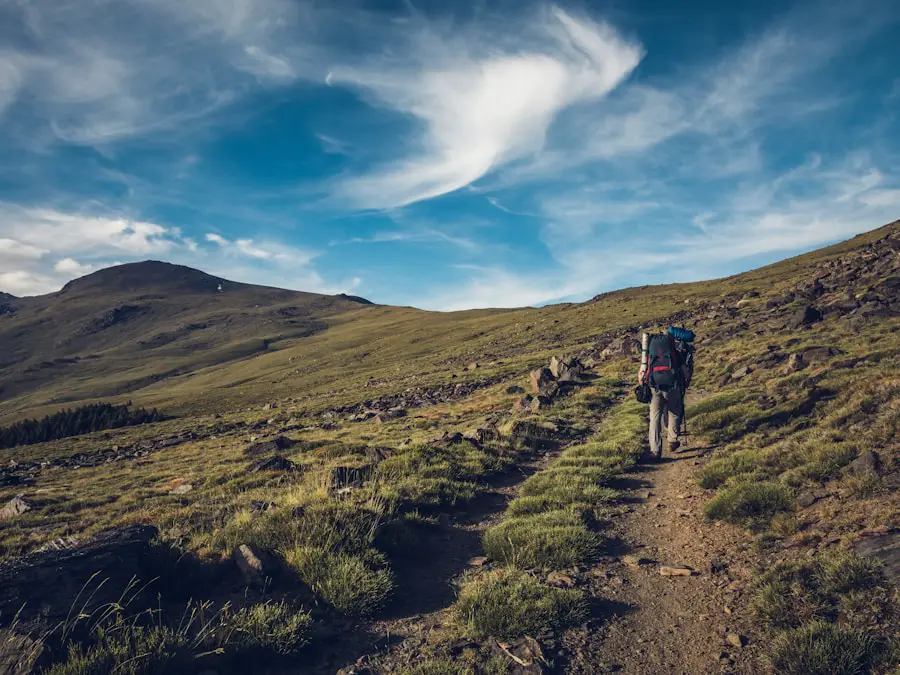
The right gear can make both walking and hiking more comfortable, but the amount of equipment you need depends on the route rather than the activity label alone.
For an ordinary walk, comfortable, well-fitting shoes and weather-appropriate clothing may be enough. Moisture-managing clothing can improve comfort in hot conditions, while a hat, sunglasses, and sunscreen help reduce sun exposure. On a longer walk, a small pack can carry water, snacks, medication, and an extra layer.
Hiking footwear should match the terrain. A smooth, dry trail may be comfortable in trail-running shoes or other sturdy footwear with suitable traction. Rough, loose, wet, snowy, or heavily loaded trips may justify more protective hiking shoes or boots. Boots are therefore not mandatory for every hike, although they can offer useful protection and structure in demanding conditions.
Trekking poles can provide additional points of contact on steep, loose, or slippery ground. They are optional rather than required, and correct pole length and technique matter.
The Ten Essentials for More Serious Hikes
For outings where unexpected delays, changing weather, or navigation problems could become serious, the National Park Service Ten Essentials provide a practical preparation framework:
- Navigation, including a map, compass, GPS, or offline map appropriate for the route
- Sun protection
- Extra clothing and weather protection
- A headlamp or flashlight
- First-aid supplies and personal medication
- An appropriate emergency fire-starting method where legal and relevant
- Repair tools and supplies
- Extra food
- Water and, when necessary, water-treatment equipment
- Emergency shelter
A phone is useful, especially when carrying downloaded maps and a backup battery, but it should not be your only navigation or emergency plan in remote areas. Cell coverage can be weak or absent on trails.
Safety Considerations for Walking and Hiking
| Category | Practical Safety Guidance |
|---|---|
| Accidents and falls | Choose terrain that matches your ability, watch your footing, slow down on steep descents, and turn around when conditions exceed your comfort or skill level. |
| Wildlife encounters | Learn the guidance for the species and location you are visiting. Keep your distance, never feed wildlife, store food properly, and follow instructions from the land manager. |
| Weather | Check the forecast and local alerts before leaving. Carry appropriate layers and have a turnaround plan for heat, storms, flooding, snow, or rapidly worsening conditions. |
| Getting lost or needing rescue | Carry navigation tools, leave your route and expected return time with a trusted person, stay on the intended route, and do not depend entirely on cellular service. |
For urban walkers, road traffic may be one of the main hazards. Use sidewalks or designated pedestrian routes when available, cross where drivers expect pedestrians, remain visible, and stay aware of vehicles, bicycles, and other path users.
Hiking introduces additional uncertainty because the environment can change quickly. Before leaving, research the route, current trail conditions, closures, forecast, sunset time, and any known hazards. The National Park Service Hike Smart guidance recommends choosing a route that fits your ability, leaving a trip plan with someone who is not on the hike, preparing for emergencies, carrying suitable gear, and checking weather and park alerts.
Carry enough food and water for the route and conditions, but avoid relying on one universal water formula. Heat, humidity, altitude, exertion, individual needs, and water availability can change requirements significantly. Natural water should not be assumed safe to drink without appropriate treatment.
Warning: Do not continue toward exposed ridges, summits, or open terrain when thunderstorms threaten. Check official forecasts before leaving and follow National Weather Service lightning-safety guidance. Severe weather is a reason to turn around, not a challenge you need to overcome.
Wildlife safety is also location-specific. Advice for black bears may differ from advice for grizzly bears, mountain lions, snakes, moose, or other animals. Check the website or visitor center for the park or land agency you are visiting instead of relying on one universal response.
Mental and Emotional Benefits of Walking and Hiking
Walking and hiking can also support mental and emotional well-being. Physical activity itself is associated with reduced anxiety and depression risk, while time in natural environments may provide additional benefits for stress, mood, and quality of life. A 2024 meta-analysis of nature exposure and adult mental health found overall benefits across several mental-health and quality-of-life outcomes.
There is no need to reduce these effects to a single hormone or chemical. A quiet walk may provide a break from work, screens, traffic, or other demands. A hike may add focused attention to footing, route-finding, weather, scenery, and changing terrain. For some people, that shift in attention makes outdoor activity feel restorative.
Walking and hiking can also be social. A neighborhood walk with a friend or a group hike can provide conversation, shared goals, and a sense of connection. At the same time, some people prefer going alone for quiet and reflection. Solo hikers should take extra safety precautions, particularly on remote routes.
Which Burns More Calories: Walking or Hiking?
Hiking often uses more energy per hour than an easy walk because hills, uneven terrain, altitude, and pack weight can increase the workload. That does not mean every hike automatically burns more calories than every walk. A brisk uphill walk can be more demanding than an easy, mostly level nature trail.
Calorie expenditure varies with body size, pace, grade, terrain, pack weight, fitness, temperature, and duration. For that reason, a universal “calories burned while hiking” number is not very useful. Fitness watches and phone apps can provide estimates, but they should be treated as estimates rather than exact measurements.
For health and fitness, consistency is usually more useful than choosing an activity solely because an app predicts a larger calorie total.
Environmental Impact of Walking and Hiking
Environmental Impacts of Walking and Hiking
Outdoor recreation is not impact-free. Repeated traffic on natural surfaces can compact soil, remove vegetation from trail treads, widen routes, and contribute to erosion. U.S. Geological Survey research on recreational trails shows that factors such as trail grade, alignment, drainage, environmental conditions, design, and type of use influence soil loss.
This does not mean people should avoid hiking. Well-designed trails concentrate traffic onto routes that land managers can maintain, helping provide recreation while limiting damage to surrounding areas.
Mitigating Environmental Impacts
The National Park Service Leave No Trace guidance encourages visitors to plan ahead, use durable surfaces and established trails where appropriate, dispose of waste properly, leave natural and cultural objects where they are, minimize campfire impacts, respect wildlife, and be considerate of other visitors.
Stay on designated routes where required rather than creating shortcuts around switchbacks. Pack out food scraps and other trash. Observe wildlife from a safe distance and never feed animals. Follow local rules for pets, camping, fires, sanitation, and protected areas.
Promoting Stewardship
Walkers and hikers can also contribute positively to the places they enjoy. Organized trail-maintenance projects and clean-up events give volunteers a practical way to support parks and public lands. Even on an ordinary outing, following posted rules and avoiding unnecessary trail widening helps protect the route for future visitors.
Choosing the Right Trail for Your Fitness Level
Selecting an appropriate trail is one of the most important parts of planning an enjoyable hike. Beginners often do well with shorter, well-marked routes that have modest elevation gain and reliable footing. Distance should be only one part of the decision.
Before choosing a route, check:
- Total distance, including the return trip
- Elevation gain and loss
- Surface conditions and technical obstacles
- Whether the route is a loop, out-and-back, or point-to-point
- Weather and seasonal conditions
- Altitude
- Water availability
- Trail closures or permit requirements
- Expected daylight and a safe turnaround time
- Navigation difficulty and cell-service limitations
Intermediate hikers can gradually add mileage, elevation, or rougher terrain rather than increasing every variable at once. Experienced hikers may choose remote backcountry routes that require stronger navigation and emergency skills, but experience does not eliminate the need to check conditions and carry appropriate equipment.
Know your limits without assuming those limits are permanent. Fitness and trail skills can improve progressively, but there is little benefit in pushing through worsening weather, unsafe footing, injury symptoms, or exhaustion simply to complete a planned route.
Should You Walk or Hike?
Choose walking when you want a convenient activity with predictable surfaces, easy access, minimal equipment, or tight control over distance and effort. Walking can be especially useful for building a consistent fitness routine because it is easy to repeat several times per week.
Choose hiking when you want natural terrain, elevation changes, scenery, exploration, or a greater route-planning challenge. Hiking can also build confidence with navigation, balance, pacing, and outdoor decision-making.
You do not need to choose one permanently. Walking during the week and hiking when time and conditions allow can complement each other well.
Tips for Getting Started with Walking and Hiking
If you are new to either activity, start with a manageable routine. A 20-minute walk several times per week can help establish consistency. Over time, increase duration, pace, or hills according to how you feel rather than changing everything at once.
For a first hike, choose a short route with modest elevation gain, straightforward navigation, and an easy turnaround point. Check the land manager’s official trail page rather than relying only on a social-media post or user review. Recent reviews can still be helpful for conditions, but official closure and hazard information should take priority.
Wear your planned footwear before committing to a long outing. Poor fit can cause rubbing, hot spots, or blisters regardless of whether the shoe is marketed as a walking shoe, trail runner, or hiking boot. Socks should also fit well and manage moisture appropriately for the conditions.
Joining a walking or hiking group can provide motivation and help beginners learn local routes. Smartphone apps can assist with tracking distance and storing maps, but download important route information before entering areas with weak reception.
Stay flexible. Weather, trail conditions, your energy level, and the pace of your companions can all justify shortening or changing a route. Turning around early is a normal part of good outdoor judgment.
A portable battery can also help keep a phone available for downloaded maps, photos, and emergency communication. See these portable phone chargers for your next getaway. For longer trips, these packing cubes for travel may also help separate clothing and small gear before and after a hike.
Frequently Asked Questions
What is the difference between walking and hiking?
Walking is the general act of traveling on foot and can happen on streets, sidewalks, tracks, parks, beaches, or trails. Hiking usually refers to recreational walking on natural trails where uneven terrain, elevation changes, distance, or remoteness may require more preparation. There is no universal mileage or speed cutoff.
How does the terrain differ between walking and hiking?
Walking often takes place on smoother and more predictable surfaces, although it can include hills and unpaved paths. Hiking more commonly involves natural surfaces such as dirt, rocks, roots, mud, sand, or snow and may include substantial climbing and descending.
What equipment is different for walking and hiking?
A routine walk may require only comfortable footwear and weather-appropriate clothing. Hiking gear depends on the route but may include trail footwear, a backpack, navigation tools, extra clothing, food, water, first-aid supplies, a headlamp, emergency shelter, and other items from the Ten Essentials.
What are the physical demands of walking versus hiking?
Walking can range from light to vigorous exercise depending on pace and hills. Hiking often requires more effort because elevation changes, uneven surfaces, balance demands, and pack weight can increase the workload. However, a fast, steep walk can be harder than an easy, level hike.
What are the typical durations for walking and hiking?
There is no fixed duration for either activity. A walk may last a few minutes or several hours, while a hike can range from a short trail outing to a full-day or multi-day trip. Terrain, elevation, weather, and preparation are more useful distinctions than duration alone.
Do you need hiking boots to go hiking?
Not for every trail. The best footwear depends on the surface, weather, load, and your preferences. Easy dry trails may be comfortable in trail shoes or other sturdy footwear with good traction, while rough, wet, snowy, or heavily loaded trips may justify more protective hiking boots.
Does hiking burn more calories than walking?
Hiking often requires more energy than an easy walk because hills, uneven terrain, and pack weight increase effort. However, calories burned depend on pace, body size, grade, terrain, duration, load, and other factors. A brisk uphill walk can be more demanding than an easy hike.
Can beginners start hiking?
Yes. Start with a short, well-marked route with manageable elevation gain and straightforward terrain. Check the weather and official trail information, carry appropriate essentials, and choose a route with an easy turnaround option. Gradually add distance or elevation as your fitness and trail skills improve.
Sources
- Centers for Disease Control and Prevention — Health Benefits of Physical Activity for Adults — supports cardiovascular, metabolic, mental-health, bone, balance, and blood-pressure benefits of regular physical activity.
- Centers for Disease Control and Prevention — Adult Activity Guidelines — supports current weekly aerobic and muscle-strengthening activity recommendations.
- National Park Service — Hike Smart — supports trail selection, trip plans, weather checks, navigation, emergency preparation, and hiking safety.
- National Park Service — Ten Essentials — supports the hiking equipment and emergency-preparedness checklist.
- National Park Service — Leave No Trace — supports responsible trail use, waste disposal, wildlife respect, and outdoor stewardship.
- U.S. Geological Survey — Soil Loss From Recreational Trails — supports discussion of erosion and factors influencing trail degradation.

