
Last Updated on July 27, 2026 by Daniel Globe
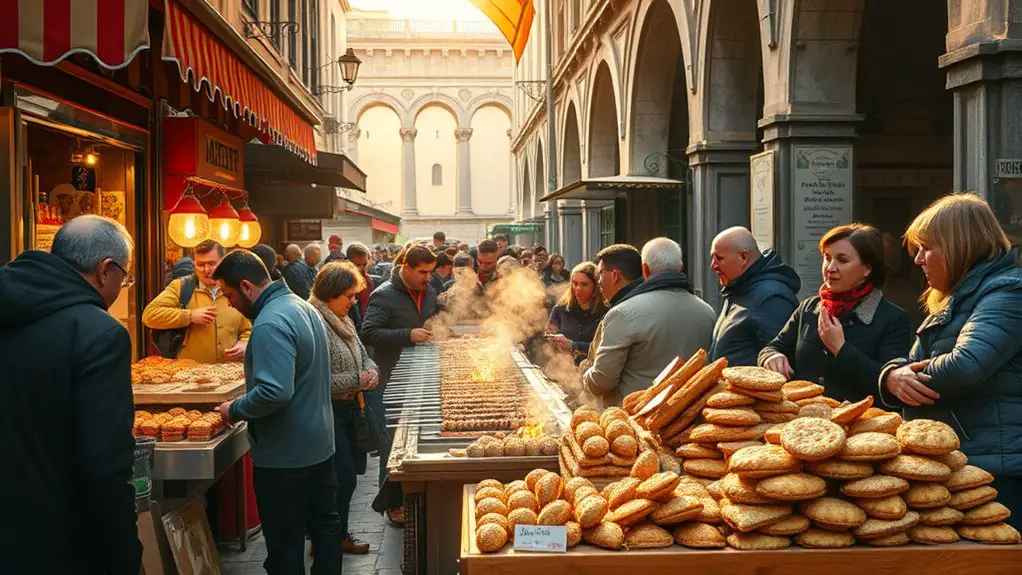
Sultanahmet is one of Istanbul’s busiest sightseeing districts, so its food scene mixes everyday Turkish favorites with plenty of visitor-focused cafés and restaurants. For a quick bite, start with freshly baked simit, börek, roasted corn or chestnuts, döner, and gözleme. The smartest approach is to check prices before ordering, choose food that is cooked and served hot, and ask directly about allergens or dietary needs.
Quick Answer
The best Sultanahmet street-food picks include simit, börek, roasted chestnuts or corn, döner, and freshly cooked gözleme. For sweets, try baklava, künefe, or dondurma. Sultanahmet Square is good for simple snacks, while nearby Sirkeci and Eminönü offer a wider range of quick Turkish food.
Disclosure: As an Amazon Associate I earn from qualifying purchases. Some links on this page are affiliate links, at no extra cost to you.
Sultanahmet Street Food at a Glance
Key Takeaways
- Simit is one of the easiest true street foods to find around Sultanahmet and makes a convenient breakfast or snack.
- Döner, börek, gözleme, köfte, and kebabs are widely available, although many are sold from small eateries rather than portable street carts.
- For food safety, favor food that is fully cooked and served hot; a long queue alone does not prove that a stall is hygienic.
- Cards are widely used in Türkiye, but small vendors can still prefer cash, so carrying some Turkish lira is useful.
- Do not assume a dish is allergen-free or gluten-free. Ask about ingredients and preparation, especially when wheat, nuts, dairy, or shared cooking surfaces are involved.
| Food | What to Expect | Best Fit |
|---|---|---|
| Simit | Sesame-coated, ring-shaped baked bread | Breakfast or quick snack |
| Börek | Flaky pastry with cheese, spinach, potato, or meat fillings | Breakfast or light meal |
| Gözleme | Thin flatbread cooked on a hot griddle, often with savory fillings | Cooked-to-order lunch or snack |
| Döner | Meat cooked on a rotating vertical spit and sliced to order | Quick lunch or dinner |
| Roasted corn or chestnuts | Simple hot snacks from carts; chestnuts are especially appealing in cooler weather | Between sightseeing stops |
| Baklava or künefe | Rich syrup-soaked Turkish desserts | Dessert shop or café stop |
Note: “Street food” in Sultanahmet is often used broadly. Simit, corn, and chestnuts may come from carts, while döner, kebabs, gözleme, börek, Turkish coffee, and desserts are often better found in small bakeries, cafés, grills, or takeaway shops.
Must-Try Savory Snacks
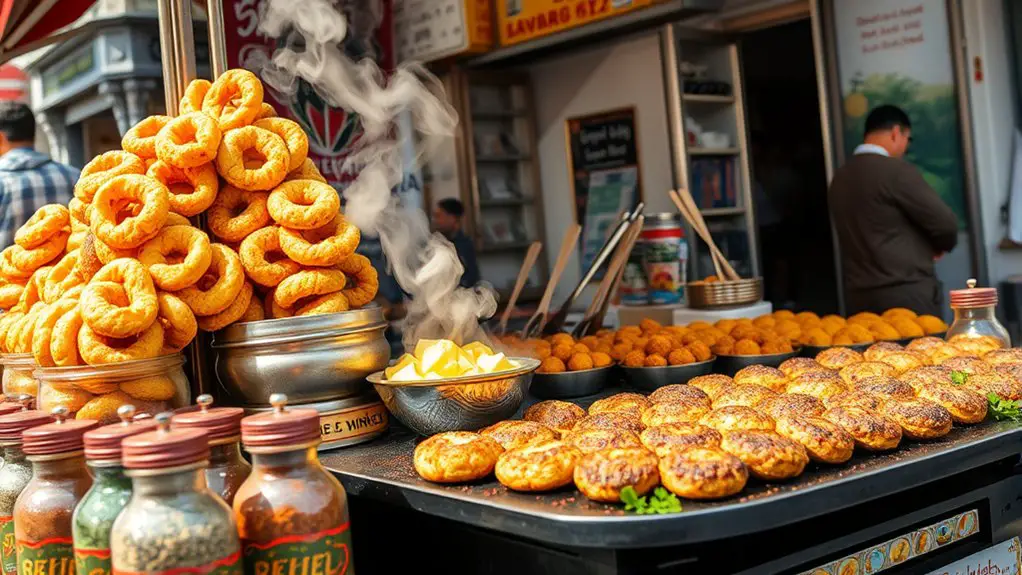
For an easy Sultanahmet snack, simit deserves the first spot on the list. It is a sesame-coated ring of bread that is baked rather than grilled. Istanbul-style simit is traditionally coated before baking, producing its browned crust and strong sesame flavor. It is especially convenient in the morning with tea.
Börek is another good choice when you want something more filling. This flaky pastry comes with many fillings, including cheese, spinach, potato, or minced meat. Bakeries are often a better place for börek than outdoor carts because you can see the trays and choose pieces that are still fresh.
Gözleme is a thin Turkish flatbread cooked on a hot sac or griddle. Depending on the vendor, fillings can include cheese, spinach, potato, minced meat, or combinations of several ingredients. It is particularly good when prepared in front of you and served immediately.
For meat, look for döner, köfte, or grilled kebabs. Döner is cooked on a rotating vertical spit and shaved from the browned exterior. Köfte consists of seasoned meat patties or meatballs. Kebabs cover a much wider range of grilled meat dishes, so the exact preparation depends on what you order.
Simple cart snacks also deserve attention. Roasted corn makes an easy warm snack, while roasted chestnuts are especially popular when the weather turns cooler.
For a classic Sultanahmet snack with almost no planning, freshly baked simit and Turkish tea are hard to beat.
Sweet Treats to Satisfy Your Cravings
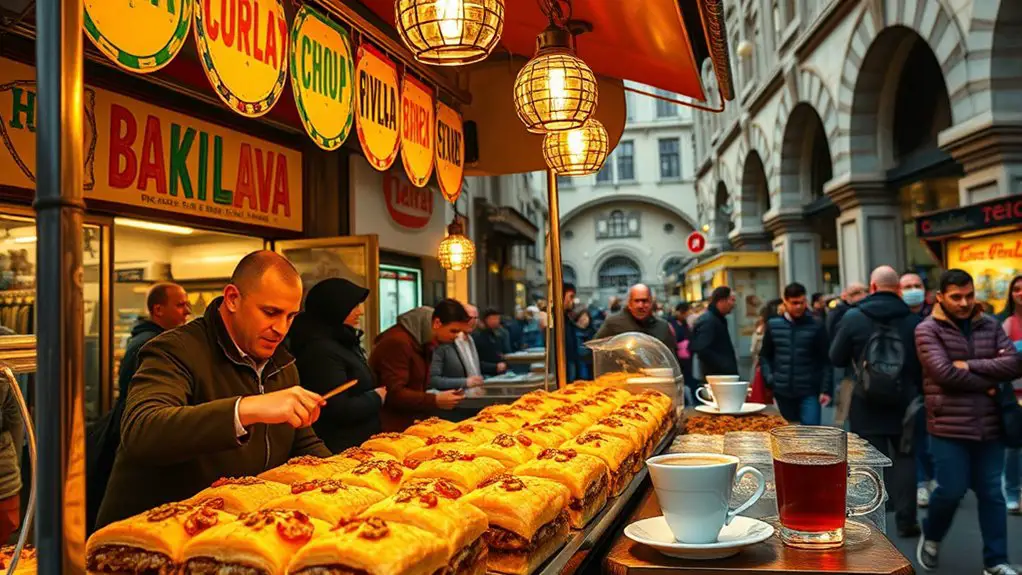
Sultanahmet also makes it easy to add a dessert stop between the district’s major sights. Baklava, künefe, sütlaç, revani, lokum, and Turkish ice cream all offer very different textures and flavors.
Classic Turkish Desserts
Baklava combines very thin layers of pastry with butter or clarified butter, nuts, and sweet syrup. Pistachio and walnut are among the most familiar fillings. Traditional Antep baklava is finished with a sugar-based syrup rather than being defined by honey; Türkiye’s official Culture Portal describes its ingredients and preparation.
Künefe is quite different. Fine shredded pastry surrounds unsalted cheese, the dessert is browned, and hot syrup is added before serving. It is at its best fresh and warm because the contrast between crisp pastry and melted cheese is part of the appeal.
Sütlaç is a much gentler dessert: Turkish rice pudding served chilled or at room temperature, sometimes with a browned baked surface. Revani is a soft semolina cake soaked in syrup.
| Dessert | Description | Ordering Tip |
|---|---|---|
| Künefe | Shredded pastry, cheese, and syrup | Order it freshly cooked and eat it hot |
| Sütlaç | Creamy rice pudding | Try the baked version for a browned top |
| Baklava | Layered pastry, nuts, butter, and syrup | Compare pistachio and walnut varieties |
| Revani | Semolina cake soaked in syrup | A good choice if you prefer a soft cake texture |
Unique Flavor Combinations
Traditional desserts are only part of what you will see. Modern Istanbul dessert shops may add chocolate, fruit sauces, rose, citrus, or other flavors to familiar sweets. These can be enjoyable, but they are contemporary variations rather than ingredients you should expect in every traditional version.
That distinction matters with dondurma. Traditional Maraş-style dondurma is famous for its dense, elastic, slow-melting texture, produced with ingredients such as milk and salep. Flavored versions may include vanilla, fruit, chocolate, or other additions, but rosewater is not a defining ingredient of traditional Maraş dondurması.
Must-Try Local Specialties
For a first dessert stop, choose baklava if you like crisp pastry and nuts, künefe if you want something hot and cheesy, or dondurma when you want a colder treat.
These desserts come from different regional traditions within Türkiye rather than being inventions of Sultanahmet itself. Istanbul’s role is that it brings foods from across the country together in one city, making the historic center an easy place for visitors to sample several traditions in a single day.
Iconic Turkish Dishes to Sample
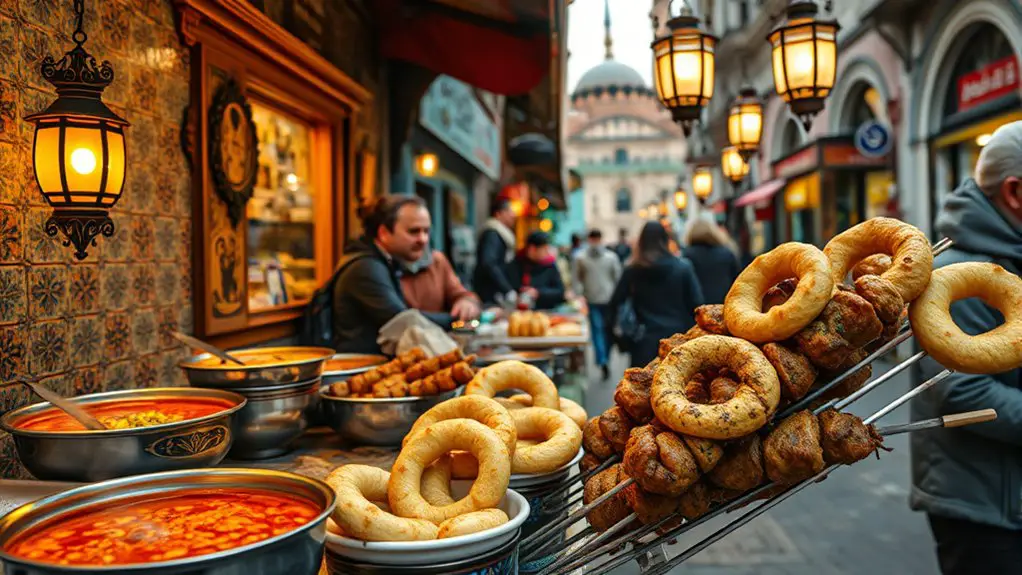
Some of the most famous Turkish dishes available around Sultanahmet are not technically street food, but they are still worth including because small kebab shops and casual eateries make them easy to fit between sightseeing stops.
Must-Try Kebabs
Döner is the easiest quick option. Layers of meat cook on a vertical rotating spit before the browned exterior is sliced away. It can be served on a plate or in bread, depending on the shop.
Şiş kebab consists of pieces of meat cooked on skewers. Adana kebab is a seasoned minced-meat kebab associated with Adana and traditionally cooked over a grill. Both are generally better thought of as grill-shop dishes than food from a mobile street cart.
İskender kebab is even more firmly a sit-down dish: sliced döner is served over pieces of bread with tomato sauce, yogurt, and butter. It is delicious, but it is not the most practical choice when you need to eat while walking.
Sweet Baklava Delights
Baklava makes an easy finish after kebab or döner. Its thin pastry layers are baked with butter and nuts, then sweetened with syrup. Pistachio and walnut versions are widely available, and individual pieces make it easy to try more than one style without ordering a large dessert.
Freshness matters here too. Look for pastry with distinct crisp layers rather than pieces that appear soggy or have been sitting uncovered for a long time.
Local Beverages to Refresh Your Palate
Street snacks become more interesting when you pair them with a traditional drink. Some choices are refreshing, while others are better treated as a café stop.
| Drink | Description | Good Pairing |
|---|---|---|
| Ayran | A chilled yogurt-based drink with a lightly salty taste | Döner, köfte, or kebab |
| Fresh Pomegranate Juice | Tart fruit juice pressed at juice stands | A light snack; choose a clean stand that presses it to order |
| Turkish Coffee | Finely ground coffee slowly brewed and served in a small cup | Baklava, lokum, or a café break |
| Şalgam | A sour, fermented drink traditionally made with black carrot, turnip, and a fermented grain base | Grilled meat |
| Lemonade | Sweet-and-tart cold drink | Warm-weather sightseeing |
Turkish coffee deserves special mention. UNESCO inscribed Turkish coffee culture and tradition on the Representative List of the Intangible Cultural Heritage of Humanity in 2013. The drink is traditionally brewed slowly and served in small cups, often with water.
Where to Look Beyond the Busiest Tourist Spots
You do not need to search for a mysterious “hidden stall” to eat well. A better strategy is to understand how the food changes as you move through the historic center.
Sultanahmet Square is convenient for simple snacks such as simit and tea while you move between the Blue Mosque, Hagia Sophia, and nearby attractions.
Arasta Bazaar, behind the Blue Mosque, is primarily a shopping area, but cafés and casual food stops around it can be useful when you want gözleme, tea, or a seated break.
Along Divanyolu and in the direction of Sirkeci, you will encounter more bakeries, döner shops, grills, dessert counters, and everyday takeaway food. Walking a little beyond the immediate landmark frontage also gives you more opportunities to compare menus before choosing somewhere to eat.
For an even broader street-food scene, continue toward nearby Eminönü. That area is better known for foods such as balık ekmek, or fish sandwiches, as well as busy snack and food counters around the waterfront.
Pro Tip: Do not feel pressured to order from the first restaurant or vendor beside a major attraction. Check the displayed price, see how the food is being handled, and compare a few nearby options first.
Tips for Enjoying Street Food in Sultanahmet
Good street-food choices depend on more than finding a long queue. Food temperature, handling, ingredients, payment, and price transparency all matter.
Warning: The CDC advises travelers that food from street vendors can carry a greater risk of illness. When choosing street food, favor items that are fully cooked and served steaming hot, and be cautious with food that has been sitting at room temperature or with raw ingredients when sanitation is uncertain.
| Tip | Why It Matters | What to Do |
|---|---|---|
| Choose hot food | Proper cooking and hot service reduce food-safety risk | Favor food cooked or reheated thoroughly in front of you |
| Check handling | Clean utensils and protected ingredients matter more than hype | Skip stalls with visibly poor handling or food left exposed |
| Ask about allergens | Wheat, dairy, nuts, sesame, and other allergens are common | Ask before ordering rather than judging by the dish name |
| Carry some cash | Small vendors may not accept your card | Keep a modest amount of Turkish lira in small denominations |
| Check the price first | Sultanahmet is heavily visited and prices can vary | Confirm the price before ordering or adding extras |
Look for the Official Food-Business QR Code
Türkiye introduced a useful extra check for food businesses. Since July 28, 2025, covered food sales and food-service establishments must display an official food-business QR code where consumers can see it. The Ministry of Agriculture says the system can show information such as the business registration or approval number, name, address, and latest inspection date. You can read the Ministry’s food-business QR guidance.
This is most useful at established restaurants, cafés, bakeries, and other registered food businesses. It should supplement, not replace, basic checks such as food temperature and clean handling.
Allergies and Gluten-Free Food
Türkiye requires allergen information to be available at food-service businesses. The Ministry of Agriculture’s current allergen guidance notes that the requirement covers food-service settings including mobile vehicles and fixed or movable service stalls.
Still, never assume that a dish is safe for a serious allergy or celiac disease simply because its basic ingredients appear suitable. Shared grills, utensils, fryers, dough surfaces, sauces, seasonings, and marinades can introduce allergens or gluten.
Simit, börek, gözleme, baklava, künefe, revani, and ordinary bread all normally contain wheat or wheat-derived ingredients. Plain grilled meat, roasted chestnuts, corn, vegetables, or rice-based foods may be naturally gluten-free, but preparation and cross-contact still need to be confirmed.
Cash, Cards, and Prices
Credit and debit cards are widely used in Türkiye, but they are not guaranteed at every small vendor. Current U.S. State Department travel guidance for Türkiye recommends having cash available because some markets and establishments may prefer it and some foreign cards can encounter problems.
For small snacks, carrying Turkish lira in smaller denominations makes payment simpler. Never rely on a claimed percentage of vendors accepting cards because acceptance varies by stall, terminal, network, and location.
Note: Türkiye’s Ministry of Trade announced in January 2026 that restaurants, cafés, and similar businesses may not impose compulsory service, table, cover, or similarly named extra charges. Voluntary tips remain voluntary. Check the menu and bill before paying.
Sources
- CDC Yellow Book — Food and Water Precautions for Travelers — street-food and food-safety guidance.
- U.S. Department of State — Türkiye Travel Guidance — current currency and payment guidance.
- Türkiye Ministry of Agriculture and Forestry — Food-Business QR System — current business-verification requirements.
- Türkiye Ministry of Agriculture and Forestry — Allergen Information in Food-Service Businesses — allergen disclosure requirements.
- Türkiye Ministry of Trade — January 2026 Price Regulation Update — rules on compulsory service, table, and cover fees.
- Türkiye Culture Portal — Antep Baklavası — traditional baklava ingredients and preparation.
Frequently Asked Questions
What are the best times to visit Sultanahmet for street food?
Morning is especially good for simit, tea, and bakery foods. For döner, grilled food, or gözleme, normal lunch and dinner periods can mean faster turnover. Roasted chestnuts are especially appealing in cooler weather. There is no universal rule that late afternoon is fresher or safer, so pay more attention to how recently the food was cooked.
Are there vegetarian options in Sultanahmet street food?
Yes. Depending on the vendor, options can include simit, roasted corn, roasted chestnuts, and gözleme filled with spinach, cheese, or potato. Many Turkish desserts are also meat-free, although dairy, eggs, nuts, or other allergens may be present. Ask about ingredients when your diet requires strict exclusions.
How can I find street-food vendors that accept credit cards?
Look for a visible card terminal or card-payment sign and ask before ordering. Cards are widely used in Türkiye, but small stalls can still prefer cash and foreign cards do not work everywhere. Carry some Turkish lira as a backup rather than assuming every vendor accepts cards.
Is street food in Sultanahmet safe to eat?
It can be, but no queue or reputation guarantees food safety. Favor food that is fully cooked and served hot, avoid items that appear to have been sitting at unsafe temperatures, check that utensils and ingredients are handled cleanly, and clean your hands before eating. At established food businesses, the official Turkish food-business QR code provides another useful verification step.
Can I find gluten-free street food in Sultanahmet?
Some foods may be naturally gluten-free, but do not assume street food is safe for celiac disease. Simit, börek, gözleme, baklava, künefe, and many other pastries contain wheat. Plain grilled meat, roasted corn, or chestnuts may be suitable only when ingredients, marinades, seasonings, and cross-contact have been checked with the vendor.
Can I ask Sultanahmet food vendors about allergens?
Yes. Turkish food-service rules require allergen information to be made available to consumers, including at covered mobile and fixed food-service operations. Ask before ordering when you need to avoid wheat, sesame, milk, eggs, nuts, or another allergen, and remember that allergen information does not automatically guarantee protection from kitchen cross-contact.
Conclusion
Sultanahmet makes it easy to taste several sides of Turkish food while exploring Istanbul’s historic center. Start simply with simit, börek, gözleme, döner, roasted corn, or chestnuts, then make room for baklava, künefe, dondurma, ayran, or Turkish coffee. For an even wider choice, continue toward Sirkeci and Eminönü.
The best experience comes from combining curiosity with a little practical judgment: check prices before ordering, keep some Turkish lira handy, choose food that is cooked and served hot, and ask about allergens or gluten when that matters to you. That gives you a much better chance of enjoying Sultanahmet’s food for the right reasons.
