
Last Updated on September 10, 2026 by Daniel Globe
Good hiking gear should do more than make a trail feel comfortable. It should help you handle changing weather, stay on route, manage minor injuries, carry enough food and water, and cope with an unexpected delay. The best packing list depends on the trail, season, distance, elevation, water access, and how far you will be from help, so start with the core safety systems and adjust from there.
Quick Answer
For most hikes, pack the Ten Essentials: navigation, sun protection, extra clothing, illumination, first aid, fire, repair tools, extra food, water plus treatment supplies, and emergency shelter. Add well-fitted footwear, a suitable backpack, insect protection, and any route-specific gear. Check the forecast, trail conditions, and local rules before leaving.
Key Takeaways
- Choose hiking shoes or boots for fit, traction, terrain, weather, and the load you plan to carry.
- Dress in layers so you can manage sweat, warmth, wind, and rain as conditions change.
- Carry the complete Ten Essentials, even on a day hike, and know how to use your navigation and first-aid gear.
- Bring enough water for the route and carry a reliable treatment method if you may need to use natural water sources.
- Check the weather, trail alerts, cell coverage, fire restrictions, wildlife guidance, and other local rules before you start.
Disclosure: As an Amazon Associate I earn from qualifying purchases. Some links on this page are affiliate links, at no extra cost to you.
Plan Your Hike Before Packing
Your gear list should start with the trip, not the gear closet. Review the route distance, elevation gain, expected time, terrain, forecast, daylight, water availability, trail alerts, and the experience level of everyone in your group. The National Park Service Hike Smart guidance recommends checking weather and current conditions and being ready to change plans when conditions are not suitable.
Leave your route and expected return time with a trusted person. Download maps before you lose service, but do not assume a phone will work everywhere. Remote routes may justify a satellite messenger or personal locator beacon in addition to a phone, especially where cell coverage is limited.
Warning: Do not push into severe weather just because you packed rain gear. If you hear thunder, the National Weather Service says there is no safe place outdoors during a thunderstorm; move to a substantial building or hard-topped vehicle when possible.
Complete Hiking Essentials Checklist
The Ten Essentials are best treated as safety systems rather than a rigid shopping list. The exact items can change with the season and route, but each system should still be covered. Current National Park Service hiking guidance includes navigation, sun protection, extra clothing, illumination, first aid, fire, repair tools, extra food, hydration and water treatment, and emergency shelter.
| Navigation | Route map, compass, offline map or GPS, and the skills to use them. |
| Sun Protection | Sunscreen, sunglasses, a hat, and protective clothing as conditions require. |
| Extra Clothing | Insulating and weather-protective layers for conditions colder, wetter, or windier than expected. |
| Illumination | Headlamp or flashlight with spare batteries or a reliable backup power source. |
| First Aid | Wound care, blister care, personal medications, and supplies matched to the group and trip. |
| Fire | A lighter, matches, or fire starter for emergency use where fires are legal and safe. |
| Repair Tools | Knife or multi-tool plus tape, cord, patches, or other items suited to your gear. |
| Extra Food | Nutritious, shelf-stable food beyond what you expect to eat on schedule. |
| Water | Enough water for the route, extra carrying capacity, and treatment supplies when natural sources may be used. |
| Emergency Shelter | A lightweight bivy, tarp, emergency blanket, or other shelter appropriate to the environment. |
Choosing the Right Hiking Footwear
The best hiking footwear depends on fit, terrain, weather, pack weight, and personal preference. A grippy outsole and secure fit can improve confidence on loose, rocky, or muddy ground, while a stiffer boot may provide more underfoot protection on rough terrain. Lighter hiking shoes or trail runners can work well on maintained trails, especially in warm conditions.
Do not treat “ankle support” as a guarantee against sprains. Footwear should feel stable without pinching, heel lift, or toe pressure. Try it with the socks you plan to wear, and leave enough room for your toes when descending. Waterproof footwear can be useful in wet or cold conditions, but it may feel warmer and can dry slowly if water gets inside from the top.
Pro Tip: Test new shoes on short walks before a long hike. Address rubbing or hot spots immediately instead of waiting for a blister to form, and carry blister treatment in your first-aid kit.
Layering for Variable Weather Conditions
The Base Layer: Managing Moisture
The base layer sits next to your skin and helps move sweat away so it can evaporate. Merino wool and synthetic fabrics are common choices because they manage moisture better than absorbent everyday fabrics. Choose a comfortable fit that allows free movement and does not chafe under a backpack.
The Middle Layer: Insulation
The middle layer traps warm air. Fleece, synthetic insulated jackets, and down garments are common options. Pick the amount of insulation for the coldest conditions you could reasonably face, including the temperature after sunset if an injury, wrong turn, or slow pace delays your return.
The Outer Layer: Wind and Rain Protection
The outer layer protects against wind and precipitation. A waterproof-breathable shell can help in rain or snow, but even breathable fabrics can feel clammy during hard effort. Use vents, slow your pace, or remove insulation before you become overheated and soaked with sweat.
Socks matter too. Wool or synthetic hiking socks can help manage moisture and friction. Pack a dry spare pair when wet feet are likely, and add a warm hat or gloves when the forecast and elevation call for them.
Choosing the Right Backpack
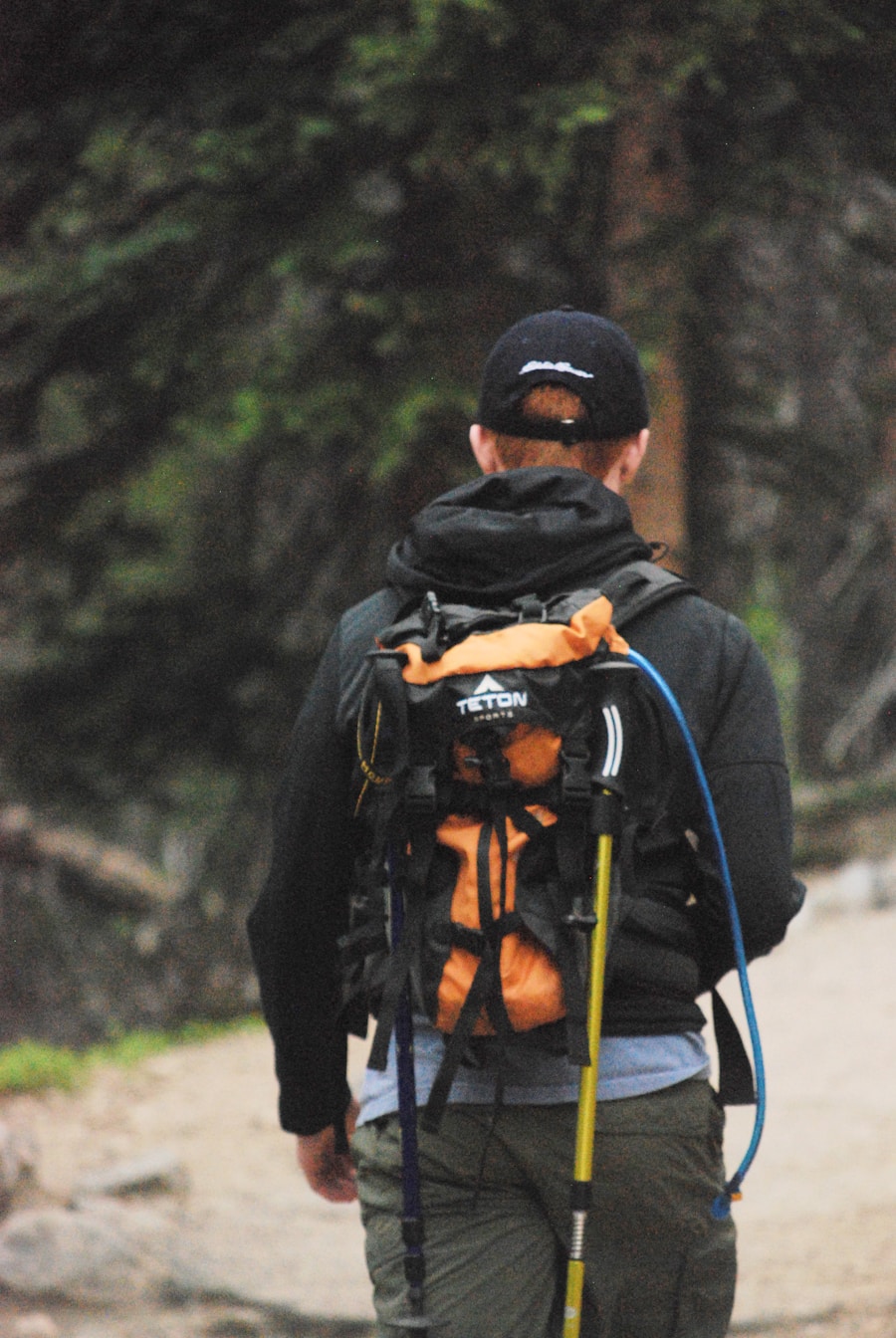
Select a backpack based on the volume of gear you actually need and how well the pack fits your torso and hips. Manufacturer guidance varies, but current Osprey hiking-pack guidance places short day hikes around 10–25 liters, full-day hikes around 20–35 liters, overnight trips around 35–50 liters, and multi-day trips at 50 liters or more. Treat those ranges as a starting point, not a rule.
Fit matters as much as capacity. Adjustable shoulder straps, a supportive hip belt, a sternum strap, and a back panel that suits your load can make a pack easier to carry. Useful features may include water-bottle pockets, hydration-reservoir compatibility, rain protection, trekking-pole attachment points, and quick-access storage for snacks, a map, or a shell.
Pack dense items close to your back and keep frequently used gear easy to reach. Do not choose an oversized pack simply because it can hold more; extra space often encourages unnecessary weight.
Essential Navigation Tools
| Navigation Tool | Best Use | Important Limitation |
|---|---|---|
| Map and Compass | Route planning, orientation, and a battery-free backup. | You need practice, a suitable map, and an understanding of magnetic declination. |
| Phone with Offline Maps | Convenient route tracking and location checks on many trails. | Battery, water damage, cold, broken screens, and missing downloads can make it unusable. |
| Dedicated GPS Device | Navigation and tracking on remote routes when properly configured. | Accuracy varies with terrain, signal blockage, receiver quality, and satellite geometry. |
A topographic map can show trail routes, elevation changes, water features, and surrounding terrain. Learn how to orient the map, take a bearing, and account for magnetic declination before relying on a compass in the field. The U.S. Geological Survey explains how GPS north settings and compass declination should work together.
Digital navigation is useful, but it is not infallible. GPS-enabled smartphones are often accurate to within about 4.9 meters under open sky, according to GPS.gov, but trees, terrain, buildings, atmospheric conditions, and receiver quality can reduce accuracy. Carry a backup that does not depend on the same battery or device.
Note: A downloaded map is not the same as navigation skill. Before leaving, confirm that the correct map is stored offline, your device is charged, and you know how to return to the trailhead without a data connection.
Hydration and Nutrition Essentials
Carry enough water for the actual route and conditions rather than relying on a single universal rule. Heat, humidity, altitude, pace, body size, distance, and water availability can all change your needs. Drink regularly and plan conservatively when reliable water is not available.
Natural water that looks clear can still contain disease-causing germs. The CDC backcountry water-treatment guide says boiling is the most reliable way to kill germs. When boiling is not possible, filtering followed by another treatment method is generally more protective than relying on a basic filter alone. Follow the filter, purifier, disinfectant, or UV-device instructions exactly.
Warning: Do not assume that a clear stream is safe to drink or that every filter removes every type of germ. Match the treatment method to the water risk and follow the product directions for pore size, contact time, and replacement intervals.
For food, favor lightweight, shelf-stable options that are easy to eat even if you stop only briefly. Trail mix, nuts, dried fruit, energy bars, jerky, nut-butter packets, tortillas, and similar foods can work well. On longer trips, choose meals that fit your stove setup, food-storage requirements, and water supply. Pack some extra food in case the hike takes longer than expected.
Protection from the Elements: Sun, Rain, and Bugs
Sun Protection
Sun exposure adds up on long hikes, especially at high elevation or around reflective surfaces such as snow and water. The U.S. Food and Drug Administration recommends broad-spectrum sunscreen with SPF 15 or higher, even on cloudy days, and reapplication at least every two hours and more often when swimming or sweating. Add sunglasses, a brimmed hat, and protective clothing as needed.
Rain and Footwear Protection
A rain shell should block precipitation while allowing enough ventilation for the activity. Rain pants can be worthwhile in cold, windy, or sustained rain. Waterproof footwear may help in shallow mud, wet vegetation, or cold rain, but no shoe stays dry if water enters over the cuff. In warm conditions, quick-drying footwear can sometimes be more comfortable than waterproof footwear.
Insect Repellent
Mosquitoes and ticks can transmit disease, so use proven protection where they are active. The CDC recommends EPA-registered repellents with active ingredients such as DEET, picaridin, IR3535, oil of lemon eucalyptus or PMD, or 2-undecanone, used according to the label. The CDC also recommends 0.5% permethrin for treating clothing and gear; do not apply permethrin products intended for gear directly to skin.
Wear long sleeves and pants when practical, check for ticks after hiking, and follow local guidance for mosquito- and tick-borne disease risks.
Safety Essentials: First Aid Kit and Emergency Supplies
A hiking first-aid kit should match the trip length, group size, known medical needs, and distance from help. Common items include adhesive bandages, gauze, medical tape, antiseptic supplies, blister treatment, tweezers, pain relievers, and personal medications. A compact first-aid reference can also be useful if you need to manage an unfamiliar problem.
Emergency gear extends beyond first aid. Carry a whistle, headlamp, repair supplies, a knife or multi-tool when appropriate, and emergency shelter. A small bivy sack, tarp, or space blanket can provide critical protection if an injury or wrong turn forces you to stop. Keep your headlamp accessible rather than buried at the bottom of your pack.
Fire-starting gear belongs in the Ten Essentials, but that does not mean you should build a fire whenever you want one. Check current fire restrictions and land-manager rules. In dry or windy conditions, an open flame may be prohibited or unsafe.
Additional Gear: Trekking Poles, Headlamps, and More
Trekking poles are optional, but many hikers find them helpful for balance on uneven ground, stream crossings, steep climbs, and long descents. Adjust them to the terrain and keep the tips under control around other hikers. Gaiters can help keep mud, snow, scree, or trail debris out of your footwear when conditions warrant them.
A headlamp is usually more practical than a handheld flashlight because it leaves both hands free for route finding, first aid, camp tasks, or trekking poles. Carry spare batteries or another dependable power source and know how long your light lasts at the brightness setting you normally use.
Other useful additions can include a battery bank, small repair kit, sit pad, hygiene supplies, prescription medications, and a satellite communication device. The farther you are from roads, cell service, or other hikers, the more important self-sufficiency becomes.
Day-Hike Gear vs. Overnight Gear
A day hike still calls for the Ten Essentials because a short outing can turn into an unplanned night outside. Keep the load compact, but do not remove critical safety systems simply because the route is familiar.
For an overnight or multi-day trip, add a sleeping system, tent or other primary shelter, stove and fuel if needed, more food, a larger water-management plan, hygiene supplies, additional layers, and any required food-storage equipment. Pack capacity should grow only after your actual gear list grows.
Winter, desert, alpine, and wildlife-heavy routes may require specialized equipment that is not covered by a general list. Examples can include traction devices, insulated water storage, extra sun coverage, bear-resistant food storage, or region-specific emergency equipment. Check the land manager’s current guidance before departure.
Leave No Trace and Local Rules
Good preparation includes protecting the place you came to enjoy. Stay on durable or designated routes where required, pack out trash and food scraps, and follow site-specific rules for human waste, fires, pets, food storage, permits, and wildlife. Requirements differ by location, so do not assume that a practice allowed on one trail is allowed on another.
Before leaving the trailhead, take one final look at posted notices and current alerts. That last check may reveal a closure, fire restriction, wildlife advisory, water issue, or weather hazard that was not present when you planned the trip.
If you’re planning a hiking trip, you’ll also want clothing that matches the climate you expect. For a destination-specific example, see TakeTravelInfo’s guide to what to wear hiking in Costa Rica, which covers footwear, layers, sun protection, hydration, and insect protection for warm, wet conditions.
Love travel? Join Our Facebook Community
Sources
- National Park Service — Hiking, Great Smoky Mountains National Park — Ten Essentials and basic hiking preparation.
- National Park Service — Hike Smart — weather, trail planning, water, food, and changing conditions.
- CDC — Water Treatment While Hiking, Camping, and Traveling — backcountry water-treatment methods.
- CDC — Avoid Bug Bites — EPA-registered repellents and permethrin-treated clothing and gear.
- U.S. Food and Drug Administration — Tips to Stay Safe in the Sun — sunscreen, protective clothing, and reapplication guidance.
- National Weather Service — Lightning Safety — thunderstorm and lightning precautions.
Frequently Asked Questions
What should I wear for hiking?
Wear clothing that matches the forecast and lets you adjust as conditions change. A moisture-managing base layer, insulating layer when needed, and wind- or rain-protective shell make a flexible system. Choose well-fitted hiking footwear with traction suited to the terrain.
What type of socks should I wear for hiking?
Wool or synthetic hiking socks are practical choices because they manage moisture and dry more readily than absorbent everyday socks. Match the sock thickness to your footwear, and consider carrying a dry spare pair on wet or long hikes.
Should I wear a hat while hiking?
A brimmed hat can add useful sun protection in exposed conditions, while a warm hat can reduce heat loss in cold weather. Choose the style for the conditions rather than treating one hat as essential for every hike.
What type of jacket should I bring for hiking?
Bring a shell that matches the expected wind and precipitation, plus enough insulation for the coldest reasonable conditions. A lightweight waterproof-breathable rain shell is a versatile choice when rain is possible, but colder trips may also require fleece or an insulated jacket.
Do I need to wear sunscreen while hiking?
Sun protection is recommended when UV exposure is a concern. The FDA recommends broad-spectrum SPF 15 or higher and reapplication at least every two hours, with more frequent reapplication when swimming or sweating. Protective clothing, sunglasses, and a hat add coverage.
Should I wear sunglasses while hiking?
Sunglasses are a smart choice in bright conditions because they protect your eyes from ultraviolet radiation and reduce glare. They are especially useful on exposed trails, snow, water, and at higher elevations.
What are the Ten Essentials for hiking?
The Ten Essentials are navigation, sun protection, extra clothing, illumination, first aid, fire, repair tools, extra food, water and treatment supplies, and emergency shelter. The exact products should be adjusted for the route, season, trip length, and local hazards.
How much water should I carry on a hike?
There is no single amount that fits every hike. Water needs change with heat, humidity, altitude, pace, body size, distance, and access to reliable water. Plan conservatively, carry enough capacity for the route, and bring a treatment method if you may need to use natural water sources.
Is a phone enough for hiking navigation?
A phone can be an excellent navigation tool when the map is downloaded and the battery is protected, but it should not be your only plan on remote or consequential routes. Carry a backup navigation method you know how to use and do not depend on cell service.

