
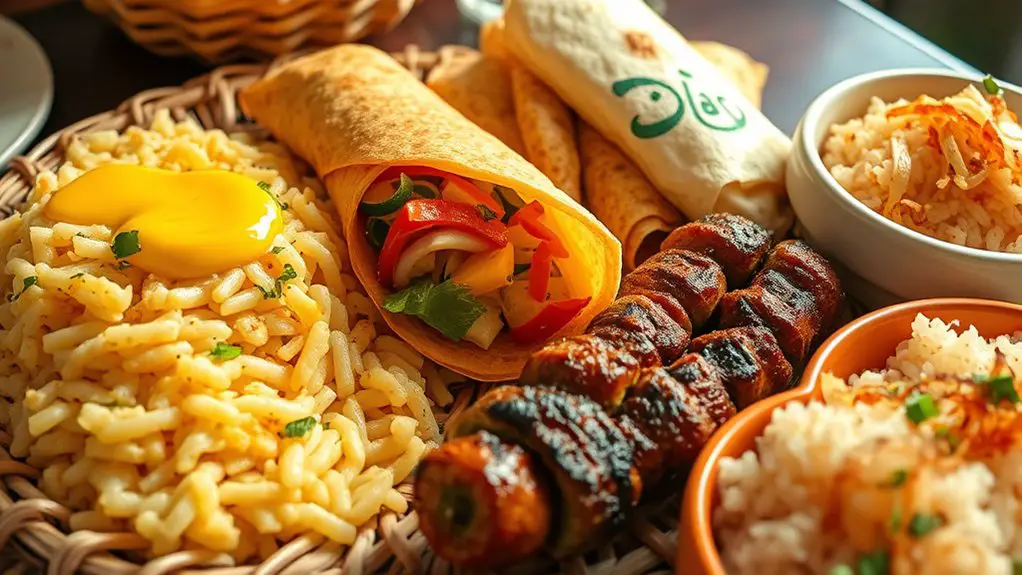
Last Updated on April 21, 2026 by Daniel Globe
Quick Answer
Emirati cuisine is a blend of aromatic rice dishes, hearty meat-and-wheat stews, and sweet date-based desserts shaped by Bedouin and maritime history. Popular staples include Majboos, Al Harees, and Luqaimat, which reflect the region’s deep traditions and hospitality.
Key Takeaways
- Al Harees is a traditional slow-cooked porridge made from wheat and tender meat.
- Majboos features aromatic basmati rice layered with spiced meat and vegetables.
- Street food favorites like Shawarma and Falafel offer convenient, flavorful bites.
- Luqaimat provides a sweet finish, consisting of crispy, golden fried dumplings.
- Emirati cooking prioritizes aromatic spices like cardamom, saffron, and turmeric over intense heat.
Exploring Emirati cuisine in Dubai reveals a tapestry of flavors that reflect the region’s rich heritage. From the creamy comfort of Al Harees to the aromatic layers of Majboos, each dish shares a piece of local history. You can find quick bites like Shawarma and Falafel at street corners, or enjoy sweet treats like Khabees that offer a unique twist on dessert. These culinary experiences help you understand this vibrant culture and its traditions.
Al Harees: A Traditional Emirati Dish
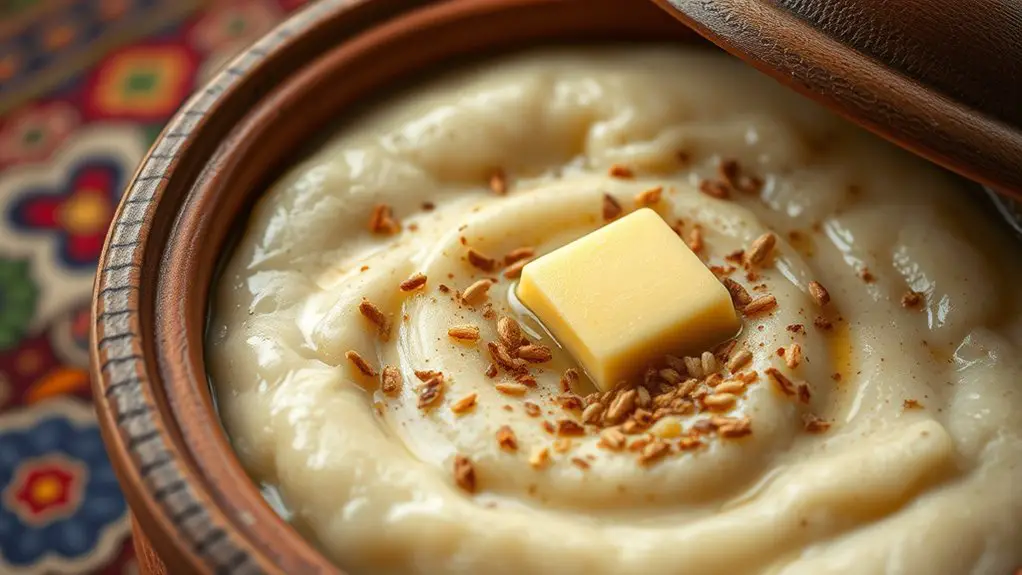
Al Harees serves as a beloved staple of Emirati cuisine and a symbol of community. This comforting meal features finely ground wheat and tender meat, simmered together into a creamy porridge. Its origins date back centuries, reflecting the heritage of the UAE.
You’ll typically find Harees served during special occasions, such as Ramadan and weddings. It brings families together around the table. While recipes vary, many regional versions incorporate spices like cardamom or saffron to add depth to the dish.
Majboos: The Flavorful Rice Dish
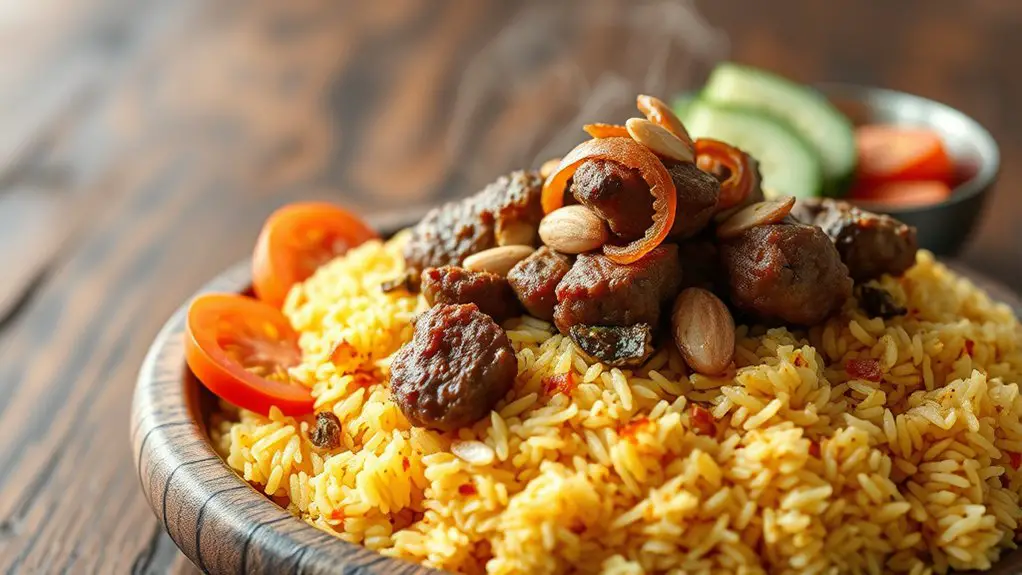
Majboos is a vibrant, aromatic rice dish that embodies the essence of local flavors. It features basmati rice infused with spices like saffron, turmeric, and cardamom. Cooks simmer tender pieces of chicken, lamb, or fish to perfection, often adding tomatoes and bell peppers for flavor.
You can find diverse versions across Dubai. Some chefs include nuts or raisins to provide a delightful crunch and sweetness. Vegetarian options also exist, which showcase hearty legumes and seasonal vegetables to ensure all diners can enjoy this staple.
Shawarma: A Popular Street Food
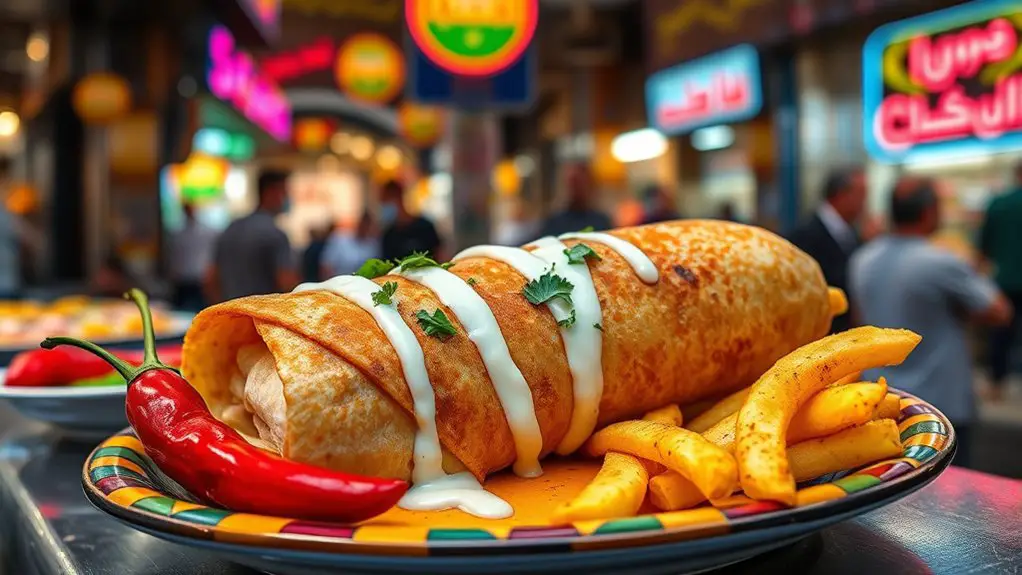
Shawarma remains a staple of Dubai street food. As you bite into the tender, marinated meat wrapped in warm pita, you’ll experience a blend of spices that define Middle Eastern street cuisine.
| Shawarma Type | Description | Common Toppings |
|---|---|---|
| Chicken | Marinated chicken | Garlic sauce, pickles |
| Beef | Spiced beef | Tahini, tomatoes |
| Vegetarian | Grilled veggies | Hummus, tabbouleh |
Falafel: A Vegetarian Delight
If you prefer a hearty plant-based option, falafel is a must-try. Made from ground chickpeas or fava beans, these crispy balls are deep-fried and seasoned with herbs like parsley, cilantro, cumin, and coriander. You can enjoy them in a wrap, served with fresh vegetables, or as part of a mezze platter.
Luqaimat: Sweet Emirati Dumplings
Luqaimat stands out as a popular treat with its golden, crispy exterior and soft center. Traditionally prepared by hand, these dumplings feature a drizzle of date syrup or honey.
Traditional Preparation Methods
The cooking process for Luqaimat relies on a batter of flour, sugar, and yeast. After the dough rises, cooks drop small portions into hot oil to create a light, airy texture. This method preserves the authenticity of the dish and connects you to Emirati culinary heritage.
Cultural Significance Today
Luqaimat symbolizes Emirati hospitality, especially during family gatherings or festivals. Modern cafes often introduce creative twists, such as saffron or cardamom infusions, to appeal to a wider audience. This evolution showcases how the cuisine honors its roots while adapting to new tastes.
Jasheed: A Hearty Fish Stew
Jasheed is a flavorful fish stew that highlights the importance of the sea in local cuisine. It typically features minced meat from hammour or kingfish, simmered with an aromatic blend of turmeric, cumin, and coriander. You should serve it with rice or bread to soak up the broth.
Khabees: A Traditional Sweet and Savory Dessert
Khabees is a unique dessert that blends flour, sugar, and dates. It showcases the heart of traditional Emirati cooking by using pantry staples to create a rich, comforting dish.
Key Ingredients Explained
Three main components define Khabees:
- Flour: Provides a rich, dense texture.
- Spices: Cardamom and cinnamon add warmth.
- Dates: Offer natural sweetness and chewiness.
Note: When eating in traditional settings, it is customary to use your right hand for dining, as the left hand is traditionally considered unclean in many cultures.
Frequently Asked Questions
Are there vegetarian options in traditional Emirati cuisine?
Yes. You can enjoy dishes like lentil soup, vegetable salona, and various mezes such as hummus and tabbouleh, which are naturally vegetarian and highlight fresh produce.
What beverages pair well with Emirati dishes?
Pair your meal with Gahwa (Arabic coffee) to signify hospitality, or enjoy Laban (buttermilk) to provide a cooling contrast to spiced dishes.
Where can I find authentic Emirati food in Dubai?
Look for local establishments like the Al Fanar Restaurant & Cafe or visit the traditional Spice Souk to experience genuine flavors in an authentic setting.
How spicy is traditional Emirati cuisine?
The cuisine is generally mild. It emphasizes aromatic spices like saffron and cardamom rather than heat-inducing peppers.
Conclusion
Exploring Emirati cuisine in Dubai offers a deeper understanding of the UAE’s vibrant heritage. From the comforting warmth of Al Harees to the sweet finish of Luqaimat, every dish serves as a bridge to local traditions. Make an effort to visit a local market or restaurant to experience these authentic flavors for yourself.
References
- Emirati Cuisine — Official UAE Government Portal
- Must-Try Emirati Dishes — Visit Dubai
- United Arab Emirates: Daily Life — Encyclopedia Britannica
