
Last Updated on July 28, 2026 by Ethan Caldwell
Hotel sheets should be clean when a new guest enters the room, but the schedule during a multi-night stay can vary widely. Some hotels provide daily housekeeping, some service rooms every other day, and others change sheets only on set days or by request. Knowing the difference helps you ask for exactly what you need.
Quick Answer
Hotels should provide clean sheets and pillowcases for each new guest. During a multi-night stay, however, there is no universal replacement schedule: service may be daily, every other day, every few days, or on request. Ask the property, and request fresh linens immediately if anything looks or smells unclean.
Key Takeaways
- Clean sheets and pillowcases are the normal standard when a room is prepared for a new guest.
- Daily housekeeping does not always mean that every sheet, blanket, or duvet layer is replaced daily.
- Stayover service varies by hotel, brand, room type, sustainability program, local rules, and guest request.
- A neat bed or fresh scent cannot prove that the linen was changed.
- Visible soil, hair, dampness, or an unusual odor is enough reason to request a full linen replacement.
Disclosure: As an Amazon Associate I earn from qualifying purchases. Some links on this page are affiliate links, at no extra cost to you.
Do Hotels Change Sheets Between Guests?
Clean sheets and pillowcases are the expected standard when a hotel room is prepared for a new guest. Some local lodging rules expressly require linen to be changed for a new occupant. For example, Kentucky’s hotel sanitation regulation requires sheets and pillowcases to be kept clean and changed when there is a new occupant.
Requirements are not identical in every state or country, but a reputable property should not place a new guest in a bed with previously used sheets. If you see hair, makeup, blood, food, dirt, moisture, or a strong stale odor, do not use the bed. Contact housekeeping or the front desk and ask for a complete linen replacement.
Note: “Housekeeping service” can mean trash removal, bathroom cleaning, towel replacement, amenity restocking, or bed making. It does not automatically mean that all sheets and covers are replaced.
You can ask about the property’s turnover procedure at check-in. A direct question works best: “Are the sheets, pillowcases, and removable duvet cover replaced before each new guest?”
How Often Are Sheets Changed on Long Stays?
There is no universal sheet-change timetable for a guest who remains in the same room. A hotel may offer daily housekeeping, every-other-day service, reduced service, or service selected by the guest. The linen itself may be replaced less often than the room is cleaned unless it is soiled or the guest asks for a change.
Standard Long-Stay Frequency
Service frequency depends more on the property’s written policy than on labels such as luxury, mid-range, or budget. For example, Hilton’s current housekeeping policy lists daily housekeeping at several luxury, full-service, lifestyle, and Embassy Suites properties, while several focused-service and extended-stay brands in the United States and Canada receive service every other day. Additional service can be requested.
That policy describes room service frequency, not a promise that sheets are replaced at every visit. A housekeeper may make the bed without changing the fitted sheet, top sheet, pillowcases, or duvet cover.
Daily housekeeping and daily sheet replacement are not the same service. Ask specifically for fresh sheets and pillowcases when that is what you need.
- Ask whether stayover sheets are changed daily, on a set day, or only by request.
- Check whether the policy is different for extended-stay rooms or suites.
- Request an immediate change after illness, a spill, heavy sweating, or visible soil.
- Confirm whether pillowcases and the removable duvet cover are included.
Green Program Exceptions
Hotels may invite guests to reuse towels, keep the same sheets, or decline full housekeeping to reduce laundry. The EPA WaterSense program notes that linen reuse can reduce the water and energy used to wash and dry hotel laundry.
A sustainability program should be explained clearly. Look for an in-room card, app setting, booking option, door hanger, or check-in notice. Do not assume that placing a card on the bed, leaving towels on a rack, or declining room entry has the same meaning at every hotel.
Participation is often optional. Tell the front desk if you want normal housekeeping or a fresh-linen service instead of linen reuse.
Requesting Extra Changes
You can usually request fresh sheets during a longer stay, although the timing may depend on staffing and when the request is made. Be specific so the bed is not merely straightened or remade with the existing linen.
Pro Tip: Say, “Please remove the current fitted sheet, top sheet, and pillowcases and replace them with freshly laundered linens.” Add the duvet cover if you want that item changed too.
- Make the request before the hotel’s normal housekeeping cutoff time.
- Ask the front desk to record the request on your room.
- Use the hotel app or text service when available so the request is documented.
- Repeat any fragrance-free or allergy-related need each time linen is replaced.
Extra changes can be especially helpful after a spill, fever, illness, night sweats, a child’s accident, or exposure to an allergen. Some hotels may offer fragrance-free linen or bedding without feather-filled pillows, but availability varies.
How Housekeeping Cleans a Hotel Room
The exact checkout procedure varies, but a room attendant generally removes used direct-contact linen, collects towels and trash, cleans the bathroom, wipes room surfaces, vacuums or mops the floor, restocks supplies, makes the bed, and completes a final check. Larger hotels may add a supervisor inspection or digital checklist.
Products Worth Considering

Our Original fragrance opens with vibrant kiwi, crisp apples, and zesty citrus top notes, creating an invigorating burst that instantly captivates the senses. A delicate heart of jasmine and elegant florals follows, striking the perfect balance of sweetness and sophistication. As the scent lingers, warm musk and sunlit herbs create a fresh, inviting finish. This timeless blend of fresh florals, crisp fruits, and precious wood leaves a lasting, beautiful impression.

650 TC 70% COTTON / 30% POLYESTER SATEEN PILLOWCASES - Ivory Standard Pillowcases pillowcase pair combines a smooth sateen surface with easy-care durability and reduced wrinkling for polished everyday bedding.

Replacement pads for the Trodat Printy 4911 Clothing Marker
Bed Stripping Process
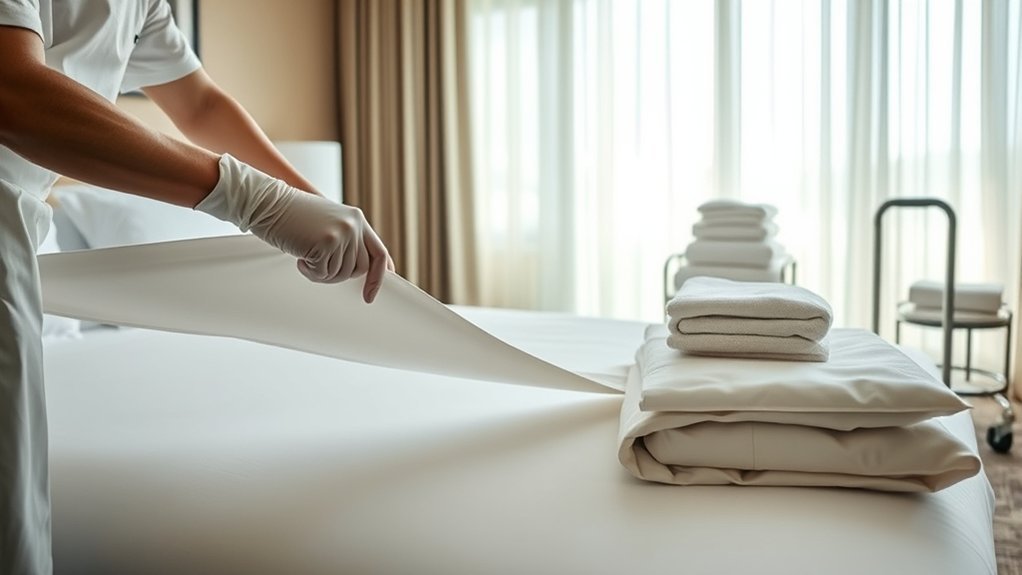
During a checkout clean, the attendant normally removes used sheets and pillowcases and checks the bed for stains, damage, lost property, or pest evidence. The mattress pad or protector should remain clean and in good condition. A soiled protector, blanket, cover, or insert should be removed under the property’s procedure.
- Used sheets and pillowcases are separated from clean linen.
- The mattress, protector, pillows, and visible bedding are checked.
- Clean linen is brought from protected storage or a clean section of the cart.
- The bed is remade and checked for visible soil, hair, or damage.
Hotels may wash linen on-site or use a commercial laundry contractor. Hot-water laundering is effective, but it is not the only possible commercial process. CDC laundry guidance explains that controlled lower-temperature cycles can also reduce contamination when detergents, laundry additives, drying, and process controls are properly managed.
That CDC guidance was written for healthcare infection control rather than hotel grading, but it demonstrates why “washed hot” should not be treated as the only sign of hygienic laundering. Guests usually cannot verify a hotel’s wash temperature from the finished bed.
Surface Sanitization Steps
Housekeepers should focus on visible soil and frequently touched items such as handles, switches, faucets, phones, remote controls, thermostats, desks, and bathroom fixtures. Cleaning physically removes dirt and many germs. Disinfection may be added when the property’s procedure, an outbreak, visible contamination, or local health guidance calls for it.
According to the CDC’s facility-cleaning guidance, a surface should be cleaned first when needed, and an appropriate EPA-registered disinfectant should remain wet for the label’s required contact time. Products should also be compatible with the surface and used with the required ventilation and protective equipment.
The label “hospital-grade” by itself does not prove that a hotel room was cleaned correctly. Product choice, physical wiping, coverage, contact time, staff training, and quality checks all matter.
What Happens to Comforters and Pillowcases?
Not every item visible on a hotel bed follows the same cleaning schedule. Pillowcases and sheets touch the guest directly and should be replaced for a new occupant. Other layers depend on their design, whether they have a removable cover, their condition, and the hotel’s policy.
| Bedding item | What to expect | What to ask |
|---|---|---|
| Fitted and top sheets | Clean linen for a new guest; stayover changes vary. | “When are stayover sheets replaced?” |
| Pillowcases | Direct-contact linen that should be fresh for a new occupant. | “Please replace every pillowcase.” |
| Duvet cover | May be treated as a removable linen layer, but policies differ. | “Is the duvet cover changed between guests?” |
| Duvet insert or comforter | Often protected by a cover and cleaned under a separate schedule or when soiled. | “Can you provide a freshly cleaned replacement?” |
| Blanket or bedspread | May have a separate inspection and cleaning schedule. | “Was this top layer cleaned for the room turnover?” |
| Mattress pad or protector | Should be clean, dry, intact, and replaced or cleaned when soiled. | Request replacement if it is stained, damp, torn, or odorous. |
Decorative pillows and runners are not direct-contact sheets. You may remove them from the sleeping area if you do not plan to use them. Avoid placing them on clean pillows or between the sheets.
How Can You Tell If Hotel Sheets Were Changed?
You cannot prove that hotel sheets were changed simply by looking at how neatly the bed was made. Tight corners, smooth fabric, fold lines, wrinkles, or a laundry scent are only clues. Clean linen may be wrinkled, while used linen can be pulled tight and sprayed with fragrance.
Before placing luggage or clothing on the bed, check the exposed sleeping area:
- Pull back the cover and look across the fitted and top sheets.
- Check around the pillow area for hair, makeup, skin products, or moisture.
- Look near seams and corners for crumbs, grit, spots, or discoloration.
- Notice stale, sour, smoky, musty, or strongly perfumed odors.
- Check that the mattress protector is dry and does not show visible soil.
A single wrinkle does not mean the linen was reused. More meaningful warning signs include hair beneath a pillow, body-shaped creasing, dampness, debris between layers, visible bodily-fluid stains, or a strong used-fabric odor.
Do not mark, stain, cut, or write on hotel linen to test whether it gets changed. A mark may damage property, and it still would not prove that replacement linen came from a clean supply. Ask for a fresh set and, when practical, remain in the room while the old linen is removed.
What Are the Signs of Bed Bugs in Hotels?
Dirty sheets and bed bugs are different problems. Bed bugs can appear in clean or dirty properties because they travel in luggage, clothing, and furniture. The EPA notes that bed bugs are not attracted to dirt, although clutter gives them more places to hide.
Physical evidence is more useful than bites alone. The EPA explains that skin reactions can resemble mosquito bites, rashes, or hives, and some people do not react at all.
Products Worth Considering

🔦【395M BLACKLIGHT】395nm wavelength can help to detect what naked eye can not see, like dog and other pet urine/stains, driver license, official identification cards, passports, customs or authenticate currency.

Maximized Use for Black Light UV Flashlight: This Black Light UV Flashlight instantly detects dried dog urine, food stains, and hidden grime on rugs and carpets. Identify cat ringworm and skin fungi for pet health; spot scorpions and bed bugs in dark rooms. Authenticate currency, passports, and ID cards; inspect jade and gemstones with ease. Reveal fluorescent agents in baby clothes and cosmetics to ensure family safety. A portable UV nail dryer for quick curing of nail gels and resin.

395M Blacklight: 395nm wavelength can help to detect what naked eye can not see, like dog and other pet urine/stains, driver license, official identification cards, passports, customs or authenticate currency.
Visible Bed Bug Clues
The EPA’s bed-bug identification guide lists these common signs:
- Live bed bugs.
- Rusty or reddish stains caused by crushed bugs.
- Small dark spots that may bleed into fabric like ink.
- Tiny eggs, eggshells, or pale shed skins.
- Evidence around mattress piping, seams, tags, the box spring, bed frame, or headboard.
One unexplained stain is not enough to confirm an infestation. Photograph anything suspicious and allow trained hotel staff or a pest professional to inspect it.
Inspecting Rooms On Arrival
The EPA’s travel guidance recommends checking the mattress, headboard, and luggage rack before sleeping. Keep your suitcase away from the bed and floor while you inspect the room.
- Leave luggage closed on a hard surface or in the bathroom while you inspect.
- Use a flashlight to check mattress seams, piping, tags, the headboard, and the bed frame.
- Inspect the luggage rack before placing a suitcase on it.
- Keep bags away from upholstered furniture and the wall beside the bed.
- Report physical evidence before unpacking.
Warning: If you find possible bed bugs, stop unpacking, photograph the evidence, close or seal your bags, and contact hotel management. Do not spray the room or your belongings with an unapproved pesticide.
Ask management to document the report and relocate you only after the new room has been checked. When you return home, inspect the suitcase and unpack clothing directly into the laundry area. EPA guidance notes that high dryer heat kills bed bugs more reliably than washing alone. Store luggage away from the bedroom until it has been inspected.
What Should You Do If Sheets Look Dirty?
If the sheets look dirty, do not sleep in the bed or place personal items on it. Document the condition before housekeeping removes the evidence, especially when you see hair, dampness, debris, blood, makeup, food, or a strong odor.
- Take clear photos. Photograph the whole bed and a close view of the problem.
- Contact housekeeping or the front desk. Explain exactly what you found.
- Request a complete linen change. Specify the fitted sheet, top sheet, pillowcases, and duvet cover when applicable.
- Check the replacement. Look at the clean linen before settling into the bed.
- Ask for a room change if the issue continues. Inspect the replacement room before unpacking.
- Escalate unresolved problems. Ask for the manager on duty and keep the photos, request time, employee names, and written messages.
A useful request is: “The bedding has visible hair and an odor. Please replace all sheets and pillowcases with freshly laundered linen and remove the current duvet cover.”
If you have asthma, eczema, chemical sensitivity, or a fragrance allergy, ask whether fragrance-free laundry or hypoallergenic bedding is available. Do not assume that a strong detergent scent means the linen is cleaner.
Products Worth Considering

COMPLETE BEDDING SET – Our bed sheet set includes everything you need: (2) 20"x30" pillowcases, (1) 102"x90" flat sheet, and (1) 80"x60" fitted sheet with deep pockets that fit mattresses up to 16” deep. Perfect for master bedrooms, guest rooms, dorms, or Airbnb stays.

ULTRA SOFT COMFORT: Crafted from premium 100 GSM fabric and finished with our signature brushing process for an exceptionally soft, lived-in feel from the very first night. Lightweight, breathable, and durable.

COLORFUL & CLASSIC - Add a splash of colour to your bedroom or guestroom with this premium Lacoste sheet set. Available in a rainbow of warm and cool colours, these luxury sheets are the perfect match for any décor.
Why Fresh Bedding Matters for Guests
Fresh bedding removes the previous guest’s direct-contact linen and makes the bed more comfortable to use. It also prevents the visible buildup of skin oils, hair, cosmetics, food residue, and other soil. Clean sheets do not make the entire room germ-free, but they are a basic part of preparing a sleeping space for a new occupant.
| Benefit | Why it matters | Practical guest impact |
|---|---|---|
| Clean sleeping surface | Removes direct-contact linen used by the previous occupant. | You can use the bed without visible residue or used fabric. |
| Comfort | Dry, smooth linen is less distracting than damp, gritty, or stained fabric. | It is easier to settle into the room and rest. |
| Allergy management | A fresh set may reduce exposure to hair, fragrance residue, or other material left on the previous linen. | Guests can also request fragrance-free or non-feather options when available. |
| Service confidence | Clean bedding shows that a key turnover task was completed. | You are less likely to need an immediate complaint or room move. |
Fragrance is not a dependable cleanliness test. Unscented linen can be clean, and strongly scented linen can still contain visible soil. Condition, dryness, direct inspection, and the hotel’s response to concerns are more useful signs.
How Hotels Keep Cleanliness Standards High
Hotels maintain consistent rooms by using written procedures rather than relying only on individual judgment. The strongest systems separate clean and soiled linen, train staff on chemical labels and equipment, identify high-touch surfaces, document guest requests, and inspect completed rooms.
- Turnover checklists identify required tasks before a new guest arrives.
- Clean-linen controls keep fresh sheets away from used laundry, trash, and dirty cleaning cloths.
- Staff training covers bed making, stain rejection, chemical safety, pest reporting, and guest-property handling.
- Room inspections help catch hair, stains, missing supplies, odors, maintenance problems, and incomplete work.
- Linen audits remove torn, badly stained, or worn items from service.
- Guest feedback helps management identify repeated failures by room, floor, shift, or contractor.
No checklist guarantees that every room will be perfect. A hotel’s response to a documented problem is an important quality signal. Staff should acknowledge the concern, correct it promptly, and offer a room change when the room cannot be brought to an acceptable condition.
What Should You Ask Before Booking a Hotel?
Online listings often say “daily housekeeping” without explaining which tasks are included. Ask direct questions when linen frequency matters to you:
- Are sheets and pillowcases replaced before every new guest?
- How often are sheets changed during a multi-night stay?
- Does daily housekeeping include fresh sheets or only bed making?
- Is housekeeping automatic, every other day, selected during booking, or available by request?
- Is the removable duvet cover changed between guests?
- How are blankets, bedspreads, duvet inserts, and decorative pillows handled?
- Can I request fragrance-free detergent, non-feather pillows, or hypoallergenic bedding?
- Does a green program reduce service automatically, or can I opt out?
- What should I do after the normal housekeeping cutoff time?
Read recent reviews for repeated reports of hair, odors, stained bedding, missed service, or slow complaint handling. One complaint may be an isolated mistake; a pattern across multiple recent reviews is more meaningful.
Frequently Asked Questions
How often do hotels replace bed sheets?
Sheets and pillowcases should be clean when a room is prepared for a new guest. During the same guest’s stay, replacement may be daily, every few days, on a set service day, or by request. Daily housekeeping does not necessarily include daily sheet replacement, so ask the property for its exact policy.
What is the most stolen item from a hotel room?
There is no authoritative worldwide database that proves one item is always stolen most often. Towels, robes, hangers, and small amenities are commonly mentioned in informal hotel surveys, but the results vary. Reusable room property is not complimentary unless the hotel clearly says it is.
Why would you put tape over outlets in a hotel room?
You should not tape over an outlet as an improvised repair. If an outlet is cracked, loose, hot, sparking, buzzing, or discolored, stop using it and report it to the hotel. For young children, use a proper outlet cover or outlet plate approved for that purpose rather than tape.
What is the germiest place in a hotel room?
There is no single item that is always the germiest. Remote controls, phones, switches, handles, faucets, toilet controls, and other frequently touched surfaces deserve attention. Wash your hands, avoid touching your face, and ask the hotel to reclean any visibly dirty high-touch item.
Conclusion
Hotels should prepare a new guest’s bed with clean sheets and pillowcases, but sheet replacement during a longer stay is not governed by one universal schedule. It may happen daily, every other day, on selected service days, or only when requested.
Inspect the sleeping area before unpacking, but remember that appearance alone cannot prove whether the linen was changed. If you find hair, stains, moisture, debris, or an unusual odor, photograph the issue and request a complete linen replacement. For suspected bed bugs, keep luggage away from the bed, document physical evidence, and contact management before moving your belongings.
Sources
- Kentucky Administrative Regulation 902 KAR 7:010 — lodging requirements for clean sheets, pillowcases, mattress covers, and new occupants.
- Hilton Housekeeping Policy — examples of daily and every-other-day service by hotel category.
- Marriott Housekeeping Service Information — guest housekeeping selections and service preferences.
- CDC: When and How to Clean and Disinfect a Facility — cleaning, EPA-registered disinfectants, safety, and contact time.
- CDC: Laundry and Bedding — hot- and lower-temperature laundering processes, detergents, additives, drying, and linen handling.
- U.S. EPA: Bed Bug Tips for Travel — room inspection, luggage placement, and return-home precautions.
