
Last Updated on July 24, 2026 by Caleb Warren
Sleeping soundly at 30,000 feet is one of the toughest challenges for long-haul travelers. While modern commercial aircraft come equipped with built-in seat headrests, millions of passengers still disembark with severe neck stiffness, shoulder tension, and fatigue caused by frequent head bobbing. Deciding whether to rely on native airplane seat hardware or invest in a specialized travel pillow comes down to understanding cervical spine alignment, ergonomic support, and personal sleeping habits.
Quick Answer
Dedicated travel pillows significantly outperform standard airplane headrests by maintaining proper cervical spine alignment, preventing forward head drops, and providing 360-degree lateral neck support. While airplane headrests offer basic height adjustment and foldout wings, they lack chin support and soft, ergonomic cushioning necessary for restorative upright sleep on long-haul flights.
Key Takeaways
- Cervical Support: Ergonomic travel pillows cradle the natural C-curve of the neck, whereas rigid headrests often force the head into an unnatural forward position.
- Head Bobbing Prevention: Wrap-around designs (like Trtl or BCOZZY) stabilize the chin to prevent sudden drops during deep REM sleep stages.
- Hygiene & Maintenance: Travel pillows feature removable, machine-washable covers, avoiding direct contact with high-touch airline fabric.
- Custom Fit: High-density memory foam, internal rib structures, and inflatable models adapt to individual sleeping positions far better than static seat upholstery.
Disclosure: As an Amazon Associate I earn from qualifying purchases. Some links on this page are affiliate links, at no extra cost to you.
What Makes Travel Pillows So Great?
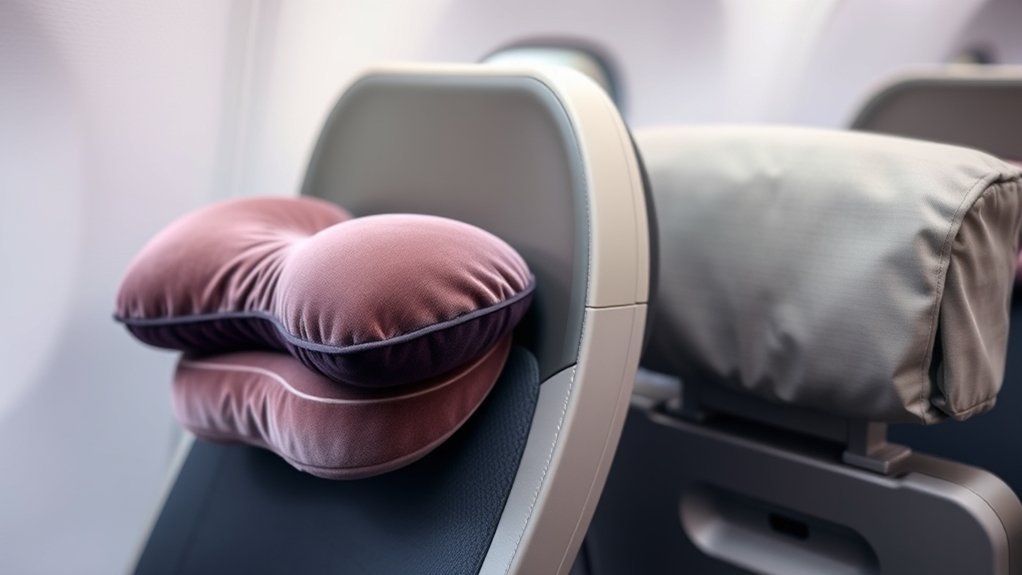
When starting a long-haul flight, having the right travel pillow can mean the difference between landing energized or suffering from acute neck strain. Travel pillows offer personalized ergonomic benefits that standard airplane headrests simply cannot match. When sleeping in an upright economy seat, your neck muscles relax, leaving the heavy head (weighing 10 to 12 pounds) susceptible to sudden gravity pulls. A dedicated travel pillow cradles the neck to distribute this weight evenly.
Many modern designs feature adjustable structures, such as the internal flex-support ribs found in the Trtl Travel Plus Pillow, allowing you to fine-tune support to your exact neck length. Practical features like machine-washable plush covers and compact compression sacks make travel pillows an essential, hygienic accessory for frequent flyers. Furthermore, innovative wrap designs like the BCOZZY Travel Pillow actively cushion the chin, eliminating the disruptive forward head drop that triggers sudden awakenings during flight transitions.
Pro Tip: Position memory foam travel pillows slightly asymmetrical if you lean toward the window wall. Turning the bulkier side toward your lean angle fills the gap between your shoulder and the plane panel, maintaining spinal alignment without awkward bending.
Key Differences in Design: Travel Pillow vs. Airplane Headrest
While both travel pillows and airplane headrests aim to assist passengers during transit, their fundamental engineering creates vastly different comfort outcomes during long journeys.
At a Glance: Airplane Headrest vs. Travel Pillow
| Feature | Airplane Seat Headrest | Dedicated Travel Pillow |
| Chin & Forward Support | None (Head drops forward easily) | High (Wrap & chin-rest options lock head) |
| Adjustability | Vertical slide & foldable side wings | 360° custom fit via straps, toggles, or velcro |
| Cushioning Material | Dense commercial foam and synthetic fabric | Viscoelastic memory foam, fleece, or air cell |
| Hygiene & Washing | Fixed aviation fabric; spot clean only | Removable, machine-washable outer covers |
- Custom Ergonomics: Travel pillows are designed to contour to individual jawlines and neck circumferences, catering directly to personal sleep preferences.
- Portability & Weight: Modern travel pillows compress down to the size of a water bottle, attaching easily to carry-on luggage handles.
- Superior Hygiene: Removable covers allow travelers to wash off airport germs after every trip, unlike permanent aircraft seat upholstery.
- Seat Attachment Features: Advanced travel pillows include rear straps that anchor to airplane headrest posts, stopping sideways slumping entirely.
Limitations of Airplane Headrests
Although modern aircraft seats (such as those on Boeing 787 or Airbus A350 jets) feature headrests with vertical sliding tracks and foldable side “wings,” their ergonomic limitations quickly become apparent on long flights. The primary issue stems from their rigid, flat base structure, which rarely conforms to the natural lordotic curvature of the cervical spine. This causes unwanted pressure points against the back of the skull, pushing your head slightly forward into an unnatural posture.
Furthermore, standard headrests provide zero anterior (front) or mandibular (chin) support. When you drift into deep sleep, muscle tone drops, causing your jaw and head to snap forward. This triggers the body’s natural startle reflex, waking you repeatedly and causing strain in the trapezius and sternocleidomastoid muscles.
Warning: Sleeping with an unsupported neck during unexpected flight turbulence can lead to cervical micro-trauma or acute neck spasms. Relying solely on a flat seat headrest increases the risk of sharp lateral jerks when the aircraft hits choppy air.
Which Travel Pillow Is Best for You?
Selecting the ideal travel pillow requires matching your primary sleep style with the pillow’s internal structure and material density. Here is how popular market options compare:
- Trtl Travel Pillow: Features a scientifically proven internal plastic rib structure hidden inside soft fleece. It holds the head in an upright, neutral posture by transferring weight directly to the shoulder, making it perfect for side-leaning sleepers on short to medium flights.
- BCOZZY Travel Pillow: Utilizes an overlapping double-loop design that cradles the chin to prevent forward head drops. Excellent for upright middle-seat sleepers who need 360-degree continuous support.
- Cabeau Neck Pillow (Evolution S3): Constructed from high-density memory foam with raised side bolsters and seat-attachment straps. It eliminates head sway entirely and is favored by long-haul international travelers.
- NapFun Travel Pillow: A traditional U-shaped memory foam pillow featuring an ergonomic rear neck contour and a breathable, machine-washable cover. Great for back sleepers seeking affordable, reliable comfort.
- Sunny Inflatable Travel Pillow: Packs down flat for ultra-lightpackers, offering customizable firmness through adjustable inflation valves.
Tips for Getting the Most Comfort From Your Travel Pillow
To maximize neck support and sleep duration during your flight, implement these practical adjustments:
- Adjust the Seat Headrest First: Raise or lower the airplane seat’s built-in headrest so its lower cushion rests right at the nape of your neck, creating a stable base for your travel pillow.
- Secure the Chin Strap: If using a memory foam or wrap pillow, tighten the front toggles or straps to prevent your neck from sliding outward during sleep.
- Maintain Optimal Inflation: When using inflatable models, inflate the air cell to roughly 80% capacity. Fully inflated pillows become rock-hard due to cabin pressure changes at high altitudes.
- Prioritize Washing: Unzip and wash the pillow cover after every journey in warm water to keep skin contact surfaces free from bacteria and allergens.
Note: Per Federal Aviation Administration (FAA) cabin safety guidelines, ensure your travel pillow straps do not attach to seat components in a way that blocks rapid aisle egress or interferes with emergency seatbelts during taxi, takeoff, and landing.
Frequently Asked Questions
Can Travel Pillows Be Washed or Cleaned Easily?
Yes, most modern travel pillows feature removable outer covers equipped with hidden zippers that are machine washable on a gentle cycle. For memory foam interiors, spot-clean with a damp cloth and mild detergent—never submerge memory foam core material in water, as moisture breaks down its cellular structure.
Are Travel Pillows Suitable for All Body Types?
Travel pillows accommodate various body frames, provided you select the right style. Travelers with shorter necks benefit from slim wrap designs (like Trtl), while broader-shouldered individuals prefer high-density memory foam pillows with elevated side bolsters (like Cabeau) to fill the gap between the head and shoulder.
How Do I Choose the Right Travel Pillow Size?
Measure your neck circumference and note your natural sleep posture. Side sleepers require taller lateral support (3.5 to 5 inches high), while back sleepers need a thinner rear neck section so the head isn’t pushed too far forward off the airplane seatback.
Do Travel Pillows Come With a Carrying Case?
Yes, high-quality memory foam and inflatable travel pillows usually include a compact travel pouch or compression sack. These storage bags often feature snap-loop straps that attach directly to backpack handles or rolling carry-on luggage for easy transportation.
What Materials Are Commonly Used in Travel Pillows?
Common materials include viscoelastic memory foam for pressure relief, TPU (thermoplastic polyurethane) coated nylon for inflatable cores, structural plastic internal supports, and outer covers made from micro-fleece, plush velvet, or cooling bamboo-derived fabrics.
Conclusion
Choosing between a specialized travel pillow and a standard airplane headrest comes down to prioritizing your sleep quality and spinal health. While modern airplane headrests offer basic height adjustments and foldout wings, they lack the chin support, 360-degree cushioning, and anatomical contouring necessary to prevent forward head drop and neck strain. By pairing your flight setup with an ergonomic travel pillow suited to your personal sleep style, you can transform long, exhausting air journeys into restful, comfortable trips.
Sources
- Sleep Foundation — Ergonomic standards for neck alignment and posture during transit.
- Mayo Clinic — Prevention of cervical strain and joint tension during prolonged sitting.
- Federal Aviation Administration (FAA) — Passenger safety regulations regarding carry-on items and seat clearance.
- National Center for Biotechnology Information (NCBI) — Spinal biomechanics studies on upright sitting postures.
