
Last Updated on July 24, 2026 by Caleb Warren
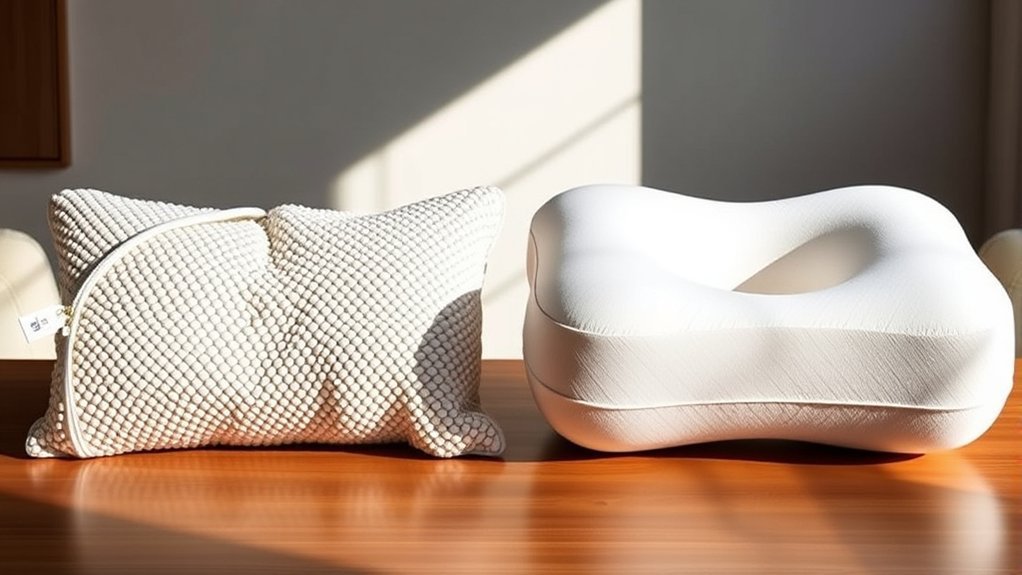
When choosing between microbead and memory foam travel pillows, key differences in neck support, temperature regulation, and portability will dictate which option best suits your journey. Memory foam molds precisely to your neck and head, delivering high-level support and pressure relief that prevents chin drops on long-haul flights. Microbead travel pillows offer squishable, adjustable comfort and superior airflow, making them lightweight, cool, and easy to pack for quick trips. Evaluating material composition, durability, and care instructions will ensure you choose the ideal travel companion for a restful trip.
Quick Answer
Memory foam travel pillows are best for long-haul flights and travelers needing firm neck alignment, as dense viscoelastic foam prevents head bobbing and relieves pressure points. Microbead travel pillows are best for short trips, warm climates, and budget travelers due to their ultra-lightweight design, squishable compressibility, and continuous airflow.
Key Takeaways
- Support & Alignment: Memory foam provides structured, ergonomic contouring that keeps the cervical spine aligned during upright sleep; microbeads shift dynamically for soft, customizable cushioning.
- Temperature Control: Microbead (EPS) fills allow air to circulate freely through the pillow, whereas traditional memory foam retains body heat unless designed with open-cell structures or cooling gel.
- Durability: High-density memory foam maintains its shape for 2 to 5 years, while microbead pillows tend to lose volume within 1 to 3 years as the polystyrene beads compress under weight.
- Maintenance: Memory foam cores must never be submerged in water, whereas microbead pillow covers can be washed easily (though the bead core requires delicate spot cleaning).
Disclosure: As an Amazon Associate I earn from qualifying purchases. Some links on this page are affiliate links, at no extra cost to you.
Understanding Travel Pillows: What You Need to Know
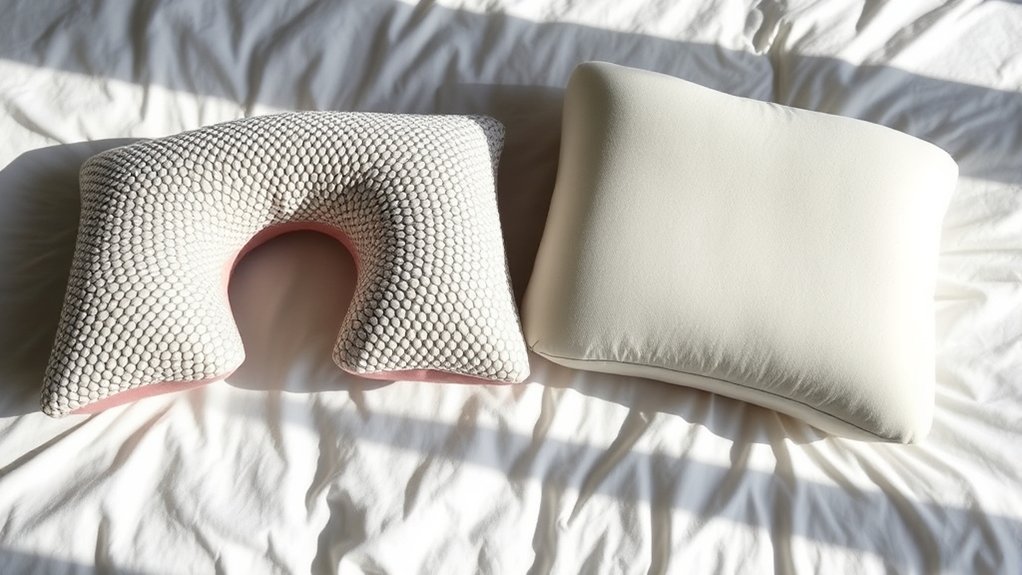
Travel pillows are essential gear for maintaining comfort on long flights, road trips, and train commutes. Selecting the right travel pillow material directly impacts your rest quality and posture while sleeping in an upright position. The two most prominent materials on the market are viscoelastic memory foam and expanded polystyrene (EPS) microbeads.
Memory foam responds to body heat and pressure, contouring specifically to the shape of your head and neck. This prevents lateral leaning and neck strain during turbulent or bumpy journeys. On the other hand, microbead pillows contain thousands of tiny synthetic beads that slide past one another, offering a malleable cushion that shifts fluidly as you change sleeping positions. Understanding how these materials handle firmness, heat retention, compressibility, and cleaning will help you maximize your travel sleep quality.
Why Memory Foam Pillows Offer Superior Neck Support
Memory foam travel pillows excel at cervical spine support. Viscoelastic foam was originally engineered to absorb high pressure, making it an exceptional material for holding the head in proper alignment when sleeping upright in airplane or vehicle seats.
As memory foam reacts to your weight and body temperature, it softens strategically around pressure points while maintaining structural density where support is needed most. This prevents the forward “chin-drop” motion and side-to-side head swaying that frequently causes wakefulness and muscle spasms during long flights.
“Proper cervical support during transit-induced upright sleep reduces trapezius muscle strain and neck stiffness by maintaining natural spinal alignment against gravitational pull.”
Unlike fluid or bead fills, high-density memory foam retains its structural memory over long travel periods, eliminating the need to fluff or readjust the pillow mid-flight.
Pro Tip: If you suffer from severe neck fatigue during long-haul travel, choose a memory foam pillow with raised lateral side bolsters and an adjustable front clasp to lock your neck in place.
Advantages of Microbead Travel Pillows
Microbead travel pillows offer unique functional benefits, particularly for travelers who prioritize lightness, breathability, and quick adaptability over rigid structural support.
Lightweight and Portable Design
Microbead travel pillows excel in weight savings and packing flexibility:
- Ultra-Light Weight: Filled with air-filled expanded polystyrene (EPS) beads, these pillows weigh significantly less than dense foam models, helping you stay under strict airline carry-on limits.
- High Compressibility: The shifting nature of microbeads allows the pillow to squish into tight corners of backpacks or carry-on luggage without permanent deformation.
- Dynamic Reshaping: You can quickly shift the bead density to one side of the pillow depending on whether you are leaning against a airplane window or a headrest.
- Effortless Handling: Their light weight makes them easy to clip onto external luggage loops without dragging down your bag.
Adjustable Comfort and Support
Microbead travel pillows offer customizable, soft support that adjusts instantly as you shift positions. Because the tiny smooth beads roll over each other, the pillow molds around your jaw and neck without applying firm counter-pressure. This soft texture makes microbead pillows a comfortable choice for travelers who feel restricted or overheated by rigid memory foam collars.
Good Airflow for Cooling
Temperature management is a primary strength of microbead construction:
- Air Circulation: Spherical EPS beads leave small interstitial gaps throughout the pillow interior, allowing heat to escape rather than build up against your skin.
- Moisture Management: Synthetic microbeads do not absorb body sweat, keeping the core interior dry during hot journeys.
- Dual-Fabric Covers: Many microbead pillows feature a cool spandex blend on one side for warm weather and a soft fleece fabric on the reverse for chilly cabin environments.
How to Choose Between Memory Foam and Microbead Pillows
Deciding between memory foam and microbead travel pillows depends on your travel style, sleep posture, and sensitivity to temperature and weight. Memory foam is engineered for maximum posture control on long-haul trips, while microbead pillows focus on flexibility and lightweight ease for shorter journeys.
Review the comparative breakdown below to determine which material fits your travel habits:
At a Glance: Microbead vs. Memory Foam
| Feature | Memory Foam Pillow | Microbead Pillow |
| Support Level | Superior & Firm; maintains shape and keeps spine aligned | Soft & Flexible; shifts dynamically with position changes |
| Thermal Comfort | Retains heat (unless gel-infused or perforated) | High airflow; stays cool in warm environments |
| Durability | 2 to 5 years; resilient against flattening | 1 to 3 years; beads compress and lose volume over time |
| Weight & Packing | Slightly heavier; packs down with compression sacks | Ultra-lightweight; squishes into odd bag spaces |
| Best Travel Scenario | Long-haul international flights and overnight transit | Short regional flights, road trips, and lounging |
Evaluating Portability: Which Pillow Is Easier to Pack?
Portability extends beyond total weight; it includes how efficiently a pillow packs into your carry-on luggage or attaches to your travel gear.
- Weight Considerations: Microbead travel pillows typically weigh between 5 and 8 ounces, whereas memory foam travel pillows weigh between 10 and 18 ounces depending on foam density.
- Packing Volume: High-quality memory foam travel pillows frequently include custom compression travel sacks that reduce overall pillow volume by up to 50% to 70%. Microbead pillows cannot be cinched into tight compression sacks without risking seam ruptures, but they squish easily around hard items inside a suitcase.
- Attachment Straps: Memory foam pillows often come equipped with snap straps or carabiner loops designed to secure the compressed pillow directly onto carry-on handle extensions.
Note: TSA guidelines permit both memory foam and microbead travel pillows in carry-on bags and personal items without restriction during security screening.
Assessing Durability: How Long Will Each Pillow Type Last?
Pillow longevity varies based on structural integrity, frequency of use, and material quality:
Memory Foam Durability (2 to 5 Years): High-density viscoelastic foam retains its structural resilience through hundreds of compression cycles. Premium memory foam will bounce back to its original shape within seconds even after being stored in a compression bag during a 14-hour flight.
Microbead Durability (1 to 3 Years): Microbead travel pillows degrade through physical bead compression. Over extended use, friction and pressure cause the tiny polystyrene spheres to flatten and lose air volume, leading to a sagging, less supportive pillow. Additionally, stretched outer seams can risk bead leakage over time.
Warning: Never machine-wash an intact microbead pillow core. A seam tear in a washing machine can release thousands of static-charged polystyrene beads, damaging your machine’s pump filter.
How Comfort Affects Travel Experiences
Selecting a pillow that matches your anatomical needs directly impacts physical health and mental alertness upon arrival at your destination:
- Ergonomic Alignment: Consistent neck alignment prevents strain on the cervical spine and trapezius muscles during long hours spent sitting upright.
- Sleep Continuity: Minimizing sudden head drops allows for deeper REM and slow-wave sleep cycles during overnight flights.
- Fatigue Reduction: Proper head stabilization mitigates post-flight tension headaches and muscle stiffness, helping you land feeling energized.
Making Your Choice: Which Travel Pillow Suits You Best?
To finalize your choice, evaluate your personal travel habits against these specific criteria:
- Choose Memory Foam if: You frequently fly long-haul flights, suffer from chronic neck or shoulder pain, require firm head stabilization to sleep upright, or prefer long-lasting gear.
- Choose Microbead if: You prioritize minimal weight, tend to sleep hot during transit, prefer a soft malleable feel, or need an inexpensive pillow for short car trips and train commutes.
Frequently Asked Questions
Can microbead pillows be machine washed?
You should not machine wash a microbead pillow core directly, as agitators can rupture seams and spill beads. Instead, remove and wash the outer protective cover. For spot cleaning the core, wipe with a damp cloth and mild detergent, then air dry completely.
Do memory foam travel pillows retain heat?
Standard high-density memory foam can trap body heat due to its solid cellular structure. However, modern travel pillows offset this by incorporating cooling gel layers, ventilated air channels, or breathable moisture-wicking covers like bamboo or rayon blends.
Are microbead travel pillows hypoallergenic?
Yes, expanded polystyrene (EPS) microbeads are synthetic, non-porous, and inherently resistant to dust mites, mold, and common allergens. Always ensure the removable fabric cover is washed regularly to remove surface dust.
How long does it take for a memory foam travel pillow to expand after unpacking?
A uncompressed travel pillow typically expands to its full operational shape within 15 to 30 minutes after release from a travel compression pouch. If cold from transit, warming the foam in a ambient room accelerates expansion.
Can I use a microbead pillow for lower back lumbar support?
Yes, microbead pillows make excellent temporary lumbar cushions for plane seats or car rides because the beads shift smoothly to fill the gap in your lower spine without pushing your torso unnaturally forward.
Conclusion
Selecting between microbead and memory foam travel pillows ultimately comes down to balancing support needs against weight and temperature preferences. Ergonomic studies demonstrate that maintaining proper cervical spine posture during long transit hours is essential for preventing muscle strain and travel fatigue. If your primary goal is robust neck support and long-term durability on long flights, a quality memory foam pillow is the ideal investment. Conversely, if lightness, squishable packing, and stay-cool breathability matter most, a microbead pillow will serve your journey well.
Sources
- Sleep Foundation — Ergonomic evaluation criteria for travel pillows and cervical support materials
- Transportation Security Administration (TSA) — Security screening rules for carry-on items and personal travel cushions
- National Center for Biotechnology Information (NCBI) — Biomechanical studies on cervical spine alignment and pillow support ergonomics
