
Last Updated on July 24, 2026 by Caleb Warren
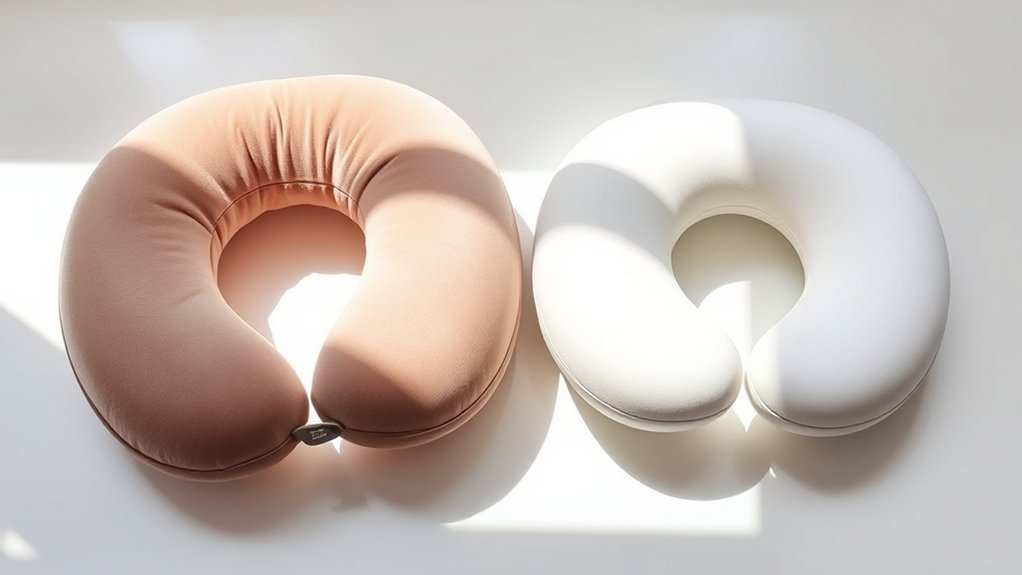
Understanding the differences between a travel pillow and a cervical pillow is essential for managing neck discomfort and achieving restful sleep. While both cushions aim to support your neck, they are engineered for entirely different environments, body postures, and ergonomic demands. Choosing the correct support system directly impacts your posture, spinal alignment, and long-term musculoskeletal health.
Quick Answer
The main difference between a travel pillow and a cervical pillow is their design intent and posture support: travel pillows are compact, lightweight, U-shaped or wrap-around cushions made to stabilize the neck in an upright seated position during transit. Cervical pillows are dense, contoured ergonomic pillows engineered to preserve the cervical spine’s natural curve (lordosis) during horizontal sleep at home.
Key Takeaways
- Posture Focus: Travel pillows support upright seating (preventing head bobbing and lateral tilts); cervical pillows support horizontal lying (maintaining C1–C7 alignment).
- Material Density: Cervical pillows utilize high-density viscoelastic memory foam or latex; travel pillows prioritize lightweight memory foam, microbeads, or inflatable TPU.
- Primary Purpose: Travel pillows offer temporary convenience during transit; cervical pillows deliver long-term orthopedic pain relief and spinal unloading.
- Fit & Adjustability: Cervical pillows rely on precise anatomical contours and height variations; travel pillows use chin straps, velcro, or internal rib structures.
Disclosure: As an Amazon Associate I earn from qualifying purchases. Some links on this page are affiliate links, at no extra cost to you.
How Travel Pillows Enhance Comfort During Travel

When you are traveling on planes, trains, or long-haul buses, sitting in an upright position forces your neck muscles to work continuously to keep your head balanced. A high-quality travel pillow counters gravitational pull by providing lateral and anterior support to prevent sudden head droop, lateral cervical flexion, and muscle strain.
Modern travel cushions have evolved far beyond basic inflatable rings. Today’s ergonomic models incorporate high-density memory foam, internal plastic structural ribs (such as those found in the TRTL pillow), and adjustable chin straps. According to travel ergonomics assessments published by the Sleep Foundation, securing the head in a neutral position while seated upright significantly reduces micro-awakenings caused by sudden head drop during transit.
Pro Tip: When using a standard U-shaped travel pillow on an airplane, try spinning it around so the thickest part sits under your chin. This prevents your head from falling forward—the leading cause of sudden neck wake-ups during flight sleep.
How Cervical Pillows Support Neck Health
Unlike standard bed pillows that simply elevate the head, cervical pillows are medically engineered orthotic cushions designed to support the natural curvature of your cervical spine (the cervical lordosis across vertebrae C1 through C7). Maintaining this anatomical curve during sleep keeps the intervertebral discs uncompressed and relaxes surrounding neck muscles.
Warning: If you suffer from acute cervical radiculopathy, severe spinal stenosis, or recent whiplash trauma, consult a licensed physical therapist or orthopedist before switching to a firm cervical pillow. Incorrect contour height can temporarily exacerbate nerve compression.
Proper Spinal Alignment
Proper spinal alignment requires that your head, neck, and spine form a continuous, stress-free line during sleep. Clinical studies indexed in PubMed demonstrate that contoured cervical pillows significantly improve spinal alignment and sleep architecture compared to standard feather or fiberfill pillows.
| Cervical Feature | Biomechanical Benefit | Optimal Sleep Position |
|---|---|---|
| Contoured Neck Roll | Fills the lordotic cavity under the neck, maintaining natural spinal curvature. | Back Sleepers |
| Elevated Side Panels | Keeps head elevated to match shoulder height, preventing neck tilt. | Side Sleepers |
| Central Cavity Indentation | Cradles the occiput (back of head) to relieve cranial pressure without tilting the chin toward the chest. | Back & Combination Sleepers |
Pain Relief Mechanism
Cervical pillows relieve neck strain by systematically redistributing head weight (which averages 10 to 12 pounds). Standard soft pillows flatten out during the night, forcing your neck muscles to contract involuntarily to keep your spine supported. This nocturnal muscle tension is a primary trigger for morning neck stiffness and tension headaches.
High-density memory foam and latex cervical designs conform slowly to heat and pressure, cradling critical pressure points along the base of the skull. Medical guidance from Mayo Clinic highlights proper neck support during sleep as a foundational step in managing chronic cervical muscle strain and mechanical neck pain.
What Makes Travel and Cervical Pillows Different?
Understanding the fundamental differences between travel and cervical pillows helps you avoid buying the wrong support tool for your physical needs.
Shape and Structure Differences
The structural difference between these two pillow categories stems from the posture they are built to support:
- Travel Pillows: Engineered around a vertical sitting orientation. Shapes include horseshoe U-curves, wrap-around fleece collars, inflatable wedges, and infinity loops. They emphasize lightweight compactness, enabling quick packing into carry-on luggage.
- Cervical Pillows: Built for horizontal lying down. Features include butterfly contours, central head depressions, raised side lobes, and dual-height neck rolls. Their structure is larger, heavier, and optimized for mattress placement.
Material and Support Variations
Materials dictate both durability and orthotic efficacy. Travel pillows often use low-density memory foam, inflatable TPU/vinyl chambers, or polystyrene microbeads to keep total weight down. While convenient, inflatable travel pillows lack the uniform density required to correct severe cervical misalignments.
In contrast, cervical pillows prioritize material density over weight. Premium models use high-density, viscoelastic memory foam (ranging from 3.5 to 5 lbs/cu.ft.) or molded natural latex. Expert advice from Harvard Health notes that firmer memory foam or latex pillows maintain their structural integrity throughout the night, preventing the neck from sinking into unnatural angles.
Comparing Materials: Travel vs. Cervical Pillows
Selecting the right pillow material depends on whether your priority is easy transport or long-term therapeutic relief.
| Feature / Attribute | Travel Pillow Standard Specs | Cervical Pillow Standard Specs |
|---|---|---|
| Core Material | Low-density memory foam, inflatable TPU, microbeads | High-density viscoelastic foam, natural molded latex |
| Material Durability | Moderate (designed for intermittent transit use) | High (built for daily 7–9 hour nightly sleep over 3+ years) |
| Temperature Control | Fleece cover / breathable mesh covers | Phase-change cooling covers, pinhole ventilated latex |
| Pain Relief Capability | Temporary neck fatigue prevention | Targeted chronic neck pain & disc pressure relief |
How Each Pillow Secures Comfort: Attachment Systems Explained
Stabilization mechanisms differ significantly based on whether you are sleeping on a moving seat or on a stationary home mattress.
- Travel Pillow Securing Systems: Utilize snap buttons, adjustable toggles, velcro straps, or internal plastic support frames. Some advanced travel pillows feature rear straps that connect directly to airplane seat headrests to prevent your torso from sliding forward.
- Cervical Pillow Stabilization: Relies on anti-slip bottom surfaces, contoured weight-distribution cavities, and precise loft sizing. Cervical support stays anchored because your head weight rests directly inside its ergonomic center recess.
Care and Maintenance Guidelines
Proper hygiene extends the functional lifespan of both pillow types while protecting skin health:
- Travel Pillows: Because transit environments harbor bacteria and allergens, choose travel pillows with removable, machine-washable velour or fleece covers. Inflatable inner cores should be wiped down with antibacterial wipes; never submerge memory foam cores in water.
- Cervical Pillows: Wash the outer protective cover every week in warm water. Spot clean the memory foam core using a damp cloth and mild detergent. Allow the foam to air dry completely away from direct sunlight, as UV rays degrade viscoelastic foam structures.
When to Use a Travel Pillow vs. a Cervical Pillow?
Selecting between these two ergonomic tools comes down to your current environment and physical activity:
Note: Do not attempt to use a standard cervical pillow inside an airplane or car passenger seat. Their thick rear contours push your head forward against the vehicle seat, creating severe neck flexion and pain.
- Reach for a Travel Pillow when: Flying on commercial flights, taking long train trips, riding as a passenger on road trips, or taking quick 20-minute power naps in an office chair.
- Use a Cervical Pillow when: Sleeping in bed at home, recovering from chronic neck stiffness, managing morning headaches, or working to restore healthy spinal alignment overnight.
Travel Pillow Benefits for Long Journeys vs. Cervical Pillow Benefits for Home Use
Comparing key benefits side-by-side demonstrates why both items deserve a place in your wellness routine.
Matching your pillow choice to your environment ensures optimal cervical support whether you are at 35,000 feet or resting at home.
Primary Benefits of Travel Pillows:
- Portability & Packability: Compress into small travel sacks or clip easily to backpack straps.
- Upright Lateral Support: Prevents uncomfortable side-to-side head sway and chin-drops during transit.
- Versatile Sitting Adjustability: Adapts quickly to restricted legroom and upright airliner seats.
Primary Benefits of Cervical Pillows:
- Restores Natural Cervical Curve: Keeps vertebrae C1–C7 aligned throughout full 8-hour sleep cycles.
- Reduces Disc Compression: Unloads muscular tension, relieving morning neck stiffness and spasms.
- Supports Multiple Lying Postures: Specialized contours accommodate both back and side sleepers seamlessly.
Choosing the Best Pillow for Neck Comfort
When selecting the best pillow, evaluate your primary pain points and lifestyle demands. If travel fatigue and transit head-bobbing disrupt your trips, invest in an ergonomic wrap-style travel pillow. If waking up with neck pain or shoulder tightness is an ongoing issue at home, upgrade to an orthopedist-approved cervical pillow with memory foam density tailored to your sleeping position.
Frequently Asked Questions
Can travel pillows be used for sleeping at home in bed?
While you can technically use a travel pillow in bed, it is not recommended for nightly home sleep. Travel pillows are designed to support your head in an upright position. When lying flat on a mattress, a U-shaped travel pillow elevates the neck unnaturally and lacks side lobes for proper horizontal spinal alignment.
Are cervical pillows suitable for travel purposes?
Full-sized cervical pillows are generally too bulky for travel and do not perform well in upright vehicle seats. However, compact travel-sized cervical neck rolls or mini contoured memory foam cushions exist specifically for road trips and hotel stays.
How do I clean my travel or cervical pillow?
Unzip and remove the fabric cover, then machine wash on a gentle cycle with mild detergent. Spot clean the interior memory foam or latex core with a moist cloth. Never submerge memory foam cores in water or place them in a mechanical clothes dryer.
What sizes do travel and cervical pillows come in?
Travel pillows typically measure around 10 to 14 inches wide and compress down for storage. Cervical pillows come in standard bed dimensions (approx. 20 to 24 inches wide) and are available in low-loft (3–4 inches) and high-loft (4.5–5.5 inches) options to match your shoulder height.
Do travel pillows provide enough support for side sleepers?
Standard inflatable U-shaped travel pillows rarely offer enough firmness for side sleeping in bed. However, high-density memory foam travel pillows with elevated side bolsters can provide temporary support if you are sleeping on a side-leaning seat during transit.
Conclusion
Choosing between a travel pillow and a cervical pillow isn’t about deciding which product is universally better; it is about matching the right ergonomic tool to your environment. A travel pillow is your portable companion for sitting upright during transit, preventing uncomfortable head drops and muscle strain on long trips. Conversely, a cervical pillow is a long-term investment in your home sleep hygiene, engineered to restore your spine’s natural curve and alleviate chronic neck pain while you rest overnight. By understanding these key structural, material, and positional differences, you can protect your neck health both on the road and in your own bed.
Sources
- Journal of Physical Therapy Science / PubMed — Clinical evaluation of cervical pillow designs on neck curvature and sleep quality.
- Sleep Foundation — Ergonomic analysis of travel support cushions and sitting sleep posture.
- Harvard Health Publishing — Guidelines on choosing orthopedic pillows for neck pain prevention and spinal support.
- Mayo Clinic — Medical causes of mechanical neck strain and non-surgical pain management techniques.
