
Last Updated on September 11, 2026 by Daniel Globe
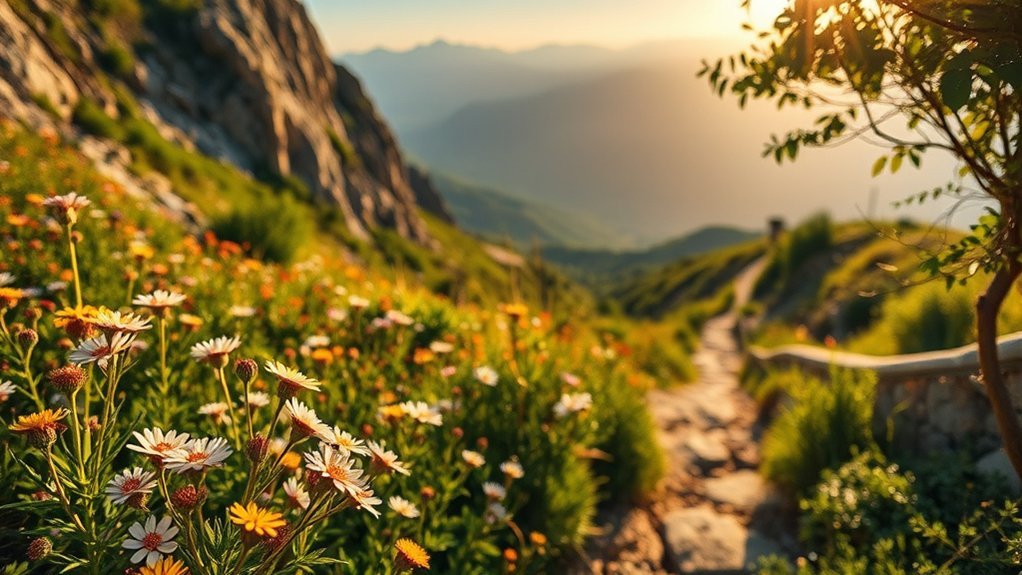
Corsica’s wildflower season unfolds gradually rather than arriving on one fixed date. Coastal maquis can begin flowering in March, April and May usually bring the broadest displays at low and middle elevations, and mountain plants may continue into June. The best timing depends on your route, elevation, weather, and the flowers you hope to see.
Quick Answer
Corsica’s broad blooming season runs from March through June. For the most reliable mix of colorful maquis, mild hiking weather, and open visitor services, plan for mid-April through May. Coastal areas flower first, while cooler valleys and mountain slopes often reach their best later.
Key Takeaways
- April and May are usually the safest choices for widespread spring color.
- Coastal maquis often blooms before high mountain areas, where cool weather and snow can delay spring.
- Cap Corse, Balagne, the Agriates, Restonica, and southern Corsica offer different spring landscapes.
- Pack layers and rain protection because Corsican spring weather can change quickly.
- Stay on marked paths, leave flowers in place, and check trail access and weather before setting out.
Disclosure: As an Amazon Associate I earn from qualifying purchases. Some links on this page are affiliate links, at no extra cost to you.
When Corsica’s Blooming Season Starts
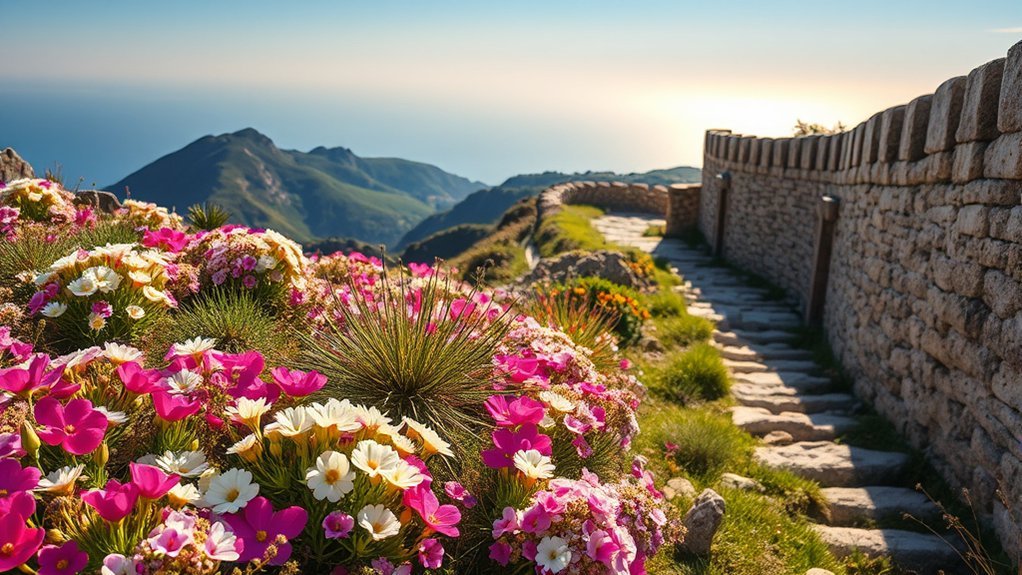
Corsica’s earliest spring growth often becomes noticeable in March, especially near the coast and in sunny, sheltered areas. As days lengthen, flowering spreads through the maquis, valleys, farmland, and lower mountain slopes.
The island does not reach one single peak. Corsica rises sharply from sea level to mountains above 2,000 meters, so plants growing near the coast may flower weeks before plants at higher elevations. Rainfall, winter temperatures, wind, and spring heat can also move the calendar forward or backward.
Corsica Wildflower Calendar by Month
| Month | What to Expect | Best Areas |
| March | The season begins in warmer coastal and low-elevation areas. Early herbs, tree blossom, asphodel, and patches of flowering maquis may appear. | Southern coast, Balagne, Bonifacio countryside, and sheltered coastal paths. |
| April | One of the most dependable months for colorful and fragrant maquis. Rockrose, broom, rosemary, and other shrubs may be flowering. | Cap Corse, Balagne, the Agriates, coastal paths, and lower inland valleys. |
| May | A strong all-around choice. Low and middle elevations remain green, many flowers are active, and warmer days make longer walks easier. | Cap Corse, Giussani, Restonica’s lower valley, Ospédale, and inland village routes. |
| June | Later flowers may remain at elevation, while exposed coastal vegetation begins drying as temperatures rise. | Cooler forests, upland valleys, and mountain areas where trails are safely accessible. |
Note: Flowering dates are never guaranteed. A warm, dry spring can shorten the coastal display, while a cold winter may delay plants at higher elevations.
Why Spring Is Best for Corsica Wildflowers
Spring combines flowering vegetation with conditions that are often more comfortable for walking than the hottest part of summer. The official Corsica tourism website highlights the island’s colorful, fragrant maquis, varied spring landscapes, outdoor activities, and lighter crowds.
The maquis is more than a field of seasonal flowers. It is a dense Mediterranean plant community containing evergreen shrubs, herbs, and aromatic plants. Depending on the location and week, you may notice white or pink rockrose, yellow broom, myrtle, rosemary, thyme, lavender, asphodel, juniper, and immortelle.
Spring also gives you more flexibility. Coastal paths can be pleasant before summer heat arrives, village roads are generally less congested than in July and August, and lower demand may make some accommodation easier to find. However, not every seasonal restaurant, activity provider, or mountain facility will be operating in early March, so check opening dates before building your route.
Corsica does not have one island-wide peak bloom. Spring moves gradually from sunny coastal maquis to cooler inland valleys and mountain slopes.
Best Places to See Corsica in Bloom
Cap Corse and the Sentier des Douaniers
Cap Corse is one of the strongest choices for a combination of wild maquis, sea views, rocky headlands, and historic Genoese towers. The Sentier des Douaniers runs about 19 kilometers between Macinaggio and Centuri. The entire route requires more than eight hours, but you can walk shorter sections from Macinaggio, Barcaggio, Tollare, or Centuri.
The official route guidance recommends proper shoes and enough water. It also warns against walking during strong winds because of fire danger. Camping, bivouacking, and fires are prohibited along protected sections.
Balagne and the Agriates
Northwestern Corsica offers some of the island’s most dependable spring scenery. The official tourism site specifically highlights flowering maquis in the Agriates and spring walks through Balagne. Coastal areas around Ostriconi and the lower hills flower earlier, while Giussani villages around 900 meters tend to feel cooler and develop later.
For an easier botanical visit, Saleccia Park, near L’Île-Rousse, has walking routes focused on Corsican and Mediterranean plants. Its collections can help you identify myrtle, immortelle, olive trees, oleanders, and other plants before exploring wilder trails.
Restonica Valley
The Restonica Valley near Corte provides a dramatic contrast to the coast, with Laricio pine forest, clear river water, granite mountains, and access toward high glacial lakes. In spring, lower sections of the valley can be rewarding for woodland growth and mountain scenery.
Do not assume the upper trail has summer conditions. Lac de Melo is a high glacial lake that remains frozen for part of the year, and snow or ice may persist around the upper valley. Road access, parking arrangements, and trail conditions can also change. Check locally before attempting a high-elevation route.
Ospédale Forest and Southern Corsica
Ospédale Forest offers shaded woodland, rocky viewpoints, and a cooler setting above Porto-Vecchio. It is a good choice when you want to combine forest walking with the scented maquis of southern Corsica. Spring is also a useful season for exploring the countryside around Bonifacio and the Genoese towers near Fautea.
Ospédale should not be treated as a guaranteed rare-flower destination. Its main appeal is the change in habitat, elevation, and scenery compared with the nearby coast. Choose a trail that matches your fitness and check the forecast because exposed viewpoints can be windy.
Flowers and Plants to Look For
You do not need specialist botanical knowledge to enjoy Corsica’s spring landscape. A few common plant groups can make each walk more interesting:
- Rockrose: White or pink flowers that are common in Mediterranean scrub.
- Broom: Bright yellow flowers that can cover sunny slopes.
- Asphodel: Tall stems carrying clusters of pale, star-shaped flowers.
- Myrtle: An aromatic evergreen shrub found throughout the maquis.
- Rosemary and thyme: Familiar herbs that grow naturally in dry, sunny ground.
- Immortelle: An aromatic plant known for small yellow flower heads and a warm, curry-like scent.
- Lavender: Purple-flowering aromatic plants found in suitable dry habitats.
- Chestnut and citrus blossom: More likely around cultivated valleys, villages, and orchards than on exposed coastal paths.
Plant identification apps can be helpful, but do not rely on an app to decide whether a plant is edible or safe to touch. Some species can irritate the skin, and protected plants must be left where they grow.
Warning: Do not pick wildflowers, uproot plants, disturb wildlife, or leave the trail to reach a photograph. Protected Corsican sites ask visitors to preserve the flora, carry out their rubbish, and obey local rules on fires and camping.
What Weather to Expect in Bloom Season
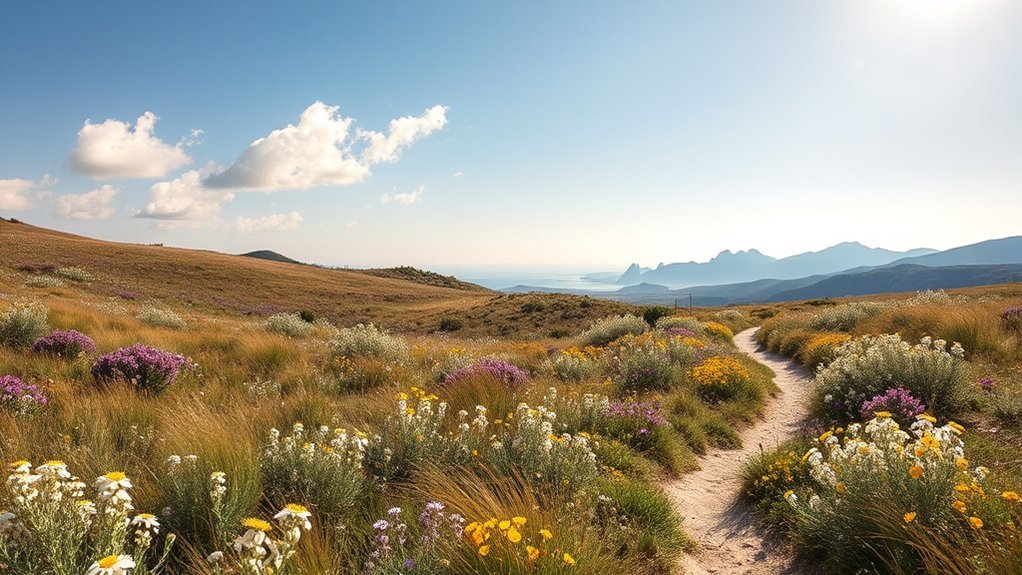
Corsican spring weather is usually mild near the coast, but it can change quickly. The table below uses 1991–2020 climate normals from the Météo-France Ajaccio-Parata station. These are coastal averages, not a forecast for the entire island.
| Month | Average High | Average Low | Average Rainfall | Days With at Least 1 mm |
| March | 15.9°C / 61°F | 8.7°C / 48°F | 40.7 mm | 6.1 days |
| April | 18.4°C / 65°F | 10.8°C / 51°F | 46.1 mm | 6.6 days |
| May | 22.2°C / 72°F | 14.1°C / 57°F | 44.6 mm | 4.9 days |
| June | 26.2°C / 79°F | 17.7°C / 64°F | 17.5 mm | 2.5 days |
Mountain conditions can be much colder than the coastal figures suggest. Restonica, Giussani, and other upland areas may have cold mornings, strong winds, low cloud, rain, or remaining snow when Ajaccio feels warm. Pack a waterproof outer layer and an insulating layer even when the coastal forecast looks settled.
Spring showers are possible in March, April, and May. Increasing daylight gives you more time outdoors, but it does not guarantee uninterrupted sunshine. Check the local forecast each morning and avoid exposed ridges during storms or high winds.
How to Plan a Bloom-Season Trip to Corsica
Start by choosing your dates according to your main goal:
- Late March to early April: Quieter travel, early coastal flowers, cool evenings, and a higher chance that seasonal businesses remain closed.
- Mid-April through May: The best balance for widespread flowers, moderate temperatures, and low-to-middle-elevation hiking.
- Early June: Warmer days, later upland flowers, longer daylight, and more visitor services, but drying may begin on exposed coastal slopes.
For a short trip, use one or two bases instead of trying to cross the island every day. Bastia or Saint-Florent works well for Cap Corse and the Agriates. Calvi or L’Île-Rousse suits Balagne. Corte gives you access to the Restonica area, while Porto-Vecchio is useful for Ospédale and the southeast.
Corsican roads are often narrow and winding. A destination that looks close on a map may require a slow drive. Leave extra time, avoid scheduling several long hikes on the same day, and confirm parking or seasonal transport arrangements for popular natural sites.
Spring fairs can add food and local culture to your trip. A Fiera di u Casgiu, the Corsican farmhouse-cheese fair in Venaco, is one example. The 2026 edition was held from May 1 through May 3, but dates change, so check the official program before booking around a future edition.
Tips for Enjoying Corsica’s Wildflower Season
- Walk early or late: Cooler temperatures and softer light can improve both comfort and photography.
- Carry water: Coastal paths may have little shade and no reliable refill point.
- Wear sturdy shoes: Granite, loose stones, roots, and wet ground can be slippery.
- Pack layers: A warm coast does not guarantee a warm mountain valley.
- Protect yourself from the sun: Use sunscreen, sunglasses, and a hat even on breezy days.
- Prepare for pollen: Travelers with seasonal allergies should bring their usual medication and avoid rubbing their eyes after touching vegetation.
- Use insect protection: Mosquito activity varies by location and weather. Cover exposed skin near damp areas and use an approved repellent according to its label.
- Photograph without damage: Use a zoom or crouch beside the path rather than stepping into flowers.
- Download maps: Mobile reception can be weak in valleys, forests, and remote coastal sections.
- Check local notices: Weather, fire danger, road damage, maintenance, or conservation work can affect access.
Pro Tip: Combine one coastal walk with one inland or higher-elevation route. The change in altitude gives you a better chance of seeing different plants at different stages of flowering during the same trip.
Warning: Turn back when wind, visibility, trail surfaces, or remaining snow make a route unsafe. Do not rely on coastal temperatures when judging conditions around Restonica or other high mountain areas.
Frequently Asked Questions
What should you avoid in Corsica during spring?
Avoid picking flowers, leaving marked paths, lighting fires, disturbing wildlife, and starting exposed hikes during high winds or storms. Do not assume a mountain route is clear because the coast is warm. Check access notices and carry out everything you bring with you.
What is the best month to see wildflowers in Corsica?
April and May are usually the most reliable months for a broad mix of flowering maquis and comfortable low-to-middle-elevation walks. March can provide early coastal color, while June is more useful for later flowers in cooler or higher areas.
Are mosquitoes a problem in Corsica?
Mosquitoes can be noticeable near wetlands, standing water, gardens, and sheltered areas, particularly around dawn or dusk. Conditions vary with temperature and rainfall. Wear covering clothing when practical and use an approved repellent according to its instructions.
Can you swim in Corsica in April?
You can enter the sea in April, but the water normally remains cold and is often only in the mid-teens Celsius. Confident cold-water swimmers may manage a short swim, while most visitors will find beach walks or a wetsuit more comfortable.
Can you hike the GR20 during Corsica’s spring bloom?
Do not treat the high GR20 as an ordinary spring flower walk. Snow, ice, cold, closed refuges, and severe weather may affect the route well into spring. High-mountain travel requires suitable experience, equipment, current local information, and a route chosen for the actual conditions.
Where can you see flowers without taking a difficult hike?
Saleccia Park near L’Île-Rousse offers accessible botanical walks, while village paths, low coastal sections, and short routes in Balagne can provide spring color without a full-day mountain hike. Confirm opening hours and route conditions before traveling.
Conclusion
Corsica’s blooming season is best understood as a moving wave of spring rather than one exact date. Coastal flowers can begin in March, April and May generally provide the most dependable island-wide variety, and higher areas may continue flowering into June. Match your route to the elevation, check current conditions, pack for changing weather, and leave every plant where you found it.
Sources
- Official Corsica Tourism: Five Reasons to Visit in Spring — spring scenery, flowering maquis, outdoor activities, and seasonal travel.
- Météo-France: Ajaccio-Parata Climate Statistics — 1991–2020 temperature and precipitation normals.
- Official Corsica Tourism: Sentier des Douaniers — route length, walking times, equipment, and safety rules.
- Official Corsica Tourism: Lac de Melo — high-elevation conditions and environmental rules in Restonica.
- A Fiera di u Casgiu Official Website — current program and dates for the Corsican farmhouse-cheese fair.
- ANSES: Protection Against Mosquito Bites — clothing, mosquito nets, and approved repellent guidance.
