
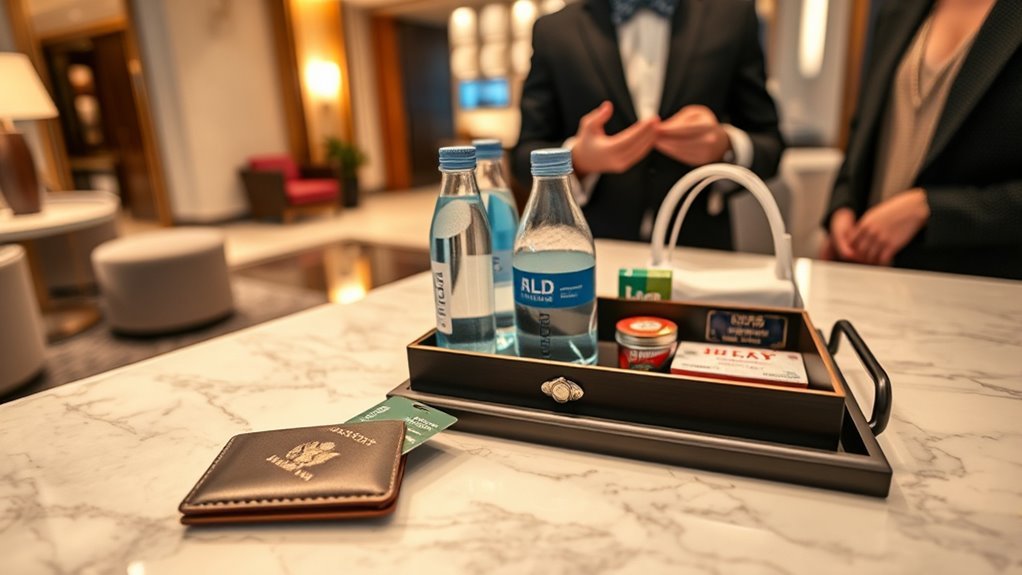
Last Updated on July 24, 2026 by Ethan Caldwell
Hotel incidental charges are costs that can be added during or after your stay, such as room service, minibar purchases, parking, premium Wi-Fi, or damage. Hotels may also place a temporary authorization hold on your card at check-in. Understanding the difference between a hold, a posted charge, and a mandatory hotel fee can help you protect your available funds and catch billing errors early.
Quick Answer
Hotel incidental charges are costs added during or after a stay for optional services or guest activity, such as room service, minibar purchases, parking, premium Wi-Fi, or damage. A hotel may also place a temporary authorization hold at check-in. The hold is not a fee, and unused funds are released after checkout.
Key Takeaways
- An authorization hold temporarily reduces your available credit or bank balance, but it is not the same as a completed charge.
- Optional incidentals include services you choose, while mandatory resort or destination fees are part of the lodging price.
- Hold amounts and release times vary by hotel and card issuer, so ask the property before arrival.
- A credit card usually protects your checking balance better than a debit card during a hotel stay.
- Engine Direct Bill alone may not cover incidentals. Separate Incidentals Coverage must be enabled for a covered reservation.
Disclosure: As an Amazon Associate I earn from qualifying purchases. Some links on this page are affiliate links, at no extra cost to you.
What Counts as a Hotel Incidental?
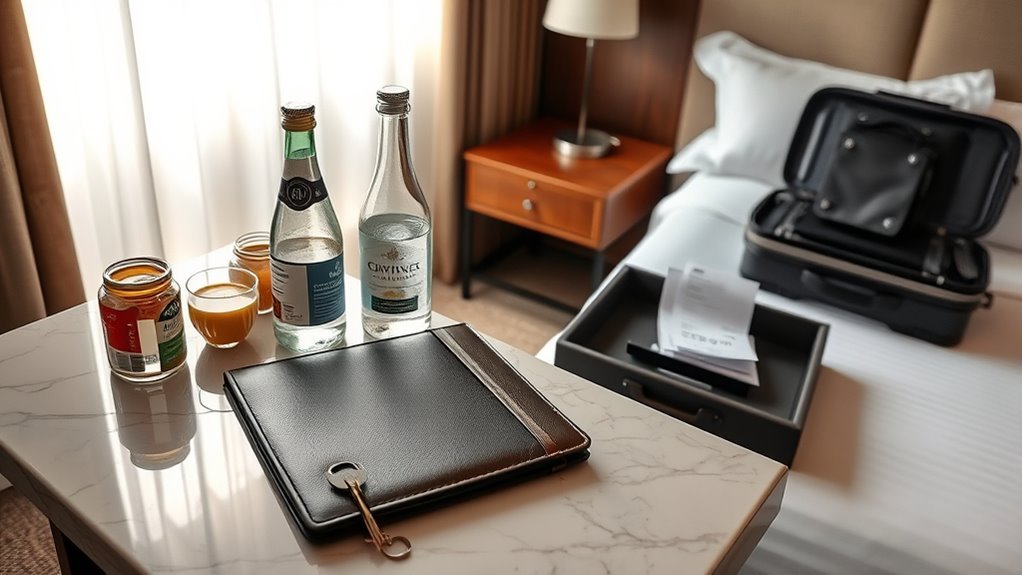
A hotel incidental is usually an extra cost created by something you use, request, or do during your stay. Common examples include room service, minibar items, valet parking, premium internet access, movies, laundry, spa services, telephone calls, pet-related cleaning, and damage to the room.
Not every amount added to a hotel bill is an incidental. Taxes, mandatory resort fees, destination fees, and required service charges may be part of the lodging price. An authorization hold is also different because it temporarily reserves funds instead of immediately becoming a completed charge.
| Type | What It Means | Examples |
|---|---|---|
| Optional incidental | A charge caused by an optional service or purchase during the stay. | Room service, minibar items, premium Wi-Fi, movies, spa treatments |
| Mandatory fee | A required amount that applies to the booking rather than an optional purchase. | Resort fee, destination fee, required service fee |
| Authorization hold | A temporary reservation of available credit or account funds to protect the hotel against unpaid charges. | Estimated room balance plus an amount for possible extras |
| Security or damage deposit | Money held or collected to cover damage, smoking, missing items, or policy violations. | Smoking charge, broken furniture, missing hotel property |
In the United States, the FTC Rule on Unfair or Deceptive Fees has applied to short-term lodging since May 12, 2025. A known mandatory fee generally must be included in the prominently displayed total price. Optional add-ons, damage charges, and costs that depend on later guest choices may be treated differently.
Note: A pending authorization hold is not necessarily money you have spent. It temporarily reduces the amount you can use until the hotel submits the final bill and the card issuer releases the unused authorization.
Hotels may require a card for incidentals even when the room was prepaid. Hilton, for example, explains that a hotel may place a hold at check-in for gratuities, food and drink, parking, and other possible charges.
A prepaid room does not always mean a hold-free check-in. The property may still require a payment method for incidentals and damage.
How a Hotel Authorization Hold Works
- At check-in: The hotel requests authorization for the expected room balance and an estimated amount for incidentals.
- During the stay: Charges made to the room may increase the expected final total.
- At checkout: The hotel submits the final charge and releases or reverses the unused part of the authorization.
- After checkout: Your card issuer processes the release. The available funds may not return immediately.
For a credit card, the hold usually reduces available credit. For a debit card, it can make money in your checking account temporarily unavailable. The exact amount and timing depend on the hotel, the length of the stay, the card network, and your bank.
How Hotel Incidentals Affect Business Travel
When you travel for work, incidental charges can affect more than the final bill. A hold may reduce the credit available for meals, transportation, fuel, or later hotel stays. Employees using debit cards may temporarily lose access to part of their checking balance.
Personal-card payments also complicate reimbursement. The employee may need to separate business purchases from personal purchases, wait for a corrected folio, and explain delayed minibar, parking, or restaurant charges that appear after checkout.
Late hotel charges can create problems during month-end reconciliation. A minibar item, parking charge, or restaurant tip may be submitted after the main room charge, so the card statement may not initially match the checkout folio.
Controls for Business Travelers and Employers
- Set a written policy for meals, parking, upgrades, minibar purchases, and other hotel extras.
- Tell travelers which charges the company will and will not reimburse.
- Use project codes, traveler names, and stay dates on expense records.
- Require an itemized hotel folio instead of relying only on a card statement.
- Use a corporate payment method or approved direct-billing arrangement when practical.
- Confirm whether incidentals are included before the employee arrives.
Some hotels accept a third-party credit-card authorization for room charges, incidentals, or both. Acceptance and processing requirements vary by property. Marriott advises contacting the hotel directly and notes that some properties may require several days to process an authorization request.
Credit Card Holds vs. Debit Card Holds
Credit- and debit-card holds use a similar authorization process, but they affect your available money differently.
| Issue | Credit Card | Debit Card |
|---|---|---|
| What becomes unavailable? | Part of your available credit limit | Part of your checking-account balance |
| Immediate cash-flow effect | Does not directly remove spendable cash from checking | Can reduce money available for bills and daily purchases |
| Main risk | Less available credit for later purchases | Declined payments, insufficient funds, or possible overdraft-related costs |
| Best practice | Keep enough unused credit for the room, hold, and other trip costs | Ask the hotel for the hold amount before presenting the card |
Visa explains that a hotel may place a temporary hold on money connected to a debit card. The hold is released after the final amount is processed, but the money may take a few days to become available again. You can read more in Visa’s debit-card guidance.
There is no release time that applies to every hotel or card. Hilton’s payment guidance says the hotel releases its hold within 72 hours after checkout, though the card provider may take longer. Marriott’s digital-entry terms state that an issuing bank may keep a hotel authorization hold for up to five business days after departure.
Warning: Do not use a debit card for a hotel hold without checking your available balance. The authorization may temporarily block money needed for rent, automatic payments, food, fuel, or transportation.
How Engine Direct Bill and Incidentals Coverage Work

Engine offers business-travel payment tools, but Direct Bill and Incidentals Coverage are not the same feature. Direct Bill is designed to move eligible booking costs to a company account and consolidated invoice. By itself, it may not remove the hotel’s request for a personal card to cover incidentals.
Engine’s separate Incidentals Coverage is designed to cover approved hotel incidentals upfront for an eligible reservation. When the coverage is properly enabled, Engine says the traveler can check in without placing an incidental hold on a personal card.
| Payment Setup | Room and Tax | Incidentals at Check-In |
|---|---|---|
| Personal or corporate card | Charged or authorized on the card | Hotel may place an additional hold |
| Engine Direct Bill only | Eligible booking costs go to the company account | A personal card may still be required |
| Direct Bill with Incidentals Coverage | Eligible costs are centrally billed | Approved incidentals are covered without a personal-card hold |
Coverage may require approval, an available credit arrangement, a booking-level selection, and an additional fee. Covered charges and limits may also vary. Travelers should confirm that Incidentals Coverage appears on the reservation before arriving at the hotel.
Note: Engine is one corporate-travel option, not a requirement for avoiding personal reimbursements. Companies can also use corporate cards, hotel-approved authorization forms, virtual cards, or other travel-management services.
Ways to Avoid or Control Hotel Incidentals Upfront
You cannot always avoid an authorization hold, but you can reduce optional charges and prevent many billing surprises by asking the right questions before booking and check-in.
Before You Book
- Compare the total lodging price. Look for required resort, destination, cleaning, service, and facility fees.
- Check the parking policy. Confirm whether self-parking, valet parking, or nearby parking costs extra.
- Ask what is included. Confirm whether breakfast, internet access, gym use, and airport transportation are complimentary.
- Ask about the deposit. Contact the actual property for its authorization amount, accepted payment methods, and estimated release time.
- Read cancellation rules. A no-show or late cancellation charge is different from an incidental, but it can still increase the trip cost.
Before Check-In
- Use a credit card instead of a debit card when practical.
- Make sure the card has enough available credit for the expected bill and hold.
- Confirm whether a prepaid reservation still requires a card.
- Ask whether cash or a refundable cash deposit is accepted if you do not have a suitable card.
- For business travel, confirm whether the company is paying for room and tax only or all approved charges.
During Your Stay
- Ask for the price before ordering room service or using paid amenities.
- Avoid removing minibar items unless you plan to buy them. Some minibars use sensors.
- Confirm whether room-service gratuity or a service charge is already included.
- Do not charge personal purchases to the room when your employer covers only approved business costs.
- Report room damage or minibar errors to the front desk as soon as you notice them.
At Checkout
- Request an itemized printed or emailed folio.
- Review parking dates, room-service items, minibar charges, taxes, and mandatory fees.
- Ask the front desk to correct errors before the final charge is submitted.
- Keep the folio and booking confirmation until all pending transactions disappear.
Pro Tip: Ask the front desk to state the incidental authorization amount before handing over your card. This is especially useful with a debit card or during a long stay.
Common Hotel Incidentals and How to Handle Them
Hotel folios can include optional purchases, mandatory fees, and penalty charges. Review the description of each item instead of assuming everything outside the room rate is an incidental.
| Charge | How to Manage It |
|---|---|
| Parking or valet | Check the daily rate, taxes, in-and-out privileges, and whether nearby self-parking is available. |
| Room service | Review delivery fees, service charges, and included gratuity before adding another tip. |
| Minibar items | Do not move sensor-based products unnecessarily. Report an incorrect charge immediately. |
| Premium Wi-Fi | Confirm whether basic internet is free and whether loyalty status includes an upgrade. |
| Pet fee | Ask whether it is charged once, nightly, per pet, or as a refundable deposit. |
| Early check-in or late checkout | Get approval and the fee in writing before changing your arrival or departure time. |
| Smoking or damage charge | Follow hotel rules, report existing damage, and keep photos or messages if a later dispute becomes necessary. |
| Mandatory resort or destination fee | Treat it as part of the lodging price rather than an optional incidental. Compare the all-in total before booking. |
What to Do If a Hotel Hold or Charge Is Wrong
First determine whether you are looking at a pending authorization or a completed charge. A pending amount may temporarily appear beside the final posted charge while the bank processes the hotel’s release.
- Review the folio. Compare each charge with your receipts, booking confirmation, and hotel policy.
- Contact the hotel. Ask the front desk or billing department to explain the amount and correct any error.
- Request written confirmation. If the hotel has released or reversed a hold, ask for a receipt, void record, or email confirmation.
- Contact the card issuer. Give the issuer the hotel’s release information if the hold remains after the property’s stated processing period.
- Dispute an incorrect posted charge. Follow the card issuer’s billing-dispute procedure and keep copies of all documents.
The Consumer Financial Protection Bureau recommends contacting the credit-card company promptly. To preserve federal billing-error rights, it advises sending a written notice within 60 days after the card company sent the statement containing the error.
For a debit-card error or unauthorized transaction, report the problem to your bank as soon as possible. Debit-card disputes follow different timelines and may affect money already unavailable in your account.
Warning: Do not assume a second pending amount is automatically a duplicate completed charge. Check whether one entry is still pending and the other is the final posted transaction before starting a dispute.
Frequently Asked Questions
What does an incidental charge mean at a hotel?
An incidental charge is an extra cost connected to your activity during the stay. Examples include room service, minibar purchases, parking, premium internet access, movies, spa services, and room damage.
Is a hotel incidental hold a real charge?
Not usually. An authorization hold temporarily reserves available credit or bank funds. The hotel later submits the final bill and releases any unused authorization. A posted incidental purchase or damage charge is a completed transaction.
How much do hotels hold for incidentals?
There is no universal amount. The hold may depend on the property, room balance, number of nights, resort fees, payment method, and expected incidental spending. Contact the specific hotel before arrival for its current policy.
Can a prepaid hotel still require a card for incidentals?
Yes. Prepayment may cover only the room and taxes. The hotel can still request a card or another accepted deposit for optional purchases, damage, parking, or other charges created during the stay.
Can you refuse a hotel incidental hold?
You can ask about alternatives, but the hotel may require an accepted card, cash deposit, or approved third-party authorization as a condition of check-in. Policies vary, so contact the property before booking if you cannot provide its preferred payment method.
How long does a hotel incidental hold last?
The hotel normally releases unused authorization after checkout, but your card issuer controls when the funds or credit become available again. Processing may take several days and can vary by hotel, bank, card network, weekends, and holidays.
How can you avoid unnecessary hotel incidental charges?
Review the property’s policies before booking, compare the total mandatory price, avoid paid minibar and premium services, ask about parking and Wi-Fi, request an itemized folio, and correct errors before leaving the hotel.
What is an example of an incidental fee?
A room-service meal is a common example. Other examples include a minibar drink, valet parking, a paid movie, premium Wi-Fi, laundry service, or a charge for damage caused during the stay.
Conclusion
Hotel incidental charges are easier to manage when you separate optional purchases from mandatory fees and temporary authorization holds. Ask the property about its deposit before arrival, use a credit card when practical, review your itemized folio at checkout, and monitor pending transactions afterward. For business stays, confirm exactly which charges the company payment arrangement covers before the traveler checks in.
Sources
- Federal Trade Commission: Rule on Unfair or Deceptive Fees FAQs — mandatory and optional short-term lodging fee disclosure.
- Hilton Payment FAQs — prepaid stays, estimated incidentals, and hold-release guidance.
- Marriott Digital Entry Terms of Use — card authorization and possible post-departure bank hold timing.
- Visa Debit Card Guidance — how hotel authorization holds affect available account funds.
- Engine Incidentals Coverage — distinction between direct-billed rooms and optional incidental coverage.
- Consumer Financial Protection Bureau: Fixing Credit-Card Billing Errors — steps and deadlines for disputing incorrect posted charges.
