

Last Updated on August 26, 2026 by Daniel Globe
Cobra Kai is a martial arts comedy-drama that continues the story of The Karate Kid decades after Daniel LaRusso and Johnny Lawrence faced each other at the 1984 All Valley Karate Tournament. The series mixes old rivalries with a new generation of students, using karate to explore redemption, family, mentorship, friendship, pride, and second chances.
Quick Answer
Cobra Kai follows former rivals Johnny Lawrence and Daniel LaRusso more than 30 years after The Karate Kid. Johnny reopens the Cobra Kai dojo, reigniting their rivalry and drawing a new generation of teenagers into competing karate philosophies. The completed series has six seasons and is now streaming on Netflix.
Key Takeaways
- Cobra Kai is an official continuation of the original Karate Kid story.
- You can understand the series without watching the films first, although the movies add useful context and make many returning characters more meaningful.
- Ralph Macchio and William Zabka return as Daniel LaRusso and Johnny Lawrence.
- The show originally launched through YouTube before Netflix became its new home in 2020.
- The sixth and final season concluded on February 13, 2025, so the complete story is available to watch.
What Is Cobra Kai About?
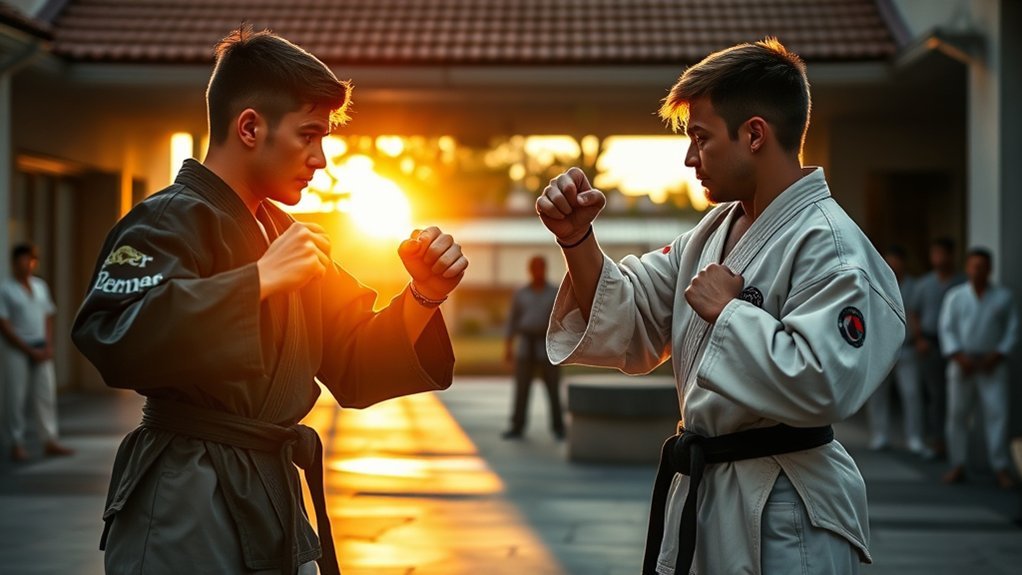
Cobra Kai revisits Daniel LaRusso and Johnny Lawrence more than 30 years after their famous tournament fight in the 1984 film The Karate Kid. Johnny is struggling with the direction of his life when he decides to reopen the Cobra Kai karate dojo. That decision brings his old rivalry with Daniel back to the surface.
The story soon grows beyond Daniel and Johnny. Teenagers including Miguel Diaz, Robby Keene, Samantha LaRusso, Tory Nichols, and Eli “Hawk” Moskowitz become central to the series. Their friendships, rivalries, romances, family problems, and changing loyalties turn the dojo conflict into a much larger story about identity and growing up.
The show combines martial arts action with comedy and family drama. It also plays with the idea that heroes and villains can look different when you hear another person’s side of the story. Johnny’s pursuit of redemption is especially important, but Daniel also has to reconsider some of his assumptions about the past.
How Cobra Kai Connects to The Karate Kid
Cobra Kai is not a remake. It is a continuation of the film franchise, with Ralph Macchio returning as Daniel LaRusso and William Zabka returning as Johnny Lawrence. John Kreese, Terry Silver, Chozen Toguchi, and several other characters from the movies also become important as the series develops.
The show regularly uses memories and flashbacks to connect current conflicts with events from the films. Training methods, old relationships, tournament history, and the different philosophies of Cobra Kai and Miyagi-Do all carry forward.
The connection becomes increasingly important in later seasons. The original Karate Kid gives you Daniel and Johnny’s rivalry, The Karate Kid Part II adds important context for Chozen and Mr. Miyagi’s Okinawan history, and The Karate Kid Part III introduces Terry Silver and develops John Kreese’s story further.
That history helps Cobra Kai feel familiar without simply repeating the films. The series spends much of its time asking whether people can learn from mistakes that were made years earlier.
Do You Need to Watch The Karate Kid First?
No. You can start Cobra Kai without watching The Karate Kid first. The series gives new viewers enough context to understand Daniel, Johnny, Cobra Kai, Miyagi-Do, and the major rivalries.
Watching the movies does improve the experience, however. Many returning characters, visual callbacks, old grudges, and emotional moments carry more weight when you know what happened before the series.
Not Required To Start
If you are mainly interested in the newer characters and the current story, starting with Season 1 works well. The opening episodes quickly explain Johnny’s loss to Daniel, his history with Cobra Kai, Daniel’s present-day life, and why reopening the dojo matters.
The show was deliberately built so a new audience could follow the story while longtime fans could recognize deeper references.
Helpful For Extra Context
- The Karate Kid (1984): The most useful movie to watch first because it establishes Daniel, Johnny, Mr. Miyagi, John Kreese, and the original All Valley rivalry.
- The Karate Kid Part II (1986): Becomes more useful when Okinawa, Chozen, and Mr. Miyagi’s past enter the series.
- The Karate Kid Part III (1989): Adds major context for Terry Silver and his relationship with Kreese.
Pro Tip: If you want extra context without delaying the series for long, watch the original 1984 Karate Kid first. You can return to Parts II and III before or after the characters from those films become important.
Cobra Kai’s Biggest Themes and Lessons
Although karate drives much of the action, Cobra Kai is mainly interested in what people do with failure, anger, pride, and the chance to change. Characters repeatedly discover that a useful lesson can become harmful when it is taken to an extreme.
Redemption and Second Chances
Johnny Lawrence’s story begins with a man who is still defined by a defeat from decades earlier. Reopening Cobra Kai gives him purpose, but it also forces him to confront the damaging lessons he learned from John Kreese.
- Johnny tries to become a better teacher, father, and partner.
- Daniel learns that being the hero of an old story does not make him right in every new conflict.
- Several younger characters move between dojos as they reconsider what strength and loyalty mean.
- Former enemies sometimes discover that cooperation is more useful than holding on to old grudges.
The series rarely treats redemption as instant. Characters make progress, make new mistakes, and then have to decide whether they will repeat old patterns.
Mentorship and Rivalry
Daniel and Johnny teach very different styles of karate. Daniel emphasizes balance, patience, defense, and lessons he learned from Mr. Miyagi. Johnny begins with Cobra Kai’s aggressive approach and later tries to separate confidence and toughness from cruelty.
The students do not simply copy their senseis. Miguel, Robby, Sam, Tory, Hawk, and others gradually decide which lessons help them and which ones they need to reject. That makes mentorship one of the series’ strongest themes.
Growth Through Conflict
- Characters who initially look like villains are sometimes given more complicated motivations.
- Parents, senseis, and surrogate father figures strongly influence the teenagers’ choices.
- Competition can build confidence, but obsession with winning repeatedly causes damage.
- The series contrasts self-control with aggression rather than treating fighting itself as the answer to every problem.
The strongest character arcs come from people realizing that defeating an opponent does not automatically solve the conflict behind the fight.
The Main Characters and Their Arcs

The heart of Cobra Kai lies in its characters, whose personal conflicts drive the story as much as the martial arts.
- Johnny Lawrence: William Zabka’s former Cobra Kai student begins the series struggling with his past. Reopening the dojo starts a long attempt to rebuild his life and become a better mentor and father.
- Daniel LaRusso: Ralph Macchio returns as the former Karate Kid, now an adult with a family and successful business. His loyalty to Mr. Miyagi’s teachings is a strength, but his unresolved history with Cobra Kai can also cloud his judgment.
- Miguel Diaz: Xolo Maridueña plays one of Johnny’s first students. Miguel’s journey from a bullied teenager to a confident fighter helps launch the new generation’s story.
- Robby Keene: Tanner Buchanan plays Johnny’s estranged son. Robby’s relationships with Johnny, Daniel, Miguel, and Tory make him one of the series’ most conflicted characters.
- Samantha LaRusso: Mary Mouser plays Daniel’s daughter, who must balance family expectations, relationships, fear, and her own approach to karate.
- Tory Nichols: Peyton List’s character becomes one of Sam’s fiercest rivals but gradually receives a more complicated story involving family pressure, loyalty, grief, and survival.
- Eli “Hawk” Moskowitz: Jacob Bertrand’s character begins as an insecure, bullied teenager whose new confidence becomes aggression before he learns to rethink the identity he created.
- John Kreese and Terry Silver: Martin Kove and Thomas Ian Griffith return from the films as major forces behind Cobra Kai’s harsher philosophy.
- Chozen Toguchi: Yuji Okumoto’s returning Karate Kid Part II character shows how dramatically a person can change after the events that once defined him.
How Cobra Kai Was Made
Cobra Kai was created by Josh Heald, Jon Hurwitz, and Hayden Schlossberg and produced in association with Sony Pictures Television. Ralph Macchio and William Zabka returned to the roles that made the original rivalry possible.
- The project was announced in 2017 as a continuation of the Karate Kid films.
- It debuted in 2018 through YouTube Red, which later became YouTube Premium.
- Netflix announced in June 2020 that it would become the show’s new home, beginning with the first two seasons and a forthcoming third season.
- The show eventually ran for six seasons.
- The sixth season was expanded into a 15-episode final season released in three parts.
- The final five episodes arrived on February 13, 2025.
Netflix’s 2020 announcement confirms the platform change, while Sony Pictures’ official Cobra Kai page identifies the series as a continuation of the 1984 All Valley storyline.
Why Cobra Kai Became a Hit
| Element | Effect | Why It Matters |
|---|---|---|
| Nostalgia | Brings back familiar characters and conflicts | Rewards longtime Karate Kid fans |
| New characters | Creates a story that is more than a reunion | Gives younger viewers their own heroes and rivals |
| Character evolution | Complicates old ideas about heroes and villains | Makes long-running rivalries more interesting |
| Fight scenes | Turns emotional conflicts into physical stakes | Keeps the series energetic |
| Comedy and drama | Keeps the tone from becoming too serious | Lets family stories and action exist together |
Its strongest idea is simple: viewers know how Daniel remembered the original rivalry, but Cobra Kai begins by spending significant time with Johnny’s perspective. From there, the show repeatedly changes the audience’s assumptions about characters.
That approach allows the series to use nostalgia without depending entirely on it. The returning cast creates familiarity, while Miguel, Robby, Sam, Tory, Hawk, and the other younger characters give the story its own identity.
Where to Watch Cobra Kai Now

Netflix is the current streaming home of Cobra Kai. All six seasons have been released, including the final five episodes of Season 6, which premiered on February 13, 2025.
- Start with Season 1 if you are completely new to the series.
- Watch the seasons in release order; the story is highly serialized.
- The complete six-season story is available, so there is no need to wait for another batch of episodes.
- Season 6 is the final season; there is no Season 7 continuing the main Cobra Kai series.
Note: Netflix maturity ratings can differ by country. For example, the U.S. service lists Cobra Kai as TV-14, while other markets may show a different local rating. Check the rating displayed on your own Netflix account when deciding whether the show is suitable for a younger viewer.
What to Watch After Cobra Kai
If you finish the series and want another story from the franchise, the 2025 film Karate Kid: Legends is a related option. It follows a new protagonist, Li Fong, and brings Ralph Macchio’s Daniel LaRusso together with Jackie Chan’s Mr. Han.
It is better treated as another chapter in the wider Karate Kid franchise rather than as a seventh season of Cobra Kai. Sony Pictures describes it as a new story in which Daniel and Mr. Han help Li combine their different martial arts traditions.
Frequently Asked Questions
What Are the 5 Rules of Karate?
There is no single universal list of five rules followed by every form of karate. The Japan Karate Association’s Dojo Kun uses five guiding precepts: seek perfection of character, be sincere, put maximum effort into what you do, respect others, and develop self-control. In the fictional Cobra Kai dojo, the best-known philosophy is instead summarized as “Strike First, Strike Hard, No Mercy.”
Who Did Robby Lose His Virginity to in Cobra Kai?
Cobra Kai does not explicitly confirm when Robby first had sex or identify a person as the definitive answer to that question. Robby has romantic relationships during the series, including with Sam and Tory, but stating that he lost his virginity to Sam as a confirmed fact goes beyond what the show establishes.
Should I Let My 12-Year-Old Watch Cobra Kai?
That depends on your child’s maturity and the rating used in your country. The series contains frequent martial arts fights, bullying, intense rivalries, mature family situations, and other teen and adult themes. Netflix ratings vary by market, so check the maturity rating shown on your local Netflix account and preview an episode if you are unsure.
Why Was Kwon So Angry?
Kwon Jae-Sung is portrayed as highly competitive, aggressive, proud, and eager to prove himself within Cobra Kai’s demanding environment. His anger is closely tied to rivalry, status, and the dojo’s ruthless approach to competition. The series does not establish a specific betrayal-and-abandonment backstory that explains his personality, so those details should not be treated as canon.
Is Cobra Kai Finished?
Yes. Cobra Kai ended after six seasons. Season 6 was officially the final season, and its last five episodes were released on Netflix on February 13, 2025.
Is Cobra Kai Canon to The Karate Kid?
Yes. Sony Pictures and Netflix describe Cobra Kai as a continuation of the Karate Kid film franchise. Daniel LaRusso, Johnny Lawrence, John Kreese, Terry Silver, Chozen, and other returning characters continue stories that began in the original films.
Sources
- Sony Pictures — Cobra Kai — official series synopsis and franchise connection.
- Netflix Tudum — Cobra Kai — official seasons, cast, episodes, and series information.
- Netflix Tudum — Cobra Kai Season 6 — final-season status and February 13, 2025 release of the last episodes.
- About Netflix — Cobra Kai Comes to Netflix — confirms the 2020 move from its original platform to Netflix.
- Japan Karate Association — Philosophy and Dojo Kun — authoritative background on traditional karate principles.
- Sony Pictures — Karate Kid: Legends — official information about the 2025 franchise film featuring Daniel LaRusso and Mr. Han.
Conclusion
Cobra Kai takes a simple idea—revisiting Daniel LaRusso and Johnny Lawrence decades after The Karate Kid—and turns it into a six-season story about rivalries, families, mentors, students, and second chances. You can start without seeing the movies, although knowing the original films makes many returning characters and callbacks more rewarding.
Most importantly for new viewers, the story is now complete. All six seasons have been released, the final episodes arrived in February 2025, and you can watch Daniel, Johnny, Miguel, Robby, Sam, Tory, Hawk, and the rest of the cast’s journey from beginning to end.
