

Last Updated on July 24, 2026 by Ethan Caldwell
You may be able to park at a hotel without booking a room, but you should never assume the lot is open to the public. Some properties allow parking for restaurant diners, event guests, meeting visitors, spa customers, or drivers who pay a public rate. Others restrict every space to registered overnight guests. Check the property’s rules before you enter, register your vehicle when required, and keep the validation receipt or parking pass.
Quick Answer
Yes, you can sometimes park at a hotel without staying there, but only when the property allows visitor, restaurant, event, day-use, or paid public parking. Ask the front desk or parking operator first. Unauthorized cars may receive a notice, be immobilized, or be towed under the property’s rules and local law.
Key Takeaways
- Hotel parking is private property, so access depends on the individual hotel or garage operator.
- Non-guests may be allowed to park for dining, meetings, events, spa visits, airport parking, or a separate fee.
- Confirm the rate, time limit, validation process, overnight rules, and in-and-out privileges before leaving your car.
- In Manhattan, compare the hotel with nearby garages, legal street parking, transit, and New Jersey park-and-ride options.
- Do not treat a hotel loading zone as a parking space. It is generally for active passenger and baggage loading only.
Disclosure: As an Amazon Associate I earn from qualifying purchases. Some links on this page are affiliate links, at no extra cost to you.
Can You Park at a Hotel Without Staying?
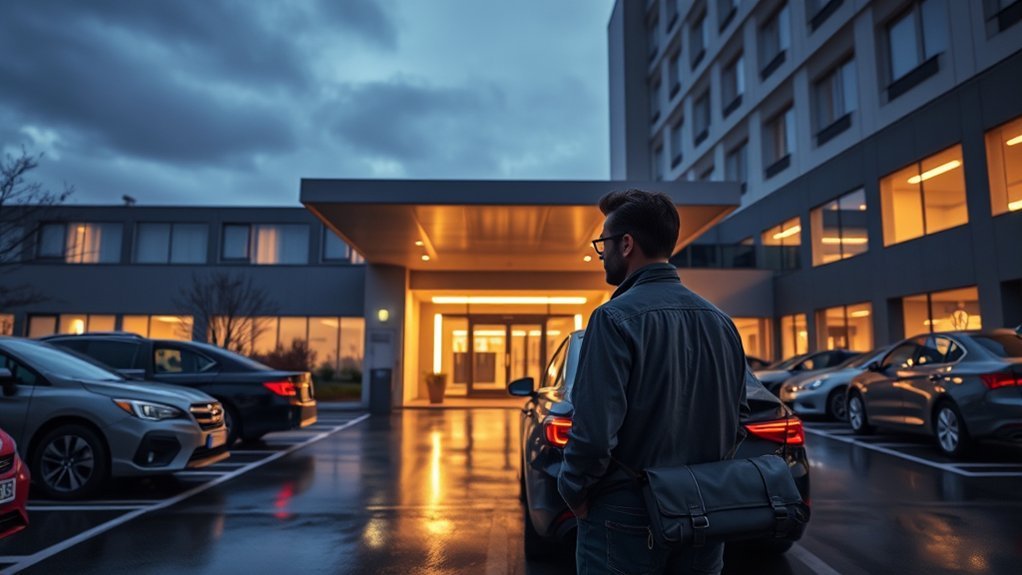
Sometimes, but permission depends on the property. Many hotels reserve parking for registered guests because the number of spaces is limited. Other hotels sell parking to the public or allow visitors who are using an on-site restaurant, bar, meeting room, ballroom, spa, or other service. Some hotel parking programs also offer validated parking for dining customers.
Call the hotel, use its official parking page, or ask the parking attendant before you leave your vehicle. Find out whether you must take a ticket, scan a QR code, register your license plate, display a pass, or validate your parking inside. A verbal answer is helpful, but a printed ticket, receipt, text message, or email gives you better proof if a question comes up later.
Warning: An open gate or an empty space does not mean public parking is allowed. Private lots may use cameras, plate readers, permits, attendants, or towing contractors to enforce their rules.
Who Can Use Hotel Parking?
Hotel parking is commonly available to registered overnight guests, but access may also extend to other approved users. The exact groups vary by property:
- Overnight guests: You may receive self-parking or valet access after registering your vehicle at check-in.
- Restaurant or bar customers: Some hotels offer free or reduced parking after validation, often for a limited number of hours.
- Event and meeting guests: Wedding, conference, and banquet attendees may receive a special rate, code, voucher, or reserved area.
- Spa, casino, or day-use customers: Parking may be included, discounted, or billed separately.
- Public parking customers: Some hotel garages operate as public facilities even when the driver is not using the hotel.
- Airport parking customers: Some airport hotels sell park-and-fly packages or separate long-term parking, with their own shuttle and vehicle rules.
- Visitors of registered guests: A hotel may allow short visits, but the registered guest or visitor may need to report the license plate.
These arrangements support approved visits rather than unrestricted public parking. Confirm the hotel’s parking policy before arrival so you know who qualifies, what proof is required, and when the permission ends.
Hotel Parking Costs and Fee Types
There is no dependable nationwide hotel parking price range. Rates change by city, property, vehicle size, service type, event schedule, and length of stay. Even hotels in the same neighborhood can charge very different amounts. Official Manhattan hotel pages, for example, may list daily valet rates well above the price of many suburban hotel lots, so a broad claim such as “hotel parking costs $2 to $50” can quickly become inaccurate.
Before booking or driving in, check for all of these charges and conditions:
- Hourly, day-use, or overnight rate: The rate may reset at a fixed time rather than exactly 24 hours after entry.
- Self-parking or valet fee: Valet usually costs more because staff park and retrieve the vehicle.
- Taxes and facility fees: The advertised parking rate may not be the final total.
- Oversized-vehicle fee: SUVs, pickup trucks, roof boxes, vans, and tall vehicles may cost more or be refused.
- Electric-vehicle charging fee: Charging may be separate from the parking fee, and an available charger is not guaranteed.
- In-and-out privileges: Some rates allow unlimited exits and returns, while others charge again after you leave.
- Validation: A restaurant, meeting, or event may reduce the fee only after staff validate the ticket.
- Lost-ticket fee: Losing your ticket can trigger a maximum daily charge or an identity check.
- Early arrival or late departure: Parking before check-in or after check-out may require approval or an extra fee.
Read the parking terms on the hotel’s official site and confirm them again if your trip is during a holiday, major event, or busy weekend. Parking prices and access rules can change more often than room descriptions.
Valet, Self-Park, and Garage Options

Once you know that parking is allowed, compare how each option works. The lowest posted rate is not always the best choice if it adds a long walk, has no in-and-out privileges, closes overnight, or cannot accept your vehicle.
| Option | How it works | Check before choosing |
|---|---|---|
| Valet | You hand the keys to hotel or garage staff, who park and retrieve the car. | Daily fee, tipping, retrieval time, in-and-out privileges, operating hours, and oversized-vehicle limits. |
| Hotel self-parking | You park your own vehicle in the hotel’s lot or garage and keep the keys. | Guest-only restrictions, plate registration, gate access, height limit, security, and exit rules. |
| Partner garage | The hotel directs you to a nearby independent garage, sometimes with a negotiated or validated rate. | Whether validation is required, who handles complaints, walking distance, hours, and re-entry rules. |
| Public garage | You book or enter a garage that is not connected to the hotel. | Final price, taxes, reservation window, cancellation terms, operating hours, and vehicle exclusions. |
| Legal street parking | You park at a curb where signs, meters, and local rules allow it. | Time limits, meter hours, street cleaning, loading zones, hydrants, permit zones, and overnight restrictions. |
Valet offers convenience, while self-parking gives you more control. A partner or public garage may cost less, but you need to compare the full terms rather than the headline rate.
Pro Tip: Take a photo of the rate board, parking ticket, level, row, vehicle condition, and any validation receipt. It can help you find the car and resolve a billing or damage dispute.
Cheaper Parking Near Manhattan Hotels
If you are trying to cut costs near a Manhattan hotel, compare the hotel rate with nearby garages before arrival. Do not rely on an old blog price or assume that a facility called “Port Authority parking” offers a standard public daily rate. Confirm the exact garage name, address, vehicle size, arrival time, exit time, taxes, and re-entry terms.
Legal street parking can be less expensive than a hotel garage, but it is harder to find and comes with strict rules. The New York City Department of Transportation parking-meter page lists current meter zones and rates and tells drivers to follow the signs and meter at the specific block. Rates and time limits vary by area and time of day.
You can also compare New Jersey park-and-ride locations and continue by train, bus, or light rail. The NJ TRANSIT North Bergen Park & Ride page, for example, confirms that daily commuter parking is available for 24 hours from entry. Check the current parking fee, transit fare, schedule, overnight allowance, and last return service before choosing this option.
Parking reservation apps can help you compare nearby garages, but read the final checkout screen carefully. A low quote may change because of taxes, oversized-vehicle charges, event pricing, or a different entry window.
Note: A Manhattan hotel loading zone is not a place to leave your car. NYC DOT states that hotel loading zones are for quick guest pickup, drop-off, and baggage loading. Follow the posted “No Standing Hotel Loading Zone” sign.
How to Avoid Hotel Parking Problems
Before you arrive, confirm the hotel’s parking rules so you do not face a guest-only restriction, an unexpected fee, or enforcement action. If the lot is full, too expensive, or limited to certain users, prepare a backup garage or another way to reach the property.
Confirm Parking Rules
Check the hotel’s parking page and contact the property when the wording is unclear. Ask whether you are parking as an overnight guest, restaurant customer, event attendee, meeting visitor, guest visitor, or public parking customer. The answer may change the rate and time limit.
| Check | Why it matters | Smart move |
|---|---|---|
| Guest-only policy | Stops surprise refusals | Call ahead |
| Garage partner | May offer self-parking | Ask for rates and validation |
| Time limit | Prevents an overstay charge | Confirm entry and exit times |
| In-and-out access | Leaving may end the paid session | Ask before your first exit |
| Vehicle size | Tall or oversized vehicles may be refused | Give the make, model, and height |
| Local rules | Avoids tickets | Read every posted sign |
| Hydrant zones | Creates a towing and safety risk | Park elsewhere |
| Parking app | Helps compare prices | Review the final terms before booking |
Use a reputable parking app when it helps, but compare the app terms with the garage signs. If they conflict, speak with the garage operator before leaving the vehicle.
Plan Alternate Transport
When hotel parking is tight or overpriced, plan another way to reach the property. You may be able to drop off passengers and luggage, then park at a legal garage or park-and-ride. Public transport can be simpler in dense city centers. A taxi or rideshare may also work, although travel time and prices can rise during busy periods.
Do not wait in a hotel loading zone longer than needed for active pickup, drop-off, or baggage handling. In New York City, NYC DOT identifies hotel loading zones as “No Standing” areas for quick passenger and luggage activity, not general parking.
What Happens If You Park Without Permission?
The result depends on the property, its signs, local law, and how long the vehicle remains. The hotel or parking operator may leave a warning, charge the public rate, issue a private parking notice where allowed, block gate access, immobilize the vehicle, or call a towing company. A city may also issue a ticket when the car violates public-street rules near the hotel.
If your car is missing, ask the front desk or garage operator whether it was relocated or towed. Photograph the signs, save your ticket and receipts, and get the towing company’s name and contact details. Do not argue with staff at the vehicle entrance. Use the property’s billing or dispute process and the local consumer or parking authority when needed.
How to Ask the Hotel for Parking Permission
A direct question usually gives you the clearest answer. Tell the hotel why you are visiting, when you will arrive, how long you will stay, and what vehicle you drive. You can ask:
“I am not staying overnight, but I am visiting the restaurant from 6:00 p.m. to 8:00 p.m. Can I use the hotel parking, and do I need validation or a vehicle pass?”
Also ask for the total fee, tax, time limit, entry instructions, exit instructions, and the name of the garage if it is off-site. When possible, keep the answer in writing.
Overnight and Long-Term Hotel Parking
You may leave a car overnight only when the hotel or garage permits it. Being a registered guest often qualifies you, but it does not automatically mean parking is free or included. Non-guests may also qualify through a paid public garage, airport parking program, event arrangement, or park-and-fly package.
For overnight or long-term parking, confirm:
- the exact start and end time of the parking period;
- whether you must stay one night at the hotel;
- whether the lot keeps your keys;
- whether the vehicle can leave and return;
- shuttle hours and reservation rules;
- security measures and the property’s limits of liability;
- snow, construction, street-cleaning, or vehicle-movement rules; and
- what happens if your return is delayed.
Remove valuables, lock the car, record the mileage and fuel level when using valet or key-retention parking, and keep the claim ticket somewhere safe.
Accessible, EV, and Oversized-Vehicle Parking
Accessible parking spaces are reserved for eligible users under applicable law. The U.S. Department of Justice ADA guidance explains how accessible spaces and access aisles must be provided in covered parking facilities. Do not use an accessible space or its striped access aisle unless you are legally entitled to do so and are following the local permit rules.
Electric-vehicle charging spaces may have separate charging, idle, or time-limit rules. A hotel may require you to move the car after charging ends. Oversized vehicles can face height, length, width, weight, or roof-equipment limits. Tell the hotel about roof racks, cargo boxes, trailers, bicycles, and lift kits before arrival.
Frequently Asked Questions
Can I park in a hotel parking lot for free?
Sometimes. Free parking may be limited to registered guests, validated restaurant customers, event attendees, or loyalty members. Other hotels charge everyone. Confirm the rule and get any required validation before the free period expires.
How can I get a hotel parking fee waived?
Ask before booking, check direct-booking packages, review loyalty benefits, and ask whether a restaurant, meeting, event, or accessible-travel arrangement includes validation. A hotel is not required to waive the fee, so get the approved benefit in writing.
Can you leave your car in a hotel parking lot overnight?
Yes, when the hotel or garage allows overnight parking. Registered guests often qualify, while non-guests may need a public parking reservation, event permission, or airport parking package. Confirm the fee, vehicle-registration process, and departure deadline.
What are six common places where you cannot park?
Common restricted places include fire hydrants, driveways, loading zones, street-cleaning zones during posted hours, accessible spaces without legal authorization, and areas marked “No Parking,” “No Standing,” or “No Stopping.” The exact rules vary by location, so always follow local signs and laws.
Can I park at a hotel while eating at its restaurant?
Often, but not always. Some hotels validate restaurant parking for a set time, while others charge a visitor rate or have no customer parking. Ask the restaurant or front desk where to park and how to validate the ticket.
Can I use hotel valet parking without booking a room?
Some hotels offer valet service to restaurant, event, spa, or public parking customers. Others limit valet to overnight guests. Confirm eligibility, total cost, closing time, and retrieval rules before handing over your keys.
Can a hotel tow a visitor’s car?
A hotel or parking operator may arrange towing when a vehicle violates posted private-property rules and local law. Requirements differ by jurisdiction. Read the signs, register the vehicle when required, and keep proof of permission or payment.
Conclusion
So, can you park at a hotel without staying? Sometimes yes, but only when the hotel or garage allows it. Check who may use the lot, the total fee, validation rules, time limits, overnight access, and re-entry terms before you park. In busy cities such as New York, compare the hotel with nearby garages, legal street parking, park-and-ride facilities, and public transport. A few minutes of checking can help you avoid an unexpected bill, a ticket, or a tow.
Sources
- NYC Department of Transportation: Parking Regulations — supports street-parking, hydrant, sign, and street-cleaning guidance.
- NYC Department of Transportation: Parking Meters — supports current meter-zone, rate, sign, and time-limit guidance.
- NYC Department of Transportation: Loading Zones — explains hotel loading zones and active pickup, drop-off, and baggage loading.
- U.S. Department of Justice: ADA Parking Guidance — supports accessible-parking-space and access-aisle guidance.
- NJ TRANSIT: North Bergen Park & Ride — supports the park-and-ride alternative and its 24-hour commuter-parking window.
- Marriott: Residence Inn New York Manhattan/Central Park — illustrates that official hotel pages publish property-specific valet rates, vehicle surcharges, and re-entry terms.

