
Last Updated on September 11, 2026 by Daniel Globe
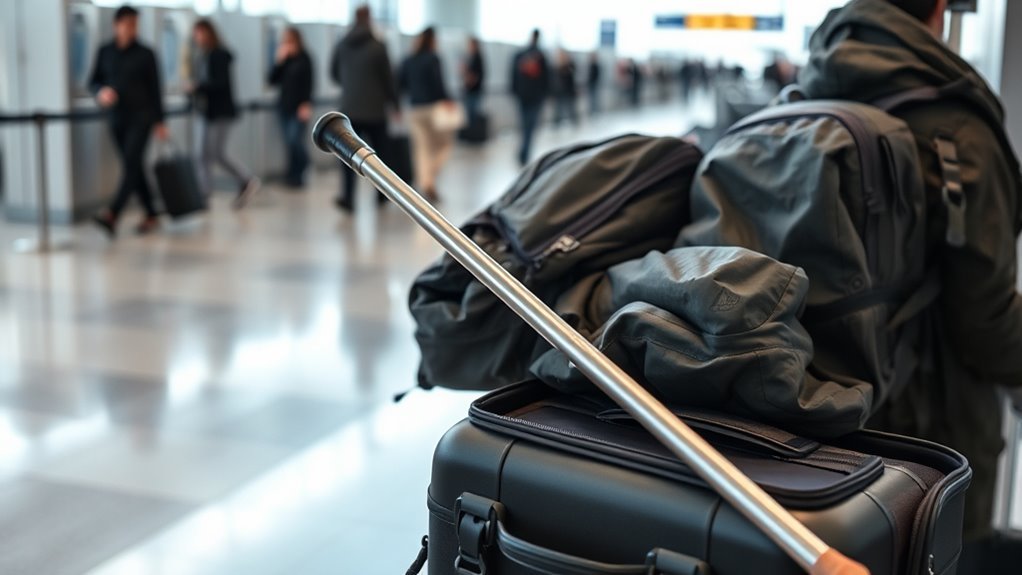
Flying with hiking poles can be confusing because airport security rules and airline baggage rules are not always the same. The answer depends mainly on the pole’s tip, its packed size, your airline, and the countries where you pass through security. Checking every flight segment before departure is the safest approach.
Quick Answer
Under current U.S. TSA guidance, blunt-tipped hiking poles may go in carry-on or checked bags, but sharp-tipped poles cannot go in carry-on luggage. Your airline may still reject a pole because of its size or policy. UK airport security and airlines such as Ryanair require hiking poles to be checked.
Key Takeaways
- TSA allows blunt-tipped hiking poles in carry-on and checked bags, subject to screening and the officer’s final decision.
- Sharp-tipped poles should go in checked baggage with their tips securely covered.
- Airlines and other countries may apply stricter rules than TSA.
- A necessary mobility cane is treated differently from a recreational trekking pole on covered U.S. flights.
- Collapsible poles are easier to pack, but being collapsible does not guarantee cabin approval.
Disclosure: As an Amazon Associate I earn from qualifying purchases. Some links on this page are affiliate links, at no extra cost to you.
Can You Bring Hiking Poles in the Cabin?
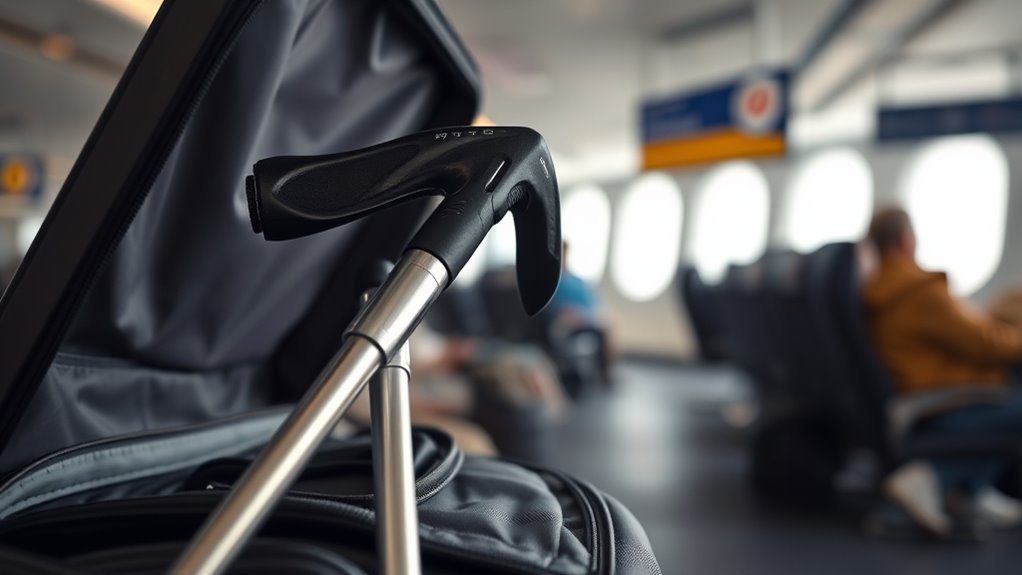
You may be able to bring hiking poles in the cabin, but permission is not automatic. For travel from a U.S. airport, the Transportation Security Administration allows blunt-tipped hiking poles in carry-on bags. Sharp-tipped hiking poles are not allowed in carry-on luggage.
Passing security is only one part of the process. Your airline can still refuse the poles if they exceed its carry-on dimensions, cannot be stored safely, or conflict with its own baggage policy. A pole that passes TSA screening must still fit under the seat or inside an approved overhead compartment.
Collapsible poles give you a better chance of meeting cabin-size limits. Collapse each section fully, secure the adjustment locks, fold the straps against the shafts, and place the poles inside your bag rather than attaching them loosely to the outside.
Warning: Do not arrive at security without a backup plan. Even an item that is generally permitted can receive extra screening or be refused by the officer at the checkpoint.
What Are the TSA Rules for Hiking Poles?
Current TSA guidance separates hiking poles by the type of tip:
- Blunt-tipped hiking poles: Allowed in carry-on and checked bags, subject to security screening.
- Sharp-tipped hiking poles: Not allowed in carry-on bags. Pack them in checked baggage.
- Final checkpoint decision: A TSA officer may refuse an item if it presents a security concern, even when the item is generally permitted.
- Airline approval: TSA advises travelers to confirm that their airline permits hiking poles as carry-on items.
A removable rubber cap can protect the pole and your luggage, but it does not guarantee cabin acceptance. Security staff may consider the complete design, including the tip under the cap. When there is any doubt, checked baggage is the lower-risk option.
The shaft material does not change the published TSA rule. Aluminum, carbon-fiber, and composite poles are judged under the same tip and screening guidance. Material matters more when you are protecting the poles from bending, crushing, or cracking in transit.
Note: TSA rules apply to screening at U.S. airports. A different security authority may inspect you during an international departure, transfer, or return flight.
Do Airlines Allow Hiking Poles?
Many airlines transport hiking poles, but cabin and checked-bag rules vary. Security approval does not override an airline’s size, weight, packaging, or stowage requirements. Check the policy of every operating carrier on your itinerary, especially when a ticket includes a partner airline.
| Authority or carrier | Current guidance | What you should do |
|---|---|---|
| TSA | Blunt-tipped poles may be carried on or checked. Sharp-tipped poles are checked-bag items. | Inspect the tips and confirm your airline’s cabin limits. |
| Delta | Hiking and trekking poles are accepted when properly packed, subject to TSA rules and normal baggage allowances. | Pack them inside a compliant bag and confirm the aircraft’s available storage space. |
| Ryanair | Walking and hiking poles are not permitted onboard but may be placed in checked baggage. | Book suitable checked baggage and wrap exposed tips securely. |
| UK airport security | Walking and hiking poles are not allowed in hand luggage but are allowed in hold luggage. | Check the poles when departing through a UK airport. |
| International trips | Rules can change by country, airport, airline, and transfer point. | Check the departure, connection, return, and operating-airline rules. |
Delta’s official baggage guidance lists hiking and trekking poles as accepted when they are properly packed and comply with TSA and standard baggage requirements. Ryanair’s policy is stricter and lists walking and hiking poles among the items that must not be carried onboard.
If you change planes and must pass through security again, the rules at the connecting airport apply. A pole accepted at your first airport may not be accepted at the next checkpoint.
Hiking Poles Versus Mobility Aids
A recreational trekking pole and a cane needed because of a disability are not always treated the same way. On flights covered by U.S. disability rules, a cane or similar assistive device may be carried in the cabin if it can be stored safely.
According to the U.S. Department of Transportation, assistive devices do not count against a passenger’s normal baggage limit. They may be stored under a seat, in an overhead compartment, or in another approved space. If the device cannot be stored safely in the cabin, the airline must transport it in the baggage compartment without charging a checked-bag fee.
Tell the airline and security staff that the cane is a necessary mobility aid. Contact the airline’s accessibility team before an international trip because foreign security and disability rules may differ.
Can You Pack Hiking Poles in Checked Bags?
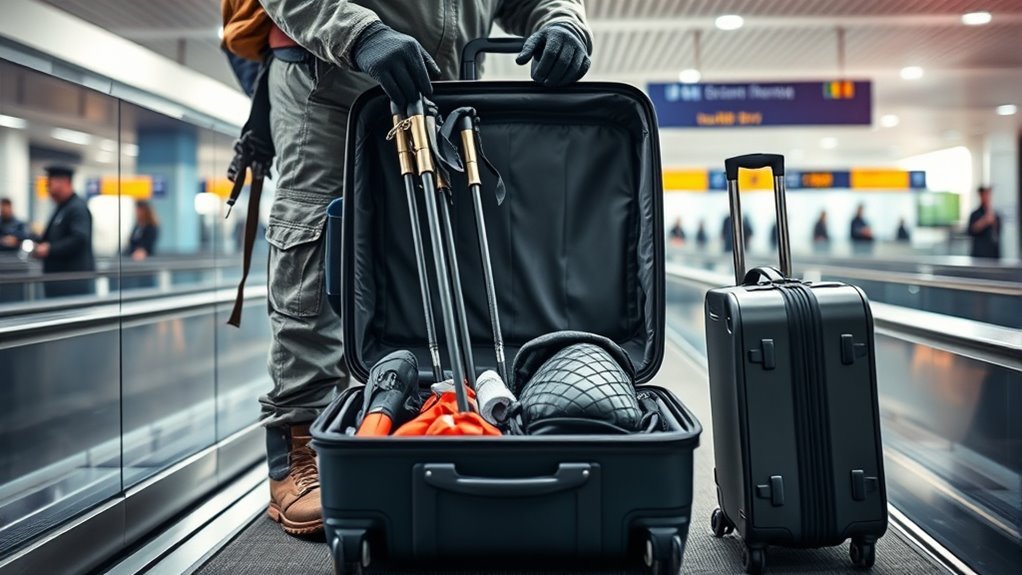
You can generally pack hiking poles in checked baggage. This is usually the simplest option for sharp-tipped, full-size, or non-collapsible poles.
All checked baggage remains subject to security screening. Blunt tips do not remove that requirement, but they reduce the chance of a pole puncturing your suitcase or injuring a baggage handler.
How to Pack Hiking Poles Safely
- Clean the poles. Remove mud, plant matter, and loose dirt before packing.
- Collapse or separate the sections. Shorter poles are less likely to bend and are easier to position inside a suitcase.
- Cover every tip. Use fitted rubber protectors, a thick cloth, foam, or another secure cover.
- Remove large baskets when possible. Store detachable baskets and small parts in a sealed pouch.
- Bundle the shafts. Fasten the poles together with their straps or reusable ties so they cannot move independently.
- Add impact protection. Place the poles in a padded sleeve, rigid tube, or sturdy pole bag.
- Position them carefully. Run the poles along the side or center of the suitcase and surround them with clothing.
- Check the final dimensions and weight. Oversize or overweight baggage fees may apply.
Pro Tip: Take a photo of the poles and their packing before checking the bag. The image can help document their condition if they are damaged during the trip.
Carbon-fiber poles need protection from crushing and sharp side impacts. Aluminum poles may tolerate impact better but can still bend. A rigid or well-padded container is useful for either material.
What’s the Best Way to Travel With Hiking Poles?
The best method depends on the pole design and your itinerary:
- Use carry-on baggage only when the poles have blunt tips, meet the security rule at every checkpoint, fit inside your cabin bag, and are accepted by the operating airline.
- Use checked baggage for sharp tips, full-size poles, UK departures, Ryanair flights, or any trip where the cabin rule is uncertain.
- Ship the poles ahead when checked-bag fees, tight connections, or unusual pole dimensions make air transport difficult.
- Rent or buy poles at the destination when you need the lowest-risk travel option and equipment is available locally.
For most travelers, collapsible poles packed securely inside checked luggage provide the best balance of convenience and low risk. Carrying blunt-tipped poles in the cabin can work on some U.S. itineraries, but you should confirm both TSA and airline rules before relying on that option.
What to Do if Security Rejects Your Hiking Poles
If an officer will not allow your poles through the checkpoint, stay calm and ask what options are available. Depending on the airport and the time before departure, you may be able to:
- Return to the airline counter and check the poles.
- Place them in a checked suitcase or approved protective bag.
- Give them to a friend who is not traveling.
- Use an airport mailing or shipping service, when available.
- Leave or surrender the poles if no other option is practical.
Do not assume that showing a website or arguing that another airport accepted the poles will change the decision. The screening officer at the current checkpoint makes the final security determination.
Before You Fly Checklist
- Inspect whether each tip is blunt or sharp.
- Measure the poles when fully collapsed.
- Read the security rules for every country where you may be screened.
- Read the baggage policy of every operating airline.
- Confirm whether checked-bag fees or oversize charges apply.
- Cover the tips and secure loose straps, baskets, and sections.
- Keep enough time at the airport to check the poles if cabin carriage is refused.
- Contact the accessibility team when the item is a necessary mobility aid.
Frequently Asked Questions
Can I Carry a Hiking Stick on an Airplane?
You may carry a blunt-tipped hiking stick through a U.S. TSA checkpoint if it passes screening and your airline accepts its size and design. Sharp-tipped hiking sticks should go in checked baggage. Other countries may prohibit all hiking sticks in hand luggage.
Can I Take a Metal Walking Stick on a Plane?
A metal walking stick may be transported, but the rules depend on its purpose and tip. A blunt recreational stick must meet security and airline rules. A cane needed as a mobility aid receives separate assistive-device treatment on covered U.S. flights, provided it can be stored safely.
Are Trekking Poles Allowed in Cabin Baggage?
Blunt-tipped trekking poles may be allowed in cabin baggage at U.S. TSA checkpoints, but the airline must also accept them. Sharp-tipped poles are not allowed in U.S. carry-on bags. UK airport security and Ryanair require walking or hiking poles to be checked.
Can I Take Hiking Poles in Hand Luggage?
You can sometimes place blunt-tipped poles in hand luggage on a U.S. itinerary, provided they pass screening and fit the airline’s cabin limits. Do not place sharp-tipped poles in hand luggage. Rules outside the United States may be stricter.
Do Rubber Tip Covers Make Hiking Poles Carry-On Safe?
Rubber covers protect the tips and surrounding items, but they do not guarantee carry-on approval. Security staff may inspect the tip underneath the cover and decide whether the complete pole presents a risk.
Conclusion
You can fly with hiking poles, but you should not rely on one rule for every trip. TSA currently permits blunt-tipped poles in carry-on bags, while sharp-tipped poles must be checked. Airlines and foreign security authorities may be stricter. Check every flight segment, protect the tips, pack the poles securely, and keep a checked-bag backup plan.
Sources
- Transportation Security Administration: What Can I Bring? — U.S. carry-on and checked-bag rules for hiking poles and walking sticks.
- Delta Air Lines: Other Possibly Hazardous Items — Delta’s requirements for properly packed hiking and trekking poles.
- Ryanair: Prohibited Cabin and Checked-Bag Items — Ryanair’s checked-baggage rule for walking and hiking poles.
- GOV.UK: Hand Luggage Restrictions for Sports Equipment — UK airport rules for walking and hiking poles.
- U.S. Department of Transportation: Assistive Device Stowage — Cabin storage and baggage protections for disability-related assistive devices.
