
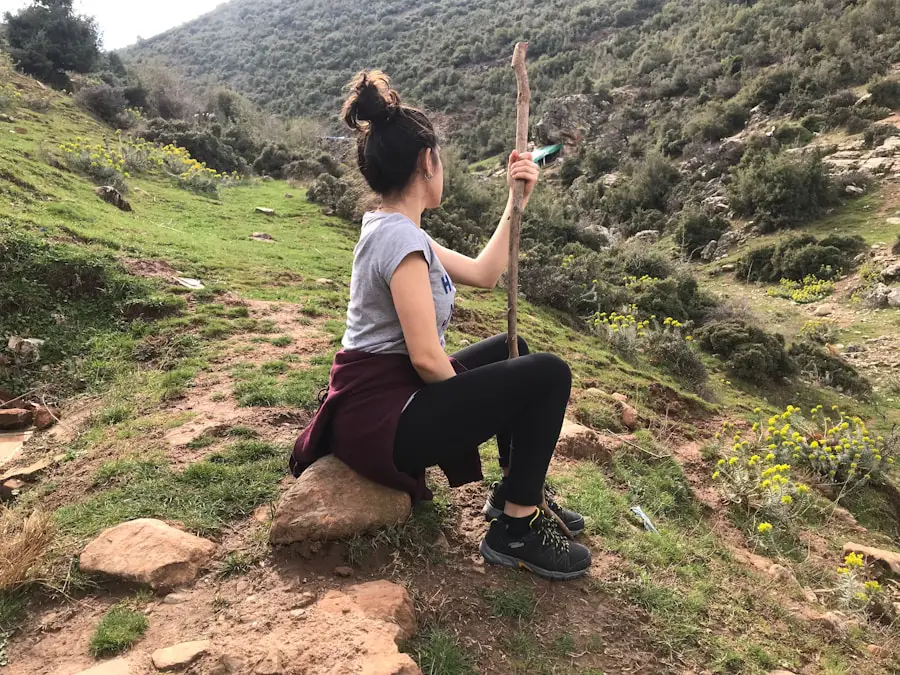
Last Updated on July 27, 2026 by Daniel Globe
Flying with hiking poles is easier when you separate airport-security rules from airline baggage rules. In the United States, the Transportation Security Administration (TSA) currently allows blunt-tipped hiking poles in carry-on and checked baggage, while sharp-tipped hiking poles are not allowed in carry-on bags. Your airline can still impose its own size and baggage restrictions.
Quick Answer
Yes, but the answer depends on the tip. TSA currently permits blunt-tipped hiking poles in carry-on and checked bags. Sharp-tipped hiking poles are not allowed in carry-on bags and should be checked. Your airline can still impose size restrictions, and airport-security rules outside the United States may be stricter.
Key Takeaways
- TSA allows blunt-tipped hiking poles in U.S. carry-on and checked baggage, subject to screening.
- Sharp-tipped hiking poles, including poles with exposed metal or carbide points, should go in checked baggage.
- A pole being collapsible, folding, or telescoping does not by itself make a sharp-tipped pole acceptable in a carry-on.
- Airlines decide whether the packed pole meets their cabin-baggage size and stowage rules.
- International airport-security and biosecurity rules can differ, so check every country and airport where you will pass through security.
Can You Bring Hiking Poles Through TSA?
According to the TSA What Can I Bring? guidance, blunt-tipped hiking poles are permitted in both carry-on and checked bags. Sharp-tipped hiking poles are not permitted as carry-on items.
TSA also states that hiking poles must be screened like other property and that the final decision rests with the TSA officer at the checkpoint. This means an item that is normally permitted can still receive additional screening or be refused if it raises a security concern.
| Pole or Situation | U.S. Carry-On | Checked Bag |
| Blunt-tipped hiking pole | Allowed by TSA, subject to screening and airline rules | Allowed |
| Sharp metal or carbide-tipped hiking pole | Not allowed | Allowed; protect the tip when packing |
| Blunt folding or collapsible pole | Potentially allowed if the airline also accepts its packed dimensions | Allowed |
| International itinerary | Check every security authority and airline | Usually the simpler option, subject to local rules |
Warning: Do not assume that placing a removable rubber cap over an otherwise sharp carbide or metal tip guarantees that TSA will treat the pole as blunt-tipped. When the underlying pole has a sharp point, packing it in checked baggage is the lowest-risk option.
Types of Hiking Poles
Hiking poles come in adjustable, fixed-length, and folding or collapsible designs. The construction affects how easily the poles fit into luggage, but it does not override airport-security rules.
Adjustable or Telescoping Poles
Telescoping poles use two or more sliding sections and a locking system so you can change their length. They are useful on varying terrain and often collapse enough to fit inside a suitcase.
Before flying, collapse each section completely and lock it so the pole cannot extend while it is being handled.
Fixed-Length Poles
Fixed-length poles are simple and can be lightweight, but their full length can make them difficult to pack. Even a blunt fixed-length pole that TSA would otherwise permit in a carry-on still has to comply with your airline’s cabin-baggage and stowage rules.
Folding Poles
Folding poles break down into short connected sections and are often the easiest style to fit inside luggage. However, folding construction does not automatically make them carry-on compliant. A folding pole with a sharp tip is still a sharp-tipped hiking pole under TSA’s current guidance.
Packing Hiking Poles for Air Travel
The safest packing method depends on whether your poles are going in a checked bag or into the cabin. In either case, collapse or fold them fully and prevent loose sections from moving around.
Products Worth Considering
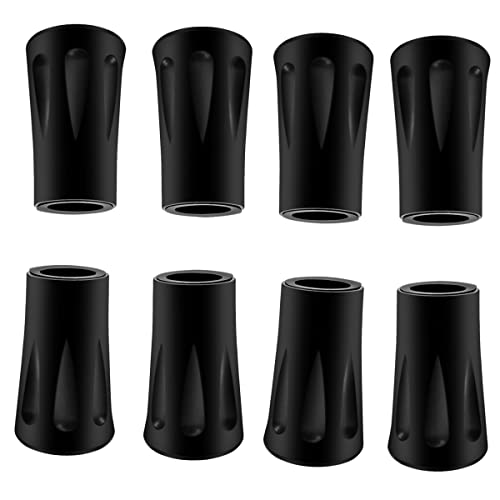
Durability: The head protector is made of durable high-quality rubber with high durability, anti-skid, lightness and wear resistance. A metal washer is embedded at the bottom of the hole to prevent the tip of the insertion rod from piercing the rubber.

NON-MARKING PROTECTION: TPU material protects surfaces while maintaining excellent grip on pavement or rock.

UNIVERSAL:Fits most popular brands of trekking poles or walking hiking sticks,compatible with all brands models of poles available in the market
How to Pack Hiking Poles in Checked Baggage
- Clean the poles. Remove mud, dirt, seeds, and plant material, especially before international travel.
- Collapse or fold them completely. Lock telescoping sections so they cannot extend in transit.
- Protect the tips. Use durable tip protectors, padding, or another secure covering so sharp points cannot puncture your bag or injure a baggage handler.
- Bundle the poles together. Straps or a pole sleeve can stop sections from shifting.
- Pad the full length. Surround the poles with clothing or place them in a protective case.
- Keep them inside the bag. An internally packed pole is less likely to catch on baggage-handling equipment than one strapped to the outside.
Pro Tip: Place folding or telescoping poles along the rigid side or bottom structure of a suitcase, surround them with clothing, and keep the tips covered. This reduces bending and puncture risk without requiring a separate oversized case.
Preparing a Blunt-Tipped Pole for Carry-On
First confirm that the pole is genuinely blunt-tipped under current TSA guidance. Collapse or fold it as short as possible, then check your airline’s cabin-baggage limits before leaving home.
The Federal Aviation Administration’s carry-on guidance advises passengers to verify the airline’s limits on the number and maximum size of cabin items. Some airline policies are stricter than general federal guidance, and an item that cannot be safely stowed may have to be checked.
Avoid attaching a hiking pole to the outside of your cabin bag unless the airline specifically permits that arrangement. An external pole can increase the measured size of the bag and may be difficult to stow securely.
Security Screening Process
Hiking poles carried through a U.S. passenger checkpoint must be screened like other property. A permitted pole may also receive additional inspection if the screening equipment produces an unclear image or the TSA officer has a security concern.
You do not need to rely on tricks such as hiding the pole, taking it apart unnecessarily, or arguing that another airport previously allowed it. Pack it so it is easy to inspect and follow the officer’s instructions.
TSA permission answers the security question. Your airline still decides whether the pole can be accepted and safely stowed as cabin baggage.
Products Worth Considering

Compact & Portable - Our foldable hiking poles collapse down to 15 inches, fitting easily into any bag. These collapsible walking sticks for hiking are perfect for travel, offering lightweight portability for any outdoor adventure.

Compact & Portable - Our foldable hiking poles collapse down to 15 inches, fitting easily into any bag. These collapsible walking sticks for hiking are perfect for travel, offering lightweight portability for any outdoor adventure.

BUILT TO LAST: Whether you're hiking on rugged terrain or snowshoeing on fresh powder, you need hiking gear that can keep up! Trailbuddy trekking poles are built tough enough for the long haul.
What If TSA Does Not Allow Your Pole Through?
The TSA officer at the checkpoint makes the final decision. If a pole is refused, do not plan on receiving an exception simply because it is collapsible or because you have flown with it before.
If time and airport procedures allow, you may be able to leave the checkpoint and ask your airline whether the pole can be placed in checked baggage. Other possible options, depending on the airport, include returning it to someone outside security, arranging shipment, or voluntarily leaving the item behind. Planning for that possibility before arriving at the airport is much easier than dealing with it immediately before boarding.
International Travel Considerations
TSA rules apply to TSA checkpoints in the United States; they do not create a worldwide carry-on rule. The security authority at each foreign airport can impose different restrictions, including an airport used for your return flight or a connection where you must pass through security again.
For example, current UK government hand-luggage guidance lists walking and hiking poles as prohibited from hand luggage but permitted in hold luggage. A pole accepted at a U.S. checkpoint therefore may not be accepted in the cabin when you fly home from another country.
Note: For an international trip, check the airport-security rules for every location where you expect to pass through screening, including your departure airport, any connection requiring re-screening, and your return airport. Also check each operating airline’s baggage policy.
Biosecurity and Dirty Hiking Gear
International travel can involve a second issue that is separate from airport-security rules: biosecurity. Used hiking equipment can carry soil, seeds, plant material, or organisms between countries.
For example, New Zealand’s Ministry for Primary Industries says used outdoor equipment for activities such as hiking and camping must be declared because it may carry soil or plant material. Equipment may be inspected on arrival.
Australia likewise advises travelers to clean and dry hiking and other outdoor gear and provides biosecurity requirements for equipment that has been used outside the country. Before an international trip, remove visible mud and organic material from pole tips, baskets, straps, and adjustment mechanisms.
Alternatives to Hiking Poles
If carrying your own poles creates too much baggage difficulty, there are several practical alternatives. Renting poles at your destination can eliminate the airport-security issue entirely. Outdoor stores near major hiking destinations may also sell inexpensive poles that you can purchase after arrival.
A traditional walking staff can provide some balance on the trail, but do not assume it has easier airline-security rules. Security authorities may apply similar restrictions to long or pointed sticks.
Hiking without poles is another option on easier terrain. Supportive hiking shoes or boots with suitable traction can improve stability, but footwear is not a direct substitute for the extra balance and support that poles provide on steep, loose, or uneven ground.
If you normally depend on poles because of mobility limitations rather than simply for recreation, review the applicable assistive-device rules with the security authority and airline before travel rather than assuming the recreational hiking-pole rule applies in the same way.
Tips for Smooth Air Travel with Hiking Poles
- Check the actual tip. Determine whether it is blunt or has an exposed metal or carbide point.
- Check TSA before a U.S. departure. Rules can change, so verify the What Can I Bring? guidance close to your travel date.
- Check your airline separately. Security approval does not guarantee that the airline will accept the pole as a cabin item.
- Use checked baggage for sharp-tipped poles. This avoids relying on a checkpoint exception that TSA’s published rule does not provide.
- Protect all tips. Covers and padding help protect your luggage, baggage handlers, and the poles themselves.
- Keep poles inside your bag when possible. External attachments can snag or alter the bag’s dimensions.
- Clean used outdoor equipment before international travel. Soil and plant material can trigger biosecurity inspection.
- Check every country on the itinerary. Do not assume the U.S. rule applies at your return or connecting airport.
- Leave time for screening. A permitted item can still receive additional inspection.
Enjoying Hiking Adventures on Your Travels
Traveling with hiking poles does not need to be complicated once you know which rules control each part of the trip. For a U.S. TSA checkpoint, the key distinction is the tip: blunt-tipped hiking poles may be carried on, while sharp-tipped poles belong in checked baggage. After that, your airline decides whether the packed item meets its cabin or checked-baggage requirements.
International trips require one more check because foreign airport-security rules may be different. Cleaning outdoor equipment before crossing borders can also prevent biosecurity problems in destinations with strict controls.
The lowest-risk strategy for a sharp-tipped pole or a complicated international itinerary is usually to collapse or fold the pole, protect its tips, pad it well, and place it inside checked baggage. If you are also preparing the rest of your travel kit, this guide to travel gifts for her includes additional gear ideas for travelers and outdoor adventures.
Frequently Asked Questions
Can I bring hiking poles on a plane?
Yes. In the United States, TSA currently permits blunt-tipped hiking poles in carry-on and checked bags. Sharp-tipped hiking poles are not allowed in carry-on baggage and should be checked. Airline baggage rules also apply.
Can collapsible hiking poles go in a carry-on?
A collapsible or folding pole may go through a U.S. TSA checkpoint if it is blunt-tipped and passes screening. It must also meet your airline’s cabin-baggage and stowage rules. Collapsibility does not make a sharp-tipped pole acceptable in a carry-on.
Can sharp-tipped trekking poles go through TSA?
Not as carry-on items. TSA states that sharp-tipped hiking poles are not allowed in carry-on baggage. They can be placed in checked baggage, where the tips should be protected to prevent punctures or injuries.
Does putting rubber caps on hiking poles make them carry-on safe?
A rubber protector is useful for packing, but it does not guarantee that a pole with a sharp metal or carbide point underneath will be treated as a blunt-tipped pole. For the lowest risk of refusal, place sharp-tipped poles in checked baggage.
Do hiking poles need a special case for checked baggage?
A special case is not normally required, but good protection is worthwhile. Collapse or fold the poles, cover the tips, bundle loose sections, and pad them with clothing or a protective sleeve. Keeping the poles completely inside the suitcase reduces snagging and damage.
Are hiking-pole rules the same on international flights?
No. Airport-security rules vary by country. For example, UK government guidance lists walking and hiking poles as prohibited in hand luggage but allowed in hold luggage. Check the rules for every airport where you will pass through security.
Do airline rules matter if TSA allows my hiking poles?
Yes. TSA determines whether an item may pass through a U.S. security checkpoint. Your airline controls cabin-baggage dimensions, weight, quantity, and safe stowage. A pole can therefore satisfy TSA rules but still be too large for your airline’s carry-on allowance.
Should I clean hiking poles before an international trip?
Yes. Remove soil, seeds, plant material, and other debris from used outdoor equipment. Countries with strict biosecurity systems, including New Zealand and Australia, may require outdoor equipment to be declared or inspected.
Sources
- Transportation Security Administration — What Can I Bring? — U.S. security rules for hiking poles and TSA’s final checkpoint authority.
- Federal Aviation Administration — Carry-On Baggage Tips — airline cabin-baggage size, quantity, and stowage considerations.
- GOV.UK — Hand Luggage Restrictions: Sports Equipment — UK rules for walking and hiking poles in hand and hold luggage.
- New Zealand Ministry for Primary Industries — Declaring Items on Arrival — declaration and inspection of used hiking and outdoor equipment.
- Australian Department of Agriculture, Fisheries and Forestry — Bringing Goods to Australia — cleaning and biosecurity requirements for hiking, camping, and sporting equipment.
