
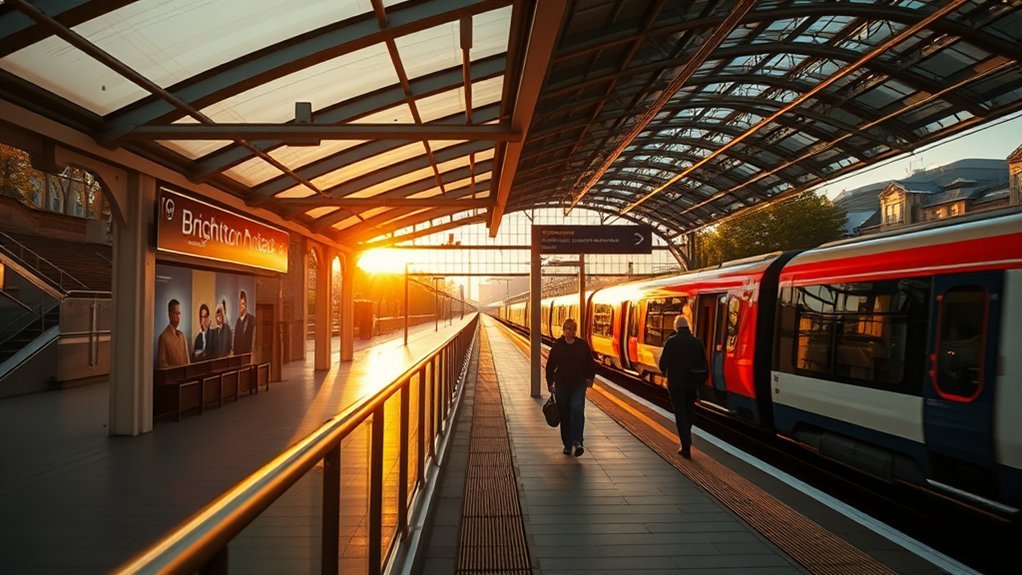
Last Updated on September 11, 2026 by Daniel Globe
Brighton Station is the city’s main railway hub and the most useful arrival point for central Brighton, the North Laine, The Lanes, the Royal Pavilion, and the seafront. This guide covers the station’s trains, ticket options, accessibility, parking, cycle storage, onward transport, and nearby attractions, including several limitations you should know before travelling.
Quick Answer
Brighton Station has eight platforms, step-free access throughout, ticket machines, staffed assistance, toilets, shops, cafés, parking, and extensive cycle storage. Direct trains connect Brighton with London, Gatwick Airport, Sussex, and other south-coast destinations. The station does not provide public Wi-Fi or a left-luggage facility.
Key Takeaways
- Brighton Station’s code is BTN, and its main entrance is on Queens Road.
- All eight platforms have step-free access, and Passenger Assist is available.
- Trains to London Victoria and London Bridge normally take about one hour or slightly longer.
- The station has 633 parking spaces and 740 cycle-storage spaces.
- There is no station left-luggage service, public Wi-Fi, or Oyster and contactless pay-as-you-go travel.
Disclosure: As an Amazon Associate I earn from qualifying purchases. Some links on this page are affiliate links, at no extra cost to you.
What Brighton Station Is
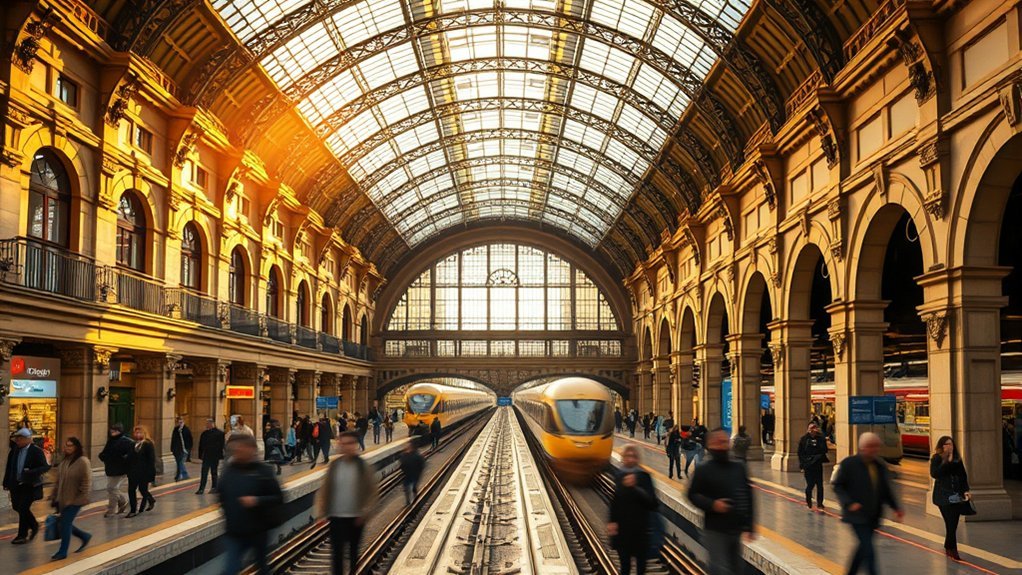
Brighton Station is the main railway station for Brighton and Hove. Its three-letter station code is BTN, and its official address is Queens Road, Brighton, East Sussex, BN1 3XP. Southern manages the station, while Southern, Thameslink, and Gatwick Express services use it.
The station combines a historic Victorian building with modern passenger facilities. According to Historic England, the surviving original station building dates from 1841. Later platform extensions and train sheds were added during the nineteenth century. The station and train sheds are protected as a Grade II* listed building.
| Station detail | Current information |
|---|---|
| Station code | BTN |
| Address | Queens Road, Brighton, East Sussex, BN1 3XP |
| Platforms | Eight |
| Step-free access | Available to all platforms |
| Parking | 633 spaces, including accessible spaces |
| Cycle storage | 740 spaces |
| Public station Wi-Fi | Not available |
| Left luggage | Not available |
Note: Station facilities, lift availability, platform assignments, and staffing arrangements can change. Check the official National Rail Brighton Station page before travelling.
Getting to Brighton Station
You can reach Brighton Station by train, local bus, bicycle, taxi, or car. Its central location makes it practical for both city-centre visits and onward journeys along the south coast. The main entrance faces Queens Road, while the car park, pick-up area, and rear station access are on the opposite side of the building.
Routes Into Brighton
Regular direct trains run to Brighton from several London stations and towns across southern England. Current journey times vary by service, stopping pattern, disruption, and engineering work.
- London Victoria to Brighton: the fastest scheduled journeys are usually about one hour.
- London Bridge to Brighton: direct journeys usually take just over one hour.
- London St Pancras to Brighton: Thameslink services provide a direct cross-London connection.
- Gatwick Airport to Brighton: the fastest trains take about 30 minutes, with some journeys slightly quicker or slower.
- Sussex and the south coast: direct or connecting services run from places including Lewes, Eastbourne, Worthing, Chichester, Portsmouth, and Southampton.
National Rail’s Brighton destination guide also lists direct links from destinations such as Cambridge, Luton, and Bedford.
Pro Tip: Check your journey again on the morning of travel. Engineering work on the Brighton Main Line can cause diversions, longer journeys, or replacement buses, especially early on Sundays and during planned weekend closures.
Station Access, Parking, and Drop-Off
The Queens Road entrance is the best choice when walking from the city centre. The rear entrance is useful for the station car park and vehicle pick-ups. National Rail lists a rear drop-off and pick-up area but does not list a formal taxi rank, so pre-booking a taxi can be helpful if you have luggage or accessibility requirements.
The station car park has 633 spaces, including accessible bays. It uses automatic number plate recognition, so read the signs carefully and complete any required payment or Blue Badge registration. Parking prices and terms may change.
Local and regional buses stop near the station’s front entrance. You can also walk downhill from the station to the North Laine, Royal Pavilion, The Lanes, and seafront.
Station Facilities and Accessibility
Brighton is a Category A step-free station, which means all eight platforms can be reached without using stairs. The station also has tactile platform warnings, visual and audible announcements, induction loops, customer information screens, ticket gates, and staff assistance.
| Facility | What to expect |
|---|---|
| Ticket office | A staffed ticket office is available for much of the operating day. Check current opening times before travel. |
| Ticket machines | Machines are available for buying tickets and collecting eligible bookings. |
| Toilets | Male, female, accessible, and baby-changing facilities are available on the main concourse. Accessible toilets require a RADAR key. |
| Waiting areas | Seating, sheltered waiting areas, and a passenger lounge are available. |
| Food and shopping | The station has shops and refreshment outlets, although individual opening hours vary. |
| Passenger assistance | Staff can assist around the station and with boarding or leaving trains. |
| Lost property | A lost-property service is available through the train operator. |
| Wi-Fi | Public station Wi-Fi is not listed as available. |
| Luggage storage | The station does not have a left-luggage facility. |
Passenger Assist
You can request help through Southern’s assisted-travel service. Advance bookings can normally be made up to two hours before departure. Turn-up-and-go assistance may also be available, but arriving early gives staff more time to coordinate help at Brighton and any interchange or destination station.
If you need assistance, speak to staff at the gateline or follow signs to the assistance meeting point on the concourse. Train ramps are kept at the station.
Note: Step-free access does not guarantee that every lift or train facility will always be working. Check live accessibility information if a lift, boarding ramp, accessible toilet, or staff escort is essential to your journey.
Cycle Storage
Brighton Station has approximately 740 cycle-storage spaces, including a purpose-built cycle hub near the car park and additional storage near the front of the station. Southern says its secure cycle hubs require an access fob, which you can obtain from the ticket office after showing photo identification. Check the current fee and access rules before relying on the hub.
Trains From Brighton Station
Brighton Station provides direct links to London, Gatwick Airport, destinations across Sussex, and towns along the south coast. Southern, Thameslink, and Gatwick Express services operate from the station, although the exact operator and stopping pattern depend on the route and timetable.
Popular Destinations From Brighton
| Destination | Typical guidance |
|---|---|
| London Victoria | Direct trains normally take about one hour. |
| London Bridge | Direct trains generally take just over one hour. |
| Gatwick Airport | Fastest services take around 30 minutes. |
| East Croydon and Clapham Junction | Useful interchange points for other London and suburban routes. |
| Lewes and Eastbourne | Regular eastbound services operate through Sussex. |
| Hove, Worthing, Chichester, and Portsmouth | Westbound services provide connections along the coast. |
The fastest published journeys are only a guide. Your actual travel time depends on the service, stops, engineering work, and disruption on the day.
Ticket Tips
You can buy tickets from the ticket office, station machines, train-company websites, approved retailers, or a compatible mobile app. Brighton also supports The Key smartcard, and eligible online tickets can be collected from station machines.
- Compare ticket types: Advance tickets can be cheaper when available, while Off-Peak, Anytime, season, and flexible tickets suit different travel plans.
- Add your Railcard: An eligible Railcard can reduce many fares by up to one-third, subject to its restrictions.
- Check eTicket availability: Many journeys support mobile eTickets, but not every fare or route does.
- Keep the complete ticket: Do not rely on a booking confirmation alone. You need the valid barcode, smartcard, or paper ticket required for your journey.
- Check the operator and route: Some tickets are restricted to a particular operator, route, or train.
Warning: Brighton Station is not listed for Oyster or ordinary contactless pay-as-you-go rail travel. You can use a contactless bank card to buy a ticket, but that does not mean you can tap the same card at the barrier as your travel ticket.
If you change trains at Brighton, National Rail warns that you may need to leave through the ticket gates and re-enter through the correct gates for the next part of your journey. Allow extra time, particularly when using separate tickets.
Qualifying dated rail tickets may also provide 2-for-1 admission to the Royal Pavilion. The Royal Pavilion’s official visitor page says both visitors must present valid dated rail tickets. Exclusions apply, and the offer cannot normally be combined with concessions or other discounts.
Getting Around Brighton
Brighton’s compact centre is easy to explore without a car. You can walk from the station to many major attractions, use local buses for longer journeys, take a short train ride to Hove, cycle, or arrange a taxi.
- Buses: Routes from the station area serve the city centre, Kemptown, Hove, the universities, Brighton Marina, and surrounding areas. Brighton & Hove Buses provides low-floor vehicles, wheelchair access, audio-visual stop announcements, and other accessibility support.
- Trains: Hove is one stop from Brighton on many westbound services, although waiting for a train may not always be faster than using a bus.
- Walking: Queens Road leads downhill toward the city centre and seafront.
- Cycling: Cycle routes connect the station with central Brighton, Hove, and parts of the seafront.
- Taxis: Use the rear pick-up area or arrange a pre-booked taxi. Pre-book an accessible vehicle when possible.
What’s Near Brighton Station
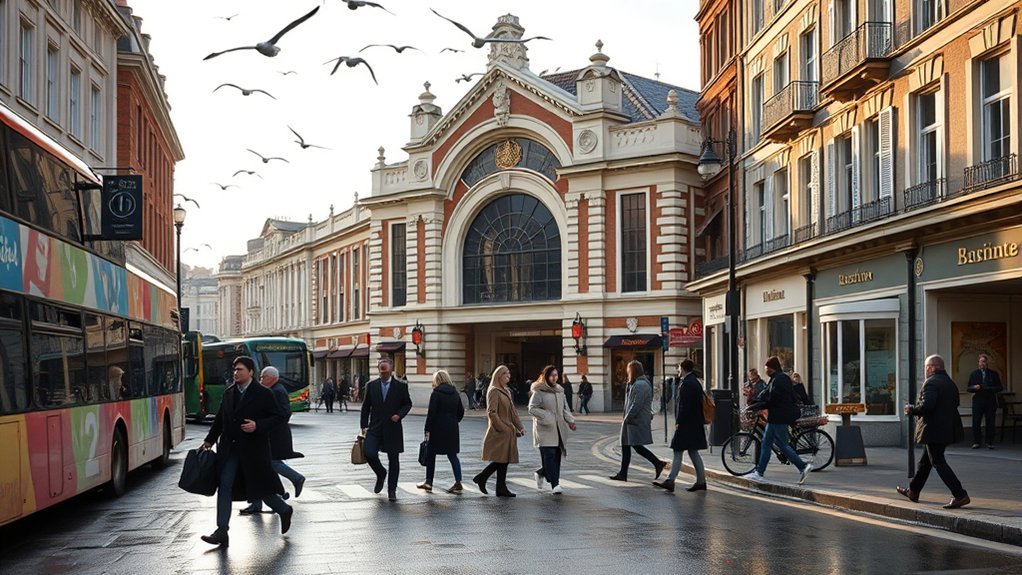
Brighton Station is close to the city’s main shopping streets, historic attractions, cafés, entertainment venues, and seafront. Walking times depend on your pace, crowd levels, and route.
| Place | Approximate walk | What you’ll find |
|---|---|---|
| North Laine | 5–10 minutes | Independent shops, cafés, markets, and street art |
| The Lanes | 10–15 minutes | Historic alleys, jewellers, shops, pubs, and restaurants |
| Royal Pavilion | About 15 minutes | Historic royal palace, gardens, and exhibitions |
| Brighton Palace Pier | 20–25 minutes | Sea views, amusements, rides, and food |
VisitBrighton’s official maps show routes from the station to the city centre, The Lanes, Royal Pavilion, Palace Pier, and seafront. Bus services near the station also connect you with Hove, Kemptown, Brighton Marina, and attractions outside the walkable centre.
You will find many cafés, pubs, takeaway shops, and restaurants between the station and the seafront. The Regency Restaurant remains a well-known seafood option on the seafront, but it is not immediately beside the station, so allow additional walking time.
Frequently Asked Questions
Are there toilets at Brighton Station?
Yes. Brighton Station has male, female, accessible, and baby-changing facilities on the main concourse. The accessible toilets require a RADAR key. Opening or cleaning closures may occasionally affect availability.
Does Brighton Station have luggage storage?
No. National Rail does not list a left-luggage facility at Brighton Station. Arrange storage elsewhere in the city before arriving with bags you do not want to carry.
Can you use Oyster or contactless pay as you go at Brighton Station?
Brighton is outside the London Oyster area, and National Rail does not list ordinary contactless pay-as-you-go travel at the station. Buy a valid paper ticket, eTicket, or supported smartcard product before passing through the barriers.
How many platforms are at Brighton Station?
Brighton Station has eight passenger platforms. All eight have step-free access, information screens, announcements, and tactile platform-edge warnings.
Is Brighton Station accessible?
Yes. It is a Category A station with step-free access to every platform. Passenger assistance, boarding ramps, accessible ticket facilities, induction loops, accessible toilets, visual information, and audible announcements are available.
Was Brighton Station closed for 42 years?
No. Brighton Station has not been identified by authoritative railway or heritage sources as having closed for 42 years. The original station building dates from 1841, and the station remains a major working railway hub.
What is the prettiest train station in the world?
There is no official answer because architectural beauty is subjective. Stations often praised for their design include Antwerpen-Centraal, St Pancras International, Helsinki Central, Gare de Lyon, and Chhatrapati Shivaji Maharaj Terminus. Brighton Station is notable for its Victorian train sheds and Grade II* heritage status.
How long is the train from Brighton to London?
The fastest current services to London Victoria take about one hour, while trains to London Bridge usually take just over one hour. Slower stopping services, engineering work, and disruption can increase the journey time.
Conclusion
Brighton Station gives you direct rail links to London, Gatwick Airport, Sussex, and the wider south coast from a central, step-free station. It has useful ticketing, toilet, parking, cycle-storage, shopping, and passenger-assistance facilities, but no left-luggage service or public station Wi-Fi. Check live departures and engineering work before leaving, especially when travelling at weekends or making a connection.
Sources
- National Rail: Brighton Station — platforms, accessibility, parking, facilities, and transport links
- National Rail station data for BTN — toilets, ticketing, cycle spaces, luggage storage, assistance, and pick-up information
- Southern: Cycle Hubs — secure cycle-hub access and fob requirements
- Historic England: Brighton Station and Train Sheds — construction history and Grade II* listing
- Royal Pavilion: Plan Your Visit — walking guidance and rail 2-for-1 conditions
- Brighton & Hove Buses: Accessibility — wheelchair, mobility, hearing, and visual-access support
