
Last Updated on July 25, 2026 by Daniel Globe
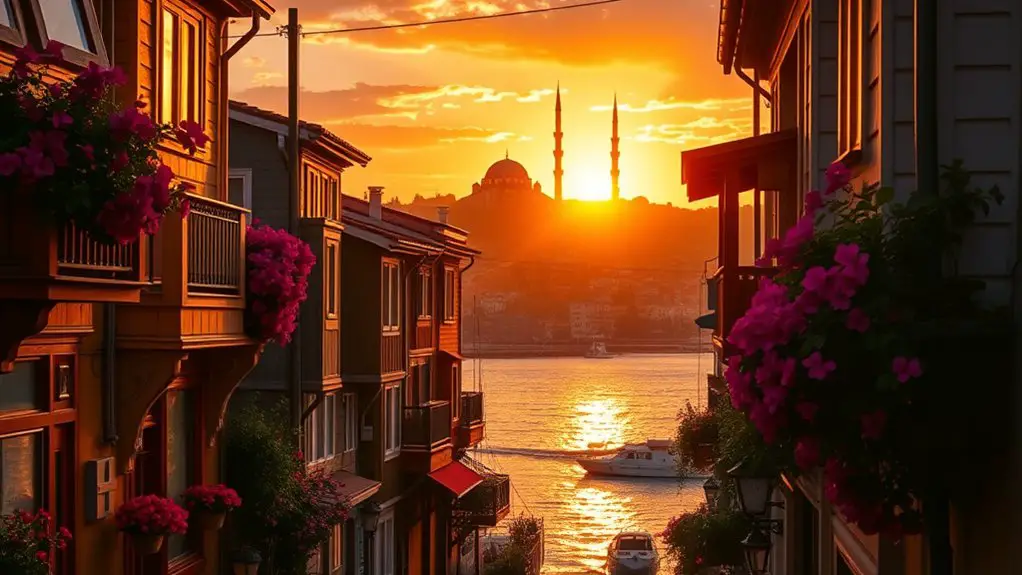
Fener and neighboring Balat are among Istanbul’s most photogenic historic neighborhoods, but the best shots come from their real streets, landmarks, hills, and Golden Horn waterfront—not from the Aegean or a supposed Fener lighthouse. Colorful Balat houses, the red-brick Fener Greek High School, the Ecumenical Patriarchate, waterfront piers, and nearby Piyer Loti offer a useful mix of architecture, street scenes, water reflections, and elevated city views.
Quick Answer
The best photo spots around Fener are the Golden Horn waterfront, Fener Greek High School, the Ecumenical Patriarchate and Church of St. George, and Balat’s colorful streets. For a higher panorama, continue west to Piyer Loti in Eyüpsultan. Visit early for quieter streets or near golden hour for softer light.
Key Takeaways
- Fener and Balat face the Golden Horn, not the Aegean Sea and not the Bosphorus waterfront.
- Fenerbahçe Lighthouse is in Kadıköy on Istanbul’s Asian side, so it should not be confused with the Fener neighborhood.
- Balat’s colorful streets, especially around Kiremit Caddesi and the surrounding slopes, are among the strongest locations for street and architectural photography.
- Fener Greek High School, St. George, and the Golden Horn piers provide recognizable architectural and waterfront subjects.
- Piyer Loti in Eyüpsultan is a worthwhile nearby option when you want a true elevated panorama over the Golden Horn.
Disclosure: As an Amazon Associate I earn from qualifying purchases. Some links on this page are affiliate links, at no extra cost to you.
Best Fener and Balat Photo Spots at a Glance
| Photo Spot | Best For | Good Time to Shoot |
| Kiremit Caddesi and Balat streets | Colorful houses, steep lanes, doors, balconies | Early morning |
| Fener Greek High School surroundings | Red-brick architecture and layered rooftops | Morning or late afternoon |
| Ecumenical Patriarchate and St. George | Historic religious architecture and details | Daylight, outside services |
| Fener and Balat waterfront | Ferries, reflections, Golden Horn views | Golden hour and blue hour |
| Sveti Stefan Church area | Waterfront architecture and landmark details | Morning or late afternoon |
| Piyer Loti, Eyüpsultan | Wide Golden Horn panoramas | Late afternoon through blue hour |
Fener Lighthouse: A Common Location Mix-Up
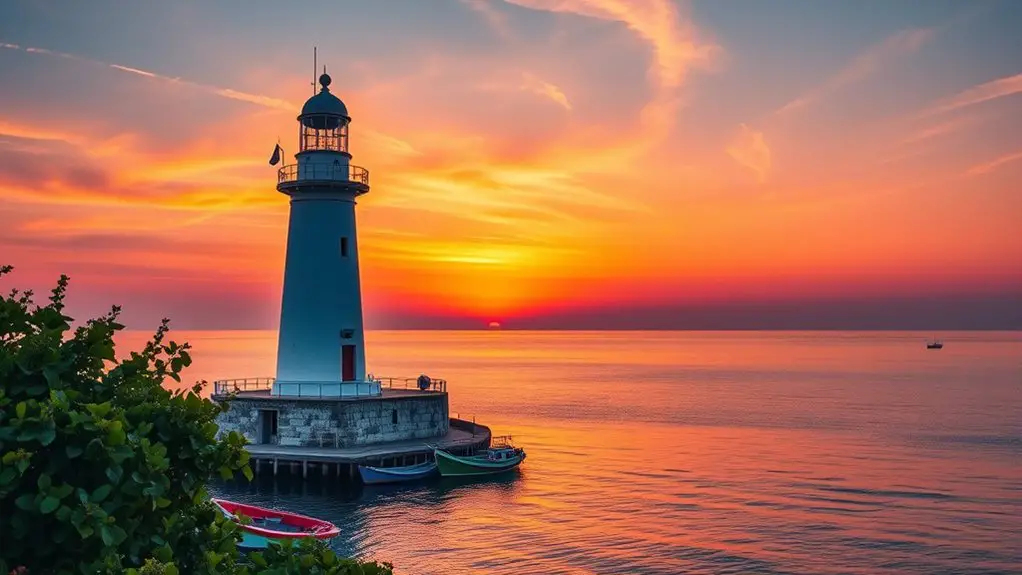
Despite the similar name, the historic lighthouse associated with Istanbul is Fenerbahçe Lighthouse, not a lighthouse in the Fener neighborhood covered by this guide. Türkiye’s Directorate General of Coastal Safety places Fenerbahçe Lighthouse on Fenerbahçe headland in Kadıköy and says the present lighthouse was built in 1857.
That means a visit to Fener and Balat should not be planned around a rocky lighthouse or an Aegean shoreline. Fener lies on the Golden Horn in Istanbul’s historic peninsula. Its strongest photography subjects are historic buildings, sloping streets, ferries, neighborhood life, and waterfront views.
Note: The lighthouse image above is illustrative. Fenerbahçe Lighthouse is in Kadıköy on Istanbul’s Asian side and is a separate destination from Fener and Balat.
Balat’s Colorful Streets and Hillside Views
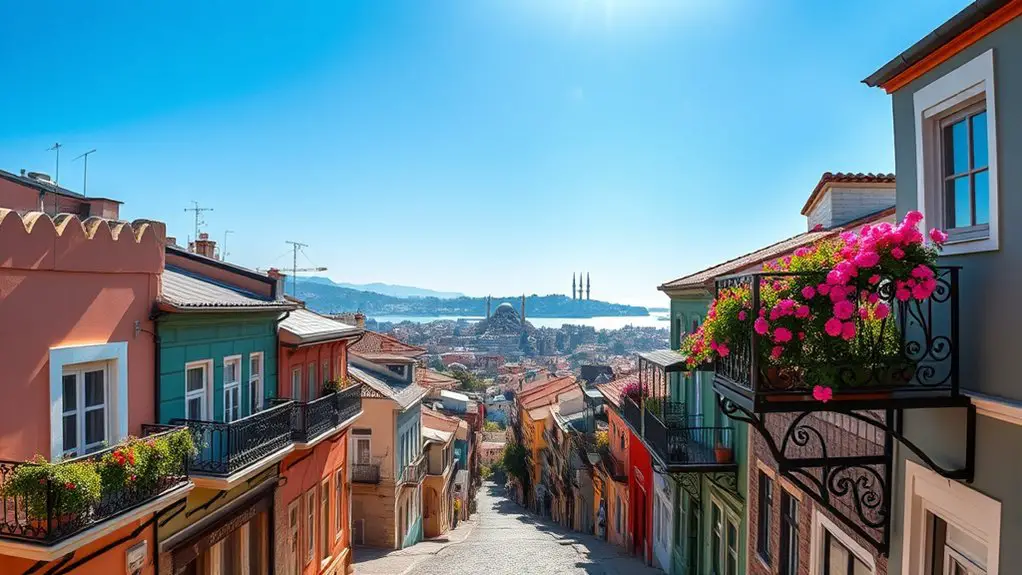
Balat does not have to be photographed from one formal “overlook.” Its steep streets and rows of colorful buildings create changing viewpoints as you walk uphill and downhill.
The Istanbul Governorate highlights Balat’s slopes, colorful streets, buildings, cafés, and popularity with both professional and amateur photographers. Nearby Kiremit Caddesi is especially useful for architectural photographs; Fatih Municipality describes it as one of Balat’s colorful and well-known photography areas.
Look for repeating bay windows, painted façades, doors, balconies, stairs, and layers of buildings climbing the hill. A normal phone camera or moderate wide-angle lens is usually enough. Very wide lenses can exaggerate leaning buildings, so keep the camera as level as possible when photographing façades.
Pro Tip: Arrive early if colorful houses are your priority. The streets are easier to compose before cafés become busy and groups begin gathering around the most photographed façades.
Ecumenical Patriarchate and the Church of St. George
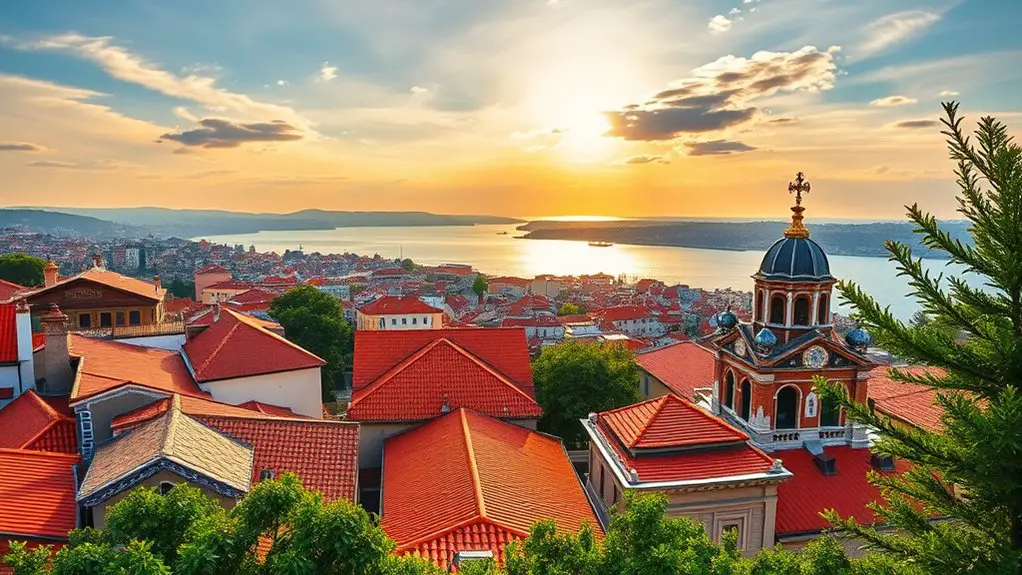
The Ecumenical Patriarchate in Fener is an important historic and religious stop, but it should not be described as a guaranteed public panoramic terrace. The main photographic interest is the Patriarchate complex, its courtyard and exterior details, and the Patriarchal Church of St. George.
The Ecumenical Patriarchate explains that St. George became the Patriarchal church around the turn of the 17th century and was rebuilt and restored several times afterward.
Best Photo Compositions
Instead of expecting a high Bosphorus panorama, concentrate on architectural details, the entrance, courtyard perspectives, doors, masonry, and the relationship between the church complex and the surrounding Fener streets.
Inside, religious objects and architectural details may also be visually striking, but this remains an active place of worship. Photography rules can change according to services, ceremonies, security requirements, and staff instructions.
Warning: Do not assume that photography is permitted everywhere inside a church or Patriarchate building. Follow posted rules, ask staff when unsure, avoid flash, and do not interrupt worship or private ceremonies.
Historic Architectural Backdrop
Fener’s narrow streets place the Patriarchate within a much broader historic urban setting. Try framing entrances through nearby street lines, photographing architectural details with a longer focal length, or using people only as small-scale elements when they are comfortable being included.
This approach produces more truthful photographs than presenting the complex as an elevated observation deck.
Fener Greek High School From the Surrounding Streets
The red-brick Fener Greek High School, often called the Red School, is one of the district’s strongest architectural subjects. It rises above the surrounding roofs and can be photographed from several public streets without needing access to the school itself.
The Istanbul Governorate lists the school among Balat and Fener’s major historic structures, alongside the Patriarchate and Bulgarian Church. For photography, its scale works especially well when you include lower neighborhood buildings in the foreground. This creates the layered cityscape that makes the area distinctive.
A moderate telephoto lens can compress the school against surrounding roofs, while a wider lens works better from closer streets when you want to show its relationship to the neighborhood.
Fener Pier and the Golden Horn Waterfront
Fener has a real waterfront pier, but it is better treated as an active transportation and waterfront photography location than as a romanticized abandoned historic structure.
Current Şehir Hatları Golden Horn services include both Fener and Balat. Around the waterfront you can photograph passenger ferries, boats, reflections, shoreline architecture, and movement across the Golden Horn.
Late afternoon produces softer light on the water, while blue hour can add reflections from streetlights and illuminated buildings. Keep enough shutter speed to freeze ferries, or deliberately use a slower exposure to show motion when you have a stable support.
The Hillside View From Balat Neighborhood
Balat’s elevation changes are useful because they create natural layers of rooftops, bay windows, narrow lanes, and historic buildings. You do not need a formal observation deck: simply walking the public slopes can reveal compositions that change every few meters.
Use the hill to photograph down a lane toward the Golden Horn, or turn uphill and frame repeating façades. On narrower streets, a vertical composition often works better than forcing the entire scene into a horizontal frame.
Remember that these are residential streets, not outdoor studios. Avoid blocking doorways, leaning equipment against homes, or directing strangers as though they were part of a staged set.
Nearby Golden Horn Panorama: Piyer Loti and Eyüpsultan
For a genuine elevated panorama, continue west from Fener and Balat to Piyer Loti in Eyüpsultan. This is a nearby side trip rather than part of Fener itself.
Metro Istanbul describes Piyer Loti as an important observation point over the Golden Horn and operates the TF2 cable car between Eyüp and Piyer Loti.
Panoramic Golden Horn Views
The elevated position gives you a broader sense of the Golden Horn than the street-level views in Fener. It works well for layered cityscapes that combine water, hills, neighborhoods, minarets, ferries, and bridges.
A longer focal length is useful for isolating distant architecture, while a wider lens captures the curve and scale of the waterway. Atmospheric haze can reduce contrast on distant subjects, so the clearest days usually produce the crispest skyline photographs.
Historic Eyüpsultan Setting
The wider Eyüpsultan area also adds religious architecture, cemeteries, streets, and everyday city life to the visual story. Treat mosque areas respectfully: keep entrances clear, avoid intrusive portraits, and be particularly considerate during prayer times.
If you only have a short visit, stay in Fener and Balat. Add Piyer Loti when a wide Golden Horn panorama is a priority.
Religious Architecture Around Fener and Balat
Fener and Balat contain several important religious buildings rather than one generic “Orthodox churches courtyard.” Along with St. George, the area includes Sveti Stefan Bulgarian Church on the Golden Horn waterfront.
These sites offer architectural details, doors, windows, crosses, towers, ironwork, masonry, and contrasting views against the surrounding neighborhood. Wider exterior compositions can show how churches sit within the dense urban fabric, while tighter frames are better for ornament and texture.
Access differs by property and can change for services or events. Never enter a courtyard, side area, or building simply because a gate happens to be open.
Waterfront Cafés Along the Golden Horn
Fener and Balat’s waterfront belongs to the Golden Horn. Cafés and seating areas near the shore can still provide excellent photographic foregrounds, especially when cups, tables, windows, and silhouettes are combined with boats or water in the background.
Use reflections in glass for layered compositions, or expose for the brighter water when shooting toward the setting light. A table near a window can also work well for small detail photographs without turning strangers into the main subject.
Because individual cafés open, close, and change their terrace arrangements over time, choose a location based on the view and access available on the day rather than relying on a supposedly permanent “best” rooftop.
Fener Waterfront Street Photography
There is no need to search for a formally named “Fener Fish Market Viewpoint.” The more dependable opportunity is street and waterfront photography around the Golden Horn, where ferries, anglers, commuters, local businesses, and shoreline activity can provide natural subjects.
Watch for repeating fishing rods, ferry wakes, reflections, birds, passing boats, and the contrast between historic streets and modern transport. These fleeting details often produce stronger images than forcing the area into an invented landmark description.
For close photographs of vendors, workers, or identifiable individuals, a quick gesture or request for permission is a more respectful approach than photographing people at close range without acknowledgment.
Public Terrace Views, Not Private Rooftops
Some cafés and hospitality businesses around Balat advertise terrace seating or elevated views, but private residential rooftops should never be treated as public viewpoints.
Stay with venues that clearly invite customers onto a terrace or rooftop. Access arrangements can change, so confirm that the terrace is open before planning a shoot around it.
Panoramic City Views
An elevated public terrace can help separate the Fener Greek High School, domes, minarets, roofs, and the Golden Horn into clean layers. A moderate telephoto lens is often more useful than an ultra-wide lens because it reduces empty sky and makes distant architecture feel more prominent.
At sunset, expose carefully around bright sky. After sunset, wait a little longer for blue hour, when city lights begin to balance with the remaining color in the sky.
Terrace Atmosphere
Terrace cafés can also work for smaller lifestyle photographs: tea glasses, coffee, plants, railings, and silhouettes against the skyline. Keep equipment compact in busy venues and avoid setting up tripods where they obstruct staff or customers.
Best Time of Day for Photography in Fener and Balat
Early morning is generally the easiest time for colorful streets. There are fewer people, parked activity is lower, and soft light can make building colors easier to control.
Late afternoon and golden hour work well for the waterfront and broader city scenes. Because the exact direction of sunset changes throughout the year, scout your preferred composition rather than assuming the sun will always set directly over the Golden Horn.
Blue hour is ideal for ferries, reflections, streetlights, and illuminated architecture. A small travel tripod can help where tripods are permitted, although modern phone and camera stabilization may be enough for many handheld shots.
Midday can produce deep shadows in narrow streets. Use that contrast deliberately for graphic compositions, or concentrate on shaded architectural details until the light softens.
Fener and Balat photograph best as lived-in neighborhoods: the strongest images often combine their architecture with the changing light, slopes, ferries, and everyday details of the Golden Horn.
A Practical Fener–Balat Photography Route
A relaxed photography walk takes roughly three to four hours before café stops or a Piyer Loti extension.
- Start near Fener. The current T5 Eminönü–Alibeyköy tram serves Fener and Balat, making either stop a convenient starting point.
- Photograph the Ecumenical Patriarchate and St. George. Begin with exterior and courtyard perspectives and follow all on-site photography rules.
- Walk toward the Fener Greek High School. Use surrounding public streets to frame its red-brick mass above lower neighborhood buildings.
- Continue into Balat. Explore colorful streets around Kiremit Caddesi and the nearby slopes rather than staying on one famous corner.
- Visit the waterfront and Sveti Stefan area. Shift from tight street photographs to wider architectural and Golden Horn compositions.
- Finish near Fener or Balat Pier. Late-day ferries and reflections give you a different set of subjects from the morning streets.
- Optional: continue to Eyüpsultan. Use T5 toward Eyüpsultan and connect with the TF2 cable car for the elevated Piyer Loti panorama.
Metro Istanbul’s current T5 information lists both Fener and Balat stations. Ferry schedules and operating conditions can change, so check the current timetable before building a visit around a particular boat departure.
Photography Etiquette and Access
- Remember that Balat is residential. Keep entrances, sidewalks, and stairs clear and avoid using private façades as props without permission.
- Ask before close portraits. A wide street scene is different from placing one identifiable resident or worker at the center of the frame.
- Respect religious sites. Follow clothing, security, photography, and service-related rules posted at each property.
- Use public viewpoints. Do not climb onto roofs, walls, closed terraces, or residential property to get a higher angle.
Note: Opening hours, worship schedules, transport times, and photography policies can change. Check the relevant official site or on-site notice on the day of your visit.
Frequently Asked Questions
Which viewpoint offers the best sunset photos in Fener?
For Fener itself, try the Golden Horn waterfront around Fener and Balat for reflections, ferries, and changing evening light. The exact position of the setting sun varies by season. For a higher and wider Golden Horn panorama, Piyer Loti in nearby Eyüpsultan is the stronger elevated option.
Are there guided photography tours in Fener and Balat?
Guided Fener and Balat neighborhood tours are available from different operators, and some private guides focus on photography. Dedicated workshop schedules and operators change, so compare the current itinerary, guide credentials, group size, and included locations before booking.
What is the best time of day for photographing Fener and Balat?
Early morning is best for quieter colorful streets. Late afternoon and golden hour suit the Golden Horn waterfront, while blue hour is useful for ferry lights, reflections, and city scenes. Midday can still work for details and strong shadow patterns.
Can photography be done inside the Fener Greek Orthodox Patriarchate?
Do not assume blanket permission. The Patriarchal Church of St. George is an active religious site, so check signs and staff instructions when you arrive. Avoid flash, intrusive photography, and photographing services or worshippers when permission has not been given.
Where can I photograph Fener’s night skyline?
The Golden Horn waterfront around Fener and Balat is the easiest place to work after sunset. Look for ferry lights, reflections, bridges, and illuminated buildings. Piyer Loti provides a higher view when you visit while access and transport are operating.
What is the easiest public transport to Fener and Balat?
The T5 Eminönü–Alibeyköy tram has separate Fener and Balat stations. City Lines also serves Fener and Balat on Golden Horn ferry routes. Check current official schedules before traveling because service times and temporary changes can occur.
Is Fenerbahçe Lighthouse located in Fener?
No. Fenerbahçe Lighthouse is on Fenerbahçe headland in Kadıköy on Istanbul’s Asian side. Fener, the historic neighborhood beside Balat, is on the Golden Horn in the Fatih district. They are separate places.
Conclusion
The best viewpoints in Fener are less about a single observation deck and more about how the neighborhood meets the Golden Horn. Start with St. George and Fener’s historic architecture, frame the Fener Greek High School from the surrounding streets, continue through Balat’s colorful slopes, and finish beside the water as the light softens.
For a true elevated panorama, add Piyer Loti in nearby Eyüpsultan. Most importantly, stay on public routes, respect residents and religious sites, and let the real character of Fener and Balat—not invented landmarks—give your photographs their sense of place.
Sources
- Istanbul Governorate — Balat — supports Balat’s colorful streets, slopes, landmarks, and popularity with photographers.
- Directorate General of Coastal Safety — Fenerbahçe Lighthouse — confirms the lighthouse’s location and history and distinguishes it from Fener.
- Ecumenical Patriarchate — History of the Church of St. George — supports the history and identity of the Patriarchal church in Fener.
- Metro Istanbul — T5 Eminönü–Alibeyköy Tram Line — confirms current Fener and Balat tram access.
- Şehir Hatları — Golden Horn Line — confirms Fener and Balat ferry stops.
- Metro Istanbul — TF2 Eyüp–Piyer Loti Cable Car — supports Piyer Loti as an elevated Golden Horn observation point.
