
Last Updated on July 25, 2026 by Daniel Globe
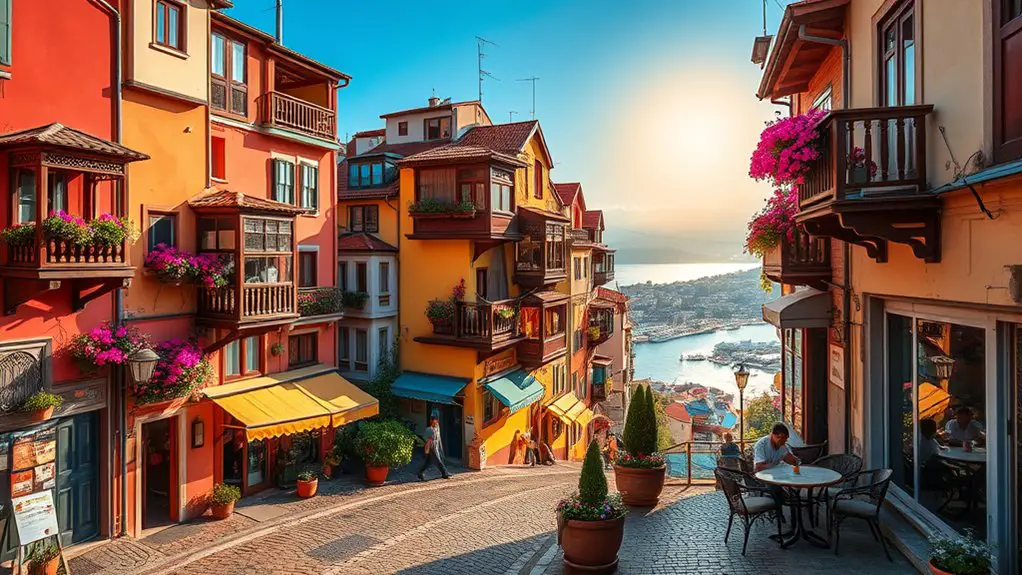
Balat is one of Istanbul’s most rewarding neighborhoods for photography, but its best views are not formal observation decks. The strongest images come from steep historic streets, rows of colorful houses, architectural landmarks in neighboring Fener, and the Golden Horn waterfront. Knowing the real locations also helps you avoid several common mix-ups about the Bosphorus and supposed “Balat” viewpoints.
Quick Answer
The best viewpoints and photo spots in Balat include the hillside streets above the Golden Horn, Merdivenli Yokuş and Kiremit Caddesi for colorful houses, Fener’s historic streets for landmark architecture, and the waterfront near Balat Pier for reflections and sunset light. Most are public streets rather than formal overlooks.
Key Takeaways
- Merdivenli Yokuş is one of the best-known places to photograph Balat’s colorful historic houses.
- Kiremit Caddesi and nearby side streets provide layered rows of painted facades, balconies, doors, and street details.
- Balat and Fener overlook the Golden Horn, not the Bosphorus waterfront.
- The Ecumenical Patriarchate is best treated as an architectural and cultural photo stop rather than a panoramic lookout.
- For sunset and reflections, finish your walk near Balat Pier and the Golden Horn shore.
- Remember that Balat is a residential neighborhood: keep doorways clear and do not enter rooftops, courtyards, or homes without permission.
Disclosure: As an Amazon Associate I earn from qualifying purchases. Some links on this page are affiliate links, at no extra cost to you.
Golden Horn Views From Balat’s Hills
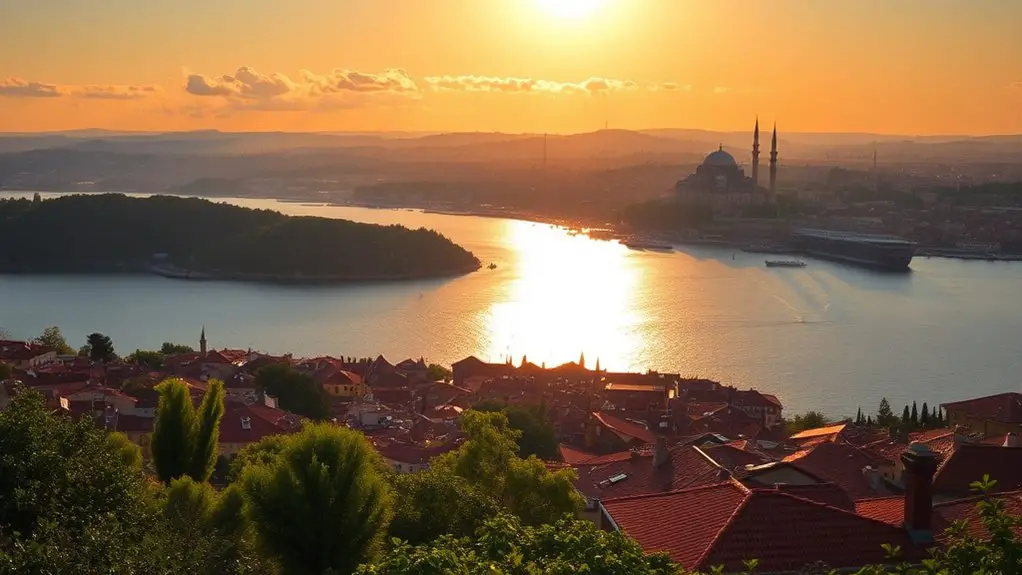
Balat rises sharply away from the Golden Horn, so some of its best elevated photographs come simply from walking uphill and looking back toward the water. There is no need to search for a formal attraction called the “Golden Horn Overlook.” Instead, use the neighborhood’s public hillside streets as changing viewpoints.
The official GoTürkiye guide to Fener and Balat describes the area’s steep streets, historic houses, stairways, religious landmarks, and position along the Golden Horn. These features create the layered compositions that make the neighborhood so photogenic.
As you climb, look for places where a downhill street opens toward the water. A medium-wide view can combine colorful facades in the foreground with the Golden Horn and Istanbul’s urban skyline beyond them. Moving only a few meters can completely change the balance between houses, roofs, street activity, and water.
Note: The water beside Balat and Fener is the Golden Horn, or Haliç. The Bosphorus lies farther east. Keeping that distinction clear makes both navigation and photo planning much easier.
Morning is useful for quieter streets and softer light on buildings. Later in the day, shift toward the waterfront if you want warmer light and reflections on the Golden Horn.
Balat works best photographically when you combine two perspectives: steep streets that layer the neighborhood vertically and the Golden Horn shore that opens the scene horizontally.
Fener Patriarchate and the Red School: Architecture, Not a Panorama
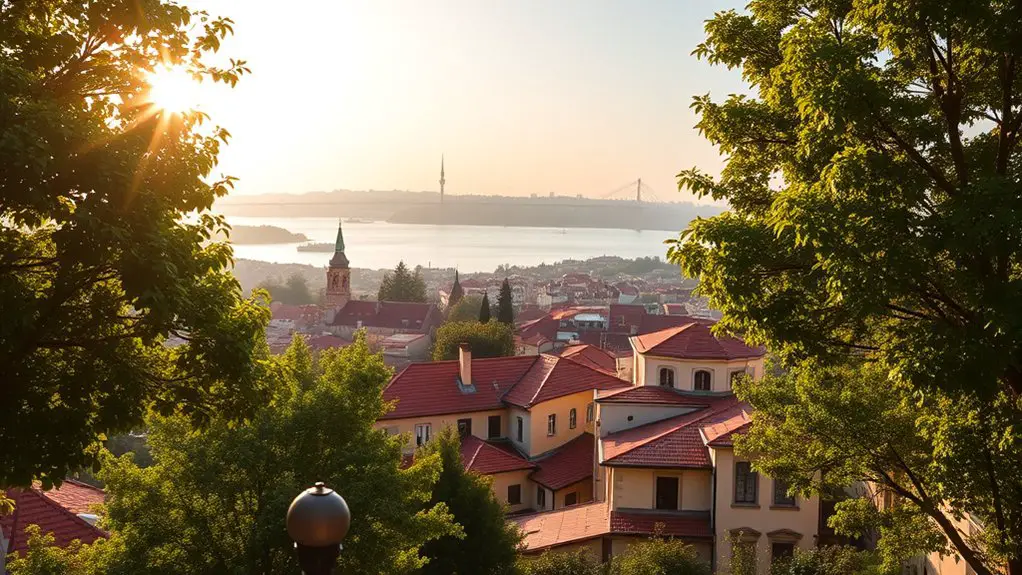
The Ecumenical Patriarchate of Constantinople and Church of St. George are important heritage landmarks in Fener, immediately beside Balat. They are worth photographing for their religious and architectural significance, but they should not be described as a public panoramic observation point.
The surrounding streets offer the stronger exterior compositions. Walk uphill through Fener and the large red-brick silhouette of the Fener Greek High School, commonly called the Red School, becomes a dominant part of the skyline. GoTürkiye highlights both St. George and the school among Fener’s important landmarks.
Try photographing the Red School from lower streets so nearby buildings frame it. A longer phone lens or moderate telephoto lens can make the red facade appear larger behind the tightly packed neighborhood.
At the Patriarchate, focus on architectural details and the atmosphere of the surrounding streets. Because this is an active religious site, keep photography unobtrusive, follow posted rules, and avoid interrupting worship or ceremonies.
Colorful Streets of Balat: Best Spots for Street Photography
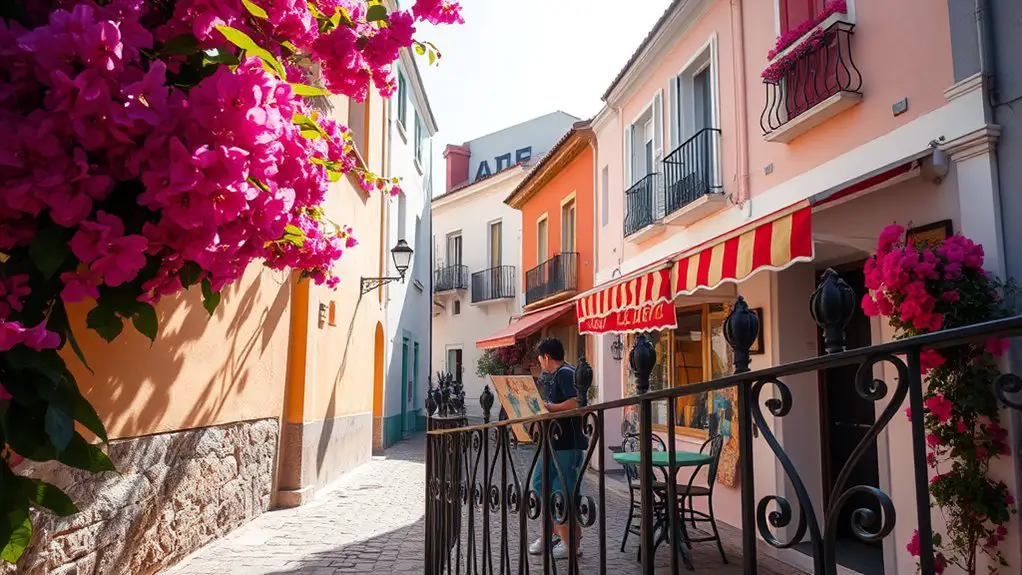
The colorful streets are the heart of Balat photography, but naming the right streets makes a big difference. The area mixes painted facades, bay windows, old doors, cafes, street art, steep slopes, and everyday neighborhood life.
Merdivenli Yokuş
Merdivenli Yokuş is one of the neighborhood’s most recognizable photography locations. GoTürkiye specifically recommends the steep street for its colorful historic houses and projecting upper-floor windows.
Stand lower on the slope and point uphill to emphasize the vertical lines. From farther back, the repeating facades create a stronger pattern. Because the street is steep, watch your footing instead of walking backward while looking through the camera.
Kiremit Caddesi
Kiremit Caddesi is another popular area for rows of brightly painted houses. Rather than photographing only the obvious wide view, look for combinations of windows, balconies, street signs, plants, doors, and changing paint textures.
A standard phone camera or roughly 28–35mm equivalent lens works well for showing a house in its street setting. A moderate telephoto lens is useful when you want to compress several facades into one layered composition.
Yıldırım, Vodina, and the Side Streets
The busier streets closer to the Golden Horn give you a different kind of picture. Around Yıldırım and Vodina, cafes, pedestrians, shopfronts, old architecture, and side lanes can produce stronger documentary-style images than a posed photograph in front of a colorful wall.
Pro Tip: Visit the colorful-house streets early on a weekday when possible. Quieter streets make it easier to frame the architecture without blocking residents or waiting for groups to move through your shot.
Historic Jewish Heritage Around Ahrida Synagogue
Balat’s Jewish heritage adds important historical context to the neighborhood. Ahrida Synagogue and nearby Yanbol Synagogue are among the Jewish sites associated with Balat, and GoTürkiye lists Ahrida among Istanbul’s notable synagogues.
The best general photography opportunities for casual visitors are often in the surrounding public streets: old facades, narrow passages, doors, upper-floor windows, and the relationship between different religious and residential buildings.
Photograph Public Streets Respectfully
Photographing an exterior from a public street is very different from entering a religious building or private property. Do not assume a synagogue is open to unscheduled visitors simply because it appears on a sightseeing map.
Security procedures and access arrangements at Jewish religious sites can change. For Jewish-heritage information, consult current official resources such as GoTürkiye’s Jewish Heritage guide before planning an interior visit.
Architectural Details to Look For
Instead of relying on exaggerated descriptions of every facade, look closely at what is actually in front of you: masonry, timber elements, arched openings, shutters, signs, ironwork, weathered surfaces, and later alterations. These small details often communicate more about the neighborhood than a wide shot alone.
Narrow Historic Streets
Balat’s narrow streets create natural frames. A doorway can anchor the foreground while the lane leads toward another facade, a hill, or a glimpse of the Golden Horn.
- Use steep streets as leading lines.
- Frame buildings through doorways, arches, or adjacent facades without entering private property.
- Look for repeating windows and bay projections.
- Wait for a pedestrian to add scale instead of filling every photograph with empty architecture.
These scenes work particularly well on overcast days because soft light reduces harsh contrast between narrow shaded streets and bright building fronts.
Side Streets, Courtyards, and Private Space
Some of Balat’s most memorable photographs come from ordinary side streets rather than famous Instagram locations. Weathered walls, plants on window ledges, cats, old shop signs, washing lines, textured doors, and tiny cafes can all make stronger images than a staged backdrop.
However, a picturesque doorway is not an invitation to enter. Many courtyards, stairways, rooftops, balconies, and entrances belong to residents or businesses.
Warning: Do not enter private courtyards, rooftops, stairwells, or homes for a photograph without clear permission. Keep doorways and narrow streets open, and ask before taking an identifiable close-up portrait of a resident.
Working within those limits actually encourages better street photography. Instead of chasing access to private spaces, concentrate on layers, reflections, shadows, signs, colors, and everyday movement visible from the public street.
Balat’s Golden Horn Waterfront
After the tight hillside streets, the Golden Horn waterfront gives you room to create wider compositions. The open water, passing boats, shoreline, park areas, and skyline provide a visual break from Balat’s dense architecture.
Golden Horn Views
Late afternoon and sunset are especially useful along the shore. When conditions cooperate, lower-angle light can produce warm reflections while silhouetting boats, birds, railings, and distant buildings.
Remember that this is the Golden Horn rather than an open-sea viewpoint. UNESCO describes the Historic Peninsula as bordered by the Golden Horn to the north and the Bosphorus to the east, making the geographic distinction clear.
You can learn more about that wider historical setting from the UNESCO Historic Areas of Istanbul listing.
Waterfront Atmosphere and Ferry Scenes
The shore also works well for everyday city photography. Ferries, walkers, anglers, cyclists, benches, and changing weather can supply foreground subjects while the Golden Horn remains the background.
Balat and Fener are both served by Istanbul’s municipal ferry network. Current routes and times should be checked on the Şehir Hatları Golden Horn timetable because schedules can change.
Balat Pier and Golden Horn Views
Rather than searching for an “iconic Balat Bridge,” use Balat Pier and the nearby shoreline as a reliable waterfront photography stop. The pier is a verified point on Istanbul’s ferry network and gives you straightforward access to open Golden Horn views.
Try several types of composition:
- Use railings or the shoreline as leading lines toward the water.
- Photograph ferries with historic buildings behind them to connect transportation with place.
- Use reflected evening light as a foreground rather than filling the entire frame with sky.
- Include people for scale when the promenade feels too empty.
- On windy or cloudy days, look for movement and changing light instead of waiting only for a perfect sunset.
A phone is enough for most of these scenes. Use the main camera for natural perspective and switch to a longer lens when you want to isolate a ferry, architectural detail, or distant skyline element.
A Practical Balat Photo Walk
You can connect the strongest locations without repeatedly climbing and descending the same streets.
- Start near Fener or the Golden Horn shore. Photograph the waterfront and exterior of Sveti Stefan Church if it fits your route.
- Walk into Fener. Use the surrounding streets to photograph the Ecumenical Patriarchate area and frame the Red School from below.
- Continue uphill toward Merdivenli Yokuş. Shoot both uphill and downhill perspectives.
- Move through Kiremit Caddesi and neighboring lanes. Focus on colorful facades, doors, windows, textures, and street life.
- Explore the public streets around Balat’s Jewish heritage sites. Treat religious buildings and residents respectfully.
- Finish at Balat Pier or the Golden Horn waterfront. This is the strongest part of the route to save for late-afternoon or sunset light.
The exact walk can be shortened by starting or ending at the T5 tram. Metro Istanbul’s T5 Eminönü–Alibeyköy line includes both Fener and Balat stations.
Accessibility and Mobility in Balat
Balat requires realistic expectations for visitors with mobility challenges. The T5 tram itself is the easiest part of the journey: Metro Istanbul says the line operates low-floor vehicles and its station entrances are built with ramps suitable for disabled access.
The historic neighborhood is different. Many of the classic photo streets are steep, uneven, cobbled, or stepped. Merdivenli Yokuş is not a good choice for someone who needs a consistently level, step-free route.
For an easier outing, concentrate on the lower streets and Golden Horn waterfront around the Balat and Fener transit stops. Conditions such as temporary construction, parked vehicles, curb access, and pavement quality can still vary.
Best Time for Photography in Balat
There is no single perfect hour because the neighborhood contains both narrow streets and open waterfront.
- Early morning: Best for quieter colorful-house streets and less crowded compositions.
- Late morning: Good for street life, cafes, shops, and documentary-style scenes.
- Midday: Harder in strong sunshine because narrow streets can create deep shadows and bright highlights.
- Late afternoon: Useful for moving gradually downhill toward the Golden Horn.
- Sunset: Best saved for the waterfront, where you have a wider horizon and a chance of reflections.
- Overcast weather: Often excellent for colorful facades because soft light keeps both shadows and highlights under control.
Getting to Balat for a Photo Walk
The T5 Eminönü–Alibeyköy tram is one of the simplest public-transport options. Both Fener and Balat are official stations on the line. Metro Istanbul currently lists connections with City Lines piers along the corridor as well.
Ferry service is another scenic option. Şehir Hatları routes on the Golden Horn include Balat and Fener, although schedules vary by day and service pattern.
Starting at one stop and leaving from another makes sense for photographers because the neighborhood is steep. It lets you build a one-way route instead of retracing every hill.
Frequently Asked Questions
Which viewpoints are best for sunset photography in Balat?
The Golden Horn waterfront near Balat Pier is the most dependable choice for sunset because it gives you open water and a broader sky. The hillside streets are better for layered neighborhood views, especially earlier in the day.
Are there accessible viewpoints for visitors with mobility challenges?
The lower Golden Horn waterfront is generally a better choice than Balat’s steep hillside streets. The T5 tram uses low-floor vehicles and ramp-accessible station entrances, but famous locations such as Merdivenli Yokuş involve steep grades or steps. Local pavement and curb conditions can also vary.
When is the best time of day for panoramic photos in Balat?
Use early morning for quieter colorful streets and late afternoon through sunset for Golden Horn views. Overcast conditions can also be excellent because soft light reduces harsh contrast in narrow streets.
Can I access private rooftops for exclusive views of Balat?
Not without permission. A rooftop belonging to a home, hotel, cafe, or other business is private property unless the operator clearly provides public access. Do not climb onto residential roofs, stairwells, or terraces simply to get a photograph.
Are there guided tours focused on photography spots in Balat?
Walking and specialist photography tours may be offered by local guides and tour companies, but availability changes. Check the current itinerary before booking to confirm that it includes the specific streets or photography instruction you want.
Where are the colorful houses in Balat?
Merdivenli Yokuş is one of the best-known colorful-house locations, while Kiremit Caddesi and nearby lanes provide additional rows of painted facades, balconies, doors, and steep-street compositions.
Is the water beside Balat the Bosphorus?
No. Balat and Fener sit beside the Golden Horn, known in Turkish as Haliç. The Bosphorus lies farther east, beyond the mouth of the Golden Horn.
Conclusion
Balat rewards photographers who look beyond a single famous row of colorful houses. Start with the steep streets and historic architecture of Balat and Fener, use Merdivenli Yokuş and Kiremit Caddesi for close street compositions, and finish beside the Golden Horn for open water and evening light.
The most important part is to photograph the neighborhood as it really is: a living historic district rather than a collection of staged backdrops. Stay on public routes, respect residents and religious sites, and give yourself time to notice the small architectural and everyday details between the headline photo spots.
Sources
- GoTürkiye — Fener and Balat Neighbourhoods — supports the Golden Horn setting, historic architecture, religious landmarks, steep streets, and Merdivenli Yokuş.
- Metro Istanbul — T5 Eminönü–Alibeyköy Tram Line — supports Fener and Balat station information and accessible low-floor tram infrastructure.
- Şehir Hatları — Golden Horn Ferry Line — supports current Balat and Fener ferry service information.
- UNESCO World Heritage Centre — Historic Areas of Istanbul — supports the geographic distinction between the Golden Horn, Bosphorus, and Marmara Sea.
- GoTürkiye — Jewish Heritage in Türkiye — supports the importance of Ahrida and Yanbol synagogues in Balat.
