
Last Updated on July 28, 2026 by Daniel Globe
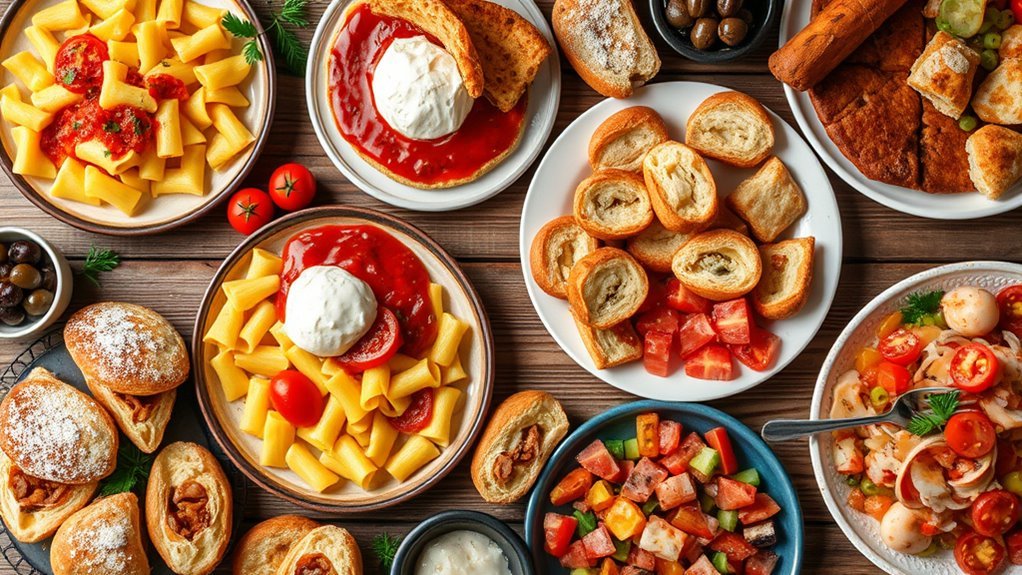
Puglia’s kitchens turn durum wheat, olive oil, fresh dairy, seafood, legumes, and seasonal vegetables into food that feels inseparable from the landscape. From hand-shaped orecchiette in Bari to warm pasticciotto in Lecce, the region rewards travelers who know what to order and where each specialty comes from. Here are the dishes worth seeking out on your next trip.
Quick Answer
Traditional Puglia foods to try include orecchiette with cime di rapa, Burrata di Andria, focaccia barese, fave e cicorie, sgagliozze, tiella barese, cacioricotta, pasticciotto, cartellate, and panzerotti. Also look for Pane di Altamura, friselle, bombette, taralli, pettole, and fresh coastal seafood.
Key Takeaways
- Bari is a strong base for orecchiette, focaccia barese, panzerotti, sgagliozze, and tiella.
- Burrata di Andria is a fresh cheese with a stretched-curd shell and a creamy stracciatella filling.
- Pasticciotto is a shortcrust custard pastry associated with Lecce and the wider Salento area.
- Cartellate are fried Christmas pastries traditionally finished with vincotto or honey.
- Ask about anchovies, shellfish, dairy, pork, and cooking methods when dietary restrictions matter.
Disclosure: As an Amazon Associate I earn from qualifying purchases. Some links on this page are affiliate links, at no extra cost to you.
Puglia Food by Region
Puglia is long and geographically varied, so its food changes as you travel. Bari is known for wheat-based dishes and street food, Andria and the Murgia for dairy and durum-wheat bread, the Valle d’Itria for grilled meat, and Lecce and Salento for rustic pastries, legumes, and distinctive pasta dishes.
Puglia Food at a Glance
| Bari and the central coast | Orecchiette, focaccia barese, panzerotti, sgagliozze, tiella, and seafood |
| Andria and the Murgia | Burrata di Andria, fresh dairy, and Pane di Altamura |
| Valle d’Itria | Bombette, grilled meats, capocollo, cheeses, and farm cooking |
| Lecce and Salento | Pasticciotto, cacioricotta, fave e cicorie, rustico leccese, and cartellate |
Orecchiette: Puglia’s Traditional Ear-Shaped Pasta
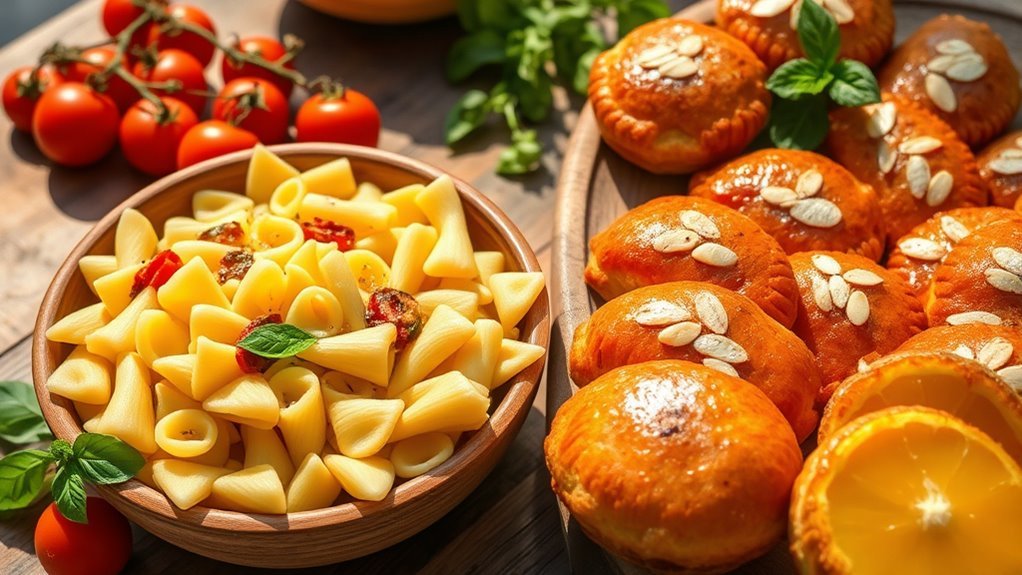
Ask someone to name a Puglian dish, and orecchiette usually comes up first. The name means “little ears,” a reference to the pasta’s small, cupped shape. Traditional dough is made mainly from durum-wheat semolina and water, without eggs.
The rough surface and thicker rim help orecchiette hold chopped vegetables, meat sauces, and grated cheese. To form each piece, cooks cut a short section from a rope of dough, drag it across a wooden board with a knife, and often turn the curled piece over a thumb to create the hollow center.
The classic order is orecchiette alle cime di rapa, made with turnip greens or broccoli rabe, olive oil, garlic, chili, and often anchovy. Tomato sauce, meat ragù, and grated cacioricotta are also common pairings.
Note: Orecchiette with cime di rapa may contain anchovies even when no visible fish is on the plate. Vegetarians can ask for it senza acciughe.
Burrata di Andria: Puglia’s Cream-Filled Fresh Cheese
Burrata is one of Puglia’s best-known dairy products. Its outer pouch is made from stretched-curd cheese, while the center contains cream mixed with hand-shredded strands of cheese called stracciatella. Cut the pouch and the filling spreads across the plate.
According to the oral history recorded for Burrata di Andria PGI, cheesemaker Lorenzo Bianchino created the product at a farmhouse near Andria in the early twentieth century as a practical way to preserve cream and pieces of stretched curd.
The exact invention date is not firmly documented, so the story is best understood as local tradition rather than a proven single-day event. What is documented is the cheese’s close connection to Andria and Puglia. Burrata di Andria holds Protected Geographical Indication status, and its protected production area covers Puglia.
Serve burrata with:
- Ripe tomatoes or grilled seasonal vegetables
- Crusty bread or friselle
- Extra virgin olive oil, salt, and fresh herbs
- Peaches, figs, or other sweet seasonal fruit
Pro Tip: Keep burrata refrigerated and follow the package use-by date. After opening it, eat it promptly. Let it stand out of the refrigerator for about 15–20 minutes before serving so the filling softens without leaving the cheese warm for an extended period.
Focaccia Barese: Bari’s Tomato-and-Olive Flatbread
Focaccia barese has a crisp, olive-oil-rich bottom, a soft interior, and a topping of tomatoes, olives, oregano, salt, and more olive oil. Many traditional doughs include boiled potato, which helps create a tender crumb. Bakers may use durum-wheat semolina, soft-wheat flour, or a blend.
The tomatoes partly collapse into the dough as it bakes, leaving sweet, concentrated juices in the surface. Olives add saltiness, while oregano gives the bread its familiar aroma. Some bakeries add other toppings, but tomato and olive remain the standard combination.
Focaccia works as breakfast, a midmorning snack, a quick lunch, or food for the train. It is best when recently baked, while the base is still crisp and the tomato topping remains juicy.
Fave e Cicorie: Fava-Bean Purée With Bitter Greens
Sautéed chicory appears in Puglian cooking, but the more distinctive regional dish is fave e cicorie. It pairs a smooth purée of dried, peeled fava beans with boiled or sautéed chicory. The mild, creamy beans balance the greens’ natural bitterness.
The dish reflects Puglia’s vegetable-forward, resourceful home cooking. It can be served warm or at room temperature and may appear as an appetizer, side dish, or light main course with bread and olive oil.
- The fava beans provide a soft, earthy base.
- Wild or cultivated chicory supplies a pleasantly bitter contrast.
- Extra virgin olive oil ties the two components together.
Cicoria ripassata is a related preparation in which cooked chicory is sautéed with olive oil, garlic, and sometimes chili. It can be eaten alone, spooned over bread, or served beside beans and grilled food.
Sgagliozze: Fried Polenta From Bari
Sgagliozze are pieces of cooled polenta fried until their surfaces become crisp and golden. They are strongly associated with Bari’s street-food tradition and are commonly served hot with salt.
A Simple Bari Street-Food Snack
Polenta is allowed to set, sliced into squares or rectangles, and fried. The result is inexpensive, filling food with a crunchy exterior and a soft cornmeal center. Sgagliozze are often linked to cucina povera, the resourceful cooking that turns basic ingredients into satisfying meals.
- Eat them plain with salt for the traditional version.
- Try them immediately after frying for the strongest texture contrast.
- Expect a mild corn flavor rather than a heavily seasoned filling.
What Sgagliozze Taste Like
The main appeal is texture: crisp edges around a tender center. Their mild flavor makes them easy to eat while walking through a market or exploring Bari Vecchia.
Tiella Barese: Rice, Potatoes, and Mussels
Tiella barese, also called riso, patate e cozze, is a layered bake of rice, potatoes, mussels, tomatoes, onions, herbs, olive oil, and grated cheese. It brings together ingredients from Puglia’s farms and Adriatic coast in one dish.
How the Layers Work Together
Thinly sliced potatoes form the base and upper layer, while uncooked rice absorbs liquid released by the mussels, tomatoes, and added water or broth. Onion, garlic, parsley, olive oil, and grated pecorino or another hard cheese deepen the flavor.
- Mussels provide the dish’s briny seafood character.
- Rice absorbs the cooking liquid and becomes tender.
- Potatoes soften while the upper edges brown in the oven.
- Tomatoes and onions contribute moisture and sweetness.
Traditional Cooking Style
The word tiella refers to the baking vessel as well as the dish. Traditional versions may be cooked in terracotta, though restaurants and home cooks also use metal, ceramic, or other oven-safe dishes.
| Core ingredients | Rice, potatoes, mussels, tomatoes, onion, olive oil, herbs, and grated cheese |
| Strongest association | Bari and the surrounding central Puglia coast |
| Typical variation | Some families add zucchini or change the type of grated cheese |
| Texture | Tender rice and potatoes with browned edges and juicy mussels |
Regional and Household Variations
There is no single family recipe. Some cooks add zucchini, use pecorino rather than Parmesan, or change the proportion of rice and potatoes. Those differences are normal, but mussels remain central to the best-known Bari version.
Warning: Tiella contains shellfish and usually dairy. Travelers with shellfish allergies should not assume that a rice-and-potato bake is seafood-free.
Cacioricotta: A Cheese Made With Two Traditions
Cacioricotta gets its name from a production method that combines features of cheesemaking and ricotta making. Whole milk is heated to a high temperature before rennet is added, allowing the finished cheese to retain proteins that would normally remain in the whey.
Puglian cacioricotta may be made from sheep, goat, cow, or mixed milk, depending on the area and producer. Fresh versions are softer and milder. Aged versions become firmer, saltier, and suitable for grating.
Try aged cacioricotta over orecchiette, tomato-based pasta, or vegetable dishes. Fresh versions can be served with bread, olives, fruit, or local wine.
Pasticciotto: Lecce’s Custard-Filled Pastry
Pasticciotto is a signature sweet of Lecce and the wider Salento area. It has an oval shell of buttery, crumbly shortcrust pastry filled with smooth pastry cream. It is commonly served warm, when the crust is crisp and the custard is soft.
- The classic filling is pastry cream, sometimes scented with lemon zest.
- Some versions include black cherry, chocolate, pistachio, or other fillings.
- It is often eaten for breakfast or as an afternoon snack.
Pasticciotto pairs naturally with coffee or tea. In Lecce, ordering one warm with a local coffee is one of the easiest ways to experience the city’s everyday food culture.
Cartellate: Fried Christmas Pastries With Vincotto or Honey
Cartellate are thin ribbons of dough shaped into spirals or rosettes, fried until crisp, and finished with a sweet coating. They are closely tied to Christmas in Puglia, when families often prepare large batches together.
Note: Christmas is the traditional season for homemade cartellate. Some bakeries and packaged-food shops sell them at other times, but holiday visits offer the best chance to encounter fresh family and artisanal versions.
Vincotto, Honey, and Other Finishes
The most traditional coating is often vincotto, a dark syrup made by reducing grape must. Fig-based vincotto and honey are also used, and some versions are finished with cinnamon, nuts, chocolate, or powdered sugar.
- Vincotto produces a dark, fruity, slightly caramelized finish.
- Honey gives the pastry a lighter floral sweetness.
- The folds trap the syrup, creating crisp and chewy areas in the same bite.
Crisp, Layered Texture
The dough commonly contains flour, olive oil, and wine. It is rolled thin, cut into strips, pinched into decorative shapes, and fried. Once coated, the pastry remains crisp at the edges while the syrup softens the inner folds.
Holiday Meaning and Family Tradition
Different communities connect the pastry’s rose, halo, crown, or swaddling-like shapes with Christian holiday symbolism. Those interpretations vary, but the stronger shared tradition is the act of making cartellate together and passing family techniques from one generation to the next.
Panzerotti: Puglia’s Fried Stuffed Dough
Panzerotti are half-moon pockets of pizza-style dough filled and fried until puffed and crisp. The classic filling combines tomato and mozzarella, although ricotta, spinach, onions, cured meat, anchovies, and stronger cheeses also appear.
They are sold hot from bakeries, takeaway counters, and street-food stalls. A panzerotto is easy to eat while walking, but the melted cheese and tomato inside can hold more heat than the crust suggests.
Pro Tip: Let a freshly fried panzerotto rest for a minute and open the first bite carefully. Steam and hot tomato sauce can escape as soon as the crust breaks.
More Traditional Puglia Foods Worth Trying
Pane di Altamura PDO
Pane di Altamura PDO is a protected bread made from re-milled durum-wheat semolina, natural starter, water, and salt. It has a deeply browned crust and a yellow, fragrant crumb that stays pleasant longer than many soft white breads.
Friselle
Friselle are ring-shaped breads baked twice until dry. Before eating, they are briefly moistened with water and topped with tomatoes, olive oil, oregano, and salt. The goal is to soften the surface while leaving some crunch in the center.
Bombette
Bombette are small rolls of pork wrapped around cheese and seasonings, then grilled or roasted. They are strongly associated with the Valle d’Itria, especially towns such as Cisternino and Martina Franca. Butcher shops that cook meat on site are a classic place to order them.
Taralli and Pettole
Taralli are crisp rings made from flour, olive oil, and wine, sometimes flavored with fennel, chili, onion, or other seasonings. Pettole are soft pieces of fermented dough fried until golden. They may be savory, served plain or with vegetables and seafood, or sweetened with sugar or honey.
Crudo di Mare
Puglia’s coastal food culture includes raw or barely dressed seafood such as mussels, oysters, sea urchins, prawns, cuttlefish, and small fish. Quality and legal harvesting controls matter because appearance, smell, or lemon juice cannot guarantee that raw seafood is safe.
Warning: Raw shellfish can carry harmful bacteria, viruses, or marine toxins. Pregnant people, young children, older adults, and anyone with liver disease or a weakened immune system should choose fully cooked seafood and follow medical guidance.
Practical Tips for Ordering Food in Puglia
- Ask what is fresh: Burrata, focaccia, fried street food, and pastries are at their best soon after production.
- Check hidden fish ingredients: Orecchiette with greens may include anchovy, even when it is not listed prominently.
- State allergies clearly: Tiella contains shellfish, panzerotti and burrata contain dairy, bombette contain pork, and most breads and pastries contain gluten.
- Look beyond tourist menus: Bakeries, neighborhood delis, markets, butcher shops, and small takeaway counters often specialize in one or two local foods.
- Respect seasonality: Tomatoes, greens, seafood, fruit, and holiday pastries change through the year, so the best version may depend on when you visit.
Frequently Asked Questions
What are some traditional Puglia dishes?
Traditional Puglia dishes include orecchiette with cime di rapa, focaccia barese, fave e cicorie, tiella with rice, potatoes, and mussels, panzerotti, sgagliozze, burrata, pasticciotto, and cartellate. Pane di Altamura, friselle, bombette, taralli, and pettole are also worth trying.
What should people with high blood pressure eat for dinner?
On a Puglian-style menu, grilled fish, beans, cooked greens, tomatoes, vegetables, and olive oil can fit a lower-sodium Mediterranean eating pattern. Ask for less added salt and limit large portions of fried food, cured meat, and salty cheese. This is general information, not medical advice; a doctor or registered dietitian can provide individual guidance.
What are 10 traditional Italian foods worth trying?
For a Puglia-focused list, try orecchiette, burrata, focaccia barese, fave e cicorie, sgagliozze, tiella, cacioricotta, pasticciotto, cartellate, and panzerotti. Italian cuisine is highly regional, so foods served in Puglia differ from specialties associated with Rome, Naples, Bologna, Sicily, or northern Italy.
What are the top dishes to try in Puglia?
Start with orecchiette with cime di rapa, focaccia barese, Burrata di Andria, tiella barese, panzerotti, and pasticciotto. Together they represent Puglia’s pasta, bread, dairy, seafood, street-food, and pastry traditions.
What food is Bari best known for?
Bari is especially known for handmade orecchiette, focaccia barese, fried panzerotti, sgagliozze, tiella with rice, potatoes, and mussels, and fresh Adriatic seafood.
What dessert is Puglia known for?
Pasticciotto is the best-known pastry from Lecce and Salento, while cartellate are strongly connected with Christmas throughout Puglia. Other regional sweets include almond pastries, scarcelle, and spumone.
Is Puglia a good destination for vegetarians?
Yes. Fave e cicorie, friselle, focaccia, vegetable antipasti, legumes, and many pasta dishes can be vegetarian. Ask whether greens or sauces contain anchovies and whether grated cheese uses animal rennet if that matters to you.
Conclusion
Puglia’s food reflects its wheat fields, olive groves, dairy farms, vegetable gardens, grazing land, and long coastline. Orecchiette and focaccia reveal the region’s grain traditions, burrata represents Andria’s dairy craft, and tiella joins farm ingredients with Adriatic mussels. Street foods such as panzerotti and sgagliozze sit comfortably beside holiday sweets such as cartellate.
Do not try to find one dish that represents all of Puglia. Taste Bari’s baked and fried foods, the Murgia’s bread and cheese, the Valle d’Itria’s grilled meat, and Salento’s pastries and legumes. The region makes the most sense one town—and one plate—at a time.
Sources
- EUR-Lex — Burrata di Andria PGI application — protected name, production area, composition, and historical background
- Italian Ministry of Agriculture — Traditional Agri-Food Products — official list of Puglia’s recognized traditional foods
- Regione Puglia — Pane di Altamura PDO — protected bread ingredients, production area, and traditional method
- Visit Puglia — Bari — Bari food traditions including orecchiette, focaccia, panzerotti, sgagliozze, and seafood
- Visit Puglia — Monopoli — regional descriptions of focaccia barese, panzerotti, burrata, friselle, and taralli
- U.S. Food and Drug Administration — People at Risk of Foodborne Illness — safety guidance for raw shellfish and unpasteurized dairy
