
Last Updated on July 25, 2026 by Daniel Globe
London’s best pubs are not all “best” for the same reason. Some are worth visiting for centuries of history, some for real ale, some for food, and others for a riverside view or a memorable setting. The nine places below cover those different moods, from Southwark’s surviving galleried inn to a hidden Spitalfields cocktail bar. Details and venue policies were checked on July 25, 2026, but opening hours, menus, and booking rules can change.
Quick Answer
For history, start with The George Inn, The Princess Louise, or The Viaduct Tavern. For beer, The Harp is the strongest ale-focused pick. Choose The Churchill Arms for Thai food and famous floral displays, The Dove for Thames views, and The Mayor of Scaredy Cat Town for a quirky cocktail-bar experience rather than a traditional pub.
Key Takeaways
- The George Inn is London’s last surviving galleried inn and one of the strongest choices for historic atmosphere.
- The Churchill Arms is known for its flower-covered exterior and long-running Thai kitchen, while The Spaniards Inn combines history with a large garden near Hampstead Heath.
- The Princess Louise and The Viaduct Tavern stand out for elaborate Victorian interiors.
- The Harp is the best beer-led choice in this list, with a strong cask-ale, cider, and perry reputation.
- The Mayor of Scaredy Cat Town is a hidden cocktail bar in Spitalfields, not a traditional pub, but it remains a fun option for visitors who want something unusual.
Disclosure: As an Amazon Associate I earn from qualifying purchases. Some links on this page are affiliate links, at no extra cost to you.
Best London Pubs at a Glance
| Venue | Best For | Area | What to Know |
|---|---|---|---|
| The George Inn | Historic coaching-inn atmosphere | Southwark | National Trust property; booking ahead is advised. |
| The Churchill Arms | Flowers and Thai food | Kensington | Very popular; tables can be booked. |
| The Spaniards Inn | History and a garden | Hampstead | A good stop before or after Hampstead Heath; booking is recommended when busy. |
| The Viaduct Tavern | Victorian gin-palace interior | City of London | Strong gin focus; prison-cell stories should be treated as lore rather than settled fact. |
| The Princess Louise | Victorian design | Holborn | Grade II* listed and best visited for the interior as much as the drinks. |
| The Mayor of Scaredy Cat Town | Quirky cocktails | Spitalfields | A hidden cocktail bar beneath The Breakfast Club, not a conventional pub. |
| The Harp | Real ale and cider | Covent Garden | Small and often busy; the pub does not take normal table bookings. |
| The Chandos | Central location and classic pub feel | Trafalgar Square | Samuel Smith pub with an upstairs Opera Room and bookable tables. |
| The Dove | Riverside atmosphere | Hammersmith | Historic pub with a Thames-side terrace; booking is available. |
Note: “Best” is subjective. This list is strongest for history, atmosphere, beer, food, and memorable settings rather than nightlife, sports screens, or late-night clubbing. Check the official venue page on the day you visit because hours, menus, private events, and age or family policies can change.
Products Worth Considering

LONDON PUB VINEGAR MALT, Pack of 6

Robust and tangy malt vinegar made from fermented barley
The George Inn, Southwark
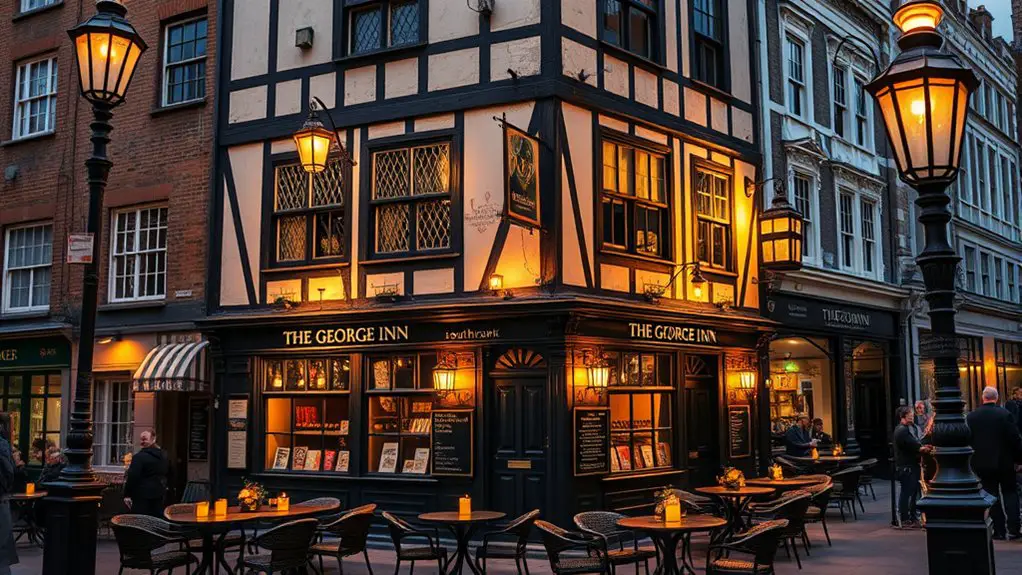
If you want a pub that feels inseparable from London’s history, The George Inn is the clearest place to start. The National Trust describes it as London’s last remaining galleried inn. The present building dates from the late 17th century after an earlier inn on the site was destroyed in the Southwark fire of 1676.
The timber galleries and courtyard explain why the pub is so distinctive. Coaching inns once used galleries to reach upper rooms, but very few London examples survived redevelopment and wartime damage. Here, the surviving structure still gives you a sense of how a busy inn yard once worked.
The Dickens connection is real rather than promotional folklore. The National Trust records that Charles Dickens visited the site and that the inn is mentioned in Little Dorrit. That makes The George especially appealing if you want literary history as well as a pint.
Today the property is owned by the National Trust and operated as a pub by Greene King. You can drink inside or spend time in the courtyard, which is one of the venue’s biggest advantages in good weather.
Pro Tip: Pair The George with Borough Market, Southwark Cathedral, or a Thames walk. The National Trust advises booking ahead, especially when you want a table rather than a quick drink.
The Churchill Arms, Kensington
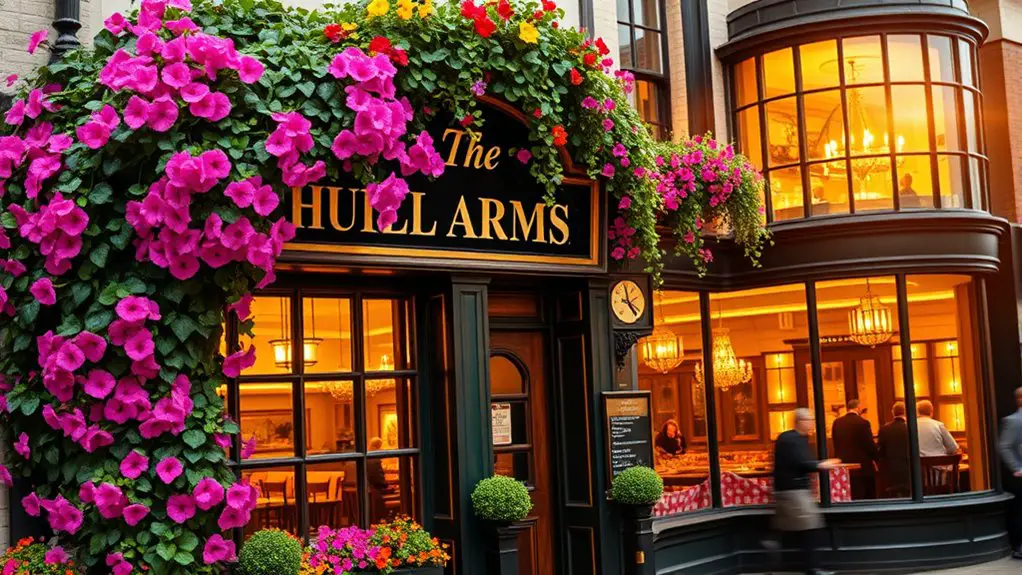
The Churchill Arms is one of London’s most recognisable pubs because its exterior can look more like a flower display than a building. Inside, memorabilia, dark wood, and tightly packed decoration give it a completely different feel from a minimalist modern bar.
It is also unusual for its food. The pub’s official Fuller’s page highlights its long-running Thai kitchen, and Fuller’s says the pub introduced Thai food in the late 1980s. That combination of traditional pub atmosphere and Thai dishes has become one of the venue’s signatures.
The Famous Floral Decor
The flowers are iconic, but they are not a centuries-old tradition. Fuller’s accounts place the development of the large-scale floral displays in the late 20th century, with hanging baskets expanding from a modest display into the dense arrangement now associated with the pub.
The exterior changes with the seasons. In warmer months, flowers dominate the frontage; around Christmas, the venue is known for replacing much of that look with elaborate festive decorations. The result is highly photogenic, but the real pub character continues inside through the memorabilia and compact rooms.
Thai Food in a Traditional Pub
The Thai kitchen is not a small side menu. It is one of the main reasons people visit. Current venue information describes regional Thai dishes ranging from mild noodles to hotter curries, served in the restaurant area at the back.
You can expect:
- A lively, highly decorated pub interior that feels very different from a standard chain pub.
- A dedicated Thai food menu rather than conventional fish-and-chips-only pub dining.
- A busy atmosphere, especially at popular meal times and during periods when the exterior display draws extra visitors.
This is a strong choice when you want bold food, visual character, and a famous London setting in the same stop.
The Spaniards Inn, Hampstead
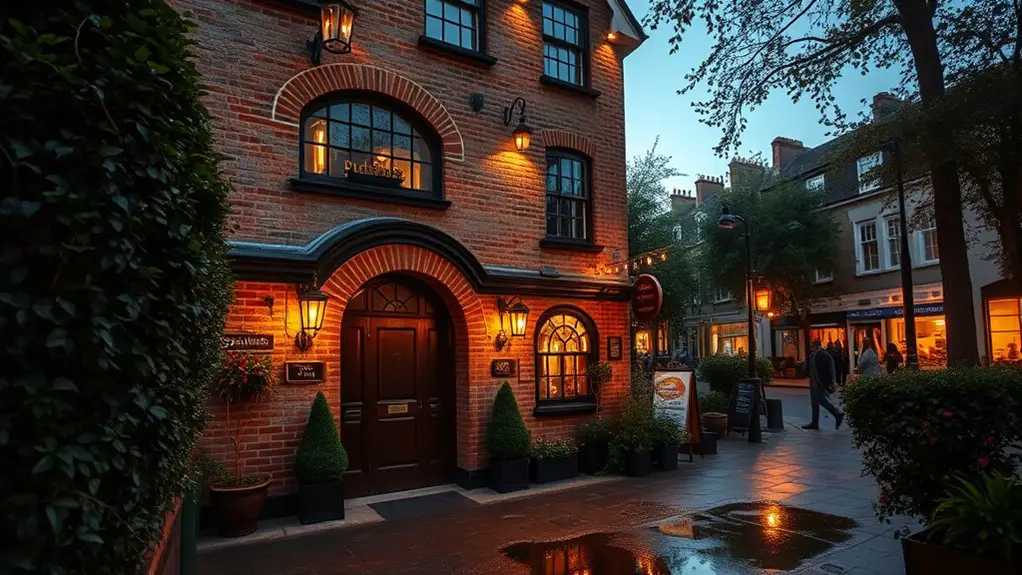
Nestled beside Hampstead Heath, The Spaniards Inn is a good counterpoint to central London’s busier pubs. Its official history dates the building to 1585, and the Grade II listed inn has long been tied to stories about writers, highwaymen, and old Hampstead.
Inside, wood panelling, fireplaces, low ceilings, and cosy corners create the intimate atmosphere people often imagine when they think of an old English pub. Outside, the walled garden gives you a more relaxed option in warmer weather.
The literary connections are part of the attraction. The venue says it was immortalised by Dickens in The Pickwick Papers and is associated by tradition with John Keats. Some of the more colourful stories surrounding Dick Turpin are harder to prove, so it is better to enjoy them as pub lore rather than firm history.
Whether you want a quiet pint after a walk or a full meal, The Spaniards Inn works best when you give it time rather than treating it as a quick photo stop. Its location near Hampstead Heath is part of the experience.
The Viaduct Tavern, City of London
For ornate Victorian atmosphere, The Viaduct Tavern is one of the strongest choices in the City. It sits on Newgate Street near the Old Bailey and presents itself today as a traditional gin palace with a broad gin range.
Victorian Gin-Palace Character
CAMRA’s current heritage listing records the pub as a Grade II building dating from 1874–75, with a major interior remodelling in 1898–1900. The surviving decoration includes etched and cut glass, carved woodwork, mirrors, marble details, and painted panels.
Look for:
- The late-Victorian bar fittings and ornate glasswork.
- The richly decorated walls and paintings that make the room feel closer to a preserved gin palace than a modern pub fit-out.
- The compact layout, which can feel especially atmospheric when the City starts filling with after-work drinkers.
The official Viaduct Tavern site also confirms its current focus on gin, cask beer, craft beer, and simple pub food.
Gin and the Newgate Prison Story
The pub’s basement is often described as containing old prison cells connected with Newgate. That story is famous, but the exact origin of the cellar spaces is disputed. Even CAMRA’s heritage description uses cautious wording when discussing the supposed cells. Treat the prison connection as part of the venue’s lore rather than a fully settled archaeological fact.
| Focus | What to Expect | Best For |
|---|---|---|
| Gin | A changing range in a traditional gin-palace setting | Gin drinkers who want atmosphere |
| Beer | Cask classics and modern craft options | Mixed groups with different drink preferences |
| Food | Simple choices such as pies and toasties on the current venue offer | A quick meal with drinks |
The Princess Louise, Holborn
The Princess Louise is the pub to choose when the interior itself is the attraction. Historic England lists the building at Grade II* and records an elaborate 1891 interior with decorative tilework, stained and embossed glass, mahogany fittings, mirrors, and other Victorian details.
The moment you step inside, the layout feels different from a typical open-plan pub. Screens, partitions, polished wood, and decorated surfaces break the room into smaller spaces and give the pub a strong sense of period character.
Come for the Victorian interior: the Princess Louise is one of London’s most visually distinctive historic pubs, with an 1891 decorative scheme protected at Grade II*.
Here’s what makes it special:
- The preserved Victorian decorative scheme gives the pub a genuine heritage feel rather than a themed imitation.
- Smaller screened areas and snugs create a more intimate atmosphere than many central London pubs.
- It is operated by Samuel Smith, so the drinks selection centres on that brewery’s own range rather than a large multi-brewery cask lineup.
For drinkers who care more about architecture and old-pub character than chasing the widest beer menu, The Princess Louise is hard to beat.
For the building’s official heritage record, see Historic England.
The Mayor of Scaredy Cat Town, Spitalfields
Hidden beneath The Breakfast Club on Artillery Lane, The Mayor of Scaredy Cat Town is the wildcard on this list. It is better described as a cocktail bar or speakeasy-style drinking den than a traditional London pub.
The entrance is part of the fun: the venue is reached through the well-known fridge door inside The Breakfast Club’s Spitalfields branch. Once downstairs, dim lighting, exposed brick, vintage touches, and playful decor create a tucked-away atmosphere that feels separate from the busy streets above.
The official venue page confirms the Spitalfields address and offers table booking. It is a good choice when you want inventive cocktails and a memorable entrance rather than cask ale and traditional pub history.
Because this is a late-opening cocktail venue rather than a family-oriented pub, check the current booking and age conditions before visiting with younger guests.
The Harp, Covent Garden
The Harp is one of the strongest choices in central London for people who care about well-kept cask beer. Its official site describes it as a traditional British ale house and says it has 10 hand pumps serving cask ales alongside guest beers, traditional ciders, and perries.
That beer focus has brought serious recognition. The Harp’s official drinks page notes that it became the first London pub to win CAMRA’s National Pub of the Year competition, in 2010.
Here’s what makes The Harp special:
- A narrow, characterful pub interior that feels more like a traditional ale house than a polished tourist bar.
- A beer-led drinks offer, with cask ale, cider, and perry at the centre of the experience.
- A location close to Covent Garden and Trafalgar Square that makes it easy to include in a central London day.
The old version of this guide described Irish charm and regular live music, but those are not what the current venue promotes. The better reason to go is simple: conversation, traditional pub atmosphere, and beer.
Warning: The Harp is small and can become crowded quickly. Its official site says normal table bookings are not taken, so go earlier if having a seat matters to you.
The Chandos, Trafalgar Square
Just off Trafalgar Square, The Chandos is useful when you want a traditional-looking pub in the middle of the West End without making a special journey. The current venue traces its name to the late 19th century: the building was rebuilt in 1885 and had become The Chandos by 1891.
Inside, polished wood, stained glass, booths, and the upstairs Opera Room create a classic pub atmosphere. Its central position also makes it a practical meeting point before or after the National Gallery, West End theatres, or Covent Garden.
The official Chandos site says the pub serves Samuel Smith beers, including cask Old Brewery Bitter, along with pub food. Tables can be booked, which gives it an advantage over very small walk-in-only pubs nearby.
This is not a centuries-unchanged time capsule, but it does offer a convincing mix of late-Victorian character, central-London energy, and everyday pub use.
The Dove, Hammersmith
The Dove in Hammersmith combines old-pub atmosphere with something many central venues cannot offer: a direct Thames-side setting. Fuller’s says a public house has stood on the site since the 17th century, and the venue remains closely associated with London’s literary and cultural history.
Inside, the pub is compact and traditional. Outside, the riverside terrace is the main draw on a pleasant day, letting you sit above the Thames with boats moving past.
Here’s what makes The Dove stand out:
- Historic character – a long-established pub site with stories connected to writers, artists, and other well-known London figures.
- Riverside views – one of the best settings in this list for a slow drink outdoors.
- Food and drink – the current venue combines seasonal pub food with cask beer, craft beer, wine, and other drinks.
The official history also notes that one tiny side room was once recognised by Guinness World Records as the world’s smallest bar room. Whether you care about that claim or not, the pub’s tight interior and Thames terrace give it a character that feels very different from central West End drinking.
See the current venue information on The Dove’s official site.
Which London Pub Should You Choose?
Use your priority to narrow the list:
- Best for history: The George Inn for coaching-inn heritage; The Princess Louise for preserved Victorian design; The Viaduct Tavern for gin-palace character.
- Best for beer: The Harp, especially if cask ale, cider, and perry matter more than a full food menu.
- Best for food: The Churchill Arms for Thai dishes; The Spaniards Inn or The Dove for a fuller pub meal.
- Best outdoors: The Dove for the Thames, The Spaniards Inn for its garden, and The George Inn for its historic courtyard.
- Best quirky choice: The Mayor of Scaredy Cat Town for cocktails and the hidden entrance.
- Best central stop: The Harp or The Chandos when your sightseeing is around Covent Garden and Trafalgar Square.
Planning Your London Pub Visit
London pub conditions can change from one day to the next. Private parties, football, theatre crowds, summer weather, and office traffic can all affect how busy a venue feels.
- Book where it matters: The National Trust advises booking The George ahead, and The Spaniards Inn recommends booking because it becomes very busy. The Churchill Arms, Viaduct Tavern, Chandos, Dove, and Mayor all offer booking options. The Harp is normally walk-in only.
- Go earlier for a quieter atmosphere: There is no reliable citywide “busiest time” that applies to every pub, but central pubs commonly become busier after work and on weekend evenings.
- Check outdoor areas: The George’s courtyard, The Spaniards Inn’s garden, and The Dove’s riverside terrace are the clearest outdoor choices in this list. Weather and private events can affect availability.
- Check family and age policies: Some pubs explicitly welcome families, while late-night cocktail venues can apply stricter age rules. Confirm the venue’s current policy before travelling with children or teenagers.
- Think about access: Historic pubs can have narrow corridors, steps, split levels, and small rooms. Check accessibility information directly if step-free access is important.
Pro Tip: Do not try to visit all nine in one crawl. Pick two or three in the same area: The George pairs well with Borough Market; The Harp and Chandos are close to each other; and The Spaniards Inn works naturally with a Hampstead Heath walk.
Frequently Asked Questions
Which pub is best for traditional British ales?
For a beer-led visit, The Harp is the strongest choice in this list. Its official drinks page highlights 10 hand pumps, cask ales, guest beers, traditional ciders, and perries. The George Inn is the better pick when history matters more than the widest or most specialist beer focus.
Are these pubs suitable for family visits?
Some are. The Churchill Arms and Viaduct Tavern currently list families as welcome, and The Spaniards Inn publishes family and under-18 guidance. Policies can vary by time and area of the venue. The Mayor of Scaredy Cat Town is a late-opening cocktail bar, so check its current age conditions before planning a family visit.
Which pubs have good outdoor seating?
The strongest outdoor picks are The Dove for its riverside terrace, The Spaniards Inn for its walled garden, and The George Inn for its historic courtyard. Outdoor seating can be weather-dependent and may fill quickly on warm days.
What are the busiest times to visit?
There is no single verified busiest-time window for all nine venues. Central pubs often get busier after work and on weekend evenings, while destination pubs can fill around meal times or good weather. Arriving earlier is the safest strategy when you want a seat and a quieter atmosphere.
Are reservations recommended?
Yes for several venues. The National Trust advises booking ahead at The George, and The Spaniards Inn recommends booking because it can become very busy. The Churchill Arms, Viaduct Tavern, Chandos, Dove, and Mayor accept bookings. The Harp states that it does not take normal table bookings and welcomes walk-ins.
Is The Mayor of Scaredy Cat Town actually a pub?
Not in the traditional sense. It is a hidden cocktail bar beneath The Breakfast Club in Spitalfields. Keep it on your list for a quirky drinking experience, but choose The Harp, George Inn, Spaniards Inn, or another traditional pub if cask ale and classic pub atmosphere are your priority.
Which pub is best for a first-time London visitor?
The George Inn is the strongest all-around first visit if you want London history in the setting itself. The Harp is better for beer enthusiasts, while The Dove is the better choice when a Thames-side location matters most.
Sources
- National Trust — George Inn — galleried-inn status, 17th-century history, Dickens connection, and booking guidance.
- The Churchill Arms / Fuller’s — current venue features, Thai kitchen, family listing, booking, and visitor information.
- The Spaniards Inn — 1585 history, literary associations, Grade II status, and garden information.
- CAMRA — Viaduct Tavern — Victorian dates, protected interior, gin-palace character, and cautious wording around the cellar story.
- Historic England — Princess Louise Public House — Grade II* status and 1891 interior details.
- Visit London — 101 Best Pubs in London — current 2026 context for London pub planning and categories.
Conclusion
No single pub can represent all of London’s drinking culture. For historic charm, The George Inn, The Princess Louise, and The Viaduct Tavern are the standouts. The Churchill Arms adds a famous Kensington setting and Thai food, while The Spaniards Inn offers a calmer Hampstead feel. The Harp is the beer lover’s pick, The Dove wins for riverside atmosphere, The Chandos is an easy central stop, and Scaredy Cat Town delivers the quirky cocktail experience. Choose the pub that matches your mood, check the current venue details, and give yourself time to enjoy the place rather than rushing through a checklist.
