
Last Updated on July 25, 2026 by Daniel Globe
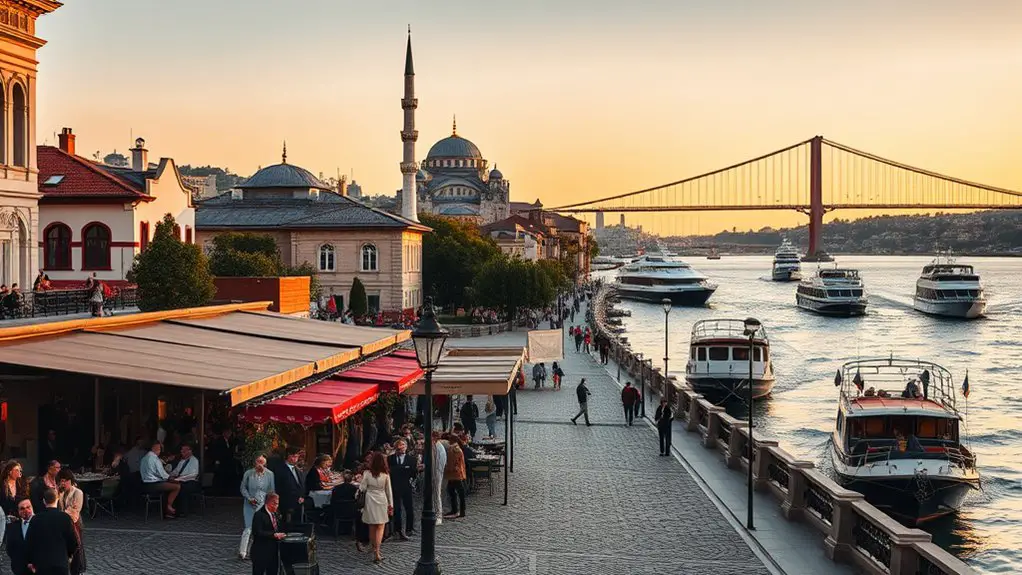
Ortakoy is one of Istanbul’s most rewarding neighborhoods for photography because its mosque, waterfront, square, food stalls, and bridge views sit within a compact area. The strongest photos come from combining these landmarks with good timing: arrive early for cleaner architectural shots, explore the streets in soft daylight, and stay through sunset and blue hour.
Quick Answer
The best Instagram spots in Ortakoy are the Büyük Mecidiye Mosque, the Bosphorus waterfront, Ortakoy Square, weekend artisan stalls, waffle stands, changing street art, and the view toward the 15 July Martyrs Bridge. Visit early for fewer people, then return to the waterfront for sunset and blue-hour photos.
Key Takeaways
- Photograph Ortakoy Mosque early in the morning or near sunset for softer light and a clearer foreground.
- Use the waterfront to frame the mosque, Bosphorus, and 15 July Martyrs Bridge in a single composition.
- Weekend artisan stalls and street displays are photogenic, but their dates, size, and locations can change.
- Stay after sunset for blue-hour skies, bridge lights, reflections, and a more balanced cityscape.
- Respect worshippers, ask before taking close portraits, and keep your belongings secure in crowded areas.
Disclosure: As an Amazon Associate I earn from qualifying purchases. Some links on this page are affiliate links, at no extra cost to you.
Best Ortakoy Photo Spots at a Glance
| Photo Spot | Best Time | Best Shot |
|---|---|---|
| Ortakoy Mosque | Early morning or golden hour | Low-angle facade, minarets, or mosque-and-bridge frame |
| Bosphorus Waterfront | Sunset through blue hour | Reflections, ferries, silhouettes, and layered skyline views |
| Ortakoy Square | Morning for architecture; afternoon for street life | Wide environmental image with the mosque behind the square |
| Art and Side Streets | Midmorning or open shade | Murals, shutters, signs, textures, and candid street details |
| Weekend Artisan Stalls | Late morning on active market days | Colorful crafts, hands at work, and close-up product details |
| Waffle and Kumpir Stands | Daylight or early evening | Overhead food shot or portrait with the square softly blurred |
| Bridge View from the Waterfront | Blue hour and night | Bridge lights with the mosque, boats, or waterfront in front |
Plan Your Ortakoy Photo Walk
A focused visit takes about two to three hours, although you may want longer if you plan to wait for sunset. Start in the side streets while the light is soft, continue into Ortakoy Square, photograph the mosque from several distances, and then explore the waterfront, stalls, cafés, and food stands.
- Begin in the side streets: Capture shopfronts, architectural details, signs, temporary art, and quieter neighborhood scenes.
- Move into Ortakoy Square: Take a wide establishing image before the busiest part of the day.
- Photograph the mosque: Try centered, low-angle, vertical, and environmental compositions.
- Explore the waterfront: Use boats, railings, birds, and people as foreground elements.
- Photograph food and market details: Look for color, texture, steam, hands, and vendor activity.
- Finish at sunset: Stay at least 20 to 30 minutes after the sun disappears for deeper blue skies and brighter city lights.
Pro Tip: Save your widest composition for early morning, when the square is less crowded. Later, switch to tighter frames that use people, food stalls, boats, and lights as part of the scene instead of trying to exclude them.
Ortakoy Mosque
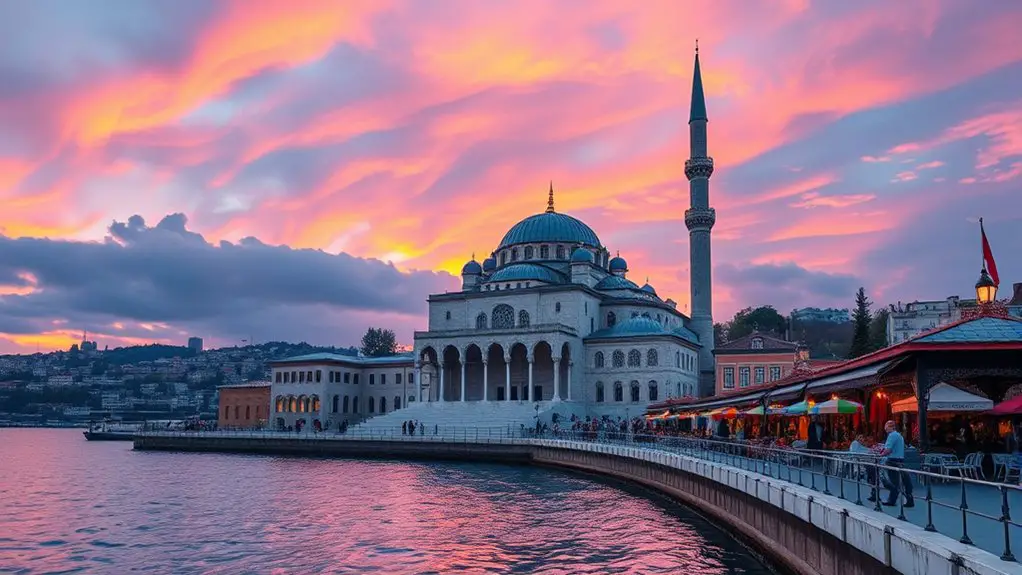
The official name of Ortakoy Mosque is Büyük Mecidiye Mosque. An earlier mosque stood on the site during the 18th century, but the building visitors see today was commissioned by Sultan Abdülmecid and completed in 1854, according to the TDV Encyclopaedia of Islam.
Its waterfront position, two slender minarets, large windows, and ornate neo-Baroque design make it Ortakoy’s defining photographic subject. The mosque is especially effective in vertical compositions because the minarets naturally lead the viewer’s eye upward.
For a classic exterior image, stand far enough back to include the mosque, water, and part of the bridge. Move closer for details in the carved stonework, arched windows, entrance, and facade. A low camera position can make the building feel taller, while a person crossing the foreground adds scale.
The interior includes marble details, decorative painting, chandeliers, and calligraphic panels. Some calligraphy is associated with Sultan Abdülmecid. Because this is an active mosque, follow all posted instructions, avoid disrupting prayer, dress respectfully, silence your phone, and do not photograph worshippers without permission.
Note: Visitor access can pause during prayers, religious events, maintenance, or crowd control. Flash, tripods, and extended photo sessions may also be restricted inside, so follow instructions from mosque staff.
Bosphorus Waterfront
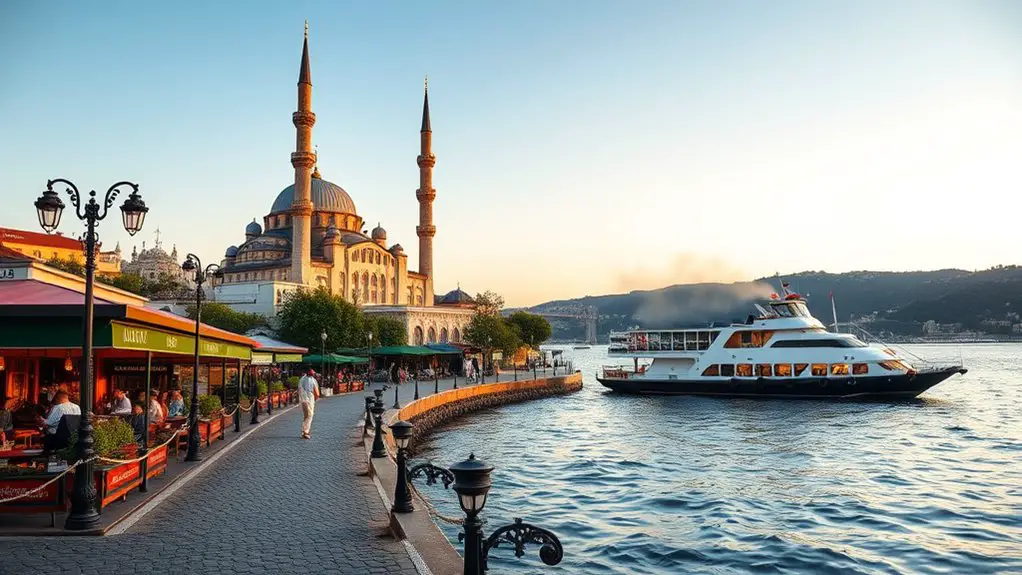
The Bosphorus waterfront gives you the widest range of photo opportunities in Ortakoy. From the same general area, you can capture the mosque, boats, water, Asian-side hills, and the 15 July Martyrs Bridge.
Do not remain in one fixed position. Walk a short distance in both directions and watch how the mosque overlaps with the bridge, boats, trees, railings, and people. Even a small change in position can separate crowded elements and produce a cleaner composition.
Scenic Views of the Bosphorus
Use the water as a source of movement and reflected light. A fast shutter speed can freeze ferries and birds, while a slower handheld exposure can soften small waves if your phone or camera has stabilization.
On bright days, tap or meter for the sky to preserve cloud detail. If the foreground becomes too dark, lift the shadows during editing instead of overexposing the water. A polarizing filter can reduce glare, although it may also weaken the reflections you want to capture.
Waterfront cafés can provide an elevated or sheltered angle, but ask before occupying a table solely for photography. Ordering a drink and working quickly is more considerate during busy periods.
Iconic Ortakoy Mosque Backdrop
The most recognizable Ortakoy photograph places Büyük Mecidiye Mosque in the foreground with the bridge and Bosphorus behind it. Türkiye’s official tourism guide also highlights this combined mosque, bridge, and strait panorama as one of the waterfront’s signature views.
Try three versions of the composition:
- Wide: Include the square, mosque, water, and bridge to establish the location.
- Medium: Frame the mosque and bridge together while removing distracting stalls and signs.
- Tight: Isolate a minaret, dome detail, ferry, or section of the bridge.
Ortakoy’s signature composition combines three layers: the mosque in front, moving Bosphorus traffic in the middle, and the bridge across the background.
Vibrant Street Life Nearby
The waterfront is not only a landscape location. Food vendors, tea glasses, street performers, families, fishermen, ferry passengers, and passing birds can add energy and scale to your photographs.
Use a longer focal length or your phone’s portrait lens for candid-looking details without standing too close. For identifiable close portraits, ask permission first. A smile and a simple gesture toward your camera are often enough to begin the conversation.
Local foods such as kumpir, waffles, simit, tea, and seafood can provide colorful foreground subjects. Photograph them soon after serving, before toppings shift or sauces lose their texture.
Warning: The square, market lanes, waterfront, transport stops, and places of worship can become crowded. Keep phones and cameras secured, avoid leaving equipment on tables or walls, and remain aware of demonstrations, temporary closures, and official safety instructions.
Ortakoy Square
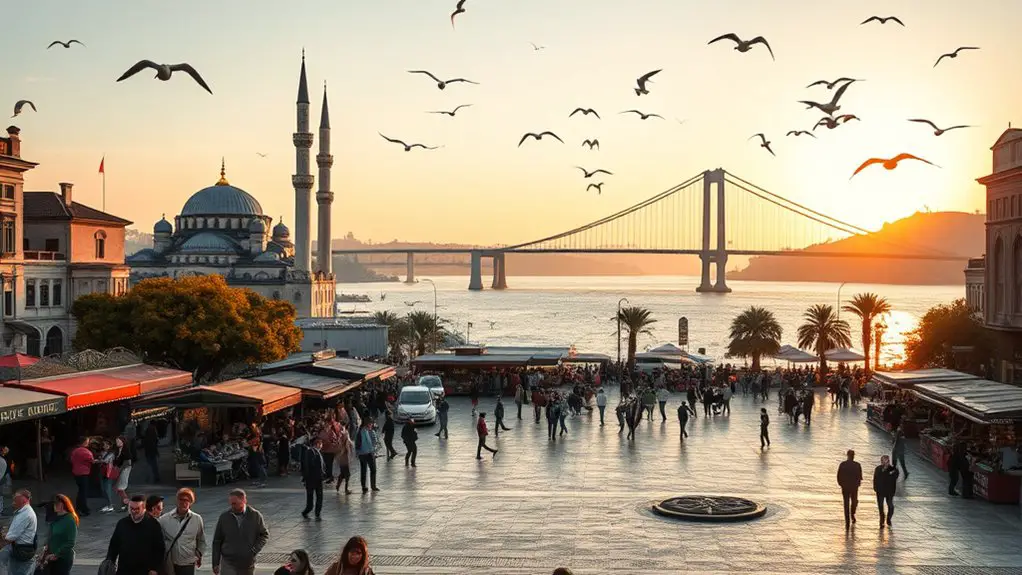
Ortakoy Square is the neighborhood’s visual and social center. It brings together the mosque, waterfront, pier, food stands, cafés, local residents, and visitors in a relatively compact space.
Arrive early for a cleaner architectural frame. During the afternoon and evening, treat the crowds as part of the story: wait for one clearly separated person to cross the frame, photograph families sharing food, or use a passing silhouette to balance the mosque.
Artists’ and craft markets are often held on weekends, according to the official GoTürkiye Ortakoy guide. However, the exact dates, number of stalls, and products can change because of weather, holidays, permits, and local events.
The square is also one of the best places to photograph kumpir, the stuffed baked potato associated with Ortakoy. Use the colorful toppings as a close-up subject, or hold the food at chest height with the square softly blurred in the background.
The Art Scene
Ortakoy has a mix of galleries, studios, boutiques, craft displays, and temporary exhibitions. The visual experience changes frequently, which makes spontaneous exploration more useful than relying on a fixed list of installations.
Look for exhibition posters, window displays, sculptures, ceramics, framed prints, and design objects. Reflections in gallery windows can create layered images that combine the artwork with pedestrians and surrounding architecture.
Indoor photography rules vary. Ask before photographing artwork, and do not assume that a public exhibition permits flash, video, or commercial photography. When photography is allowed, shoot straight toward framed work to reduce distortion and glare.
The Colorful Street Markets
When artisan stalls are operating, Ortakoy’s market lanes add color and close-up detail to a photo walk. These displays may be busiest at weekends, but visitors should not depend on a guaranteed weekly schedule.
Four subjects are especially useful:
- Handmade jewelry and accessories: Focus on repeated shapes, metallic highlights, and the maker’s hands.
- Prints and illustrations: Photograph several designs together to create a colorful pattern.
- Textiles and ceramics: Use texture, folds, glaze, and small imperfections to show craftsmanship.
- Food and drink: Capture steam, toppings, tea glasses, and the process of preparing an order.
Always ask before taking close photographs of a vendor, customer, or individual product. Some sellers may welcome exposure, while others may prefer not to have their designs photographed in detail.
The Famous Waffles
Ortakoy’s waffle stands are easy to recognize from their displays of fruit, chocolate, sauces, nuts, candy, and other toppings. The finished waffle can be one of the most colorful photographs from the neighborhood.
For a clean food image, choose a limited number of toppings rather than covering every part of the waffle. Position it near a window or in open shade, turn the most colorful side toward the camera, and use portrait mode carefully so important toppings do not become blurred.
An overhead composition works well when the waffle is on a plate. For a location-based image, hold it slightly below the camera and place the mosque, waterfront, or market lane in the background. Keep the food close enough to remain the main subject.
You can apply the same method to kumpir: emphasize the contrast between the pale potato, bright vegetables, sauces, and serving tray.
15 July Martyrs Bridge View from Ortakoy
The bridge seen from Ortakoy is officially the 15 July Martyrs Bridge. It opened in 1973 and was formerly known as the Bosphorus Bridge, a name that remains common in English travel descriptions.
There is no single official attraction called “the Bridge Viewpoint.” The best viewing area is the public waterfront around Ortakoy Square, where you can adjust your position to combine the bridge with the mosque, boats, trees, cafés, and railings.
Use these four approaches:
- Photograph from farther back: Include the mosque and a section of the square to create depth.
- Wait for a ferry: A boat between the mosque and bridge connects the three layers of the image.
- Shoot during blue hour: The cooler sky balances the warmer bridge and waterfront lights.
- Use a vertical frame: Place a minaret on one side and the bridge cables on the other.
Avoid positioning tripods where they block the promenade, seating, business entrances, or access to the pier. A compact tabletop tripod or stabilized handheld exposure is usually easier in a busy public space.
The Local Street Art
Ortakoy’s street art is better treated as a changing discovery than as a permanent attraction list. Murals, painted shutters, pasted posters, temporary walls, and decorative shopfronts can appear, fade, or be replaced.
Explore the lanes around the square and notice smaller visual details as well as large murals. A painted door, layered poster wall, hand-lettered sign, or reflection may produce a stronger photograph than a widely shared landmark.
| Where to Look | Possible Subjects | Photography Approach |
|---|---|---|
| Side streets near the square | Shutters, signs, posters, doors, and architectural details | Use open shade and keep vertical lines straight |
| Market and shop lanes | Craft displays, handwritten signs, packaging, and textures | Shoot close details after asking the seller |
| Gallery and café windows | Artwork, reflections, interiors, and passing pedestrians | Angle the camera to manage glare or use reflections deliberately |
| Temporary event spaces | Installations, banners, stages, and seasonal decorations | Check whether event photography has special restrictions |
Sunset at Ortakoy
Sunset changes the waterfront quickly. The brightest color may appear before the sun reaches the horizon, while the most balanced cityscape often comes later, when the sky is still blue and the bridge and waterfront lights have switched on.
- Arrive early: Choose your position before the best light and watch for objects that may block the mosque.
- Protect the highlights: Lower exposure slightly so the sky keeps its color instead of turning white.
- Use silhouettes carefully: Place people against an open section of water or sky so their outlines remain clear.
- Stay for blue hour: Continue shooting for at least 20 to 30 minutes after sunset if conditions and access allow.
Reflections become stronger when the water is calm. When it is windy, use the broken light patterns as texture rather than waiting for a mirror-like surface.
Pro Tip: Clean your phone lens before sunset. Fingerprints are easy to miss in daylight but create large halos around bridge, boat, and street lights at night.
Photography Etiquette and Practical Tips
- Respect worship: Büyük Mecidiye Mosque is an active religious site, not only a photo attraction.
- Ask before close portraits: This is especially important for worshippers, children, vendors, and people working at stalls.
- Keep pathways clear: Do not block the pier, mosque entrance, promenade, café service areas, or shop doors.
- Carry minimal equipment: A phone, small camera, spare battery, lens cloth, and compact bag are easier to manage in crowds.
- Prepare for weather: The waterfront can feel windy and cooler than inland streets, especially after sunset.
- Watch your equipment: Use a wrist or neck strap and avoid balancing a phone or camera on an exposed waterfront wall.
- Edit naturally: Correct perspective and recover highlights, but avoid excessive saturation that removes detail from the mosque and sky.
How to Reach Ortakoy
Ortakoy does not have its own metro or tram station. Your best route depends on your starting point and current traffic.
- From Taksim: Direct IETT services such as DT routes may serve Ortakoy, but route patterns and marked departures can change. Check the official IETT route page before leaving. Another option is the F1 funicular to Kabatas followed by a bus or taxi.
- From Sultanahmet or the historic peninsula: Take the T1 tram toward Kabatas, then continue by bus or taxi. From Eminonu, a scheduled ferry may provide a more scenic option.
- From Eminonu or Besiktas: Check the official Ortakoy–Besiktas–Eminonu ferry timetable.
- From Uskudar or Kadikoy: Scheduled City Lines services may stop at Ortakoy. Confirm the current day’s timetable before relying on the ferry.
Road traffic along the Bosphorus can be slow, especially around commuting hours, weekends, and major events. Allow extra time if you are trying to reach the waterfront before sunset.
Frequently Asked Questions
What time is best for photos at Ortakoy Mosque?
Early morning is best for fewer people and cleaner architectural compositions. Golden hour adds warmer light, while blue hour is better for balancing the mosque, bridge lights, and evening sky. Arrive before your preferred light so you have time to select a position.
Are there entry fees for the Ortakoy waterfront?
There is no ticket gate for the public square or waterfront promenade. Büyük Mecidiye Mosque is an active place of worship rather than a ticketed museum, although visitor access may pause during prayers, religious events, maintenance, or crowd-control periods.
Where can I find public restrooms in Ortakoy?
Restroom locations and operating conditions can change. Look for current WC signs around the square and pier, or ask at a café or restaurant where you are a customer. Some facilities may charge a small fee, require a purchase, or close earlier than nearby businesses.
Is Ortakoy safe for solo travelers?
Many people visit Ortakoy alone, but no tourist area is risk-free. Keep valuables secure, stay alert in crowds, use well-lit routes after dark, avoid demonstrations, and arrange licensed transportation when needed. Check your government’s current travel guidance; the U.S. State Department Türkiye advisory currently recommends increased caution.
What is the best way to reach Ortakoy from central Istanbul?
From Taksim, use a current IETT bus service or take the F1 funicular to Kabatas and continue by bus or taxi. From Sultanahmet, take the T1 tram to Kabatas and transfer. Scheduled ferries can also connect Ortakoy with Eminonu, Besiktas, Uskudar, or Kadikoy, depending on the day and timetable.
Can I take photographs inside Ortakoy Mosque?
Photography may be permitted when it does not disturb worship, but posted rules and staff instructions take priority. Avoid prayer times, silence your device, do not use flash unless clearly allowed, and never photograph worshippers at close range without consent.
Can I use a tripod on the Ortakoy waterfront?
A small tripod may be practical in a quiet area, but do not block pedestrians, pier access, businesses, or emergency routes. Temporary events or security measures may restrict equipment. A stabilized handheld shot or compact support is often easier during busy periods.
When are Ortakoy’s artisan markets open?
Art and craft stalls are commonly associated with weekends, but there is no dependable guarantee that the same market will operate every Saturday or Sunday. Weather, holidays, permits, and events can affect the schedule, so treat the stalls as a possible bonus rather than the only reason for your visit.
Conclusion
Ortakoy rewards photographers who look beyond a single landmark. Begin with the mosque and square, explore the changing details in the market lanes and side streets, use the Bosphorus as a moving backdrop, and finish with the bridge lights after sunset. By planning around the light, respecting local activity, and allowing time to change positions, you can create a varied set of images without traveling far.
Sources
- GoTürkiye: Ortakoy — official destination information on the waterfront, mosque, art galleries, weekend artists’ markets, and signature panoramic view.
- TDV Encyclopaedia of Islam: Ortakoy Mosque — construction history, completion date, architecture, interior, and calligraphy.
- General Directorate of Highways — official current name and 1973 opening of the 15 July Martyrs Bridge.
- İstanbul Şehir Hatları — current Ortakoy, Besiktas, and Eminonu ferry timetable.
- IETT Ortakoy–Taksim Route — official route information and current service notes.
- U.S. Department of State: Türkiye Travel Advisory — current general safety guidance for crowded public and tourist locations.
