
Last Updated on July 28, 2026 by Daniel Globe
Arizona may be famous for dry deserts, red-rock canyons, and cacti, but some of the state’s most memorable landscapes are built around flowing water.
Turquoise springs, seasonal desert cascades, swimming holes, and canyon waterfalls are scattered from the Grand Canyon region to Tucson and the Mogollon Rim. The catch is that access varies widely: some waterfalls require permits months in advance, some depend on recent rain, and some famous sites are currently closed.
Before choosing an Arizona waterfall trip, check the land manager, current access rules, weather, and trail difficulty. That is especially important on tribal lands and during Arizona’s summer monsoon season.
Quick Answer
Arizona’s best currently visitable waterfall trips include Havasu Falls, Fossil Creek, Seven Falls, Water Wheel, Tonto Natural Bridge, and seasonal Tanque Verde Falls. Havasu requires an advance three-night booking; Fossil Creek needs a vehicle permit April 1–October 1. Grand Falls is currently closed to public access by Navajo Nation Parks.
Key Takeaways
- Havasu Falls requires an advance Havasupai booking. For 2026, campground permits are $455 per person for a required three-night stay.
- Fossil Creek requires a $6 vehicle reservation from April 1 through October 1 and has rough, remote road access.
- Grand Falls, also called Chocolate Falls, is currently closed to the public on Navajo Nation land. Do not attempt to bypass the closure.
- Seven Falls is about 8.5 miles round trip from the Sabino Canyon Visitor Center; the paid Bear Canyon shuttle can reduce the hike by roughly four miles.
- Not all Arizona waterfalls peak in spring. Fossil Creek and Havasu Creek are spring-fed, while Seven Falls and Tanque Verde Falls depend much more on recent rain or snowmelt.
- Flash floods can travel into a canyon from storms miles away, so always check the weather before entering a wash or narrow canyon.
At a Glance
| Havasu Falls | Open to booked visitors; roughly 10 miles from Hualapai Hilltop to the campground area; advance 4-day/3-night booking required. |
| Fossil Creek | Spring-fed year-round; vehicle permit required April 1–October 1; canyon parking is reached by a rough 14-mile dirt road from Highway 260. |
| Seven Falls | About 8.5 miles round trip without the shuttle; moderate wilderness hike with multiple creek crossings when water is flowing. |
| Grand Falls | Currently closed to public access by Navajo Nation Parks, regardless of seasonal water flow. |
| Easier Alternatives | Water Wheel near Payson and Tonto Natural Bridge State Park offer shorter day trips than Havasu or Seven Falls. |
Credit: www.alltrails.com
Disclosure: As an Amazon Associate I earn from qualifying purchases. Some links on this page are affiliate links, at no extra cost to you.
Top Waterfalls In Arizona
Arizona’s waterfalls range from dependable spring-fed creeks to desert cascades that may disappear between storms. Access also varies from developed state parks to remote wilderness and sovereign tribal lands.
These are the major Arizona waterfalls travelers search for most often, along with the current rules that matter before you leave home.
Havasu Falls
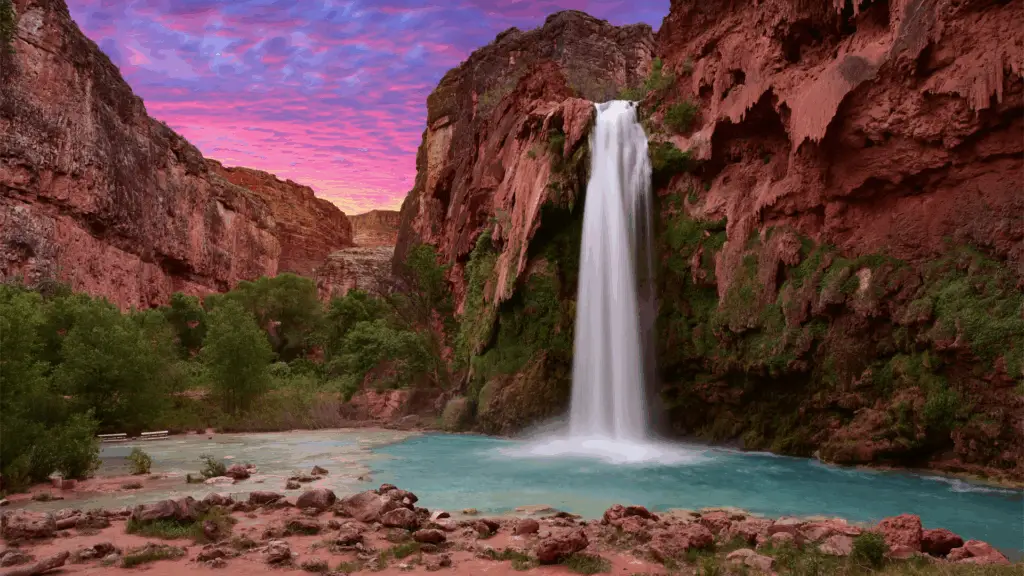
Havasu Falls is famous for vivid blue-green water flowing through red canyon walls on the Havasupai Indian Reservation. The color is associated with the mineral-rich waters of Havasu Creek.
The trail begins at Hualapai Hilltop. According to the official Havasupai tourism site, Supai Village is eight miles from Hilltop and the campground is another two miles down the main trail. That makes this a serious backpacking trip rather than a casual waterfall day hike.
Pro Tip: All visits require an advance booking. Current Havasupai bookings are four days and three nights. For 2026, campground permits cost $455 per person for three nights. Do not arrive expecting to buy a day-hike permit or walk in without a reservation.
Visitors should also remember that Havasu Canyon is remote. There is no water available along the main trail from Hilltop to Supai, and the Tribe advises hikers to travel during cooler parts of the day and carry enough water for the approach.
Fossil Creek Falls
Fossil Creek is unusual because it is fed by powerful springs rather than depending mainly on seasonal runoff. According to Recreation.gov, roughly 20,000 gallons of 70°F water per minute emerge from springs at the bottom of a 1,600-foot canyon.
The mineral-rich water has built travertine formations, terraces and clear blue-green pools. The popular waterfall area is reached from the Fossil Creek canyon side near Camp Verde rather than from the Bob Bear Trailhead near Strawberry.
Note: A vehicle reservation is required from April 1 through October 1. The current fee is $6 per vehicle. From May 15, 2026 onward, 40% of permits are released one month ahead on a rolling basis and 60% are released two days ahead. Visitors must reach the Highway 260/FR 708 junction by 2 p.m. to use the permit.
FR 708 from Highway 260 is a rough 14-mile dirt road. A high-clearance vehicle is strongly recommended, cell service is poor to nonexistent, and potable water is not available in the canyon. The Forest Service recommends bringing at least one gallon of water per person during permit season.
Grand Falls
Grand Falls, often called Chocolate Falls because of the muddy Little Colorado River water, is a roughly 185-foot seasonal waterfall on Navajo Nation land northeast of Flagstaff. Historically, its biggest flows have followed snowmelt and major rain events.
Warning: Grand Falls is currently closed to public access. Navajo Nation Parks & Recreation specifically lists Grand Falls as closed. Do not drive to the overlook, cross closure areas, or follow old online directions that were written before the closure.
The waterfall’s seasonal behavior is still useful background for understanding older photos and trip reports, but water flow does not override the closure. Only plan a future visit if Navajo Nation authorities officially reopen the area.
Seven Falls
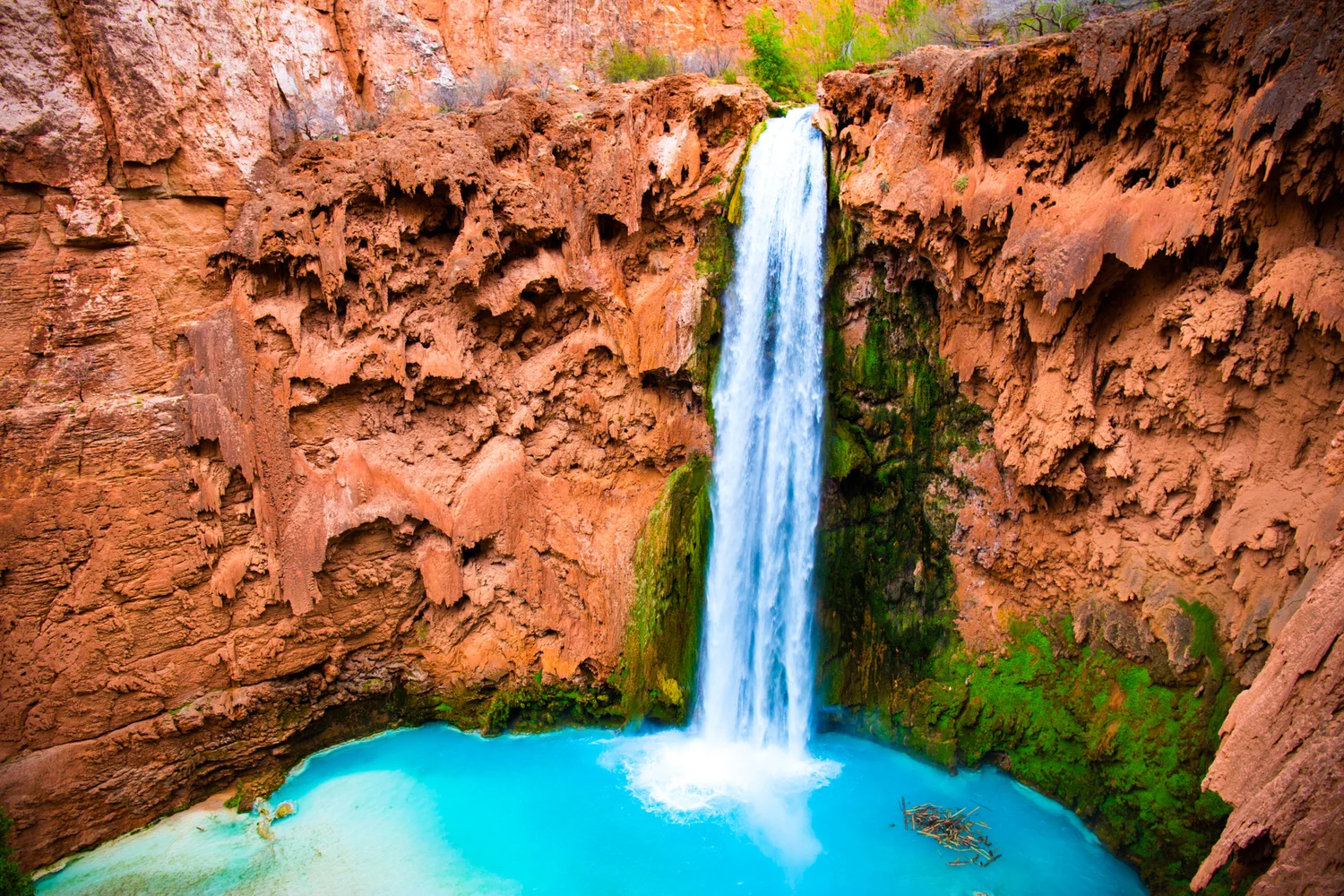
Seven Falls is a chain of pools and cascades in Bear Canyon within the Sabino Canyon Recreation Area near Tucson. The Coronado National Forest describes it as a moderate wilderness hike over rugged terrain with numerous stream crossings.
Without the shuttle, the trip is approximately 8.5 miles round trip from the Sabino Canyon Visitor Center. The paid Bear Canyon shuttle can reduce the hiking distance by about four miles. Shuttle days and schedules vary by season, so verify the operator’s current service before relying on it.
When Bear Canyon is flowing, expect wet feet at the crossings. Water levels vary greatly with weather, so Seven Falls may look dramatically different from one visit to another.
Credit: www.thewildiswaiting.com
Best Seasons To Visit
There is no single “best waterfall season” for all of Arizona because the state’s waterfalls are fed in different ways. Some run consistently from springs, while others depend on rain, snowmelt, or short-lived storm runoff.
Spring Water Flow
Late winter and spring are excellent for many seasonal Arizona waterfalls because snowmelt and winter storms can recharge creeks. Seven Falls and other desert cascades may have stronger flow during this period.
Fossil Creek is different. Its large spring discharge provides water throughout the year, so you do not need spring snowmelt to see the creek flowing. Havasu Creek is also spring-fed and normally carries water year-round.
Summer Hiking Tips
Summer can be brutally hot at lower elevations. Start hikes early, carry more water than you think you will need, protect yourself from the sun, and turn around before heat exhaustion becomes a problem.
At Fossil Creek, the Forest Service recommends at least one gallon of drinking water per person during permit season. On the Havasupai trail, there is no dependable drinking water between Hualapai Hilltop and Supai Village.
Warning: Arizona’s official monsoon season runs from June 15 through September 30. Flash floods can move into a canyon from thunderstorms many miles away, even when the sky above you looks dry. Leave narrow canyons immediately if water begins rising, turns muddy, or starts carrying debris.
Fall Colors
Fall brings cooler hiking weather and patches of changing foliage at higher elevations and along riparian corridors. Crowd levels vary by location, so do not assume a waterfall will be quiet simply because summer has ended.
For spring-fed destinations such as Fossil Creek, fall can provide flowing water with more manageable temperatures than midsummer.
Winter Access Challenges
Winter can be an excellent time for desert hiking, but snow and ice may affect higher-elevation roads and trails. Tonto Natural Bridge State Park, for example, can develop icy conditions on steep trails during cold weather.
Fossil Creek does not require the seasonal vehicle permit from October 2 through March 31, although road conditions, fire restrictions and temporary closures can still affect access. Dress in layers, wear suitable footwear, and verify current land-manager alerts before traveling.
Hidden Waterfall Trails
Some lesser-known Arizona waterfall hikes make good alternatives to the famous Havasu and Fossil Creek trips. The key is choosing places with verified public access rather than relying on old social-media posts.
Secret Spots Near Sedona
Sedona has beautiful creek hikes, but not every trail promoted online as a “hidden waterfall” actually leads to a dependable waterfall. Fay Canyon is primarily a short red-rock canyon hike, while West Fork follows Oak Creek through a narrow canyon. Both can be scenic when water is present, but neither should be planned as a guaranteed waterfall destination.
This distinction matters in Arizona because small cascades can appear after wet weather and disappear again quickly.
Remote Hikes In The Mogollon Rim
Near Payson, Water Wheel is a more dependable choice for travelers who want water without a Havasupai-scale backpacking trip. The Tonto National Forest operates Water Wheel as a year-round day-use recreation area along the East Verde River.
Current day-use fees are $8 per vehicle when purchased through a Forest Service office or retail vendor, or $12 from an on-site Tonto fee machine. There is no potable water at the recreation site.
Another developed option near Payson is Tonto Natural Bridge State Park, where trails descend toward Pine Creek, cascades, and the huge travertine bridge. Trails near the creek can be steep, rocky and slippery despite the park’s developed setting.
Waterfalls Off The Beaten Path
Tanque Verde Canyon east of Tucson develops impressive waterfalls after rain or snowmelt. The Forest Service describes waterfalls along the Lower Tanque Verde Falls route, but the same water that creates the spectacle also creates danger. Rock can be slippery, and floodwater can arrive rapidly.
Another destination that often appears on Arizona waterfall lists is Cibecue Falls on White Mountain Apache tribal land. It should not currently be treated as an available alternative: the White Mountain Apache Tribe lists Cibecue Falls as closed until further notice.
In Arizona, a famous waterfall is not automatically an accessible waterfall. Current tribal closures, Forest Service permits, road conditions, heat, and flash-flood risk should be checked before every trip.
Adventure Activities Nearby
Arizona’s waterfall destinations often sit inside larger wilderness, forest, or recreation areas, so the trip can include much more than a single viewpoint.
Hiking And Backpacking
Havasu Falls is normally part of a multi-night trip because current Havasupai reservations require a three-night stay. Seven Falls is a substantial day hike, while Water Wheel and Tonto Natural Bridge work better for travelers looking for shorter outings.
Fossil Creek offers more than one kind of experience. Visitors using the canyon parking areas can hike near the creek and Dixon Lewis Waterfall Trail, while the strenuous backpacking-style Bob Bear Trail descends about four miles toward the Fossil Springs area. The Bob Bear Trail does not directly access the main Fossil Creek waterfall.
Photography Opportunities
Soft morning or late-afternoon light can reduce harsh contrast on canyon walls and water. Keep safety ahead of photography: never step onto a wet ledge, stand in a flood channel, cross a closure boundary, or move into unsafe terrain just for a better angle.
Swimming And Wading
Havasu Creek and Fossil Creek are well known for water recreation, but neither should be treated like a guarded swimming pool. Fossil Creek has no lifeguards, and currents, submerged rocks and changing water levels can create hazards.
The Havasupai Tribe specifically warns visitors not to jump or dive because pool depths and underwater obstacles can change. At Seven Falls and other seasonal pools, assess current flow before entering and stay out whenever water is high, muddy, fast-moving or affected by storms.
Camping Near Waterfalls
Camping is available within the designated Havasupai campground for visitors holding campground bookings. Camping elsewhere along Havasupai trails or near the waterfalls is not permitted.
Camping is prohibited within the Fossil Creek permit area during the April 1–October 1 permit season. Rules elsewhere vary by land manager, so never assume that an undeveloped area beside a creek is a legal campsite.
Safety And Preparation Tips
Arizona waterfall hikes combine several hazards at once: heat, rough trails, water crossings, remote roads, unreliable cell service, and rapidly changing weather. Plan for those conditions before leaving the pavement.
Essential Gear
Bring sturdy hiking shoes with good traction, sun protection, a first-aid kit, enough food, and far more drinking water than you would carry for a short city walk. An offline map or downloaded route is useful because cell coverage disappears in many canyon areas.
Do not count creek water as safe drinking water. Where backcountry water use is allowed, treat or filter it before drinking.
Weather Considerations
Check the National Weather Service forecast before entering a canyon. Flash flooding can occur at any time of year, with the greatest concern during periods of thunderstorms and monsoon moisture.
A storm does not have to be directly overhead. Runoff can move for miles through washes and canyons before reaching hikers downstream.
Warning: Never enter or cross rapidly rising water. If a Flash Flood Warning affects the canyon you are in, move to higher ground immediately. Do not wait to retrieve gear, take photos, or see whether the water stops rising.
Wildlife Awareness
Watch for rattlesnakes and other desert wildlife, especially around rocks, brush and shaded trail edges. Never place your hands or feet where you cannot see, give wildlife room to move away, and keep food secured.
Trail Etiquette
Stay on established trails, pack out everything you bring in, yield appropriately to other trail users, and avoid damaging vegetation or travertine formations.
On tribal lands, local tribal rules take priority. A closure is not an invitation to find another road, overlook, or unofficial route.
Local Culture And Legends
Several of Arizona’s most famous waterfalls are part of living Indigenous homelands rather than ordinary public recreation sites. Visiting respectfully means recognizing tribal sovereignty, following local rules, and treating cultural sites as more than scenery.
Native American Stories
The Havasupai Tribe describes itself as the “People of the Blue Green Water.” Havasu Creek and the surrounding canyon are part of the Tribe’s homeland, and tourism takes place under Havasupai law and rules rather than National Park Service recreation rules.
Grand Falls is on the Navajo Nation. Navajo Nation Parks states that tribal park scenic areas are sacred places protected by Navajo Nation law, and Grand Falls is currently closed to visitors.
Historical Significance
Fossil Creek also has deep cultural importance. Recreation.gov notes that Western Apache and Yavapai people lived along Fossil Creek for generations and continue to recognize the canyon as ancestral homeland.
That history is another reason to leave archaeological objects, structures, rock features and cultural sites exactly as you find them.
Cultural Festivals
Rather than assuming a public festival or cultural event will be taking place near a waterfall, use official tribal websites for current visitor information. Do not enter ceremonies, residential areas or culturally sensitive locations unless visitors are specifically invited.
Respect photography restrictions, permit systems and closures even when older blogs, maps or social-media posts show previous access.

Credit: blog.whiteduckoutdoors.com
Frequently Asked Questions
What are the best waterfalls to visit in Arizona?
Good currently accessible choices include Havasu Falls with an advance booking, Fossil Creek, Seven Falls, Water Wheel, Tonto Natural Bridge and seasonal Tanque Verde Falls. Grand Falls is famous but is currently closed to public access.
When is the best time to see Arizona waterfalls?
It depends on the waterfall. Fossil Creek and Havasu Creek are spring-fed, while Seven Falls and Tanque Verde Falls depend more on recent precipitation. Cooler fall through spring weather is usually better for long desert hikes, but always check current flow, weather and access first.
Do Arizona waterfalls require permits?
Some do. Havasupai requires an advance booking for every visitor. Fossil Creek requires a vehicle reservation from April 1 through October 1. Other locations may charge parking or day-use fees, while tribal destinations can have their own permit systems or closures.
Is Grand Falls in Arizona open?
No. Navajo Nation Parks currently lists Grand Falls as closed to the public. Do not follow old driving directions or attempt to access the waterfall unless Navajo Nation authorities officially announce that it has reopened.
Are Arizona waterfalls accessible for families?
Some are much easier than others. Tonto Natural Bridge and Water Wheel are more practical family day trips for many visitors. Seven Falls is about 8.5 miles without the shuttle, while Havasu Falls requires a remote multi-night trip and roughly 10 miles of hiking to reach the campground area.
Can I swim near Arizona waterfalls?
Water recreation is popular at places such as Havasu Creek and Fossil Creek, but conditions can change quickly. Never jump or dive into unfamiliar pools, and stay out during high, muddy or fast-moving water. Always follow the rules posted by the land manager or tribe.
Can you visit Havasu Falls as a day trip?
No normal day-hike option is offered under the current Havasupai tourism system. All visitors need a booking before arrival, and current bookings are for four days and three nights.
Conclusion
Arizona waterfalls range from spring-fed turquoise creeks to short-lived desert cascades, and choosing the right one is as much about access and safety as scenery. Havasu Falls rewards travelers prepared for a permitted multi-night trip, Fossil Creek offers dependable spring flow, Seven Falls provides a substantial Tucson-area hike, and Water Wheel or Tonto Natural Bridge can work better for a shorter outing.
Always verify current conditions before leaving home. Grand Falls is presently closed to the public, Cibecue Falls is also listed as closed, and Arizona’s flash-flood and heat hazards can change a safe-looking canyon quickly. Respect permits, tribal closures, weather warnings and Leave No Trace practices so these places remain protected.
Sources
- Havasupai Tribe Official Tourism Permits — current Havasupai booking rules, hiking distances, check-in information and 2026 tourism guidance.
- Recreation.gov — Fossil Creek Wild and Scenic River — current permit season, fees, release schedule, road access, spring flow and safety rules.
- Navajo Nation Parks & Recreation — Rules & Regulations — current Grand Falls public-access closure and tribal park rules.
- Coronado National Forest — Seven Falls via Bear Canyon #29 — official Seven Falls mileage, difficulty, creek crossings and shuttle information.
- Tonto National Forest — Water Wheel Recreation Area — current Water Wheel access, day-use fees and facilities.
- National Weather Service — Arizona Monsoon Safety — flash-flood, heat and thunderstorm safety guidance.
