
Last Updated on August 26, 2026 by Ethan Caldwell
A California State Parks road trip works best when you balance scenic driving with practical planning. Pack for changing weather, limited cell service, short hikes, and roadside delays; group parks by region instead of crisscrossing the state; reserve popular campsites early; and check park and highway conditions before every major driving day.
Quick Answer
For a California State Parks road trip, pack layers, water, food, sun protection, first aid, offline navigation, a paper map, chargers, and roadside-emergency gear. Group parks by region, reserve popular campsites early, compare annual-pass coverage, and check California State Parks and Caltrans alerts before taking Highway 1 or remote backroads.
Key Takeaways
- California’s system currently includes 280 state park units, so a regional route is usually more practical than trying to cover the entire state.
- Popular campsites can fill months ahead; California State Parks allows many reservations up to six months in advance.
- There is no single annual pass that automatically covers every park and fee. Check each pass’s acceptance list before buying.
- Download maps before remote drives, but keep a paper map and charger because offline apps have limitations.
- Check live road, park, weather, and fire conditions before committing to Highway 1, mountain roads, desert roads, or long detours.
Disclosure: As an Amazon Associate I earn from qualifying purchases. Some links on this page are affiliate links, at no extra cost to you.
What to Pack for California State Parks
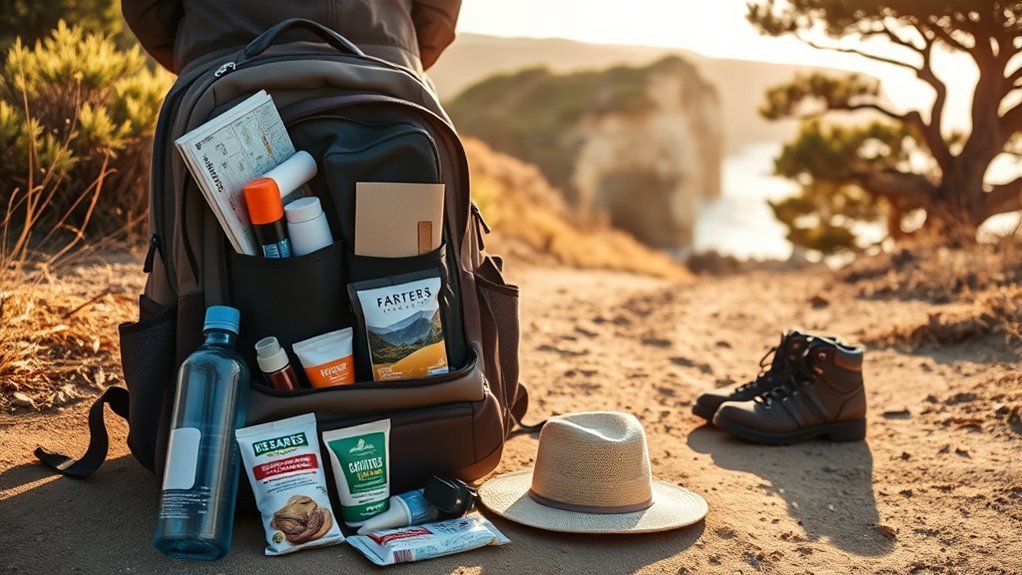
When you head to California State Parks, pack for the specific region and season rather than assuming every park has the same conditions. Coastal parks can be cool and windy even when inland valleys are hot, while mountain parks can change quickly with elevation and weather.
Start with clothing layers, comfortable closed-toe footwear, sunscreen, a hat, water, a reusable bottle, food or snacks, personal medications, and a compact first-aid kit. California State Parks also recommends bringing navigation tools, a spare phone charger, a flashlight, and enough supplies for unexpected delays. Review the department’s official safety tips before visiting remote areas.
- Water: Carry enough for your planned activities plus a reasonable reserve. Drinking-water availability varies by park and campground.
- Layers: Pack for sun, wind, cold mornings, elevation changes, and forecast weather.
- Sun protection: Bring sunscreen, sunglasses, and a hat, especially for beaches, deserts, and exposed trails.
- Food: Carry snacks or meals appropriate for your trip, but store food securely and follow local wildlife rules.
- First aid: Include basic wound care, needed medications, and any personal emergency supplies.
- Waste: Bring trash bags and pack out what you bring in when bins are unavailable.
If you bring biodegradable soap for camping, remember that biodegradable does not mean it belongs in a lake, creek, or river. Follow park-specific rules; standard Leave No Trace guidance recommends using only a small amount and washing roughly 200 feet from natural water sources. The National Park Service explains these practices in its Leave No Trace guidance.
Pro Tip: Check the individual park page before packing your car. Water availability, food-storage rules, dog access, trail closures, fire restrictions, campground facilities, and permitted activities can differ significantly from one California State Park to another.
Plan Your California State Parks Route
California State Parks currently manages 280 park units, so the easiest way to build a road trip is to choose one region or theme first. California State Parks’ own August 2026 road-trip guidance groups destinations into coastal, Northern California tree, Southern California mountain-and-desert, and history-focused routes.
California State Parks currently includes 280 park units, giving you far more choices than most travelers can reasonably cover on one road trip.
For a coastal trip, California State Route 1, or Highway 1, can connect beaches, redwoods, historic sites, overlooks, and several state parks. Rather than trying to drive the entire coastline at once, choose a manageable section and allow extra time for slower roads, stops, traffic, construction, and weather.
If you prefer forests, deserts, mountains, or history, build the route around those interests instead. The department’s recent California State Parks road-trip guide provides current route ideas you can adapt.
- Pick one region first: coast, redwoods, Sierra foothills, desert, or a history-focused cluster.
- Match trails to your energy: mix driving days with short walks instead of scheduling a major hike at every stop.
- Limit long transfers: extra scenic stops add more time than mileage alone suggests.
- Check accessibility: use California State Parks’ Accessible Features database to check camping, trails, picnic areas, shore access, programs, and other facilities.
- Confirm each park: operating hours, parking, reservations, trail access, pet rules, and seasonal restrictions can change.
The OuterSpatial app is the official California State Parks mobile-app platform. It provides park and trail information, directions, interactive maps, visitor guidance, points of interest, and condition updates. Use it alongside the individual park page rather than treating a general road-navigation app as your only park resource.
Know Fees, Passes, and Reservations
Do not assume one California State Parks annual pass covers every destination. The state sells several passes for different types of access, including the California Explorer Annual Day Use Pass and Golden Poppy Annual Day Use Pass. Acceptance varies, so compare your planned parks with the current California State Parks pass information before buying.
Note: An annual day-use pass generally addresses eligible entrance or vehicle day-use charges; it should not be treated as a universal camping, reservation, tour, boating, or special-activity pass. Always check the specific pass terms and the individual park.
For camping and State Parks lodging, use ReserveCalifornia, the official reservation service. California State Parks says many campgrounds fill quickly, and reservations at most reservable parks can be made up to six months before arrival on a rolling basis. Some parks also have first-come, first-served or same-day inventory, but availability varies.
Reservation and cancellation rules can change. California State Parks introduced updated reservation policies for arrival dates beginning July 1, 2026, so read the current Reservations and Fees information before paying.
Use Navigation Apps for Backroad Detours
Navigation apps can make scenic detours easier to plan, but no app should override road signs, closures, vehicle restrictions, or common sense. California State Parks specifically warns that GPS and mapping apps can direct visitors onto dirt roads that require four-wheel drive or are unsuitable for ordinary passenger vehicles.
Google Maps, Waze, Roadtrippers, MyScenicDrives, and OuterSpatial serve different purposes. Use them as complementary tools rather than expecting one app to handle every part of a California State Parks road trip.
| App | Best Use | Important Limitation |
|---|---|---|
| Google Maps | General routing and downloadable offline driving maps | Offline mode does not provide live traffic or alternate routes. |
| Waze | Traffic-aware navigation and avoiding freeways when practical | It may still suggest a freeway when route options require it. |
| Roadtrippers | Building multi-stop road trips and finding attractions | Treat suggested stops and routes as planning aids, then verify roads separately. |
| MyScenicDrives | Finding scenic drives and building road-trip itineraries | Verify current closures and restrictions with official road agencies. |
| OuterSpatial | California State Parks maps, trails, amenities, directions, and park updates | Use Caltrans for authoritative state-highway conditions. |
Google Maps allows you to download an area for offline driving navigation. The full route must fall within the downloaded map, and while offline you will not receive live traffic or alternate-route information. Download important areas before leaving reliable service and keep your maps updated.
Warning: “Avoid highways” does not mean “safe scenic road.” Never follow an app onto a closed, flooded, snow-covered, fire-affected, unpaved, or high-clearance road simply because it appears shorter or more scenic.
Check Park and Road Conditions Before You Leave
Road conditions are one of the most important parts of a California scenic-road-trip plan. Highway 1, mountain passes, desert roads, and remote park approaches can be affected by construction, landslides, storms, wildfire response, flooding, snow, or emergency work.
Highway 1 through Big Sur reopened through the Regent’s Slide area in January 2026, but that does not mean the highway is guaranteed to remain unrestricted. Temporary closures and one-way controls continued during 2026, including an August wildfire-related closure. Check Caltrans Highway Conditions or QuickMap immediately before a Highway 1 driving day.
- Check the individual California State Park page for closures and visitor alerts.
- Check Caltrans for state-highway restrictions and construction.
- Check the weather forecast for every major region or elevation on your route.
- Make sure your vehicle has sufficient fuel or battery charge before remote stretches.
- Tell someone your planned route and expected return when exploring remote areas.
Pack for Breakdowns and No Signal
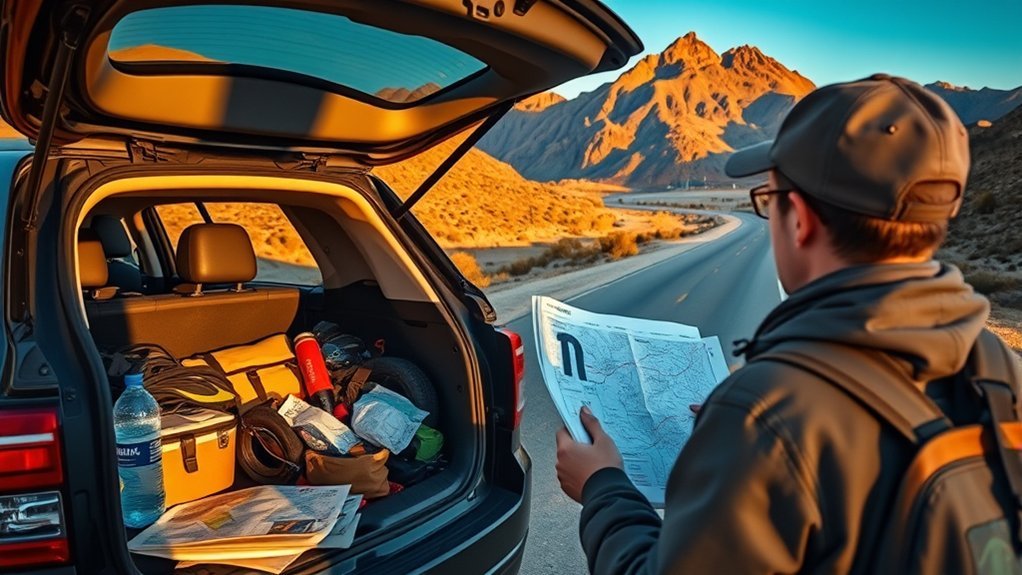
Pack an emergency road kit before driving between remote parks. Useful basics include first-aid supplies, a flashlight, spare batteries, jumper cables or an appropriate jump starter, water, non-perishable food, basic tools, warm layers or blankets, and a phone charger. Adjust the kit for desert heat, winter travel, mountain conditions, or other regional hazards.
A roadside assistance plan can be useful, but it is not a substitute for preparation. Service may be delayed or unavailable in remote areas, especially when cell coverage is weak.
Emergency Road Kit
A well-stocked emergency road kit gives you options if your vehicle breaks down or a closure forces an unexpected wait. NHTSA also recommends carrying roadside-emergency supplies on long trips.
- First-aid kit and required personal medications
- Flashlight and spare batteries
- Jumper cables or compatible jump starter
- Basic vehicle tools and tire equipment appropriate for your car
- Drinking water and non-perishable snacks
- Warm layer or blanket
- Paper map
- Portable phone charger and charging cable
- Emergency contact and roadside-assistance information
Check the kit before major trips. Recharge power banks, replace expired food and medical supplies, and verify that your spare tire or tire-repair equipment is usable.
Offline Maps And Maps
Carry both a physical paper map and offline maps on your phone when your route passes through low-signal areas. Before departure, download the entire driving area rather than only the final destination.
Google’s current offline-map guidance says downloaded maps can provide driving directions when the route remains inside the saved area, but live traffic and alternate routes are unavailable while offline. Keep a portable charger accessible so a dead phone does not eliminate your primary navigation tool.
Pro Tip: Before losing service, take screenshots or notes of your next park entrance, campground, important highway junctions, and any known detour. That gives you another layer of navigation even if an app fails.
Pick Short Hikes and Scenic Stops
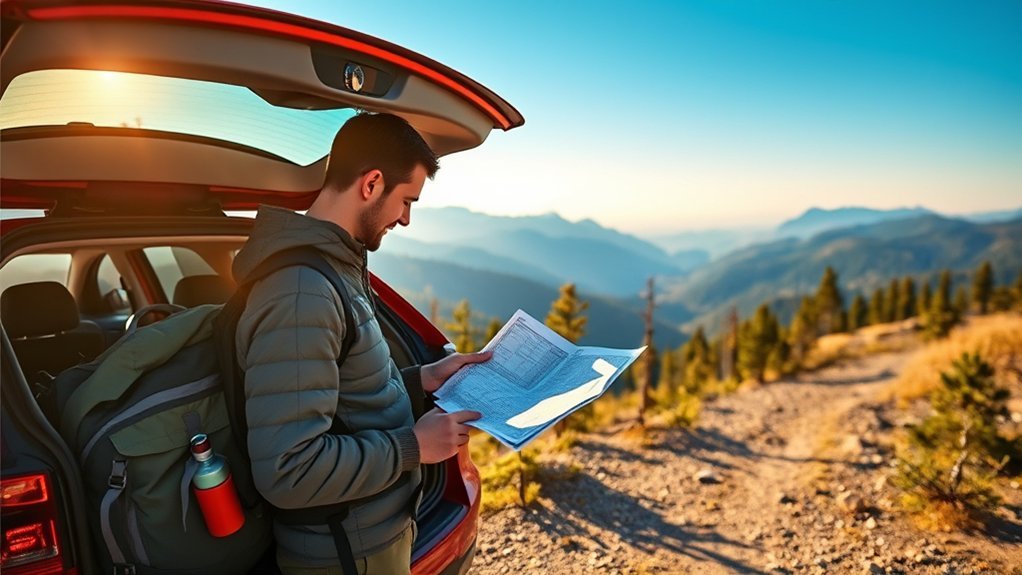
If driving is the main focus of your trip, short hikes can help you see more without turning every park stop into a half-day commitment. A 1- to 3-mile trail can fit well between driving segments when the terrain, elevation, weather, and your ability make that distance appropriate.
Look for interpretive trails, overlooks, waterfalls, beaches, redwood walks, historic sites, or wildlife-viewing areas. Distance alone does not determine difficulty, so check elevation gain, trail surface, exposure, heat, accessibility, and current trail conditions before starting.
Choose short hikes and designated scenic overlooks to break up driving, enjoy the landscape, and avoid spending an entire day behind the wheel.
- Short trails: useful between longer driving legs, but check difficulty rather than relying only on mileage.
- Scenic overlooks: use official turnouts or parking areas instead of stopping in a travel lane or unsafe shoulder.
- Wildlife viewing: observe animals from a safe distance and never feed them.
- Interpretive trails: a good choice when you want natural or cultural context without a long hike.
Some wildlife species are more active around dawn or dusk, but behavior varies. Those hours can also reduce visibility for drivers, so watch carefully for animals crossing roads and slow down where posted signs or conditions call for it.
Book Lodging Without Losing Flexibility
Flexibility is useful on a road trip, but the right booking strategy depends on what you are booking. State-park campsites and cabins should not be treated the same way as roadside motels or off-peak inns.
For popular California State Parks campgrounds, secure important nights as early as practical. For commercial lodging in towns along your route, flexible or refundable bookings can preserve room for weather changes, closures, and spontaneous stops.
Book Late When Possible
Late booking can work for commercial lodging during quieter periods when your route is flexible. It may let you follow better weather, adjust for a road closure, stay longer at a park you enjoy, or shorten a driving day.
- Check availability only when safely parked; never search or book while driving.
- Look at local inns, hotels, motels, and other legal lodging near your planned route.
- Prioritize refundable or flexible-rate options when your itinerary may change.
- Keep a backup town in mind in case your first choice sells out.
Late booking becomes much riskier on summer weekends, holidays, event weekends, and routes with few lodging options. It is especially unsuitable as the main strategy for a highly sought-after state-park campsite.
Reserve Peak Stops Early
Reserve the hardest-to-replace nights first. These usually include popular state-park campgrounds, limited-capacity cabins, and lodging near famous coastal or mountain destinations during peak periods.
California State Parks allows reservations at many reservable campgrounds up to six months ahead on a rolling window, and the department warns that many campgrounds fill quickly. You do not need to lock every night months ahead, but securing the critical nights lets you keep the rest of the trip more flexible.
Before cancelling or changing a State Parks booking, read the current ReserveCalifornia rules. Policies for arrivals beginning July 1, 2026 include updated cancellation and refund terms.
Choose the Best Scenic Byways Nearby
To find the best scenic byways near your chosen parks, start with official route information rather than relying only on social-media recommendations. Caltrans manages the California State Scenic Highway Program, which identifies eligible and officially designated scenic highway segments.
California also has federally recognized routes in America’s Byways program, including portions of Route 1 along the Big Sur coast. A scenic designation tells you a road is known for its landscape or cultural value; it does not guarantee the road is currently open, free of construction, or suitable in all weather.
- Look for official scenic routes that naturally connect the parks you already want to visit.
- Choose designated overlooks and safe pullouts for photographs.
- Compare road type, elevation, seasonal conditions, fuel availability, and total driving time.
- Use Roadtrippers or MyScenicDrives for discovery, then verify the actual highway with Caltrans.
A lesser-known road can be rewarding, but do not choose it simply because an app labels it scenic. Remote California roads may be narrow, unpaved, seasonally closed, or unsuitable for your vehicle.
Stay Safe on Your Road Trip
Before leaving, check your tires, brakes, lights, fuel or battery level, windshield visibility, and whatever spare-tire or tire-repair equipment your vehicle uses. Pack your emergency kit where you can reach it without unloading the entire car.
On long remote stretches, stay hydrated and take breaks before fatigue becomes severe. NHTSA says adequate sleep is the only reliable protection against drowsy driving and recommends getting a good night’s sleep before a long family trip. If you become sleepy, do not try to push through simply because the next destination is already booked.
Watch for deer, livestock, and other animals, particularly where warning signs are posted and when visibility is poor. Slow down on unfamiliar roads, increase following distance when conditions require it, and never stop in an active travel lane for a photograph or wildlife sighting.
If weather, fire activity, flooding, snow, or road damage makes the route unsafe, change the plan. A scenic detour is never worth driving through a closure or beyond your vehicle’s capabilities.
Warning: Never drive through floodwater or ignore an official road closure. If you become drowsy, find a safe place to stop rather than relying on caffeine, loud music, or an open window to keep driving.
Frequently Asked Questions
What Is a Scenic Route Slang?
“Take the scenic route” is an informal way of saying you are choosing a longer or less direct road because the drive itself is enjoyable. It usually means prioritizing scenery, interesting towns, viewpoints, or attractions instead of reaching the destination as quickly as possible.
What Can You Bring on a Road Trip?
For a California State Parks road trip, useful basics include water, snacks, clothing layers, sun protection, first-aid supplies, a flashlight, phone charger, offline maps, a paper map, personal medications, and roadside-emergency gear. Add camping, hiking, cold-weather, or desert supplies based on your actual itinerary.
Can You Drive 900 Miles in a Day?
It may be physically possible, but 900 miles is an aggressive one-day target for most recreational road trips. Even at a theoretical 60-mph average it represents 15 hours of driving before fuel, food, restroom, traffic, construction, and rest stops. For a scenic California trip, splitting that distance over multiple days is usually safer and far more enjoyable.
Which Is the Best Route in the World?
There is no objective best scenic route in the world. California’s Highway 1 is one of the best-known coastal drives because of its Pacific views, cliffs, beaches, redwoods, and access to numerous parks, but the right route depends on your season, interests, available time, and current road conditions.
Do You Need Reservations for California State Parks?
It depends on the park and activity. Many campgrounds and State Parks lodging options use ReserveCalifornia and can be reserved up to six months ahead. Some parks or facilities may offer first-come, first-served or same-day options, while certain high-demand destinations can have additional reservation requirements. Check the individual park before visiting.
Is Highway 1 Always Open Through Big Sur?
No. Highway 1 can be affected by landslides, storms, wildfire response, construction, and emergency work. Even when the full route is connected, temporary lane controls or local closures may occur. Check Caltrans Highway Conditions or QuickMap immediately before your drive instead of relying on an old itinerary.
Conclusion
A successful California State Parks road trip is less about covering the most miles and more about building a route you can enjoy safely. Pack for the conditions, choose parks in the same region, reserve high-demand camping early, download navigation backups, and keep enough flexibility to respond to weather or closures. Check official park and road information before each major leg, and California’s coast, forests, mountains, deserts, and historic sites can become the stops rather than obstacles along the way.
Sources
- California State Parks — Plan Your Next Road Trip to California State Parks — current park count and official 2026 road-trip route ideas.
- California State Parks — Reservations and Fees — ReserveCalifornia, campground booking, and reservation guidance.
- California State Parks — Park Passes — current annual-pass options and pass types.
- California State Parks — OuterSpatial App — official app features, park maps, directions, trails, and condition information.
- Caltrans — California Highway Conditions — current road restrictions and highway-condition checks.
- National Highway Traffic Safety Administration — Drowsy Driving — long-trip fatigue risks and safe-driving guidance.
