
Last Updated on July 31, 2026 by Daniel Globe
Barefoot shoes can be comfortable hiking footwear for the right person, route, and conditions, but they are not automatically safer or healthier than trail-running shoes or hiking boots. Their flexible, low-profile design increases ground feel and freedom of movement while reducing cushioning, underfoot protection, and the margin for error on rough terrain.
Quick Answer
Barefoot shoes can work well for maintained trails, light packs, and hikers who have adapted gradually. They are less suitable for sharp rock, scree, cold weather, heavy loads, or anyone needing added support. Research suggests possible foot-strength benefits, but it does not prove that minimalist footwear prevents hiking injuries.
Key Takeaways
- Barefoot shoes emphasize flexibility, low weight, low heel-to-toe drop, and limited motion-control features.
- They can provide more ground feedback and may help improve some foot-strength measures, but hiking-specific research is limited.
- Thin, flexible soles offer less protection from sharp rocks, repeated impact, cold ground, and technical terrain.
- Fit, outsole grip, sole thickness, toe protection, weather resistance, pack weight, and trail conditions matter more than the “barefoot” label alone.
- Transition gradually, change one variable at a time, and stop if you develop sharp pain, swelling, numbness, or an altered gait.
At a Glance
| Transition Time | Several weeks or longer, depending on your current footwear, conditioning, symptoms, and trail difficulty |
| Difficulty | Moderate; adaptation should begin on flat ground before progressing to longer or rougher hikes |
| What You Need | Properly fitted shoes, moisture-wicking socks, an easy test route, foot-care supplies, and optional trekking poles or backup footwear |
| Cost | Varies by brand and construction; a higher price does not guarantee better fit, traction, or trail protection |
Disclosure: As an Amazon Associate I earn from qualifying purchases. Some links on this page are affiliate links, at no extra cost to you.
What Are Barefoot Shoes?
Barefoot shoes, also called minimalist footwear, are designed to interfere as little as practical with natural foot movement while still covering the sole. An expert consensus definition identifies five main characteristics: high flexibility, low heel-to-toe drop, low weight, low stack height, and little or no motion-control or stability technology. Not every shoe marketed as “barefoot” is equally minimal.
A wide or foot-shaped toe box is also common. It gives the toes room to spread instead of pressing them together. However, toe-box width alone does not make a shoe suitable for hiking. A trail model also needs dependable grip, secure heel retention, durable materials, and enough underfoot protection for the intended route.
Note: Most minimalist-footwear research examines walking or running in controlled conditions. Direct evidence about hiking on uneven trails, long descents, or with a loaded backpack remains limited.
Benefits of Barefoot Shoes for Hiking
One of the main attractions of barefoot hiking shoes is increased sensory feedback. A thin, flexible sole makes changes in surface texture easier to feel. Some hikers find that this encourages more deliberate foot placement on roots, packed soil, and small rocks.
Minimalist footwear may also make the small muscles of the foot work differently. Research has reported improvements in some foot-strength measures after regular minimalist-shoe use. However, a 2025 systematic review found that the certainty of the available evidence was low to very low. These findings should not be interpreted as proof that barefoot shoes prevent plantar fasciitis, ankle sprains, or other injuries.
Other practical benefits may include:
- Lower weight: Light shoes may feel less cumbersome during long days.
- Greater flexibility: The sole can bend and twist more freely than a stiff hiking boot.
- Room for toe splay: A properly shaped toe box may reduce pinching and rubbing around the toes.
- Compact packing: Flexible shoes are often easier to carry as camp shoes or backup footwear.
- Quick drainage: Non-waterproof models may release water and dry faster after stream crossings.
Barefoot hiking shoes trade some protection and structure for greater flexibility, ground feedback, and freedom of movement.
Drawbacks of Barefoot Shoes for Hiking

The same thin sole that improves ground feel also reduces the barrier between your foot and the trail. Sharp stones, pointed roots, rough scree, and repeated contact with hard ground may become uncomfortable sooner than they would in a more protective trail shoe or boot.
Minimal cushioning can also shift more work to the feet, calves, Achilles tendons, and lower legs. That extra demand is not automatically harmful, but it can become a problem when distance, elevation, pack weight, or shoe minimalism increases faster than the body can adapt.
Other possible drawbacks include:
- Less puncture and impact protection: Very thin soles provide a smaller buffer against sharp or angular terrain.
- Greater fatigue on hard surfaces: Long stretches of rock or pavement may feel harsh.
- Limited cold protection: Low stack height and thin uppers can allow cold ground and wind to affect the feet quickly.
- Reduced stability under a heavy pack: Fatigue and extra load can make precise foot placement harder.
- Variable traction: Some barefoot shoes have road-oriented soles that are unsuitable for mud, loose gravel, or wet rock.
- Adjustment soreness: Calf, arch, or forefoot discomfort can occur when the transition is too fast.
Warning: Do not push through sharp, localized, or worsening pain. Stop and seek medical assessment if you develop swelling, bruising, numbness, pain over a specific bone, pain that changes your gait, or pain that continues during normal daily walking.
Barefoot Shoes vs. Trail Runners vs. Hiking Boots
| Footwear Type | Main Strengths | Main Limitations | Often Best For |
| Barefoot or minimalist shoe | Flexible, light, roomy toe box, strong ground feedback | Less cushioning, structure, warmth, and rock protection | Adapted hikers on maintained trails with light packs |
| Conventional trail-running shoe | Balanced cushioning, traction, flexibility, and protection | Usually less ankle coverage and durability than a boot | Day hikes and many maintained or moderately rugged trails |
| Hiking boot | More structure, underfoot protection, durability, and weather coverage | Heavier, stiffer, warmer, and slower to dry | Heavy packs, rough terrain, cold weather, scree, and off-trail travel |
Footwear category alone does not determine safety. A grippy, trail-specific minimalist shoe may outperform a smooth-soled casual shoe, while a well-fitted trail runner may be a better choice than either an extremely thin barefoot shoe or a heavy boot.
Which Trails Suit Barefoot Hiking Shoes?
Maintained and Relatively Smooth Trails
Packed dirt, grass, boardwalks, and nontechnical woodland paths are often the easiest places to test minimalist hiking footwear. The predictable surface lets you focus on fit and adaptation without combining several new stresses at once.
Rocky or Root-Covered Trails
Barefoot shoes can be used on rocky trails, but sole thickness and construction become important. Look for a durable outsole, secure lacing, useful toe protection, and enough underfoot structure to prevent every pointed rock from becoming painful. A flexible rock plate can add protection while preserving some ground feel.
Loose Scree, Steep Descents, and Off-Trail Routes
These conditions demand reliable grip, lateral control, and protection from sliding rock. A conventional trail shoe or hiking boot is often the more forgiving option, especially when carrying a heavy backpack.
Mud and Wet Rock
Check the outsole rather than assuming all barefoot shoes grip well. Widely spaced trail lugs can shed mud better than a flat road sole. No outsole guarantees traction on algae, wet roots, smooth stone, or ice.
Cold, Snowy, or Icy Conditions
Very thin footwear may not provide enough insulation or traction. Use footwear designed for the temperature and route, along with appropriate socks and traction equipment when conditions require it. Change plans when the footwear you brought does not match the weather.
Tips for Choosing the Right Barefoot Shoes for Hiking
| Factor to Consider | Why It Matters |
| Shoe Weight | Lightweight shoes may feel agile and less cumbersome, but low weight should not come at the expense of necessary protection. |
| Toe Box Width | The toes should have room to spread without sliding around inside the shoe. |
| Sole Thickness | Thicker soles provide more separation from sharp rocks, while thinner soles provide stronger ground feedback. |
| Flexibility | Flexible shoes allow natural foot movement, but extreme flexibility can feel tiring on long, rocky routes. |
| Traction | Trail-specific rubber and lugs are important for dirt, mud, loose surfaces, and wet conditions. |
| Water Resistance | Waterproof models provide more weather protection, while breathable non-waterproof shoes usually drain and dry faster. |
| Heel Hold | The heel should remain secure during climbs and descents without rubbing or pressure. |
| Toe and Rock Protection | A toe rand or flexible rock plate can reduce discomfort from roots, stones, and accidental impacts. |
| Socks and Interior Volume | The shoe must accommodate the socks you will actually hike in without compressing the toes or creating heel slip. |
Try shoes on with your hiking socks and, when possible, later in the day when your feet may be slightly larger. The heel should feel secure, the midfoot should not be painfully compressed, and the toes should not touch the front when you simulate a downhill step.
A wide shoe should not feel loose everywhere. Excess movement can create friction, hot spots, and instability. Test several models because two shoes with similar specifications may fit very differently.
Pro Tip: Wear new shoes indoors first, then test them on a short loop close to home or your vehicle. A loop makes it easier to stop before a small fit problem becomes a long walk back.
How to Transition to Barefoot Shoes for Hiking
Transitioning to barefoot shoes requires more than simply replacing your boots before a full-day hike. Your feet and lower legs need time to adapt to the shoe’s lower cushioning, lower heel, and greater flexibility. There is no universal schedule, so progression should depend on comfort during activity and recovery afterward.
Step 1: Begin With Short, Flat Wear
Wear the shoes for approximately 20 to 30 minutes during normal daily activities or an easy walk on level ground. Continue with short sessions until they feel comfortable and you have no meaningful increase in pain or soreness the following day.
Step 2: Add Easy Walks
Progress to 30- to 60-minute walks on predictable surfaces. Keep your usual hiking footwear for demanding outings. Do not increase time, terrain difficulty, elevation, and pack weight during the same session.
Step 3: Try a Short, Easy Hike
Choose a maintained trail of roughly 1 to 3 miles with limited elevation change. Carry a light pack, stay close to the trailhead, and bring backup footwear when practical.
Step 4: Increase One Variable at a Time
Once short hikes feel comfortable during the outing and the next day, gradually increase either distance, climbing, technical terrain, or pack weight. Changing only one variable makes it easier to identify what caused soreness.
Step 5: Support the Transition With Simple Exercises
Toe lifts, controlled calf raises, single-leg balance work, and gentle foot-strengthening exercises can help prepare the feet and lower legs. Exercises should feel controlled and should not reproduce sharp pain.
Caution: Normal adaptation may include mild, temporary muscle soreness. Sharp pain, focal bone tenderness, swelling, bruising, numbness, or pain that changes how you walk is not a signal to keep progressing.
Best Practices for Hiking in Barefoot Shoes
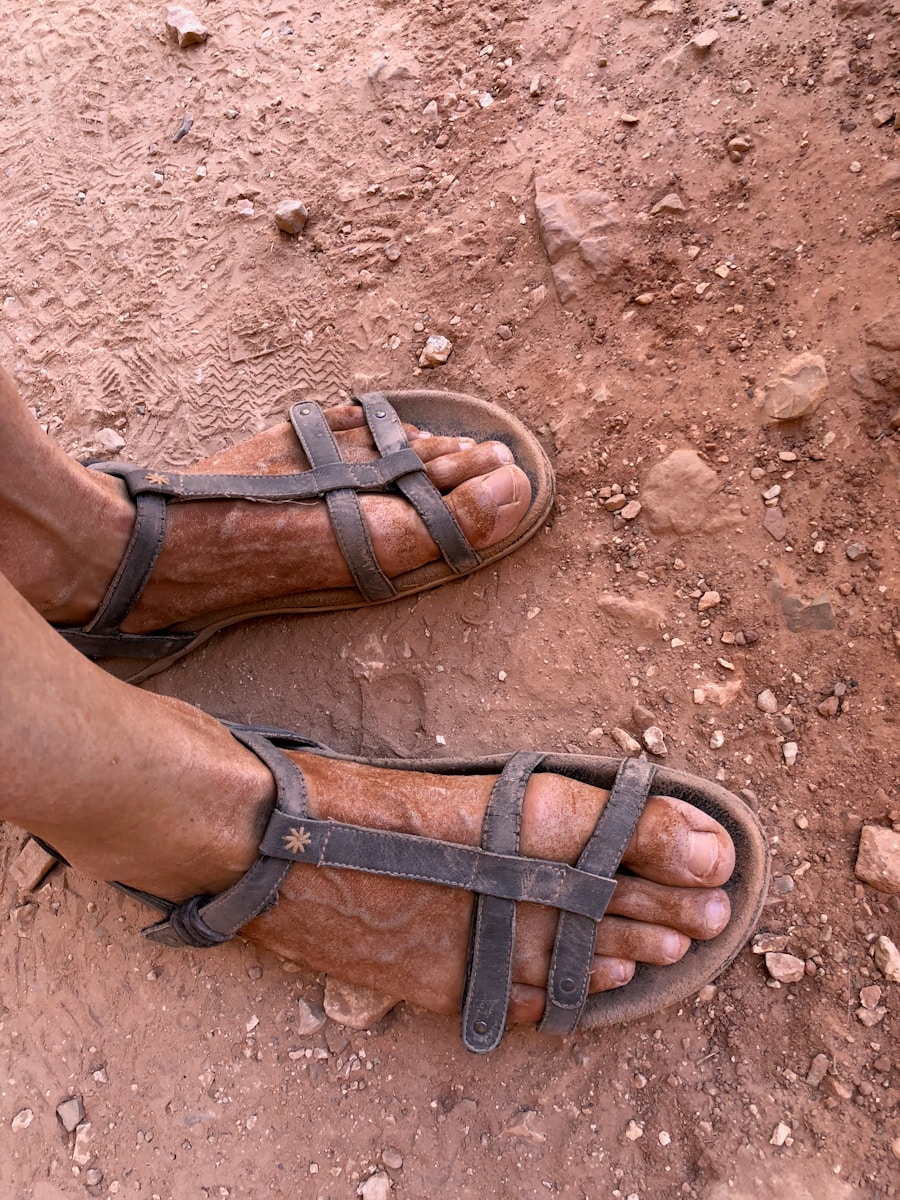
Walk naturally rather than forcing a midfoot or forefoot strike. On uneven ground, shorten your steps, slow down, and place each foot deliberately. A shorter stride can improve control without requiring an artificial change in foot-strike pattern.
- Control your pace on descents: Downhill hiking increases sliding and braking demands. Slow down before your feet become tired.
- Use trekking poles when helpful: Poles can improve balance and reduce the consequence of a poorly placed step.
- Keep early pack weight light: Do not combine new minimalist footwear with your heaviest backpack.
- Check your feet during breaks: Address rubbing, debris, hot spots, or damp socks before a blister develops.
- Carry basic blister supplies: Moleskin, tape, clean dressings, and spare socks add little weight.
- Watch the trail: Increased ground feel does not replace careful foot placement.
- Turn around early when necessary: Foot fatigue usually becomes more difficult to manage as the route continues.
The National Park Service hiking-safety guidance recommends choosing equipment that matches the route, checking weather and trail alerts, carrying the Ten Essentials, watching your step, and having a backup plan.
Pro Tip: On a new route, pack lightweight backup shoes or sandals only if they provide enough protection for the return trip. Test that backup footwear before relying on it in the backcountry.
Precautions to Take When Hiking in Barefoot Shoes
Check the route, forecast, temperature, surface, elevation, and expected pack weight before choosing minimalist footwear. A shoe that works on a dry forest path may be unsuitable for loose scree, freezing ground, deep mud, sharp volcanic rock, or an unexpectedly heavy load.
Consider speaking with a podiatrist, physical therapist, sports-medicine clinician, or other qualified healthcare professional before transitioning if you have:
- Diabetes with neuropathy or reduced sensation;
- circulation problems or slow-healing wounds;
- an active foot, ankle, Achilles, or lower-leg injury;
- a recent stress fracture or history of repeated bone-stress injuries;
- significant foot deformity or arthritis;
- prescribed orthotics or a condition that requires supportive footwear;
- unexplained numbness, weakness, or balance problems.
Inspect your feet after each early session. Look for blisters, cuts, unusual redness, swelling, bruising, and areas that remain painful after the hike. Minimalist shoes still protect the skin better than going fully barefoot, but their protection varies widely by model.
Note: This article provides general educational information and is not a diagnosis or individualized footwear prescription. Existing pain or loss of sensation deserves professional assessment.
Are Barefoot Shoes Good for Hiking?
Barefoot shoes can be good for hiking when the hiker is properly adapted, the shoes fit securely, and the route does not demand more protection than the footwear provides. They are often easiest to use on maintained trails, in mild weather, with a light pack.
They are not the best option for everyone. Hikers who want substantial cushioning, cold-weather insulation, rigid underfoot protection, or more structure under a heavy load may be better served by a conventional trail-running shoe or hiking boot.
The strongest reason to choose barefoot shoes is personal comfort and preference after a gradual, symptom-free transition—not a promise that they will correct biomechanics or prevent injury. Compare the shoe with the actual terrain, test it conservatively, and use the footwear that lets you complete the route safely.
If reducing pack weight is part of your hiking plan, you may also be interested in this guide to the best ultralight tent for backpacking. Lowering shelter weight can reduce overall pack load, but essential safety and weather protection should still guide your equipment choices.
Frequently Asked Questions
What are barefoot shoes?
Barefoot shoes are minimalist shoes designed to interfere less with natural foot movement. They usually have a flexible sole, low heel-to-toe drop, low stack height, low weight, and few motion-control features. Many also have a foot-shaped toe box.
Are barefoot shoes good for hiking?
They can be good for adapted hikers on maintained trails with light packs. They may be less suitable for sharp rock, loose scree, cold weather, heavy loads, or routes that require substantial underfoot protection.
What are the benefits of wearing barefoot shoes for hiking?
Possible benefits include greater ground feedback, low weight, flexibility, and more toe room. Some research reports improvements in certain foot-strength measures, but the evidence does not prove that minimalist shoes prevent hiking injuries.
What are the potential drawbacks of barefoot hiking shoes?
They generally provide less cushioning, rock protection, warmth, and structure than conventional hiking footwear. A rapid transition can also overload the feet, calves, Achilles tendons, or forefoot.
How should I transition to barefoot shoes for hiking?
Begin with short periods on flat ground, progress to easy walks, and then try a short maintained trail with a light pack. Increase only one variable at a time and pause if pain is sharp, localized, worsening, or still affects normal walking.
Can I wear barefoot shoes on rocky trails?
Yes, but comfort and safety depend on your experience and the shoe’s outsole, stack height, toe protection, and rock resistance. Sharp or loose terrain may be more comfortable in a protective trail runner or hiking boot.
Are barefoot shoes good for plantar fasciitis?
They are not a proven treatment for plantar fasciitis. Some people tolerate them, while others need more cushioning or support. Seek professional guidance when heel pain is active, persistent, or worsening.
Do barefoot shoes prevent ankle sprains?
There is not enough evidence to say that barefoot shoes prevent ankle sprains. Traction, fatigue, prior injuries, balance, terrain, footwear fit, and hiking technique all affect sprain risk.
Should I wear socks with barefoot hiking shoes?
Moisture-wicking hiking socks can reduce friction, manage sweat, and add warmth. Test the shoes with the same sock thickness you plan to use on the trail so the toe box and heel remain secure.
Can I use barefoot shoes with a heavy backpack?
Experienced users may do so, but a heavy load increases fatigue and the consequences of poor footing. Build pack weight gradually and consider more protective footwear for rugged, remote, or multi-day routes.
Sources
- A Consensus Definition and Rating Scale for Minimalist Shoes — defines the characteristics used to rate minimalist footwear.
- The Effects of Foot Core Exercises and Minimalist Footwear on Foot Muscle Size, Strength, and Biomechanics — reviews current evidence and its limitations.
- Foot Bone Marrow Edema After a 10-Week Transition to Minimalist Running Shoes — supports a cautious, gradual transition.
- The Risks and Benefits of Running Barefoot or in Minimalist Shoes — reviews evidence concerning biomechanics, performance, and injury claims.
- American Academy of Orthopaedic Surgeons: Is Barefoot Running Better? — explains uncertainty about injury prevention and the risks of transitioning too quickly.
- National Park Service: Hike Smart — covers route planning, proper equipment, changing conditions, and essential hiking precautions.

