
Last Updated on September 10, 2026 by Daniel Globe
The best hiking shoes are not simply the heaviest boots or the pair with the most aggressive tread. The right choice depends on where you hike, how much weight you carry, the weather, and—most importantly—how the footwear fits your feet. A well-matched pair should feel secure through the heel and midfoot, leave room for your toes, and provide enough traction and underfoot protection for your trail.
Quick Answer
Choose hiking shoes by matching the footwear to your terrain, pack weight, weather, and foot shape. Low-cut shoes work well for many maintained trails and lighter loads, while mid- or high-cut boots add coverage and support for rougher terrain. Prioritize a secure heel, comfortable width, toe room, and suitable outsole traction.
Key Takeaways
- Match hiking footwear to the trail, weather, trip length, pack weight, and your experience rather than choosing by boot height alone.
- A good fit is snug through the heel and midfoot but leaves enough space for your toes to move without hitting the front on descents.
- Waterproof membranes are useful in persistent wet conditions, but non-waterproof footwear can be preferable when maximum ventilation and faster drying matter more.
- Outsole compound, lug shape, midsole firmness, and underfoot protection can matter as much as the height of the shoe.
- Modern synthetic hiking shoes may require little traditional break-in, but every new pair should be tested on short walks before a long hike.
At a Glance
| Time Required | About 20–30 minutes for a careful fitting; allow longer if comparing several models. |
| Difficulty | Easy, but a deliberate fit test is more important than choosing quickly. |
| Tools Needed | Your hiking socks, any orthotics or insoles you normally use, and ideally a ramp or incline for downhill testing. |
| Cost | Varies widely by brand, materials, and construction. Prioritize fit and intended use before extra features. |
Disclosure: As an Amazon Associate I earn from qualifying purchases. Some links on this page are affiliate links, at no extra cost to you.
Different Types of Hiking Shoes and Their Uses
Hiking footwear ranges from flexible trail-running shoes to stiff backpacking boots. None is automatically best for every hiker. The goal is to choose enough traction, protection, support, and weather resistance without carrying unnecessary weight or stiffness.
Low-Cut Hiking Shoes
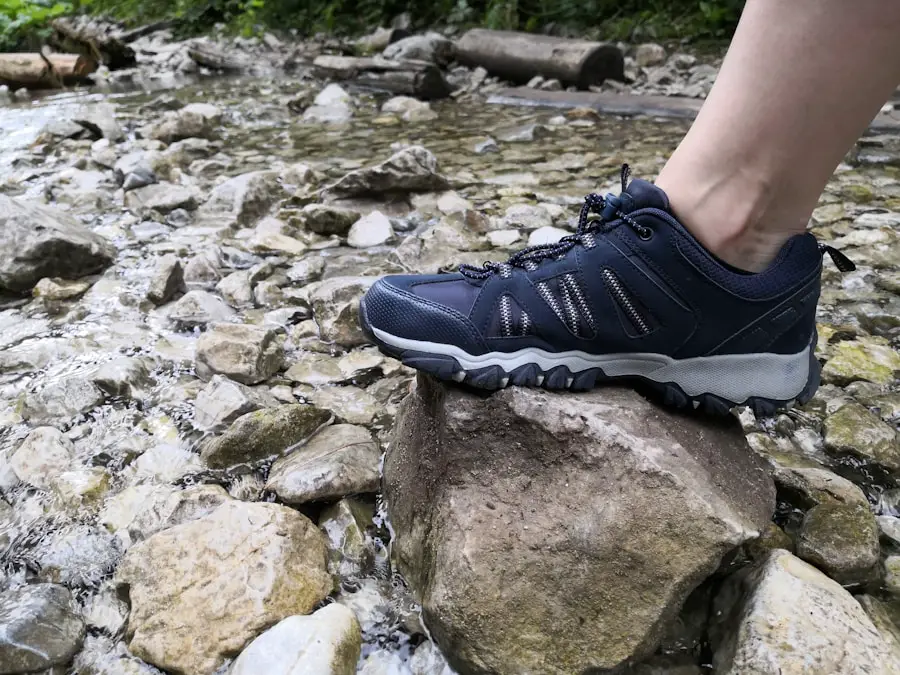
Low-cut hiking shoes end below the ankle. They usually offer good freedom of movement and are often lighter than boots. They are a practical choice for maintained trails, day hikes, warm weather, and hikers carrying lighter packs.
A low collar provides less coverage around the ankle, but collar height should not be treated as the only measure of stability. Fit, sole stiffness, heel hold, terrain, pack weight, and the hiker’s balance all matter.
Mid-Cut Hiking Boots
Mid-cut boots rise to or slightly above the ankle. They provide more coverage against dirt, brush, shallow mud, and trail debris while retaining more flexibility than many traditional high boots. They are a useful middle ground for variable trails, longer day hikes, and moderate backpacking loads.
Current Salomon guidance on hiking-shoe height similarly recommends matching low-, mid-, or high-cut footwear to terrain, load, trip length, and experience.
High-Cut and Backpacking Boots
Higher boots generally offer more ankle coverage, lateral resistance, and protection from brush or loose debris. Stiffer backpacking boots can also provide a more supportive platform under heavier loads or on rough, uneven ground.
Warning: A high boot does not make a hiker immune to ankle sprains, slips, or falls. Choose footwear as part of a complete safety approach that includes appropriate terrain selection, careful foot placement, conditioning, and slowing down when footing is poor.
Trail-Running Shoes
Trail runners are built for lighter, faster movement. Compared with many hiking boots, they tend to be more flexible and lighter, with trail-specific rubber and tread. They are popular for fast hiking and can work well for experienced hikers who prefer less structure.
The tradeoff is usually less protection from sharp rocks, brush, and heavy loads than a more substantial hiking shoe or boot.
Approach Shoes
Approach shoes are designed for the hike or scramble leading to a climbing route. Many use sticky rubber, protective toe rands, and lacing that extends farther toward the toes for precise fit and friction on rock. For example, La Sportiva describes its Boulder X approach shoe as suitable for approaches and technical hiking where friction footwork is needed.
They can be excellent on rocky scrambles and talus but may be more specialized than necessary for ordinary maintained trails.
Factors to Consider When Choosing Hiking Shoes

Start with the hike, not the shoe. Think about the roughest terrain you expect, how long you will be out, how much weight you will carry, and whether your route is likely to be hot, wet, muddy, rocky, or snowy.
The National Park Service hiking-safety guide recommends choosing proper walking footwear for the route and specifically points to sturdy, rubber-soled hiking boots for dirt and gravel trails while noting that simpler footwear may be appropriate on paved urban paths.
| Typical Use | Footwear to Consider |
| Maintained trail, warm weather, light daypack | Low hiking shoe or trail runner with suitable tread |
| Rocky or root-covered day hike | Structured hiking shoe or mid boot with good heel hold and underfoot protection |
| Multi-day hike or heavier pack | Supportive mid or backpacking boot matched to the load and terrain |
| Technical rock or scrambling approach | Approach shoe or technical hiker with precise fit and rock-oriented outsole |
| Persistent rain, wet vegetation, mud, or cold wet conditions | Waterproof hiking shoe or boot when keeping outside moisture out is a priority |
Traction and Outsole Design
Look beyond whether a sole is simply described as “grippy.” Rubber compound, lug depth, lug spacing, contact area, and tread orientation all change how a shoe behaves on mud, rock, packed dirt, or wet surfaces.
Vibram, for example, produces multiple rubber compounds and outsole technologies rather than one universal hiking sole. Its Megagrip technology is designed for grip on wet and dry terrain, while other Vibram compounds target different conditions.
Warning: Ordinary hiking tread should not be assumed to provide secure traction on hard ice. Icy routes may require footwear and traction devices specifically suited to those conditions.
Waterproof vs. Non-Waterproof Hiking Shoes
Waterproof footwear can be valuable in prolonged rain, wet grass, mud, slush, and cold conditions. Genuine GORE-TEX footwear technology, for example, is designed to be durably waterproof while allowing water vapor to escape.
That does not mean waterproof is always better. A membrane adds another layer to the shoe, and hikers in hot, dry climates may prefer a highly ventilated non-waterproof model. Non-waterproof footwear can also be attractive when quick drainage and drying are more important than blocking outside water.
Pro Tip: Buy for the conditions you face most often. Choosing a waterproof shoe solely because it sounds more protective can add a feature you rarely need, while skipping waterproofing in consistently cold and wet conditions can leave you uncomfortable.
Protection, Cushioning, and Stiffness
A shoe’s midsole and internal structure affect how much you feel rocks and roots underfoot. Softer midsoles can feel comfortable and flexible, while firmer designs may provide a more stable platform under load.
Some hiking footwear also includes rock plates, stiff inserts, protective toe caps, or supportive structures through the midfoot. These features are useful on rough trails but can be unnecessary on smooth paths.
Understanding Hiking Shoe Materials and Construction
| Material / Component | What It Means for Hiking |
| Full-grain leather | Durable and abrasion resistant. Traditional leather boots can be relatively stiff and may need more break-in and ongoing conditioning. |
| Nubuck / suede | Leather options commonly used where manufacturers want a balance of durability, flexibility, and appearance. |
| Synthetic textile | Often lighter and more flexible than traditional leather. Drying speed and breathability depend on the complete shoe construction. |
| Waterproof membrane | Designed to block outside water while allowing some moisture vapor to escape. GORE-TEX is one branded example. |
| EVA or other foam midsole | Provides cushioning between the foot and outsole. Density and geometry affect softness, stability, and trail feel. |
| Rubber outsole | Provides ground contact and traction. Performance varies with rubber compound, tread pattern, lug depth, and terrain. |
| Vibram outsole technology | Vibram is a manufacturer of high-performance rubber soles and multiple specialized compounds; the specific compound and lug design matter more than the logo alone. |
No single upper material is best in every climate. A sturdy leather boot may appeal to someone who values abrasion resistance and structure. A synthetic hiker may suit someone who wants lower weight and more flexibility. Waterproof membranes add weather protection but can change ventilation and drying characteristics.
Construction methods vary as well. Modern hiking footwear may use adhesives, stitching, molded components, board-lasted structures, or combinations of these methods. Do not assume a visibly stitched boot will automatically outlast a bonded shoe. If repairability or resoling matters to you, check whether the specific manufacturer and model are designed for it.
Tips for Properly Fitting Hiking Shoes
Fit is the most important part of choosing hiking footwear. A shoe with excellent materials and tread is still the wrong shoe if your heel slides, your forefoot is squeezed, or your toes strike the front on every descent.
1. Wear Your Hiking Socks
Try footwear with the same thickness and type of socks you plan to hike in. The National Park Service recommends wool or synthetic moisture-wicking socks for longer hikes rather than relying on moisture-retaining materials.
2. Check Toe Room
Your toes should move without pressing against the toe box. Current Salomon fitting guidance recommends roughly a thumb’s width between the longest toe and the front of a hiking shoe or boot. That clearance becomes especially important on descents, when your foot can slide forward.
3. Check Heel and Midfoot Hold
Your heel and midfoot should feel secure rather than loose. A small amount of natural movement may occur depending on the shoe, but repeated heel lifting can create friction and hot spots.
4. Check Width and Foot Volume
Size is only one measurement. Two shoes labeled with the same size can fit very differently through the heel, arch, instep, and forefoot. If the side of your forefoot is compressed or your toes are crowded together, try a wider or differently shaped last instead of automatically sizing up.
5. Test an Incline
Walk uphill and downhill if the store has a ramp. On the descent, your toes should not repeatedly strike the front. On the climb, excessive heel lifting is a warning sign.
6. Test Both Feet
Most people do not have perfectly identical feet. Fit the larger or more difficult foot and make sure neither side develops a pressure point.
Note: Do not buy a painfully tight shoe with the expectation that normal break-in will make it fit. Materials may soften, but the basic length, width, and shape still need to match your foot from the beginning.
Use Lacing to Fine-Tune, Not Rescue, the Fit
Lacing can help secure the heel or relieve pressure over a sensitive part of the foot. It cannot fix a shoe that is fundamentally too short, too narrow, or the wrong shape.
Common Hiking Shoe Buying Mistakes
- Choosing by appearance alone: Trail requirements and fit matter more than color or style.
- Assuming heavier means safer: Extra stiffness and weight are useful only when your terrain or load calls for them.
- Buying waterproof by default: Consider temperature, drainage, ventilation, and drying time.
- Ignoring width: Going up a full size to solve a width problem can create heel movement and poor control.
- Testing only on flat flooring: Inclines reveal toe impact and heel slip that may not appear while standing.
- Expecting break-in to cure pain: Persistent pinching or pressure usually indicates a fit problem.
- Choosing tread without considering terrain: Mud, smooth rock, packed dirt, and ice place different demands on an outsole.
Maintaining and Caring for Your Hiking Shoes
Cleaning Your Shoes
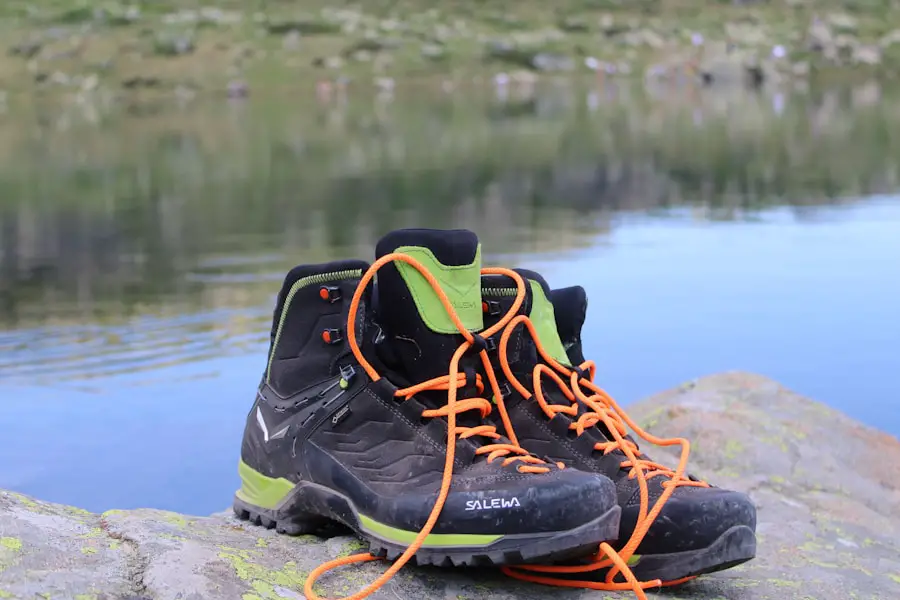
After muddy or dirty hikes, remove loose debris with a soft brush and use clean water as appropriate for the footwear. Pay attention to packed dirt around the outsole lugs because clogged tread can reduce effective grip.
Follow the manufacturer’s instructions before using detergents or specialty cleaners. Salomon’s footwear-care guidance, for example, recommends a soft wet brush and clean water and advises against machine washing its shoes.
Caring for Different Materials
Leather and synthetic footwear should not automatically receive the same treatment. Leather may need a compatible conditioner, cream, or water-based wax depending on the manufacturer’s instructions. Fabric or synthetic uppers may require only gentle cleaning or a treatment specifically approved for that material.
Waterproof shoes can also need exterior maintenance even though the waterproof membrane remains inside the footwear. Always use products approved for the particular upper and membrane.
Drying and Storage
Let wet hiking shoes dry naturally in a ventilated area. Remove the insoles when practical and loosen the laces to improve airflow. Avoid radiators, dryers, fires, and other strong direct heat, which can damage leather, adhesives, foams, and other components.
Salomon specifically recommends drying its footwear at room temperature without an external heat source.
Once dry, store hiking shoes in a cool, ventilated location instead of sealing damp footwear in a pack, trunk, or plastic container.
Breaking in Your Hiking Shoes
Not every new hiking shoe needs a long break-in period. Modern synthetic shoes are often flexible enough to feel comfortable quickly, while stiffer backpacking boots and traditional leather footwear may soften more gradually.
Even when a shoe feels good immediately, test it before a demanding trip. Wear it around home, on neighborhood walks, and then on a short local trail. Increase distance gradually so you can identify heel slip, toe contact, pressure points, or lacing problems while turning around is still easy.
Salomon’s break-in guidance likewise recommends short walks before longer routes and notes that persistent discomfort in a poorly fitting shoe is unlikely to disappear simply through continued wear.
Pro Tip: Stop and adjust your socks or lacing when you first notice a hot spot. Waiting until a painful blister has formed makes the rest of the hike much harder.
In a 2020 observational study of 315 long-distance hikers, 74% had a foot blister after several hiking stages, and finishing with wet socks was associated with greater blister risk.
The study involved a specific population walking the Camino de Santiago, so its 74% figure should not be treated as the blister rate for every hike. It does reinforce the value of moisture management. See the published hiking-blister study indexed by PubMed.
Hiking Shoe Accessories and Add-ons
Insoles and Orthotics
Aftermarket insoles can change cushioning, arch feel, heel position, and the amount of room inside a shoe. If you already use prescribed orthotics or a preferred insole, bring it when trying on hiking footwear so you can judge the complete fit rather than adding it later.
Gaiters
Gaiters cover the opening around the shoe or boot and lower leg. Depending on their design, they can help keep out dirt, small stones, mud, snow, and vegetation. They are particularly useful where loose debris or deep snow repeatedly enters the footwear.
Hiking Socks
Quality hiking socks are not an afterthought. Wool and synthetic options designed to manage moisture can help keep feet more comfortable, and carrying a dry spare pair can be useful on long or wet hikes.
Traction Devices
For snow or ice, footwear may need to be paired with traction equipment appropriate to the route and conditions. Check park, trail, and equipment guidance rather than assuming a standard hiking outsole is enough for winter terrain.
When to Replace Hiking Shoes
There is no single mileage number that applies to every pair because wear depends on the hiker, terrain, shoe construction, pack weight, and frequency of use. Inspect the footwear itself.
Replacement or professional repair may be appropriate when:
- Outsole lugs are worn smooth enough to reduce traction.
- The outsole is separating from the upper.
- The midsole feels permanently compressed or noticeably uneven.
- The upper has tears that compromise fit or protection.
- A waterproof shoe leaks because of damage that cannot be repaired.
- Your foot begins sliding inside a shoe that once fit securely.
- The shoe has developed structural deformation that changes your gait or comfort.
By understanding the differences among hiking shoes, trail runners, boots, and approach shoes—and by putting fit ahead of marketing—you can choose footwear that better matches the trails you actually hike. Whether you are planning an easy day walk or a rough backcountry route, comfortable feet, suitable traction, and realistic weather protection make the experience far more enjoyable.
If you are also looking for travel footwear that can handle wet spring conditions, see our guide to waterproof sneakers for spring travel.
Love travel? Join Our Facebook Community For More Tips.
Frequently Asked Questions
What are hiking shoes?
Hiking shoes are outdoor footwear designed to provide traction, protection, and a secure platform on trails. They are generally lower-cut than hiking boots and may be lighter and more flexible while still using trail-oriented outsoles and protective features.
What are the key features of hiking shoes?
Important features include a trail-appropriate rubber outsole, secure heel and midfoot fit, adequate toe room, suitable cushioning or stiffness, and enough underfoot and toe protection for the terrain. Waterproofing is useful when your normal conditions call for it but is not mandatory for every hike.
How are hiking shoes different from regular sneakers?
Hiking shoes generally use outsoles, tread patterns, protective uppers, and underfoot structures designed for uneven outdoor terrain. Everyday sneakers may work on simple paved paths but often lack the traction or protection preferred for rocks, roots, loose dirt, and other trail surfaces.
What are the benefits of wearing hiking shoes?
A well-chosen hiking shoe can provide trail-specific traction, underfoot protection, better resistance to abrasion, and a more secure fit than casual footwear. The benefits depend on matching the shoe to the terrain and getting the fit right.
How should hiking shoes fit?
They should feel secure through the heel and midfoot without painful pressure. Your toes should be able to move, and roughly a thumb’s width in front of the longest toe is a useful starting point. Test the shoes on a downhill slope to make sure your toes do not repeatedly hit the front.
Should hiking shoes be waterproof?
Not always. Waterproof shoes are useful for persistent rain, wet vegetation, mud, and cold wet conditions. In hot or dry weather, some hikers prefer non-waterproof footwear for greater ventilation and quicker drainage or drying.
Are hiking boots better than hiking shoes?
Neither is universally better. Hiking shoes are often lighter and more flexible. Mid- and high-cut boots provide more coverage and may offer a more supportive platform for variable terrain or heavier loads. Choose according to terrain, load, weather, fit, and personal preference.
Do hiking shoes need to be broken in?
Some do, but modern synthetic hiking shoes often require much less break-in than traditional stiff leather boots. Regardless of material, test new footwear on short walks before a long trip. Break-in should not be used to justify persistent pain, pinching, or an obviously poor fit.
Sources
- U.S. National Park Service — Hike Smart — footwear, socks, equipment, and general hiking-safety recommendations.
- Salomon — High, Mid, or Low-Cut Hiking Shoes — current 2026 guidance on shoe height, use cases, and fit.
- Salomon — How to Break In Your Hiking Shoes — modern synthetic versus leather break-in guidance.
- Salomon — Footwear Care — cleaning, leather care, and safe drying guidance.
- GORE-TEX — Footwear Technology — waterproof and breathable membrane performance.
- Vibram — High-Performance Rubber Soles — outsole compounds, technologies, and traction context.

