
Last Updated on July 27, 2026 by Daniel Globe
Army boots can work very well for hiking, but the answer depends on the boot. Military footwear is built for demanding use, yet different models are designed for different climates, loads, and missions. A lightweight hot-weather tactical boot behaves very differently from a waterproof temperate combat boot or a heavy fashion-style combat boot.
Quick Answer
Yes, army boots can be good for hiking when they fit properly and match the terrain and weather. Their strengths are protection, durability, secure lacing, and rugged construction. Their disadvantages can include extra weight, stiffness, heat, and slower drying. For long, fast hikes on maintained trails, dedicated hiking shoes or trail runners are often more efficient.
Key Takeaways
- Army and tactical boots can handle hiking, especially when protection, durability, or load carrying matters.
- Not every army boot is waterproof. Some hot-weather military boots intentionally drain water instead.
- A tall boot may feel supportive around the ankle, but boot height alone does not guarantee protection from ankle sprains.
- Heavy boots can increase the energy required for walking, which matters on long-distance hikes.
- Fit, socks, moisture control, outsole condition, and climate are more important than the word “military” on the label.
- Purpose-built hiking shoes or trail runners are often better for high-mileage trips where low weight and flexibility are priorities.
Disclosure: As an Amazon Associate I earn from qualifying purchases. Some links on this page are affiliate links, at no extra cost to you.
Are Army Boots Actually Good for Hiking?
They can be. The key is matching the boot to the hike rather than assuming any combat-style boot will perform well outdoors.
Real military footwear is designed around specific operating environments. For example, the U.S. Army’s temperate-weather combat boot uses a waterproof-breathable membrane and an abrasion- and slip-resistant rubber outsole. In contrast, the Army’s hot-weather combat boot uses drainage eyelets and an abrasion-resistant outsole for hot wet or dry environments.
That distinction matters on the trail. A waterproof boot may be useful in cold rain or wet grass, while a draining hot-weather boot may be more comfortable where your feet are likely to become soaked regardless.
Note: Military-issued boots, tactical boots, and fashion combat boots are not interchangeable categories. A fashion boot that looks military may lack the outsole, cushioning, fit, and construction needed for serious hiking.
Why Durability Is a Strength of Many Army Boots
Durability is one reason hikers consider military footwear. Genuine military and tactical boots may use rough-out or full-grain leather, abrasion-resistant textile panels, reinforced stitching, protective toe areas, and substantial rubber outsoles. Those features can be useful when hiking through brush, loose rock, rough ground, or areas where lighter footwear can take more abuse.
However, construction varies widely. It is not accurate to assume that most army boots use a Goodyear welt or that every pair can be resoled. Current U.S. Army temperate boots use a direct-attached soling system, while lightweight tactical models may use other constructions. Danner, for example, lists its current non-waterproof Tachyon as non-recraftable.
A durable upper also does not guarantee that every other component will last equally long. Outsole wear, stitching, midsole compression, waterproof membranes, and adhesives can still determine the useful life of the boot.
Pro Tip: Before buying military boots for hiking, inspect how the sole is attached, whether the manufacturer calls the boot recraftable, and whether replacement or repair services are actually available. Do not assume a rugged-looking boot can be resoled.
Support and Stability on Uneven Terrain
Many army boots use a high shaft, secure lacing, a supportive midsole, and a shank or similar structure under the foot. These features can make the boot feel stable while carrying a backpack or moving over rough ground.
The U.S. Army even maintains a specialized Mountain Combat Boot designed around the stability, support, and mobility needed in rugged mountain environments. That shows why military footwear can make sense for hikers who value a secure platform and more protection around the lower leg.
Still, a tall boot should not be treated as an ankle-sprain prevention device. A review indexed by the National Library of Medicine found good evidence for certain external ankle braces in high-risk sports but concluded that the protective effect of high-top shoes themselves remained uncertain.
Fit, outsole grip, balance, conditioning, fatigue, pack weight, terrain, and previous injuries all affect ankle stability. A boot that locks the heel securely without squeezing the foot is generally more useful than simply choosing the tallest boot available.
Warning: Do not rely on a high boot collar to prevent ankle injuries. Slow down on loose rock, wet roots, steep descents, and other unstable surfaces, especially when carrying a heavy pack.
Traction and Grip on Different Terrain
Many military boots use rubber outsoles with pronounced tread patterns to handle dirt, mud, loose ground, and rough surfaces. Some current Army footwear is specifically described as abrasion resistant or slip resistant, and tactical manufacturers commonly use lugs, rock shields, or reinforced outsole structures.
That does not mean every army boot provides superior grip everywhere. Wet rock, polished stone, roots, ice, deep mud, and loose scree place very different demands on an outsole. Rubber compound, lug depth, lug spacing, sole flexibility, wear, and contamination with mud all affect traction.
A deep tread can help on soft soil by giving the sole more edges to bite into the ground. On hard wet rock, however, compound and contact characteristics can matter as much as aggressive-looking lugs.
Check the outsole before every significant hike. If the tread is rounded off, separating, cracked, or badly worn, the boot may no longer provide the traction you expect.
Weight and Comfort on Long Hikes
Weight is one of the strongest arguments against heavy combat boots for recreational hiking. Moving mass on the feet costs more energy than carrying the same amount close to the body.
A controlled study of walking in combat boots found that footwear mass increased energy expenditure disproportionately compared with an equivalent amount of body-carried mass. Other controlled boot research has also found increases in oxygen consumption as boot weight rises.
Boot weight matters most when the miles add up: a sturdy boot can provide protection, but unnecessary weight on your feet can increase the effort required to keep walking.
Modern tactical boots can be much lighter than traditional leather combat boots, which is why it is better to check a specific model than assume all army boots are heavy.
| Boot Model | Current Manufacturer Information | Hiking Consideration |
| Nike SFB Gen 2 | Nike lists the SFB Gen 2 at 16 oz and describes a flexible sole, lugs, cushioning, ventilation, and an internal rock shield. | A lighter tactical design that may suit hikers who want military-style protection without a traditional heavy leather boot. |
| Rocky S2V | Current Rocky S2V versions feature rugged materials and military-oriented construction; specifications vary by S2V version. Rocky’s current page does not substantiate the old 4.1-lb figure used in this article. | Check the exact S2V model because waterproof, insulated, safety-toe, and draining versions serve different conditions. |
| Danner Tachyon | 26 oz per pair for the current non-waterproof Black Hot version; 8-inch height, nylon shank, polyurethane footbed, and unlined construction. | A relatively lightweight hot-weather option, but this version is explicitly non-waterproof. |
| Under Armour Valsetz RTS 1.5 | Under Armour lists a 13.58 oz weight along with a Micro G EVA midsole, TPU shank, molded sockliner, and lugged rubber outsole. | Its lightweight construction may reduce the heavy-boot feeling, although fit and durability should still be judged for your intended mileage. |
Comfort is more personal than a numerical rating can show. Foot width, arch shape, heel volume, sock thickness, lacing, pack weight, and the shape of the boot’s last all influence whether a boot remains comfortable after several hours.
Waterproofing: Not All Army Boots Keep Water Out
One of the original article’s most important misconceptions is that army boots are automatically waterproof. They are not.
Some military footwear is built with a waterproof-breathable membrane. The current U.S. Army temperate-weather combat boot is one example. Danner also sells a GORE-TEX version of the Tachyon that is waterproof.
Other military boots intentionally take the opposite approach. The Army hot-weather boot has drainage eyelets, while Danner’s hot-weather Tachyon is unlined and non-waterproof. These designs prioritize ventilation or draining instead of trying to seal every drop of water outside.
This creates an important hiking choice:
- Cold rain, wet grass, shallow puddles, or cool shoulder-season hiking: a waterproof boot can help keep external moisture out.
- Hot, humid hiking or repeated water crossings: a draining and faster-drying boot can sometimes be more practical.
- Snow and true winter conditions: use footwear with insulation, traction, and temperature suitability appropriate for the conditions rather than relying on a generic combat boot.
A waterproof membrane also cannot keep your feet dry if water pours over the boot collar, and sweat can still create moisture inside the boot.
Versatility in Different Hiking Conditions
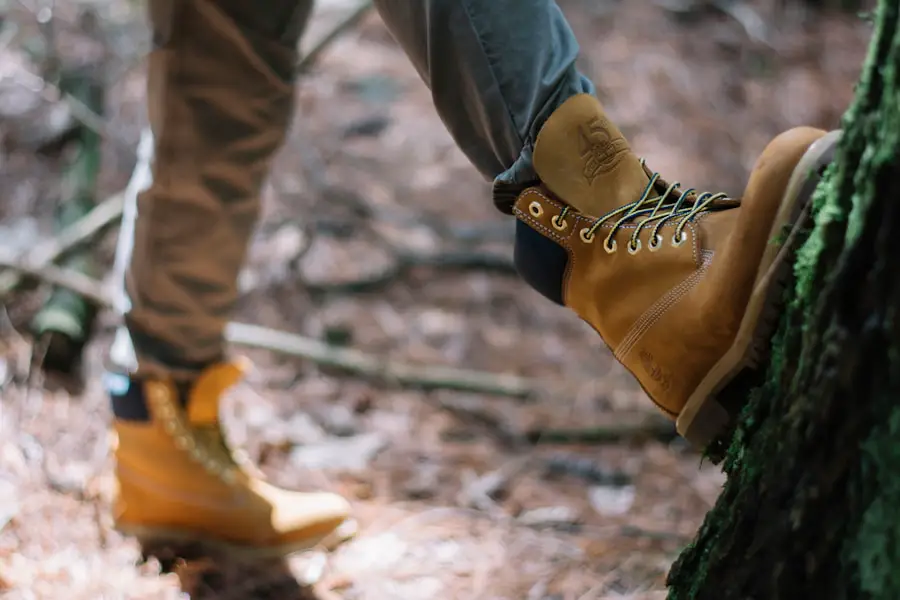
Versatility is a real advantage of a well-chosen tactical boot. A durable pair can work for hiking, outdoor work, travel, rough campsites, hunting, and other activities where protection matters.
Army boots can be particularly appealing for hikers who move through brush, carry heavier loads, want more protection around the lower leg, or already own a properly fitted pair that has proven comfortable over distance.
They are less compelling when your main goal is to cover many miles quickly on a maintained trail. In that situation, the extra protection may not justify the weight, heat, and stiffness compared with lighter hiking footwear.
Army Boots vs Hiking Boots vs Trail Runners
| Feature | Army / Tactical Boots | Hiking Boots | Trail Runners |
| Protection | Often high | Moderate to high | Lower |
| Typical Feel | Secure and potentially stiff | Trail-focused support and flex | Light and flexible |
| Weight | Varies from lightweight tactical to heavy-duty | Usually moderate | Usually lowest |
| Best Use | Rough terrain, brush, load carrying, mixed outdoor work | General hiking and backpacking | Fast or high-mileage maintained trails |
| Main Trade-Off | Can be heavier, hotter, or stiffer | More specialized for trail use | Less protection and durability in some rough environments |
There is no universally best category. The best footwear is the lightest option that still gives you the fit, protection, traction, weather resistance, and durability required by the hike.
Breathability and Ventilation
Breathability also varies substantially among military boots. Some hot-weather models combine leather with textile panels, vents, drainage ports, or unlined construction. Other models use waterproof membranes or insulation that can retain more heat.
This makes climate matching important. A waterproof insulated tactical boot that feels excellent in cold wet weather may be miserable during a summer hike. A highly ventilated hot-weather boot may be comfortable in heat but inappropriate in prolonged cold rain or snow.
Moisture management matters because wet feet are more vulnerable to friction problems. A study of 203 long-distance hikers found that finishing the day with wet socks was associated with almost twice the risk of foot blisters.
The Defense Centers for Public Health also recommends properly fitting shoes and synthetic moisture-wicking socks as primary blister-prevention measures.
How Army Boots Should Fit for Hiking
Even a high-quality boot becomes a poor hiking boot if it does not fit your foot. Defense health guidance for foot marching recommends enough length so the toes are not crowded, adequate width, and a heel fit that is secure without being excessively loose.
Use this quick fit check before trusting army boots on a long hike:
- Your toes should not strike the front of the boot while walking downhill.
- Your forefoot should have enough width to spread naturally instead of being squeezed from both sides.
- Your heel should stay reasonably secure without repeated lifting and rubbing.
- The boot should not create sharp pressure over the ankle bones, instep, heel, or little toe.
- Try the boots with the same type of socks you intend to hike in.
- Walk up and down stairs or an incline before deciding that the fit is correct.
Pro Tip: Wear new boots on several progressively longer walks before taking them on an all-day or multi-day hike. Breaking in a boot may soften materials and reveal pressure points, but it cannot fix a boot that is fundamentally the wrong size or shape.
Preventing Blisters in Army Boots
Blisters are caused by repeated friction and shear, and moisture can make the problem worse. Military marching guidance therefore emphasizes proper fit, moisture management, and gradual conditioning.
For hiking:
- Choose moisture-wicking hiking or boot socks instead of relying on thin everyday cotton socks.
- Carry a dry spare pair when hiking in hot or wet conditions.
- Change wet socks when practical.
- Stop when you feel a hot spot instead of waiting for a full blister to develop.
- Adjust lacing if your heel is sliding or your toes are being pushed forward.
- Increase hiking distance gradually when adapting to unfamiliar boots.
Warning: Persistent numbness, severe pressure, worsening pain, broken skin, or repeated blistering is a sign that the footwear or fit needs attention. Do not assume painful boots simply need more miles to “break in.”
When Army Boots Make the Most Sense
Army or tactical boots are a strong hiking option when:
- You already own a pair that fits comfortably over long walking distances.
- You are moving through brush, debris, rocky ground, or rough off-trail terrain.
- You value foot and lower-leg protection more than minimum weight.
- You are carrying a heavier pack and prefer a firm platform underfoot.
- The boot is specifically designed for the climate you will encounter.
- You need one durable pair for hiking plus work or other outdoor activities.
When Dedicated Hiking Footwear Is Usually Better
Consider a hiking boot, hiking shoe, or trail runner instead when:
- You plan to cover many miles on maintained trails.
- Low footwear weight is a major priority.
- You prefer a flexible, athletic feel.
- You hike mainly in warm weather and your military boots run hot.
- Your current combat boots cause repeated pressure points or blisters.
- You need specialized mountaineering, winter, or traction-device compatibility that your current boots do not provide.
How to Choose Army Boots for Hiking
Look beyond appearance and check the specifications of the exact model.
1. Match the boot to the weather
Decide whether you need waterproof construction, ventilation and drainage, insulation, or a balance of those features.
2. Prioritize fit over brand
A famous tactical boot that does not match your foot shape is less useful than a less glamorous model that holds your heel securely and gives your toes enough room.
3. Check actual weight
Do not assume all military boots are heavy or lightweight. Compare manufacturer specifications for the exact model and size range where possible.
4. Examine the outsole
Look for tread appropriate to the surfaces you hike most often. Deep mud, packed dirt, wet rock, pavement, and snow do not demand the same outsole design.
5. Check cushioning and underfoot protection
A shank, rock shield, supportive midsole, and cushioned footbed can improve comfort on rough ground, but the combination should still allow a natural enough stride for your walking style.
6. Confirm whether the boot is waterproof or merely water resistant
Marketing terms can be confusing. Look for an actual waterproof construction or membrane if keeping outside water out is essential.
7. Test before a major trip
Do not make a multi-day backpacking trip the first serious outing for unfamiliar footwear.
Cost and Long-Term Value
Army boots are not automatically cheaper or more economical than hiking footwear. Tactical and military boots range from relatively affordable models to premium boots that cost as much as high-end hiking footwear.
Long-term value depends on more than purchase price. Consider fit, expected mileage, outsole wear, upper durability, whether the boot is repairable, climate suitability, and how many activities you can realistically use it for.
A durable military boot can be an excellent value for someone who hikes through rugged terrain and also uses it for work or outdoor activities. For a hiker who mainly walks maintained trails, a lighter hiking shoe may deliver more useful comfort per mile even if it does not look as heavy-duty.
Care for Military Boots Used for Hiking
After muddy or wet hikes, remove loose dirt and allow the boots to dry thoroughly according to the manufacturer’s care instructions. Take out removable insoles when practical and avoid intense direct heat unless the manufacturer specifically permits it.
For waterproof footwear, follow the manufacturer’s guidance for cleaning and restoring the outer water-repellent treatment. GORE-TEX, for example, recommends cleaning footwear with lukewarm water and a small amount of liquid detergent, drying at moderate temperatures, and restoring the durable water-repellent treatment when water no longer beads on the exterior.
Regularly inspect the outsole, stitching, upper, laces, eyelets, and sole attachment. Catching damage early is especially important before a long or remote hike.
If you are considering using army boots for hiking, you may also be interested in finding the best sleeping bag for backpacking travel. Check out this article on the best sleeping bag for backpacking travel to ensure you have all the necessary gear for your outdoor adventures.
Love travel? Join Our Facebook Community For More Tips.
Frequently Asked Questions
Are army boots good for hiking?
Yes. A properly fitted military or tactical boot can work well for hiking, particularly when durability, protection, rough terrain, or load carrying matters. For long hikes on maintained trails, lighter purpose-built hiking footwear may be more comfortable and energy efficient.
What are the benefits of using army boots for hiking?
Depending on the model, benefits can include durable uppers, secure lacing, substantial outsoles, underfoot protection, a high shaft that helps keep debris out, and construction designed for demanding outdoor use.
Are there drawbacks to using army boots for hiking?
Yes. Some military boots are heavier, hotter, stiffer, or slower drying than dedicated hiking shoes. Heavy footwear can also increase walking energy cost. The drawbacks depend strongly on the specific boot rather than the military appearance alone.
What should I consider before using army boots for hiking?
Check fit, boot weight, outsole condition, terrain, temperature, waterproofing or drainage, expected distance, pack weight, and whether you have already worn the boots comfortably on shorter walks. Use suitable socks and address pressure points before a long hike.
Can army boots be used for different types of hiking?
Yes, but different designs suit different conditions. Hot-weather draining boots, waterproof temperate boots, insulated cold-weather boots, and mountain-oriented military footwear have different strengths. Match the specific model to the hike.
Are all army boots waterproof?
No. Some military boots use waterproof-breathable membranes, while others are intentionally unlined or use drainage holes for hot and wet environments. Always check the specification for the exact model.
Do army boots prevent ankle sprains?
No boot can guarantee that. A tall, well-laced boot may feel more supportive, but research has not established that high-top footwear by itself reliably prevents ankle sprains. Fit, terrain, fatigue, balance, conditioning, and previous injuries also matter.
Sources
- U.S. Army — Army Combat Boot (Temperate Weather) — waterproof membrane, outsole, construction, and environmental-use information.
- U.S. Army — Hot (Wet and Dry) Weather Boots — hot-weather construction, drainage, abrasion resistance, and specialized military footwear information.
- Defense Centers for Public Health — Foot Marching and Load-Carriage Injuries — footwear fit, socks, moisture control, conditioning, and foot-care guidance.
- National Library of Medicine — Interventions for Preventing Ankle Ligament Injuries — evidence concerning external ankle support and the uncertain protective effect of high-top footwear.
- National Library of Medicine — Physiological Strain Due to Load Carrying in Heavy Footwear — evidence on footwear mass and walking energy expenditure.
- Danner — Tachyon Black Hot Specifications — current weight, non-waterproof construction, breathability, footbed, outsole, and recraftability specifications.

