
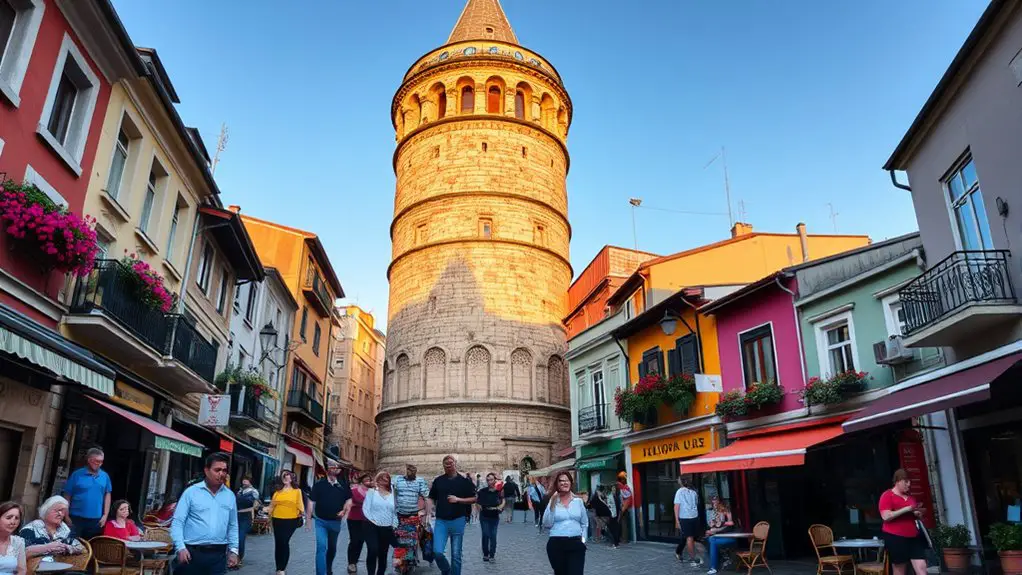
Galata’s history is a tapestry woven from its origins as a
Byzantine Greek colony to its role as a bustling trade hub.
Positioned near the Golden Horn, it attracted diverse communities,
fostering rich cultural exchanges. You’ll notice architectural gems like the
iconic Galata Tower, which stands as a symbol of its historical
significance. Today, Galata thrives as a vibrant cultural hotspot,
blending art, cafes, and nightlife. Explore further to uncover even more
fascinating details about this unique district.
Galata is a historic district in Istanbul on the northern side of the Golden Horn,
known for the 14th-century Galata Tower, narrow streets and a blend of Byzantine,
Genoese, Ottoman and modern influences. Today it mixes centuries-old architecture
with cafes, art spaces and lively nightlife.
Key Takeaways
- Galata originated as a Greek community during the Byzantine era, showcasing its deep historical roots.
- The iconic Galata Tower, built in the 14th century, symbolizes the area’s maritime trade significance.
- Galata has been a melting pot of Venetian, Genoese, and Ottoman influences throughout its history.
- The neighborhood’s narrow streets feature diverse architectural styles, including Neoclassical and Art Nouveau.
- Galata’s rich cultural exchanges have shaped its vibrant arts, cuisine, and community dynamics over centuries.
The Origins of Galata: A Historical Overview

Galata, a vibrant district of Istanbul, has a
rich tapestry of history that dates back to ancient times.
The Galata origins trace back to the
Byzantine era, where it was a thriving community,
initially established as a neighborhood with strong Greek influence.
Its strategic location near the Golden Horn allowed it to flourish,
attracting diverse cultures and influences.
Over centuries, Galata evolved, witnessing the rise and fall of empires,
including the Roman and Ottoman. From the late 13th century, the area
developed into a Genoese trading colony, which left a lasting mark on
its fortifications and skyline, including the famous tower. This cultural
amalgamation greatly contributed to its unique character.
The iconic Galata Tower, constructed in the 14th century, stands as a symbol
of its rich historical narrative. By exploring Galata’s history, you’ll
uncover layers of heritage that reflect centuries of human interaction and
adaptation, making it an essential part of Istanbul’s historical landscape.
The Role of Galata in Trade and Commerce
Istanbul’s Galata district has long been an essential hub for
trade and commerce, shaping the economic landscape
of the city. Its strategic location along key Galata trade routes has facilitated
the movement of goods and services, establishing it as a vibrant marketplace.
You’ll find that the Galata market dynamics reflect a rich tapestry of local and
international commerce:
- A diverse array of goods, from spices to textiles, flows through its bustling streets.
- Historical trade agreements have influenced the area’s economic growth.
- The blend of various cultures has enriched the trading experience.
As you explore Galata, pay attention to how these elements interact. The district’s
unique position hasn’t only supported local businesses but also attracted merchants
from afar, creating a thriving environment that continues to evolve.
Understanding this dynamic can enhance your appreciation of Galata’s enduring
significance in Istanbul’s economy.
The Cultural Melting Pot: Diverse Communities in Galata
As you explore Galata, you’ll notice how its
historical community dynamics have shaped a vibrant tapestry
of diverse cultures. The intertwining of various religious
practices has greatly impacted daily life, fostering an environment rich in
tradition and coexistence. Additionally, cultural festivals and events
reflect this diversity, offering a glimpse into the unique identities that thrive
within this neighborhood.
Historical Community Dynamics
While exploring the rich tapestry of Galata’s history, you’ll
find that its community dynamics have long reflected a remarkable
blend of cultures and ethnicities. This diversity has fostered
unique social structures and vibrant community interactions, shaping the
neighborhood’s character.
- Cultural Exchanges: Different groups contributed to art, music, and cuisine, enriching Galata’s cultural scene.
- Economic Collaboration: Merchants from various backgrounds engaged in trade, developing a robust local economy.
- Neighborhood Alliances: Communities often formed alliances for mutual support, enhancing social cohesion amidst diversity.
These elements not only highlight the historical significance of Galata but also
illustrate how its diverse communities have navigated challenges and opportunities,
creating a dynamic environment that continues to evolve today.
Religious Diversity Impact
Religious diversity in Galata has greatly shaped its cultural landscape,
fostering a unique environment where various faiths coexist and interact.
This melting pot of beliefs encourages rich religious practices and promotes
interfaith dialogue, allowing communities to learn from one another.
| Faith Community | Religious Practices | Interfaith Initiatives |
|---|---|---|
| Christianity | Church services, festivals | Ecumenical meetings |
| Judaism | Sabbath observance, Hanukkah | Interfaith discussions |
| Islam | Daily prayers, Ramadan | Community outreach |
As you explore Galata, you’ll notice how these diverse communities celebrate
their identities while engaging in collaborative efforts. This synergy not only
enriches the local culture but also cultivates a spirit of understanding and
acceptance among residents and visitors alike.
Cultural Festivals and Events
Cultural festivals and events in Galata vividly showcase the area’s rich tapestry
of traditions and communal interactions, reflecting the diverse backgrounds of its
inhabitants. These cultural celebrations not only highlight the vibrant festival
traditions but also foster a sense of unity among the various communities.
- Galata Music Festival: A celebration of local and international artists, emphasizing the area’s artistic heritage.
- Istanbul Coffee Festival: An exploration of Turkey’s coffee culture, featuring workshops, tastings, and competitions.
- Galata Gençlik Festival: A youth-driven event that promotes creative expression through art, music, and performance.
Each festival serves as a platform for dialogue, allowing you to engage with the
community while appreciating their unique customs and
shared histories.
Architectural Wonders: The Galata Tower and Beyond
As you wander through Galata, you’ll quickly realize that its
architectural wonders extend far beyond the iconic
Galata Tower. This medieval stone structure, built in the
14th century, serves as a hallmark of Galata’s historical significance
and its role in maritime trade. The tower’s Genoese design
showcases the unique blend of cultures that define Galata architecture.
Nearby, the narrow streets are lined with charming buildings, featuring
ornate facades and balconies that reflect various architectural
styles, including Neoclassical and Art Nouveau. Notable structures like the
Karaköy Gazhanesi, a former gas plant, now serve modern purposes while preserving
their historical essence.
Each edifice tells a story, illustrating the neighborhood’s evolution over
centuries. As you explore, you’ll appreciate how these
architectural gems not only enhance Galata’s aesthetic appeal
but also embody the rich tapestry of its past, making every
corner a significant piece of history. For up-to-date visitor details on the
tower as a museum, you can also consult the official Galata Tower information
from Turkey’s Ministry of Culture and Tourism
(Galata Tower museum page).
Products Worth Considering
Magnet for refrigerator or locker
✅ Premium Quality MDF wood Galata Tower Turkey magnet souvenir
PREMIUM DESIGN: Beautifully crafted 3D metal Eiffel Tower magnet that adds a touch of Parisian charm to your kitchen decor
The Transformation of Galata in the 20th Century
While the 20th century brought significant challenges to Galata,
it also sparked a remarkable transformation that reshaped the
neighborhood’s identity. Urban development projects, alongside
social changes, played an essential role in this evolution.
You’ll notice how the area adapted to modern influences while retaining its
historical essence:
- Old industrial sites were repurposed into cultural spaces.
- New infrastructures emerged, improving connectivity and accessibility.
- A diverse community formed, blending various cultures and lifestyles.
These elements combined to create a vibrant atmosphere that
attracted artists, entrepreneurs, and tourists alike. The juxtaposition of old
and new in Galata reflects broader trends in urbanization seen across many
cities. As you explore, pay attention to how the neighborhood’s rich past
intermingles with its contemporary spirit, illustrating a
unique narrative of resilience and transformation.
Contemporary Galata: Art, Cafes, and Nightlife
What draws visitors to contemporary Galata is its vibrant blend of art,
cozy cafes, and dynamic nightlife. The streets are
alive with striking street art, showcasing local talent and transforming
urban spaces into open-air galleries.
As you stroll through, you’ll find local cafés that offer not just coffee but also a
taste of Galata’s rich culture, often featuring works by emerging
artists and artisans. These spots serve as perfect havens for relaxation or inspiration,
where you can soak in the atmosphere.
When the sun sets, Galata’s nightlife hotspots come to life, pulsating with energy.
Bars and clubs host an array of performances, from local bands to DJs, creating a
diverse music scene that caters to every taste.
Whether you’re interested in a quiet evening over coffee or partying until dawn,
contemporary Galata provides an exciting landscape that reflects its
cultural revival, making it a must-visit destination for any traveler.
For a broader view of how Galata connects to the modern Karaköy waterfront, you can
also explore the official history of the Galata and Karaköy port area
(Galataport history page).
Products Worth Considering
EVENING STROLL IN PARIS: EIFFEL TOWER AND SEINE RIVER CITYSCAPE POSTER - A must-have for any art lover, this poster brings a touch of Parisian charm to your space. Its serene depiction of an evening stroll by the Eiffel Tower and Seine River adds a sophisticated and calming vibe to any room, evoking the romance and elegance of Paris.
Tips for Exploring Galata: Must-See Attractions and Experiences
To fully appreciate the essence of Galata, you’ll want to prioritize a few key
attractions and experiences that highlight its unique character.
- Galata Tower: Climb to the top for panoramic views of the
Bosphorus and the city skyline, providing a perfect backdrop for memorable photos. - Local Cuisine: Don’t miss the chance to savor authentic Turkish
dishes at local eateries. Sample mezes, kebabs, and baklava to immerse yourself in
the culinary scene. - Explore Hidden Gems: Wander through the narrow streets to discover
art galleries, quaint shops, and charming cafes tucked away from the main tourist paths.
Products Worth Considering
FAQs
What is the best time to visit Galata?
The best time to visit Galata is during spring and fall, when the weather is mild
and crowds are smaller. You’ll enjoy comfortable walking conditions and plenty of
local events and festivals.
Are there guided tours available in Galata?
Yes, several companies offer guided walking tours in and around Galata. These
tours provide historical context, highlight hidden spots and help you make the
most of a short visit.
Is Galata safe for tourists?
Galata is generally considered safe for tourists, especially in busy areas.
As in any big city, stay aware of your surroundings, keep valuables secure, and
avoid poorly lit, quiet streets late at night.
Where can I find local cuisine in Galata?
You’ll find plenty of restaurants and cafés around Galata Tower and along nearby
streets serving traditional Turkish dishes. Look for places offering pide, simit,
mezes and desserts like baklava or kunefe.
What public transportation options are available to reach Galata?
Galata is easy to reach by tram, bus and on foot. Many visitors ride the tram to
Karaköy or Tophane and then walk uphill, or connect via buses that stop near the
base of the Galata Tower area.
Conclusion
To sum up, Galata isn’t just a neighborhood; it’s a living tapestry
of time, bursting with history and culture at every corner. As you stroll through its
vibrant streets, you’ll feel the pulse of centuries past resonating
in the air. From the majestic Galata Tower to the eclectic art scene, every moment
here is an exhilarating adventure waiting to unfold. Don’t just visit Galata—immerse
yourself in its rich narrative, and you might just uncover a piece
of your own story.
Related articles