
Last Updated on July 25, 2026 by Ethan Caldwell
The Overlook Hotel is the fictional mountain resort at the center of Stephen King’s The Shining. King drew its atmosphere from a night at Colorado’s Stanley Hotel, while Stanley Kubrick used Oregon’s Timberline Lodge for exterior shots in the 1980 film. Together, these places helped create one of horror’s most recognizable settings, but they are not the same hotel.
Quick Answer
The Overlook Hotel is not a real hotel. Stephen King created it after staying at the Stanley Hotel in Colorado in 1974. For Stanley Kubrick’s 1980 film, Timberline Lodge in Oregon supplied exterior views, while studio sets created most of the hotel seen on screen.
Key Takeaways
- The Overlook Hotel is fictional, although several real hotels helped shape how readers and viewers imagine it.
- Stephen King stayed in Room 217 at the Stanley Hotel and developed the story after a disturbing dream.
- Timberline Lodge supplied exterior shots for Kubrick’s movie, but it was not used for the complete hotel interior.
- Room 217 appears in the novel, while Room 237 is the number used in Kubrick’s film.
Why Stephen King Created the Overlook Hotel
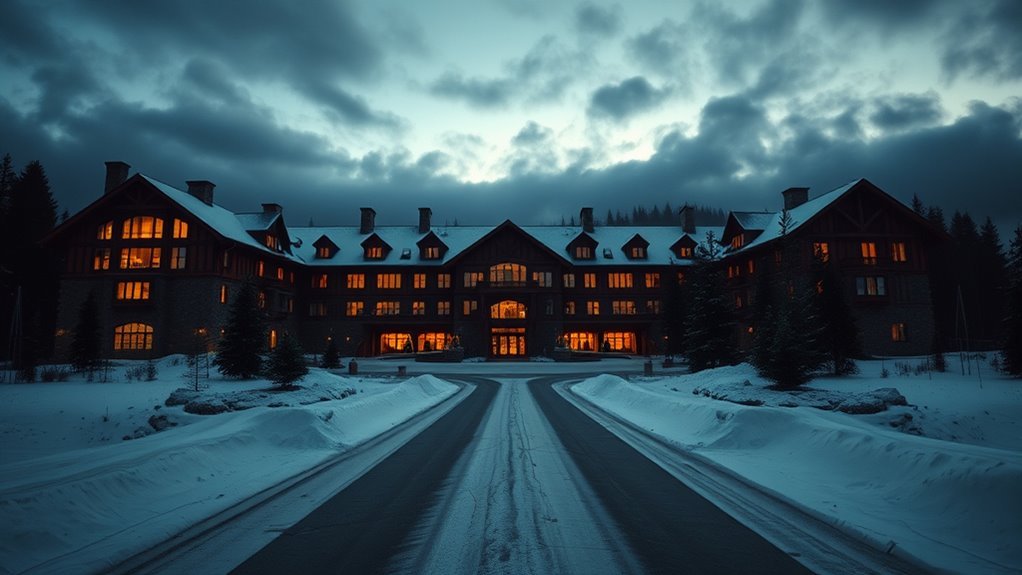
Stephen King developed the Overlook Hotel after staying at the Stanley Hotel in Estes Park, Colorado, with his wife, Tabitha, in September 1974. According to King’s official account, they were the hotel’s only overnight guests before it closed for the winter.
The empty corridors, quiet dining room, mountain setting, and approaching seasonal closure gave King what he considered an ideal setting for a ghost story. During the night, he dreamed that his young son was running through the hotel while being chased by a fire hose. King awoke frightened and soon formed the basic idea that became The Shining.
The Stanley Hotel supplied the lonely mountain atmosphere, but King transformed that setting into the fictional and malevolent Overlook.
In the novel, isolation gives the hotel time and space to work on Jack Torrance. Jack arrives hoping to rebuild his career and family life, but he also brings anger, alcoholism, shame, and a history of violence. The Overlook recognizes those weaknesses and uses them to turn him against Wendy and Danny.
Is the Overlook Hotel Real?
No. The Overlook Hotel is a fictional resort created for The Shining. It is not another name for the Stanley Hotel or Timberline Lodge.
The confusion comes from the different roles played by real locations:
- The Stanley Hotel in Colorado inspired Stephen King’s original setting and was later used for the 1997 television miniseries.
- Timberline Lodge in Oregon appeared in exterior establishing shots in Stanley Kubrick’s 1980 movie.
- Studio sets in England created many of the movie’s interiors and exterior features, including the hedge maze and loading-dock area.
Note: Neither the Stanley Hotel nor Timberline Lodge has the fictional history described in King’s novel. The Overlook’s murders, suicides, ghosts, and corrupt owners belong to the story.
How the Stanley Hotel Inspired The Shining
The Stanley Hotel opened in 1909 and was built by inventor Freelan Oscar Stanley. Its grand architecture and remote Rocky Mountain setting gave King a believable foundation for a luxurious resort that becomes dangerously isolated during winter.
King stayed in Room 217. The number later became the forbidden room in his novel, although the events inside the book’s Room 217 are fictional.
What Really Happened Near Room 217?
A real accident occurred at the Stanley Hotel in 1911. During a power outage, housekeeper Elizabeth Wilson entered a guestroom without knowing that gas had leaked into it. When she lit a lantern, an explosion threw her through the floor.
Contrary to a common retelling, Elizabeth Wilson survived. She recovered and later returned to work at the hotel. Stories connecting her spirit with the property are part of the Stanley’s folklore and guest reports, not verified evidence of paranormal activity.
The hotel now promotes its literary history through tours and themed experiences. Visitors may hear stories about unexplained sounds or sightings, but those accounts should be understood as legends and personal claims rather than established facts.
Why Kubrick Filmed the Overlook Exterior at Timberline Lodge
If the Stanley Hotel helped inspire King’s setting, Timberline Lodge gave Kubrick’s Overlook its most recognizable exterior. The lodge sits high on Mount Hood in Oregon and has a broad stone-and-timber facade that looks especially imposing against deep snow.
Kubrick used aerial footage and exterior establishing shots of Timberline in the 1980 film. However, the movie was not filmed entirely inside the lodge. Timberline’s official history explains that apparent exterior features such as the hedge maze and loading dock were produced at Elstree Studios in England with constructed sets and a lodge mock-up.
Why Room 217 Became Room 237
King’s novel places the hotel’s most disturbing supernatural encounter in Room 217. Timberline Lodge had a real Room 217, and its management worried that moviegoers might become afraid to book it.
The lodge therefore asked Kubrick not to use that number. The filmmakers changed it to Room 237, a room number that did not exist at Timberline. The change had the opposite long-term effect for Room 217, which Timberline says became its most frequently requested room.
Which Hotel Was Used for the 1997 Miniseries?
The Stanley Hotel was not a filming location for Kubrick’s 1980 movie. It was, however, used for Stephen King’s The Shining, the three-part television miniseries released in 1997.
The miniseries starred Steven Weber as Jack, Rebecca De Mornay as Wendy, and Courtland Mead as Danny. Because the production filmed at the hotel that inspired King, its version of the Overlook looks more directly connected to his original experience than Kubrick’s Timberline-and-studio design.
What the Overlook Hotel Symbolizes in The Shining
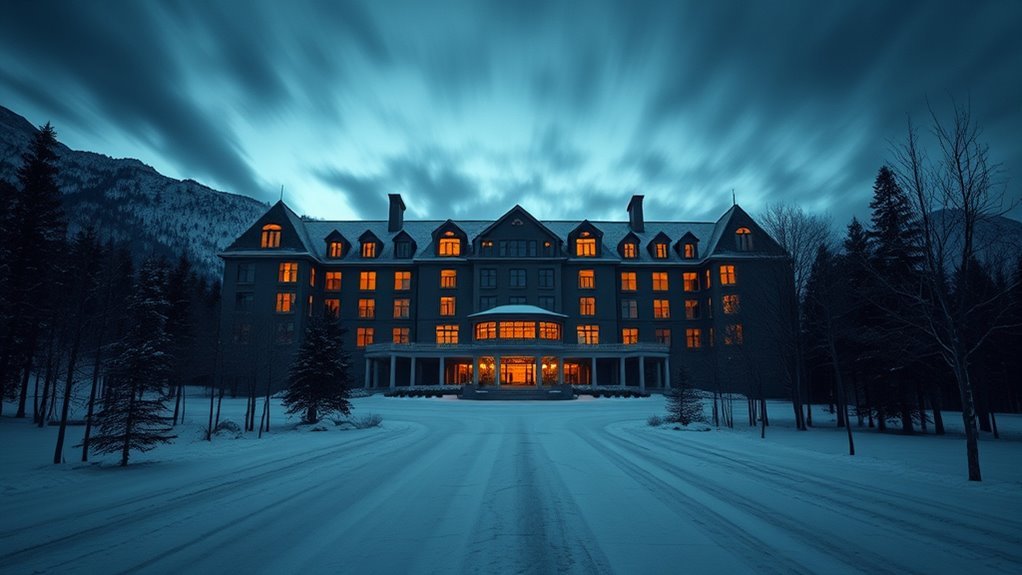
The Overlook Hotel represents more than a haunted building. It gives physical form to the Torrance family’s unresolved problems and creates an environment where those problems become harder to escape.
Isolation
Once winter weather cuts off the hotel, Jack, Wendy, and Danny lose access to ordinary support. Distance, snow, and silence allow fear and resentment to grow without outside interruption.
Addiction and Family Violence
Jack enters the Overlook with a history of alcoholism, anger, and harmful behavior. The hotel does not create every weakness inside him. Instead, it encourages his worst impulses and offers excuses for returning to them.
The Past Repeating Itself
The hotel’s fictional history contains violence, exploitation, corruption, suicide, and murder. Its ghosts invite Jack to repeat earlier patterns, including the actions of a previous caretaker who killed his family. The Overlook therefore represents a past that remains dangerous when people deny or romanticize it.
A Place That Consumes People
In both the novel and film, the hotel behaves almost like a predator. It studies the family, isolates its members, and uses familiar desires against them. Danny’s psychic ability makes him especially valuable because the Overlook wants to absorb his power.
How the Overlook Changes in the Book and Movie
The novel and Kubrick’s film use the same basic setting, but they build two noticeably different versions of the Overlook. King’s hotel is an openly supernatural force with a detailed fictional history. Kubrick’s hotel is colder and more ambiguous, using visual symmetry, impossible-feeling spaces, and repeated patterns to create unease.
Spoiler Warning: The comparison below reveals major events from the endings of the novel and the 1980 film.
| Element | Stephen King’s Novel | Kubrick’s Film |
|---|---|---|
| Forbidden room | Room 217 | Room 237 |
| Outdoor threat | Animal-shaped topiary comes to life | A large hedge maze traps Jack and Danny |
| Jack’s decline | More gradual, with clearer signs that he struggles against the hotel | He appears threatening and unstable much earlier |
| Dick Hallorann | Survives and helps Wendy and Danny escape | Jack kills him shortly after he reaches the hotel |
| Final danger | A neglected boiler explodes and destroys the Overlook | Jack becomes lost in the maze and freezes while the hotel remains standing |
| Overall effect | The hotel acts as an explicit supernatural intelligence | The hotel feels supernatural, psychological, and deliberately ambiguous |
The changes also affect Jack’s role. King’s novel gives him moments of awareness and resistance, making his downfall more tragic. Kubrick’s version places greater emphasis on menace, visual control, and uncertainty about whether the hotel is revealing Jack’s violence or actively producing it.
The Fictional Dark History of the Overlook Hotel
The Overlook’s dark history belongs to King’s fictional world. The novel describes decades of scandal, criminal activity, suicide, murder, and suspicious ownership. Jack learns much of this history while examining old records stored in the basement.
Among the hotel’s most important stories is that of former winter caretaker Delbert Grady, who murdered his wife and two daughters before killing himself. The Overlook later uses Grady’s presence to pressure Jack into harming his own family.
Room 217 also carries a fictional tragedy involving a former guest who died by suicide in its bathtub. This character and event should not be confused with Elizabeth Wilson’s real-life accident at the Stanley Hotel.
Frequently Asked Questions
Is the Overlook Hotel a real place?
No. The Overlook Hotel is fictional. The Stanley Hotel inspired Stephen King’s setting, and Timberline Lodge supplied exterior shots for Stanley Kubrick’s 1980 film.
What is the dark history of the Overlook Hotel?
The fictional hotel has a history of murders, suicides, corruption, organized crime, and family violence. These events strengthen its supernatural influence and allow it to manipulate Jack Torrance.
What movie did Stephen King say not to watch alone?
No reliable source confirms that Stephen King told audiences not to watch The Shining, or another specific movie, alone. The statement appears to be an unsupported internet claim rather than an authenticated King quotation.
What is Room 217 at the Stanley Hotel?
Room 217 is the Stanley Hotel room where Stephen King stayed in 1974. It helped inspire the forbidden Room 217 in his novel, although the supernatural events in the book are fictional.
What is Room 237 at the Stanley Hotel?
Room 237 is famous because it is the forbidden room in Kubrick’s fictional Overlook Hotel, not because it is the Stanley Hotel room that inspired King. Kubrick changed the novel’s Room 217 to 237 after Timberline Lodge asked him not to use its real room number.
Was The Shining filmed at the Stanley Hotel?
Kubrick’s 1980 movie was not filmed at the Stanley Hotel. Timberline Lodge supplied exterior shots, and studio sets supplied much of the remaining hotel. The Stanley was later used for Stephen King’s 1997 television miniseries.
Conclusion
The Overlook Hotel feels real because Stephen King and Stanley Kubrick built it from recognizable places, fears, and family conflicts. The Stanley Hotel supplied King with an isolated mountain setting and the inspiration for Room 217. Timberline Lodge gave Kubrick’s movie its imposing exterior, while carefully designed studio sets completed the illusion.
Understanding those separate influences makes the story more interesting. The Overlook is not a single real hotel waiting in the mountains. It is a fictional place assembled from history, architecture, folklore, addiction, isolation, and the fear that the past may repeat itself.
Sources
- Stephen King: The Shining — King’s account of his 1974 Stanley Hotel stay, the fire-hose dream, and the novel’s premise.
- The Stanley Hotel: History — the hotel’s 1909 opening and connection with Stephen King.
- The Stanley Hotel: Room 217 — the room’s literary connection with The Shining.
- The Stanley Hotel: Elizabeth Wilson — the 1911 explosion and confirmation that Wilson survived.
- Timberline Lodge: History — exterior filming, Elstree Studio sets, and the Room 217-to-237 change.
- The Stanley Hotel: The Shining Tour — differences among the novel, Kubrick’s movie, and the 1997 miniseries.
