
Last Updated on August 26, 2026 by Daniel Globe
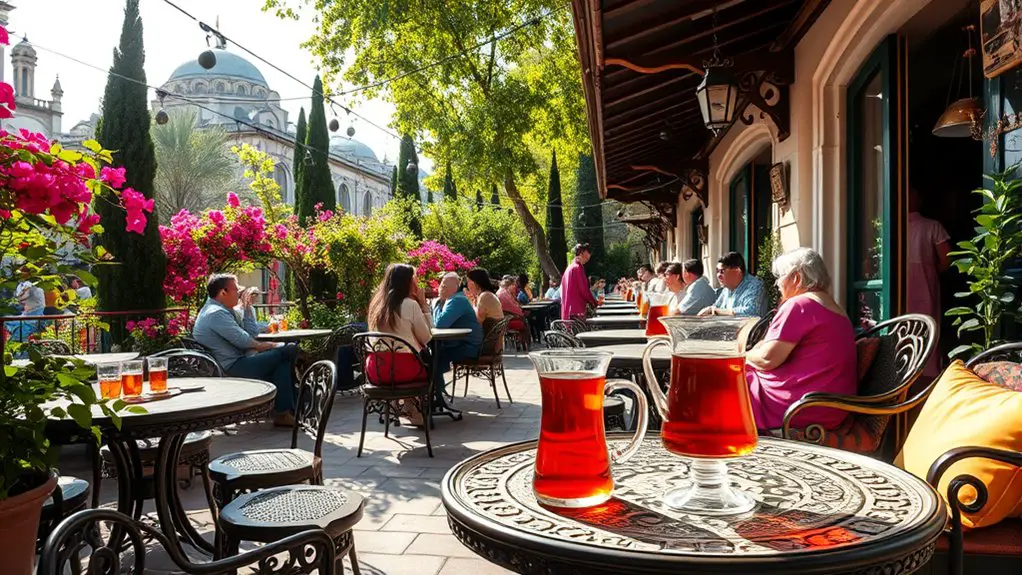
Istanbul’s tea gardens range from simple neighborhood meeting places to waterfront cafés with some of the city’s best views. The right choice depends on what you want to see: the Bosphorus from Bebek or Çengelköy, the Sea of Marmara from Moda, the Golden Horn from Pierre Loti, or everyday neighborhood life in Cihangir. Turkish tea is part of the experience, but the setting, access, crowds, and atmosphere can be just as important.
Quick Answer
For classic Turkish tea with scenery, start with Çengelköy Tarihi Çınaraltı for a Bosphorus-side local feel, Bebek Kahve for an easy European-side waterfront stop, Moda Aile Çay Bahçesi for Sea of Marmara sunsets, and Pierre Loti for Golden Horn views. Prices and hours change, so check current information before making a special trip.
Key Takeaways
- Best classic Bosphorus experience: Çengelköy Tarihi Çınaraltı combines tea, waterfront views, mature plane trees, and a strong neighborhood atmosphere.
- Best European-side waterfront stop: Bebek Kahve works well with a walk through Bebek and along the Bosphorus.
- Best sunset option: Moda is on the Sea of Marmara, not the Bosphorus, and is especially appealing near sunset.
- Best elevated panorama: Pierre Loti looks over the Golden Horn and can be reached on foot or by cable car.
- Tea culture matters: UNESCO added the shared tea culture of Türkiye and Azerbaijan to the Representative List of the Intangible Cultural Heritage of Humanity in 2022.
Disclosure: As an Amazon Associate I earn from qualifying purchases. Some links on this page are affiliate links, at no extra cost to you.
Best Istanbul Tea Gardens at a Glance
| Tea Garden | Area | Best For | Setting |
|---|---|---|---|
| Bebek Kahve | European side | Bosphorus people-watching | Waterfront neighborhood |
| Çengelköy Tarihi Çınaraltı | Asian side | Classic local tea-garden atmosphere | Bosphorus waterfront |
| Dolmabahçe area | European side | Tea after palace sightseeing | Bosphorus/Beşiktaş waterfront |
| Firuzağa Kahvesi | European side | Neighborhood culture | Urban Cihangir |
| Moda Aile Çay Bahçesi | Asian side | Sunset | Sea of Marmara coast |
| Emirgan Çınaraltı | European side | Combining tea with Emirgan | Near Bosphorus and grove |
| Sarayburnu Aile Çay Bahçesi | European side | Historic Peninsula sightseeing | Sarayburnu waterfront |
| Üsküdar waterfront | Asian side | Maiden’s Tower views | Bosphorus promenade |
| Yıldız Park Kır Kahvesi | European side | Green surroundings | Hilltop park |
| Pierre Loti | European side | Panoramic views | Golden Horn hillside |
Bebek Kahve Tea Garden
Nestled beside a sheltered stretch of the Bosphorus, Bebek Kahve is a strong choice when you want tea, neighborhood life, and water views without leaving Istanbul’s European side. Its official site describes a long history in Bebek and highlights tea among its core offerings.
The attraction is partly the setting. Bebek’s waterfront has boats, passing ferries, hillside homes, and plenty of pedestrian activity, so this is a better choice for people-watching and a lively Bosphorus atmosphere than for complete silence.
Choose Bebek Kahve when you want a tea stop that feels connected to the everyday movement of the Bosphorus rather than isolated from it.
Traditional Turkish tea is commonly served in a small tulip-shaped glass. You can also combine your stop with breakfast or a walk along the waterfront, making Bebek practical for a relaxed morning or afternoon.
Because waterfront seating can be popular, the best tables are not guaranteed at busy times. Arriving earlier in the day can give you a better chance of sitting close to the water.
For current venue information, see the official Bebek Kahve website.
Çengelköy Çınaraltı Tea Garden
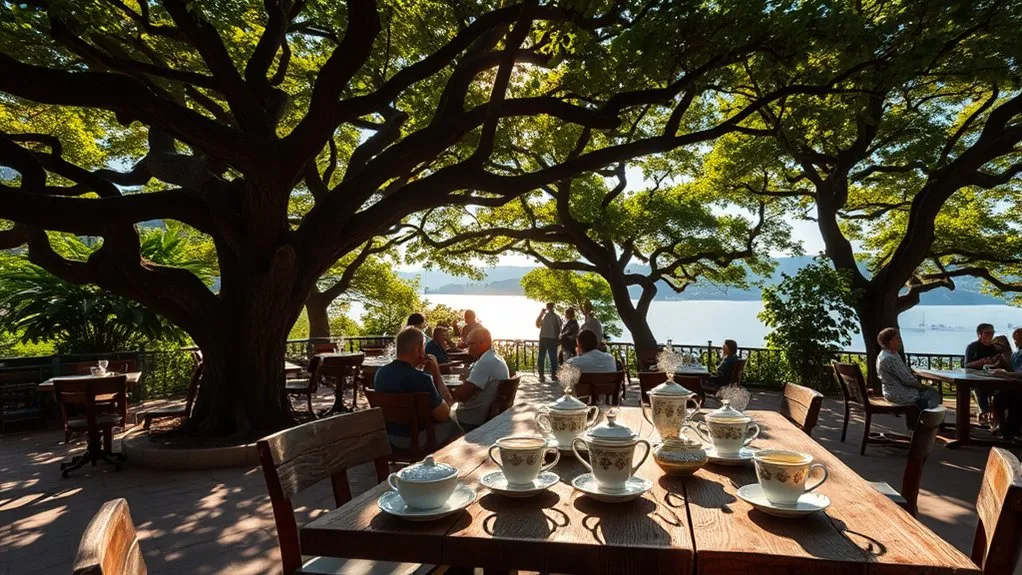
On the Asian side of Istanbul, Çengelköy Tarihi Çınaraltı Aile Çay Bahçesi is one of the strongest choices for a traditional tea-garden experience beside the Bosphorus. The Istanbul Governorate identifies the historic tea garden as one of Çengelköy’s characteristic places, while the venue itself emphasizes its waterside setting and old plane-tree tradition.
The mature trees provide shade, while tables close to the water give you a direct view of Bosphorus traffic. The atmosphere is informal: people come to talk, read, eat breakfast, and spend time with family or friends rather than rush through a short café visit.
The venue’s current official information says it operates 24 hours a day, does not take reservations, and allows guests to bring food purchased elsewhere. Outside beverages, including water, are not permitted, so drinks should be ordered from the tea garden.
Pro Tip: Pick up breakfast items from Çengelköy’s local bakeries and food shops, then order your tea at Çınaraltı. This outside-food tradition is part of what makes the venue different from a conventional café.
Its popularity means waterfront tables can be difficult to get during weekend mornings and pleasant-weather evenings. If the view matters most, go outside peak periods.
Current policies and contact details are available on the official Çengelköy Tarihi Çınaraltı website.
Dolmabahçe Çay Bahçesi Tea Garden
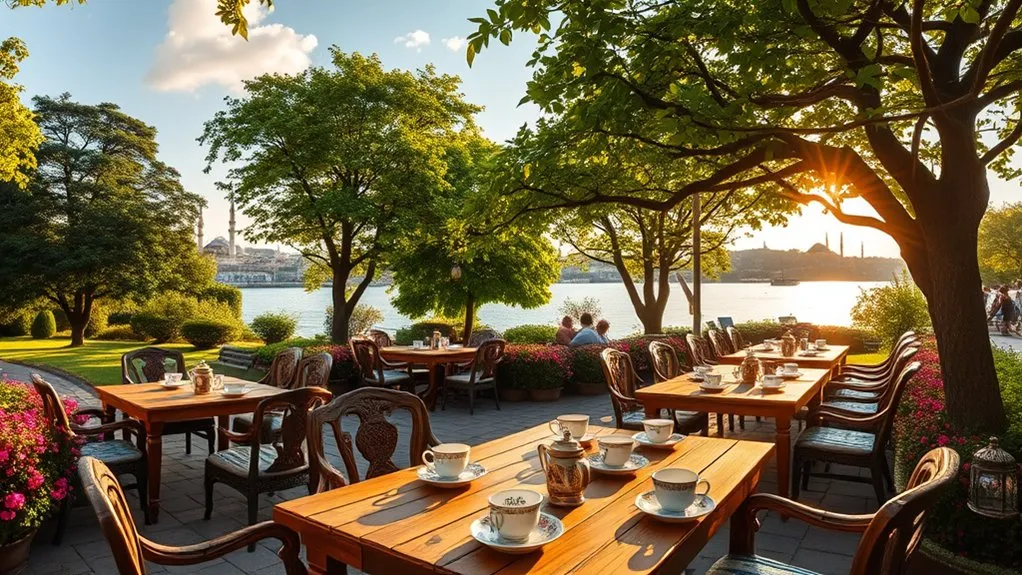
The Dolmabahçe waterfront is a convenient place for a tea break when your day includes Dolmabahçe Palace, Beşiktaş, or the nearby Bosphorus shore. The important geographic point is that Dolmabahçe faces the Bosphorus, not the Sea of Marmara.
Dolmabahçe Palace was built during the reign of Sultan Abdülmecid after the earlier Beşiktaş waterfront palace complex was replaced. Official National Palaces information dates construction to the 19th century and identifies the site with the historic Bosphorus shoreline.
Café operators and names around major attractions can change, so “Dolmabahçe Çay Bahçesi” is best treated as a description of a tea stop in the Dolmabahçe waterfront area rather than as an official part of the palace complex. Confirm the current business name if you are traveling specifically for one café.
| Feature | What to Expect | Why It Matters |
|---|---|---|
| Waterfront | Bosphorus shoreline | Good sightseeing break |
| Nearby landmark | Dolmabahçe Palace | Easy to combine with a palace visit |
| Atmosphere | Busy urban waterfront with historic architecture | More convenient than secluded |
| Best timing | Before or after sightseeing | Reduces unnecessary backtracking |
Note: Do not rely on older articles that describe this part of Istanbul as overlooking the Marmara Sea or promise views of the Prince Islands. Dolmabahçe Palace is on the Bosphorus.
For palace history and current visitor information, use the official National Palaces Dolmabahçe page.
Firuzağa Kahvesi Tea Garden
Firuzağa Kahvesi in Cihangir gives you a completely different tea experience. Instead of a dramatic waterfront, the attraction is neighborhood life: conversation, street activity, regular customers, and the historic setting beside the Firuzağa Mosque complex.
It is a useful choice if you are exploring Cihangir, Çukurcuma, Taksim, or the streets between Beyoğlu and Tophane and want a simple tea stop that feels rooted in the neighborhood.
Diverse Social Atmosphere
Firuzağa Kahvesi has long functioned as a local meeting place. You may see longtime residents, younger visitors, students, writers, artists, tourists, and people simply stopping for tea or coffee.
The appeal comes from sharing a public social space rather than receiving a polished tourist attraction. Seating is close to the surrounding streets, which makes the venue good for watching Cihangir move around you.
A çaycı is a person who prepares or serves tea; it is not another name for Firuzağa Kahvesi. Knowing that distinction makes the terminology in traditional tea and coffeehouse culture easier to understand.
Historic and Cultural Significance
The coffeehouse sits alongside the historic Firuzağa Mosque environment and continues the neighborhood coffeehouse tradition associated with this part of Cihangir. Tea, reading, conversation, and informal social contact are more central to the experience than elaborate food or décor.
| Aspect | Description | Why It Matters |
|---|---|---|
| Location | Beside the Firuzağa Mosque area in Cihangir | Easy stop while walking Beyoğlu |
| Clientele | Neighborhood regulars and visitors | Strong everyday social atmosphere |
| Cultural role | Traditional neighborhood coffeehouse | Tea is part of social interaction rather than a formal ceremony |
Strategic Urban Location
Firuzağa is useful because it fits naturally into a walking day. Taksim and İstiklal Avenue are uphill, while Çukurcuma and Tophane lie downhill. That makes the coffeehouse a practical place to stop between major parts of Beyoğlu.
Come here for urban culture and conversation, not for a panoramic waterfront. That difference is exactly why Firuzağa deserves a place beside Istanbul’s more scenic tea gardens.
Moda Çay Bahçesi Tea Garden
Moda Aile Çay Bahçesi is one of the most relaxed choices on Istanbul’s Asian side. Moda sits on Kadıköy’s coast facing the Sea of Marmara, so it should not be described as a Bosphorus tea garden.
Its combination of parkland, sea air, neighborhood life, and sunset views makes it especially good for a late-afternoon visit after exploring Kadıköy.
Scenic Sunset Views
The Moda coast has open westward and southwest-facing water views, making sunset one of the main reasons to visit. On a clear evening, the changing light over the Sea of Marmara creates a much different atmosphere from the narrower Bosphorus.
The surrounding park and promenade also give you room to walk before or after tea rather than limiting the visit to a single café table.
Weekends and warm evenings can become busy, so arrive before sunset if getting a comfortable seat matters to you.
Accessible by Ferry
Ferries are one of the most enjoyable ways to reach Kadıköy from the European side. Regular city services connect Kadıköy with areas such as Karaköy and Eminönü.
The important detail is that the ferry normally gets you to Kadıköy, not directly to the tea garden. From central Kadıköy, continue toward Moda on foot or by local transport.
This route gives you two experiences in one outing: a ferry journey across Istanbul’s waterways and an easy neighborhood walk through Kadıköy and Moda.
Relaxed Cosmopolitan Ambiance
Moda’s appeal is less formal than many famous waterfront districts. Students, families, longtime residents, visitors, and groups of friends share the surrounding parks and cafés.
Imagine enjoying:
- A sunset over the Sea of Marmara.
- A break after walking through Kadıköy and Moda.
- A simple glass of Turkish tea without turning the stop into a formal meal.
- A neighborhood atmosphere that remains active well into pleasant-weather evenings.
If you want a scenic tea stop on the Asian side but prefer parks and sunsets to close-up Bosphorus traffic, Moda is one of the strongest options.
Emirgan Çınaraltı Cafe Tea Garden
Emirgan Çınaraltı is associated with the historic Emirgan neighborhood and the route toward Emirgan Grove, but it should not be confused with the cafés and pavilions located deeper inside the grove itself.
Historical research places Çınaraltı Kahvesi near the beginning of the slope leading toward the grove, close to the mosque and fountain. That makes it a useful stop if you want to combine a traditional neighborhood tea with a visit to one of Istanbul’s best-known green spaces.
Emirgan Grove rises above the European shore of the Bosphorus and contains walking paths, mature trees, ponds, playgrounds, and the historic Yellow, Pink, and White pavilions. Spring is particularly popular because of the tulip displays.
Instead of relying on an old claim that a particular Emirgan tea garden is open 24 hours, plan around the current venue information you see on the day. Hours and operators can change.
For the wider park experience, the official Visit Istanbul Emirgan Grove guide provides current destination context.
Sarayburnu Çay Bahçesi Tea Garden
At the edge of Istanbul’s Historic Peninsula, Sarayburnu Aile Çay Bahçesi combines a waterfront break with easy access to some of the city’s most important historic areas.
The venue’s own current website states that it has operated at Sarayburnu since 1981 and lists its location on Kennedy Caddesi in Fatih.
Its position makes it useful after time around Gülhane, Topkapı Palace, Sirkeci, or the eastern end of the Historic Peninsula. UNESCO describes this peninsula as being bordered by the Golden Horn to the north, the Bosphorus to the east, and the Sea of Marmara to the south.
Here’s why you might choose Sarayburnu:
- Historic location: It fits naturally into a Historic Peninsula sightseeing day.
- Waterfront atmosphere: You can take a longer break away from crowded monument interiors.
- Food as well as tea: The current venue promotes a broader menu rather than functioning only as a tea stand.
- Convenient stop: It reduces the need to travel to another district solely for tea.
Current venue information is available from the official Sarayburnu Aile Çay Bahçesi website.
Üsküdar Waterfront Tea Garden
The Üsküdar and Salacak waterfront is one of Istanbul’s classic places to combine Turkish tea with views toward the European side. Unlike some entries in this guide, “Üsküdar Waterfront Tea Garden” is best understood as a style of waterfront tea stop rather than one single universally recognized business name.
The biggest visual landmark is Maiden’s Tower, which sits just offshore from Üsküdar. From suitable points along the waterfront, the Historic Peninsula skyline also forms part of the view across the water.
Stunning Panoramic Views
The waterfront gives you an unusual perspective: instead of looking outward from the Historic Peninsula, you look back toward it from Asia.
Depending on exactly where you sit, your view may include:
- Maiden’s Tower close to the Üsküdar shore.
- Historic Peninsula skyline across the Bosphorus.
- Ferries and boats moving between both sides of Istanbul.
- Sunset light behind the European side during suitable seasons and weather.
Simple Drinks and Snacks
A simple glass of Turkish tea works particularly well here because the view is the main attraction. Some waterfront cafés serve snacks and meals, while simpler stops focus on hot and cold drinks.
Prices can differ significantly between municipal facilities, informal tea spots, and full-service waterfront restaurants. Check the menu before ordering instead of assuming every waterside table has traditional tea-garden pricing.
Outdoor seating is also exposed to wind. Even on a sunny day, the waterfront can feel noticeably cooler than inland streets.
Historic Landmarks Nearby
Üsküdar is more than a viewing platform. You can combine tea with mosques, local markets, waterfront walks, and onward travel to neighborhoods such as Kuzguncuk or Beylerbeyi.
The Maiden’s Tower is the most immediate landmark, while the monuments of the Historic Peninsula form the distant skyline. This mixture of local Asian-side life and European-side views is what makes the waterfront distinctive.
Yıldız Park Kır Kahvesi Tea Garden
Yıldız Park Kır Kahvesi Sosyal Tesisi is a modern municipal café inside Yıldız Park in Beşiktaş. It should not be confused with the park’s historic Ottoman pavilions.
Istanbul Metropolitan Municipality states that the current facility opened in 2024 near the upper part of Yıldız Park. It provides cafeteria service with drinks, breakfast choices, sweets, and snacks rather than operating as a full restaurant.
The main reason to visit is the park environment. Yıldız Park contains mature trees, walking paths, ponds, resting areas, and historic structures connected with the wider Yıldız Palace landscape.
| Feature | Description | Experience Type |
|---|---|---|
| Location | Upper area of Yıldız Park | Green escape |
| Current facility | İBB Kır Kahvesi Sosyal Tesisi, opened in 2024 | Municipal café |
| Ambiance | Trees, walking routes, park scenery | Relaxation |
| Food service | Cafeteria, not full restaurant service | Tea, breakfast and snacks |
| Current weekly closure | Monday | Plan another day |
For current facility details, see the official İBB Kır Kahvesi page.
Pierre Loti Tea Garden
Pierre Loti is the choice for travelers who care more about a high panoramic viewpoint than sitting directly beside the water.
The hill rises above Eyüpsultan and overlooks the Golden Horn. The area became associated with French writer and naval officer Pierre Loti, who visited Istanbul repeatedly in the late 19th and early 20th centuries.
Pierre Loti’s defining feature is not the tea itself but the elevated view over Eyüpsultan and the Golden Horn.
Here, you can:
- Drink Turkish tea while looking across the Golden Horn.
- Combine the stop with Eyüp Sultan Mosque and the surrounding historic district.
- Reach the viewpoint by walking uphill or using the cable car.
- Visit near sunset for softer light over the Golden Horn, while allowing extra time for crowds.
The local district authorities specifically identify Pierre Loti Hill and its viewing terrace as one of Eyüpsultan’s important visitor sites and confirm cable-car access.
See the official Pierre Loti viewing-terrace information for destination context.
Turkish Tea Garden Etiquette and Practical Tips
Turkish tea is not limited to one formal tea time. It appears at breakfast, during work breaks, when welcoming guests, after meals, and during long conversations. UNESCO describes the tea culture of Türkiye and Azerbaijan as a social practice connected with hospitality, identity, and maintaining social ties.
How Turkish Tea Is Served
Traditional Turkish black tea is commonly prepared using a two-level çaydanlık. Concentrated brewed tea from the upper pot is mixed with hot water from the lower pot according to the drinker’s preferred strength.
You can ask for:
- Açık çay: lighter, more diluted tea.
- Demli or koyu çay: stronger tea with more concentrated brew.
- Şekersiz: without sugar.
Tea is commonly served in a small, curved glass so you can see its color and hold it near the rim while it is hot.
Tea Prices in Istanbul
There is no useful citywide fixed price for a glass of tea. Prices change with inflation, location, venue type, service level, and whether you are sitting at a municipal café, neighborhood tea garden, hotel, or premium waterfront restaurant.
Warning: Be cautious with travel articles that convert an old tea price into US dollars and present it as current. In Türkiye, restaurant and café prices can change quickly, so a current menu is more reliable than an undated price claim.
Best Time to Visit
Morning is good for quieter waterfront seating and breakfast. Late afternoon works well for Moda and Pierre Loti if you want sunset light. Warm weekend evenings are often the busiest periods at waterfront and park tea gardens.
Weather matters too. Bosphorus and Marmara shorelines can be windy, while exposed viewpoints such as Pierre Loti may feel cooler than central streets.
Tea Etiquette
Offering tea is a common gesture of hospitality, and accepting a glass can be a friendly way to join the interaction. However, you do not have to drink tea every time it is offered. A polite refusal is normally sufficient.
If someone keeps offering another glass, a smile and a courteous “teşekkür ederim” (“thank you”) is appropriate when you have had enough.
Payment, Smoking, and Accessibility
Card acceptance is common in Istanbul, but smaller or traditional venues can operate differently, so keeping some Turkish lira available is sensible.
Outdoor tea gardens may have smoking areas or nearby smokers. If smoke bothers you, choose your table carefully before ordering.
Accessibility varies significantly. Waterfront promenades can be relatively straightforward, while Yıldız Park, Pierre Loti, and parts of Cihangir involve hills. Travelers with limited mobility should favor venues near ferry, road, or level-promenade access.
Frequently Asked Questions
What Is the Most Famous Tea in Turkey?
The everyday tea known simply as çay is usually black tea. It is commonly brewed in a two-level çaydanlık and served hot in small curved or tulip-shaped glasses. Tea from Türkiye’s Black Sea region, particularly Rize, is strongly associated with the country’s tea tradition.
How Much Is a Cup of Tea in Istanbul?
There is no reliable single price. A glass of tea at a neighborhood or municipal tea garden can cost much less than tea at a premium waterfront restaurant or hotel. Prices also change quickly, so check the current menu rather than relying on an old dollar conversion.
Is It Rude to Refuse Tea in Turkey?
No. Tea is an important symbol of hospitality, so accepting can be a warm social gesture, but a polite refusal is normally fine. Thank the person offering it rather than treating the offer dismissively.
What Time Do Turkish People Drink Tea?
Tea is consumed throughout the day rather than at one fixed hour. It commonly appears at breakfast, during work or social breaks, when guests visit, after meals, and during long conversations with friends and family.
How Do I Order Strong or Light Turkish Tea?
Ask for açık çay if you prefer lighter tea with more hot water. Ask for demli or koyu tea if you prefer a stronger glass with a larger proportion of concentrated brewed tea.
Which Istanbul Tea Garden Has the Best View?
It depends on the scenery you want. Choose Çengelköy or Bebek for the Bosphorus, Moda for a Sea of Marmara sunset, Üsküdar for Maiden’s Tower and Historic Peninsula views, or Pierre Loti for a high panorama over the Golden Horn.
Sources
- UNESCO — Culture of Çay — Turkish tea culture, hospitality, social interaction, and 2022 inscription.
- Şehir Hatları — official Istanbul ferry information for reaching districts such as Kadıköy and Üsküdar.
- Çengelköy Tarihi Çınaraltı — current operating policies, location, food rules, and venue information.
- İBB Kır Kahvesi Sosyal Tesisi — current Yıldız Park facility, service type, location, and weekly closure.
- Eyüpsultan Municipality — Pierre Loti Viewing Terrace — Golden Horn viewpoint and local destination context.
- National Palaces — Dolmabahçe Palace — official palace history and Bosphorus location.
Conclusion
Istanbul does not have one single “best” tea garden because each setting offers something different. Çengelköy gives you one of the classic Bosphorus tea-garden experiences, Bebek combines tea with an active European-side waterfront, Moda is better for Sea of Marmara sunsets, and Pierre Loti is the choice for Golden Horn panoramas.
For a less scenic but more neighborhood-focused experience, Firuzağa shows how naturally tea fits into everyday Istanbul life. Yıldız and Emirgan add greenery, while Sarayburnu and Üsküdar work especially well when tea is part of a larger sightseeing day.
Whichever place you choose, the important part is not finding the most elaborate glass of tea. Turkish çay is closely tied to conversation, hospitality, and taking time to sit. Pick the view or neighborhood that suits your day, order your tea at the strength you like, and give yourself enough time to enjoy the setting rather than treating it as another attraction to rush through.

