
Last Updated on July 25, 2026 by Daniel Globe
Turkish tea is woven into everyday life in Istanbul, from neighborhood tea gardens to waterfront cafés. The best place to drink it depends on the experience you want: a Bosphorus view, the energy of the Golden Horn, a hilltop panorama, a busy food market, or a quiet island break. These five stops offer a useful mix of classic settings and local atmosphere.
Quick Answer
For a memorable Turkish tea experience in Istanbul, try Tarihi Çınaraltı in Çengelköy for Bosphorus tradition, Galata Bridge for Golden Horn energy, Çamlıca for panoramic views, Kadıköy and Moda for neighborhood life, or the Princes’ Islands for a slower seaside break. Standard Turkish çay is hot black tea, usually served in a small tulip-shaped glass.
Key Takeaways
- Tarihi Çınaraltı in Çengelköy is the strongest choice for a traditional tea-garden atmosphere beside the Bosphorus.
- Galata Bridge is better for city energy, fishermen, and Golden Horn views than for a quiet tea-house experience.
- Çamlıca suits travelers who want tea with a broad city panorama, while Kadıköy and Moda work well for a market-and-café afternoon.
- Büyükada and the other Princes’ Islands turn tea into part of a longer ferry day trip.
- Turkish çay normally means black tea; sugar is common, while strength can be adjusted by mixing more or less brewed tea with hot water.
Disclosure: As an Amazon Associate I earn from qualifying purchases. Some links on this page are affiliate links, at no extra cost to you.
What Makes Turkish Tea Special?
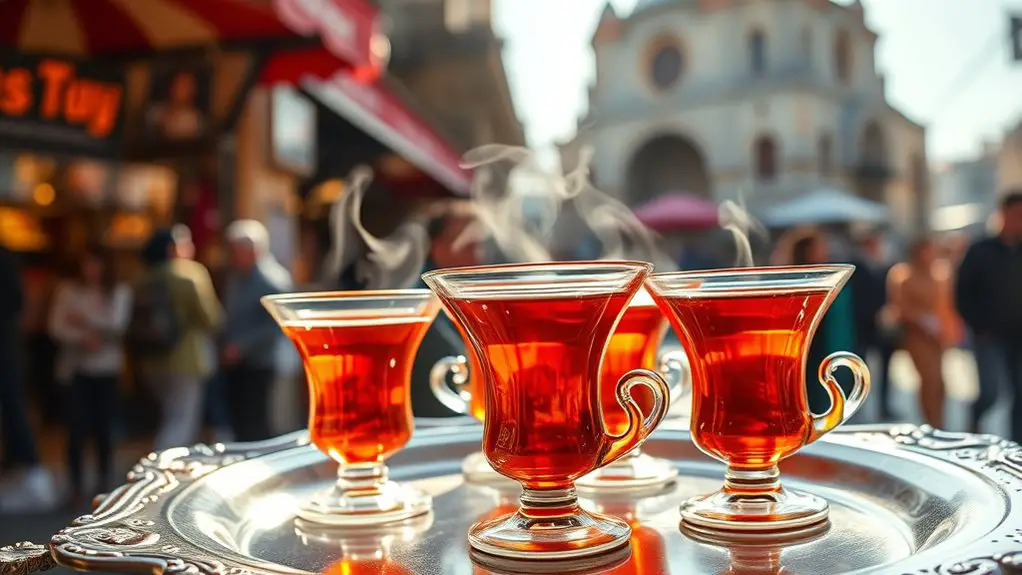
In Istanbul, ordering simply çay usually means hot black tea. It is traditionally served in a small, narrow-waisted glass that shows off the deep reddish-amber color of the drink.
The drink’s importance goes well beyond flavor. In 2022, UNESCO inscribed the shared culture of çay in Türkiye and Azerbaijan on the Representative List of the Intangible Cultural Heritage of Humanity, recognizing tea as a social practice connected with hospitality and maintaining relationships.
Turkish tea is not simply something to drink between sightseeing stops; sharing çay is part of the country’s everyday social life.
That does not mean today’s Turkish tea tradition has existed unchanged for centuries. Türkiye’s modern tea-growing industry developed mainly during the 20th century. Official Rize history traces a major turning point to legislation supporting tea cultivation in 1924, followed by expanded production and the first large tea factory in 1947.
Most traditional preparation uses a çaydanlık, a stacked double teapot. Concentrated tea brews in the smaller upper pot while hot water is kept in the larger pot below. Each glass can then be made lighter or stronger by changing the ratio of concentrate to hot water. GoTürkiye provides a detailed traditional Turkish tea brewing guide.
Best Turkish Tea Spots in Istanbul at a Glance
| Place | Best For | What to Expect |
| Tarihi Çınaraltı, Çengelköy | Traditional Bosphorus tea garden | Tea, neighborhood atmosphere, waterfront scenery and an easy pairing with simit |
| Galata Bridge | Golden Horn views and city energy | Fishermen, ferries and cafés or restaurants on and around the bridge |
| Çamlıca | Panoramic views | Green space, elevated city views and municipal dining options that serve tea |
| Kadıköy Market and Moda | Local food and neighborhood life | Browse the market first, then stop for tea in Kadıköy or by the Moda waterfront |
| Princes’ Islands | A relaxed day trip | A ferry ride followed by tea at a waterfront or neighborhood café |
Tarihi Çınaraltı Çay Bahçesi: A Taste of Tradition
For the clearest version of the classic Istanbul tea-garden experience, head to Çengelköy on the Asian side. Tarihi Çınaraltı Çay Bahçesi is a well-known neighborhood tea garden close to the Bosphorus, where the setting matters as much as the drink.
Rather than chasing an elaborate tea menu, come here for the simple ritual: a freshly brewed glass of black çay, conversation, and views across the water. Türkiye’s official tourism site specifically highlights Çengelköy’s historic tea-garden tradition and recommends enjoying Turkish tea with simit while looking over the Bosphorus.
The neighborhood itself is worth exploring before or after your tea. Çengelköy has a waterfront square, cafés, restaurants and older residential streets that make it easy to turn a tea stop into a relaxed walk.
Pro Tip: Pair your tea with simit, Istanbul’s sesame-crusted bread ring. For easier seating, a weekday or earlier visit is usually more comfortable than a busy weekend evening.
The Galata Bridge: Tea With a View
Galata Bridge gives you a very different tea experience. The bridge spans the Golden Horn between Eminönü and Karaköy, placing you in one of Istanbul’s busiest waterfront corridors.
The biggest attraction here is the scene. Fishermen line the bridge, ferries move through the water, and the skyline of the historic peninsula rises across the Golden Horn. GoTürkiye even notes the long-standing sight of anglers bringing samovars to make tea while fishing on and around the bridge.
- Wide views over the Golden Horn
- A constant flow of ferries, pedestrians and fishermen
- Easy access to cafés and restaurants on the lower level and nearby in Eminönü or Karaköy
- A lively choice around late afternoon and sunset
Think of Galata Bridge as a great setting for tea, not as one single famous tea house. Choose a café or restaurant whose view and menu appeal to you, then let the surrounding city provide the atmosphere.
Note: Individual businesses on and around Galata Bridge can change hours, menus and prices. The view is the dependable attraction; the exact tea venue is best chosen when you arrive.
Çamlıca Hill: Serenity and Sips
Çamlıca is a good choice when you want to step away from central Istanbul’s dense streets and drink tea with a broader view of the city.
The hill area on the Asian side is known for green space and panoramic views stretching toward the Bosphorus and across Istanbul. Rather than relying on an unnamed café, one current, verifiable option is Küçük Çamlıca Sosyal Tesisi. The official İBB 2026 menu lists tea among its drinks.
Çamlıca works especially well when scenery matters more to you than finding a specialist tea shop. Order a simple glass of çay, find a comfortable seat, and give yourself time to enjoy the elevated setting rather than treating it as a quick refreshment stop.
Kadıköy Market: A Local Gem
Kadıköy Market is best approached as a food-and-neighborhood experience rather than as a dedicated tea market. Official tourism information describes the area as a major local gastronomy center filled with fresh produce and specialist food traders.
Walk the market streets, browse bakeries, delicatessens, fishmongers and produce stands, then settle down for Turkish tea at one of the surrounding cafés. This gives you more of Kadıköy’s everyday rhythm than simply searching for a supposed “special tea blend.”
Explore Kadıköy for its food culture and neighborhood energy, then let a simple glass of çay become your pause between market streets and the waterfront.
- Browse fresh-food and specialty shops around the market
- Pair tea with a pastry or simit
- Continue toward Moda for cafés and waterfront scenery
- Make the tea stop part of a longer walk rather than the only reason to visit
GoTürkiye also highlights Moda Pier as a place where visitors can sit with tea or coffee while enjoying the water view, making Kadıköy and Moda an easy combination in the same outing.
Princes’ Islands: Escape With a Cup
The Princes’ Islands are the best option on this list when you want your tea stop to be part of a half-day or full-day excursion rather than a quick city break.
Büyükada, Heybeliada, Burgazada and Kınalıada are served by public ferry routes, and a ride across the Sea of Marmara changes the pace before you even sit down. Once ashore, choose a café near the waterfront or farther into the neighborhood and order a traditional glass of black tea.
The reason to come is not an unprovable claim that island cafés brew “the best” tea in Istanbul. It is the combination of tea, sea air, historic streets and a slower setting.
Note: Ferry departure patterns can vary by day and season. Check the official Şehir Hatları Princes’ Islands timetable on the day of your trip instead of relying on an old schedule.
How to Order Turkish Tea Like a Local
You do not need much Turkish to order tea. A simple “Bir çay, lütfen” means “One tea, please.”
Traditional tea is poured by combining concentrated brewed tea with hot water. That makes it easy to adjust the strength. In Turkish tea terminology, açık describes a lighter glass, while demli refers to a stronger, more concentrated one.
Sugar cubes are commonly served alongside the glass, but adding them is optional. Try the tea plain first, then sweeten it to your taste. Lemon may be available in some places, but milk is not part of the standard Turkish black-tea service.
For a classic Istanbul pairing, order tea with simit. The sesame-covered bread is widely associated with tea as a simple snack and works especially well at waterfront stops.
Frequently Asked Questions
What type of tea is commonly served in Istanbul?
Standard Turkish çay is usually black tea. Tea cultivation is strongly associated with Türkiye’s eastern Black Sea region, especially Rize. Rize Çayı is a registered geographical indication. ÇAYKUR, by contrast, is a tea producer rather than a variety of tea.
Is Turkish tea served with sugar or lemon?
Sugar is commonly offered beside Turkish black tea, although many people drink it plain. Lemon may also be available, but it is less fundamental to everyday Turkish tea service. You can simply taste the tea first and add sugar if you prefer it sweeter.
How is Turkish tea traditionally brewed?
A traditional çaydanlık has two stacked pots. Concentrated tea brews in the smaller upper pot, while the larger lower pot holds hot water. When serving, some concentrate is poured into the glass and diluted with hot water to make the tea as light or strong as the drinker prefers.
What are the health benefits of drinking Turkish tea?
Turkish black tea contains polyphenols, and research has found associations between tea consumption and some cardiovascular outcomes. That does not mean tea prevents or treats disease, and benefits vary with the person and overall diet. Black tea also contains caffeine, so people who are sensitive to caffeine may prefer fewer glasses or avoid it late in the day. The FDA notes that caffeine sensitivity varies considerably.
Can I find herbal tea options in Istanbul?
Yes. Many cafés offer herbal infusions, often listed as bitki çayı, although the exact choices vary. Keep in mind that when someone in Istanbul simply says çay, they usually mean traditional black tea rather than an herbal infusion.
How do I order one Turkish tea?
Say “Bir çay, lütfen”, which means “One tea, please.” For a lighter tea, ask for açık çay. If you prefer a stronger brew, ask for demli çay.
Where should I drink Turkish tea for the best view in Istanbul?
For Bosphorus scenery, Çengelköy’s Tarihi Çınaraltı is a classic choice. Galata Bridge is excellent for Golden Horn views and city activity, while Çamlıca offers a much higher panorama. For a slower seaside experience, take a ferry to one of the Princes’ Islands and choose a waterfront café.
Conclusion
Istanbul’s tea culture is less about finding one objectively “best” glass and more about choosing the setting that fits your day. Tarihi Çınaraltı gives you the classic Bosphorus tea-garden experience, Galata Bridge adds city energy, Çamlıca delivers a panoramic pause, Kadıköy mixes tea with local food culture, and the Princes’ Islands turn a glass of çay into part of a ferry escape.
Whichever stop you choose, keep the order simple: black tea in a traditional glass, sugar only if you like it, and enough time to sit rather than rush. That unhurried social pause is one of the most authentic parts of drinking çay in Istanbul.
Sources
- UNESCO — Culture of Çay — tea’s role in hospitality and social life and its 2022 intangible-cultural-heritage inscription.
- Türkiye Ministry of Culture and Tourism — Tea Culture — black tea, tea-growing regions, traditional glasses and brewing culture.
- GoTürkiye — Tips on How to Make Turkish Tea — çaydanlık preparation, serving and sugar customs.
- GoTürkiye — Istanbul’s Anatolian Side — Çengelköy tea-garden culture, Moda tea stops and the Princes’ Islands.
- Şehir Hatları — Princes’ Islands Ferry Timetable — current public ferry routes and schedules.
- U.S. Food and Drug Administration — Caffeine Guidance — caffeine variability and general safety considerations.

