
Last Updated on September 10, 2026 by Daniel Globe
A hiking date calls for a different outfit than dinner or drinks: you want to look put together, but your clothes still need to handle the trail, weather, sweat, and changing temperatures. The best approach is to start with comfortable hiking basics, match your footwear to the terrain, dress in adaptable layers, and add a few personal touches that still serve a practical purpose.
Quick Answer
For a hiking date, wear comfortable trail shoes or hiking boots, moisture-managing clothes that allow easy movement, and layers suited to the forecast. Add sun or rain protection as needed. Aim for an outfit that feels like you, but never trade traction, weather protection, or comfort for style.
Key Takeaways
- Choose footwear for the actual trail: casual athletic shoes can work on easy developed paths, while rough, rocky, muddy, or steep terrain calls for more traction and support.
- Wear moisture-managing clothing and bring layers so you can adapt to heat, wind, rain, or falling temperatures.
- Pack sun protection, water, snacks, basic first aid, navigation, and other essentials appropriate to the length and remoteness of the hike.
- Use long pants, insect repellent, or treated clothing when ticks, mosquitoes, brush, or thorny vegetation are concerns.
- Let practical trail clothing do most of the work, then add color, a favorite hat, bandana, or other small details to make the outfit feel date-ready.
- For a first date or unfamiliar trail, choose a well-used route, check conditions, and tell someone where you are going and when you expect to return.
Disclosure: As an Amazon Associate I earn from qualifying purchases. Some links on this page are affiliate links, at no extra cost to you.
Choosing Footwear for a Hiking Date
Selecting the appropriate footwear is one of the most important clothing decisions you will make for a hiking date. The right shoes or boots can improve comfort, traction, and confidence, but there is no single style that is best for every trail.
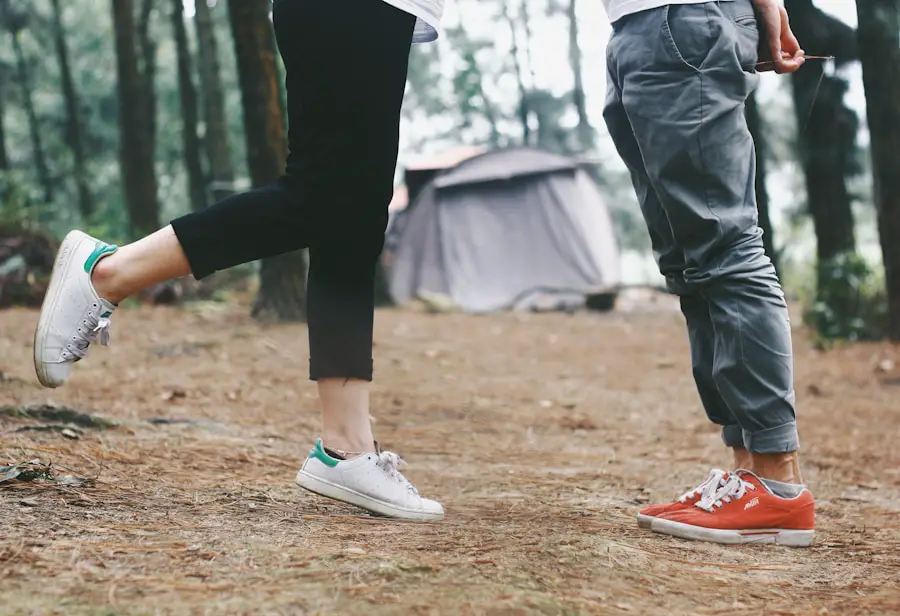
Start with the terrain. For an easy paved or highly developed path, comfortable athletic shoes may be enough. For dirt, gravel, rocky surfaces, or steeper climbs, choose footwear with a grippy rubber outsole and enough structure for the conditions. The National Park Service’s Hike Smart guidance recommends sturdy, rubber-soled hiking footwear for dirt and gravel trails and cautions against heels, flip-flops, and open-toed shoes for typical hiking.
If your hike involves rocky paths, loose gravel, or steep inclines, a sturdy pair of hiking boots may be a good choice, especially if you prefer more ankle coverage and underfoot protection. Brands such as Merrell and Salomon offer both trail shoes and hiking boots for different conditions, but brand name alone does not determine whether a shoe is right for you. Fit, tread, trail conditions, and your own comfort matter more.
Fit is especially important on a date because painful feet can turn an otherwise enjoyable hike into a long walk back to the trailhead. Try hiking footwear with the socks you plan to wear. Your toes should have room to move without hitting the front of the shoe on descents, while your heel should feel secure rather than sliding with every step.
Moisture-wicking wool or synthetic socks are a better trail choice than socks that stay wet against your skin. On a longer or wetter outing, packing one spare pair can also be useful.
Pro Tip: A hiking date is a bad time to discover that new footwear rubs your heel. Wear shoes you have already walked in long enough to know they fit comfortably.
Dressing for the Weather
Weather can change quickly outdoors, so check the forecast and trail conditions before you leave. The National Park Service recommends preparing for changing conditions with extra layers and rain protection rather than relying only on the weather at the trailhead.
Layering gives you more control over comfort. A base layer made from a synthetic fabric or merino wool can move perspiration away from your skin. A light fleece, insulated vest, or similar middle layer can add warmth when temperatures drop. For wind or rain, carry an outer shell suited to the forecast.
A waterproof and breathable jacket can be useful in sustained rain or exposed conditions. Gore-Tex is one well-known waterproof/breathable membrane, but comparable rain shells can serve the same purpose. The important part is choosing protection that matches the expected conditions rather than focusing on a particular brand.
Simple Hiking Date Outfits by Weather
| Conditions | Practical Outfit |
| Warm and dry | Breathable technical T-shirt or tank, hiking shorts or lightweight pants, trail shoes, hat, sunglasses, and sun protection. |
| Mild or changeable | Moisture-managing shirt, hiking pants or leggings, light fleece or overshirt, and a wind or rain shell in your pack. |
| Cool | Long base layer, fleece or insulating middle layer, hiking pants, warm socks, and a weather-resistant outer layer. |
| Rainy | Quick-drying layers, rain jacket, appropriate trail footwear, and optional rain pants for exposed or brushy routes. |
Warning: Do not treat a rain jacket as protection from a thunderstorm. The National Weather Service says there is no safe place outdoors when thunderstorms are in the area. If you hear thunder, move to a substantial building or a hard-topped vehicle rather than continuing the hike.
Selecting Comfortable and Functional Clothing
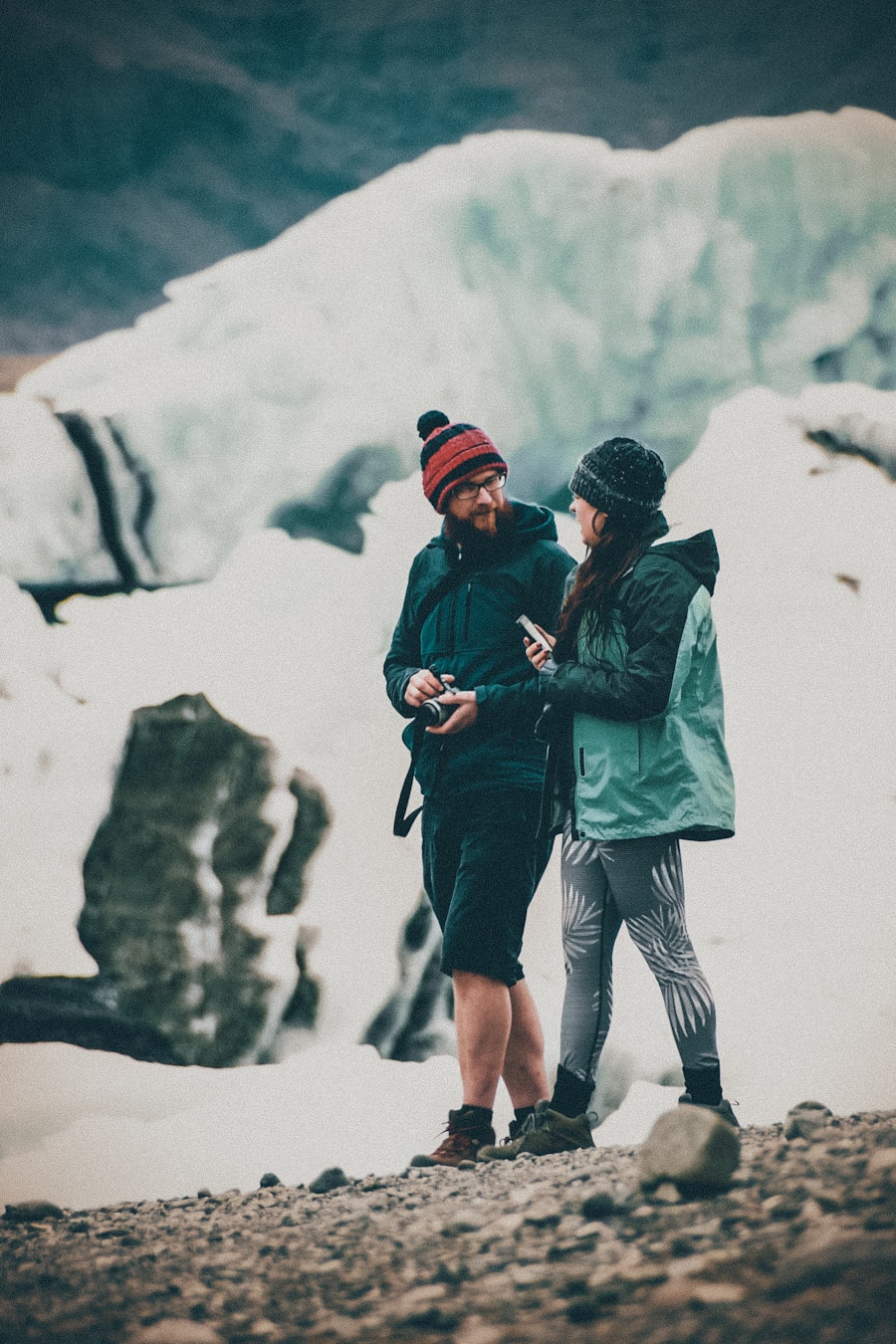
Comfort and function should come before fashion on the trail, but that does not mean your hiking-date outfit has to look boring. Synthetic and merino-wool garments are popular because they can manage moisture and generally dry faster than ordinary cotton clothing.
Your clothes should also let you walk, climb steps, bend, and sit without pulling or rubbing. Very tight clothing can chafe or restrict movement, while excessively baggy garments can catch on brush or rocks. A comfortable middle ground usually works best.
Features such as stretch panels, articulated knees, secure pockets, and adjustable waistbands can make hiking clothes easier to live with during a long walk. Pockets are particularly useful on a date because they give you quick access to small items such as a phone, lip balm, trail map, or snack without repeatedly opening your backpack.
Note: Cotton is most problematic when it becomes wet in cool conditions because it dries slowly and loses much of its insulating value. A soft cotton shirt can still be perfectly comfortable after the hike when staying warm while wet is no longer a concern.
Packing the Right Accessories
Accessories can improve comfort and safety, but a hiking date is not a reason to overpack. The original packing example below included five pairs of socks, two belts, and three scarves. Those figures are better treated as an example of how quickly unnecessary extras can accumulate rather than as a recommended day-hike checklist.
| Accessory Type | Original Number Packed | Original Weight | More Practical Day-Hike Approach |
| Socks | 5 pairs | 0.5 lbs | Wear one appropriate pair; consider one spare pair for a longer or wet hike. |
| Belts | 2 | 0.3 lbs | Wear one only if your pants need it; an extra belt usually adds no trail value. |
| Scarves | 3 | 0.7 lbs | One light scarf, bandana, or neck gaiter is usually enough when conditions justify it. |
| Hats | 1 | 0.4 lbs | One hat matched to the weather is practical: sun hat for UV exposure or a warm hat in cold conditions. |
A well-chosen hat can protect you from sun exposure or add warmth in cool weather. The CDC’s current sun-safety guidance recommends combining shade, protective clothing, a brimmed hat, sunglasses that block UVA and UVB rays, and broad-spectrum sunscreen with SPF 15 or higher when protection is needed. Sunscreen should be reapplied according to its directions, including after sweating heavily.
A comfortable daypack is also useful. Look for enough capacity to carry water, food, a layer, rain protection, first-aid supplies, and the other items appropriate to your route. On longer hikes, padded shoulder straps and a supportive hip belt can make carrying the load more comfortable.
The National Park Service Ten Essentials include navigation, sun protection, extra clothing, illumination, first-aid supplies, fire, repair tools, extra food, hydration, and emergency shelter. The exact contents should be adjusted for your trail, weather, distance, and remoteness.
A hydration reservoir or reusable water bottle makes drinking convenient, while snacks help maintain energy during a longer outing. A small first-aid kit with blister care, bandages, and supplies appropriate to your needs can also help with common minor problems.
The best hiking-date accessory is not the one that looks most outdoorsy; it is the one that solves a real problem without making your pack unnecessarily heavy.
Considering the Terrain
The trail itself should influence what you wear. A flat, maintained path has different footwear and clothing demands than a rocky mountain trail, muddy forest route, or hike with repeated stream crossings.
For steep ascents and descents, trekking poles can provide extra points of contact with the ground and may improve stability. Research summarized in a review of trekking-pole biomechanics found that poles can reduce some lower-extremity loading and improve stability in certain conditions, although the benefit varies with terrain, load, and technique.
Wet terrain requires a more careful footwear decision. Waterproof boots or shoes can be useful for mud, shallow puddles, wet vegetation, snow, or cold conditions where keeping external moisture out is valuable. By contrast, if you expect repeated warm-weather stream crossings or water deep enough to enter over the top of the shoe, quick-draining non-waterproof footwear may dry more effectively afterward. Waterproof footwear and fast-draining footwear are two different strategies.
Vegetation matters too. Long pants can protect your legs from brush, thorns, and some insect exposure. In tick habitat, the CDC recommends steps to reduce tick bites, including protective clothing, EPA-registered repellents, treated clothing or gear where appropriate, and checking yourself for ticks after being outdoors.
Dressing for Safety
Safety goes beyond wearing sturdy shoes. Bright or easily visible clothing can be useful in wooded areas, low light, or situations where rescuers may need to locate someone. The National Park Service specifically lists bright clothing as one way to make yourself easier to see during a search-and-rescue situation.
Layers also help you regulate temperature. If you begin to overheat while climbing, remove an unnecessary layer before you become excessively sweaty. If the temperature falls or wind increases, put a layer back on before you become chilled.
A whistle is a lightweight signaling tool, and a personal locator beacon or satellite communicator can add another communication option in remote places without dependable cell service. These devices do not replace planning, navigation skills, or appropriate equipment.
Before a Hiking Date, Check These Basics
- Choose a trail that both people are comfortable completing.
- Check the latest forecast, trail alerts, daylight, and expected conditions.
- Carry the essentials appropriate to the route rather than assuming a short hike cannot go wrong.
- Tell a trusted person where you are going and when you expect to return.
- Do not rely entirely on cellphone reception in remote terrain.
- For a first date with someone you do not know well, a busy, well-marked public trail is a more sensible choice than an isolated backcountry route.
Hot weather also deserves attention. Physical activity in heat increases the risk of dehydration and heat-related illness. Pace the hike for the conditions, carry enough water for the outing, take breaks when needed, and pay attention to how both of you are feeling.
Incorporating Personal Style
Function and safety come first, but personal style does not have to disappear on a hiking date. Modern hiking clothing comes in many cuts, colors, and patterns, so it is possible to look intentional without wearing something that restricts movement or performs poorly on the trail.
Color is one of the easiest ways to make practical clothing feel more date-ready. A neutral pair of hiking pants or leggings can be paired with a favorite technical top, colorful fleece, bright hat, bandana, or coordinated socks. Vibrant colors can also make you easier to see outdoors.
Small accessories are generally more practical than delicate jewelry that can snag or become uncomfortable. A bandana, distinctive hat, or a few patches or pins on a backpack can add personality while still fitting the setting.
The goal is not to look as though you bought an entire technical wardrobe for one date. Wear clothing that feels natural to you and appropriate for the trail. Feeling comfortable in your outfit can make it easier to focus on the hike and the person you are with.
What Not to Wear on a Hiking Date
Avoid clothing or footwear that makes the trail harder or less safe just because it looks more appropriate for a conventional date.
- Uncomfortable new shoes: even technically excellent hiking footwear can cause hot spots or blisters if the fit is wrong.
- Heels, flip-flops, or loose open-toed footwear: these are poor choices for most dirt, gravel, rocky, or uneven hiking trails.
- Clothing that restricts your stride: you should be able to climb steps, bend, and walk uphill comfortably.
- Heavy cotton layers in cool or wet conditions: cotton holds moisture and dries slowly, which can leave you cold after sweating or getting wet.
- Too many accessories: unnecessary belts, scarves, heavy jewelry, or bulky items add clutter without improving the hike.
- Clothing unsuited to vegetation: shorts may be comfortable in heat but are not always ideal on overgrown, thorny, or tick-heavy trails.
Dressing for After the Hike
After the hike, changing into dry, comfortable clothing can make the rest of the date more enjoyable. If you are driving to dinner, sitting around a campsite, or exploring a nearby town afterward, keep a clean shirt and other simple clothes in the car or your pack when practical.
Soft cotton T-shirts or breathable casual athletic wear are perfectly reasonable post-hike choices because you are no longer relying on them to manage moisture during sustained outdoor exertion.
Footwear can make an even bigger difference. Swapping hiking boots for comfortable sandals, slides, or slip-on shoes gives your feet a break after several hours on the trail. A light jacket or hoodie can also feel good when temperatures fall after sunset.
Taking care of comfort after the hike matters just as much on a date as preparing for the trail itself. Dry clothes, comfortable shoes, water, and something to eat can make the transition from hiking to the next part of the day much more pleasant.
If you’re planning a hiking date, it’s important to dress appropriately for the occasion. You’ll want comfortable and breathable clothing that allows for easy movement. For a longer outing that requires more equipment, this guide to the best hiking backpack for multi-day trek can help you think through carrying capacity and trail essentials. Having the right gear can make your hiking date more enjoyable and less stressful.
Love travel? Join Our Facebook Community For More Tips.
Frequently Asked Questions
What should I wear on a hiking date?
Wear comfortable trail-appropriate footwear, a moisture-managing shirt, hiking pants, shorts, or leggings that allow easy movement, and layers suited to the forecast. Add a hat, sunglasses, rain layer, or warm layer when conditions call for them.
What type of footwear is best for a hiking date?
Match the shoe to the trail. Comfortable athletic shoes may work on easy paved paths. Trail shoes or hiking boots with good tread are better suited to dirt, gravel, rocks, mud, or steeper terrain. Fit and traction matter more than choosing a particular brand.
Are sneakers okay for a hiking date?
They can be fine for a short, easy, well-maintained or paved route if they fit well and provide enough traction. For rocky, steep, loose, muddy, or technical trails, footwear designed for hiking or trail running is usually the better choice.
Should I bring any specific accessories for a hiking date?
Bring a daypack with water, snacks, weather-appropriate layers, sun protection, basic first-aid supplies, navigation, and the other essentials required by the route. A hat, sunglasses, rain jacket, whistle, or insect repellent may also be useful depending on conditions.
What should I avoid wearing on a hiking date?
Avoid uncomfortable new shoes, heels, flip-flops, restrictive clothes, and anything poorly suited to the trail. In cool or wet conditions, avoid relying on heavy cotton layers because they dry slowly after becoming wet.
How can I stay comfortable and stylish on a hiking date?
Build the outfit around functional hiking basics, then personalize it with colors, a flattering cut, coordinated layers, a favorite hat, bandana, or other simple accessories. Style should come from details rather than sacrificing footwear, weather protection, or freedom of movement.
What should I wear on a hiking date if rain is possible?
Choose quick-drying base clothing and carry a waterproof rain shell. Match footwear to the trail: waterproof shoes can be useful for mud and shallow wet conditions, while quick-draining shoes may work better for repeated warm-weather water crossings.
Sources
- National Park Service — Hike Smart — trail planning, footwear, weather preparation, communication, and hiking safety.
- National Park Service — Ten Essentials — core equipment and emergency-preparedness categories for outdoor recreation.
- CDC — Sun Safety Facts — protective clothing, hats, sunglasses, sunscreen, and UV guidance.
- CDC — Preventing Lyme Disease — tick-bite prevention, repellents, clothing, and tick checks.
- National Weather Service — Lightning Safety — when to stop outdoor activity and seek safe shelter.
- PubMed — Review of Trekking Pole Use — evidence on stability, lower-extremity loading, and physiological effects of trekking poles.
