Last Updated on July 30, 2026 by Caleb Warren
A packable daypack is a lightweight backpack designed to fold or compress into a small pouch for storage inside luggage, a vehicle, or another bag. It gives you extra carrying space for sightseeing, errands, and short outdoor trips, but its thin materials and limited structure usually make it less supportive than a regular daypack.
Quick Answer
A packable daypack is a compact secondary backpack that folds into its own pocket or a separate pouch. Most are best for light loads, travel, shopping, sightseeing, and shorter hikes. Choose one by comparing capacity, strap comfort, packed size, organization, fabric strength, and the manufacturer’s stated level of rain protection.
Key Takeaways
- A packable daypack saves luggage space by folding into a small pouch when it is not in use.
- A capacity of about 16 to 20 liters works well for many travelers, but the right size depends on what you carry.
- Thin shoulder straps and an unstructured back panel can become uncomfortable with dense or heavy loads.
- Water-resistant fabric does not automatically make the complete backpack waterproof.
- For hiking, the pack must comfortably hold the water, clothing, navigation, first-aid, and emergency supplies appropriate for the route.
Disclosure: As an Amazon Associate I earn from qualifying purchases. Some links on this page are affiliate links, at no extra cost to you.
Understanding Packable Daypacks

A packable daypack is designed to provide extra carrying capacity without taking up much room between uses. Depending on the model, the backpack may fold into an integrated pocket or compress into a separate storage sack.
Unlike a traditional daypack, a highly packable model normally has little or no frame sheet, thick foam, or rigid back-panel structure. This reduces its packed size and weight, but it also means that bottles, electronics, and other firm objects may press against your back unless you pack them carefully.
Packable daypacks are most useful as secondary bags. You can place one inside your main travel backpack or suitcase, then use it after reaching your destination. They also work well as emergency shopping bags, gym bags, beach bags, or compact backups kept in a vehicle.
Packable Daypack vs. Structured Daypack
| Feature | Packable Daypack | Structured Daypack |
| Packed size | Very small; often folds into a pocket or pouch | Keeps most of its shape |
| Comfort | Best with light, soft, evenly distributed loads | Usually better for longer wear and dense loads |
| Organization | Usually one main compartment with a few pockets | More dividers, sleeves, and quick-access pockets |
| Best use | Travel backup, errands, sightseeing, and short outings | Commuting, frequent use, heavier loads, and longer hikes |
Key Features and Benefits

The main benefit of a packable daypack is convenience. It provides an extra bag when you need one without forcing you to carry an empty full-size backpack throughout the trip.
- Compact storage: The bag can be folded or compressed when it is not needed.
- Low empty weight: Minimal padding and hardware keep many models lighter than structured daypacks.
- Flexible use: One bag can serve as a sightseeing pack, shopping bag, beach bag, or simple trail pack.
- Simple packing: A large main compartment can hold clothing, snacks, souvenirs, or other irregularly shaped items.
- Travel backup: It can provide temporary carrying space if your main bag is full or needs to remain at your lodging.
The tradeoff is that extreme packability leaves less room for thick padding, ventilation, load transfer, and protective compartments. The lightest model is not automatically the best model if it becomes uncomfortable after an hour of use.
Pro Tip: Before traveling, load the daypack with the items you expect to carry and wear it for at least 10 to 15 minutes. Check whether the straps dig into your shoulders, the contents press against your back, or the bag sways while you walk.
Size and Capacity Considerations
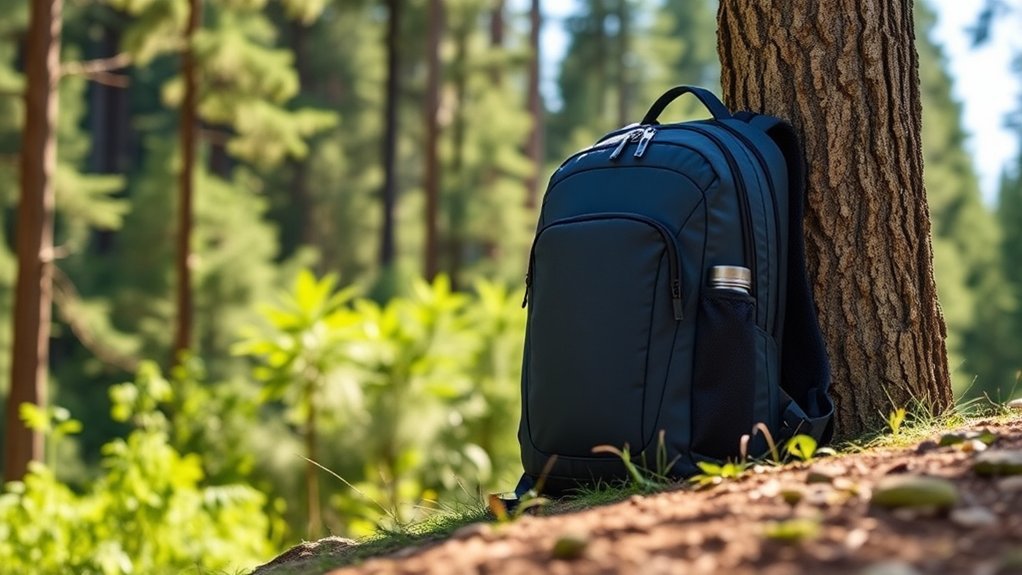
Packable daypacks are available in many sizes. Current examples from major brands include models with capacities of 15, 16, 18, 20, 21, and 22 liters. This does not create a formal category limit, but it shows where many travel-focused options fall.
| Capacity | Common Uses | Main Limitation |
| 10–15 L | Wallet, phone, light jacket, snacks, and a small water bottle | Limited room for changing weather or larger purchases |
| 16–20 L | General sightseeing, day trips, gym clothing, and shorter hikes | Can become uncomfortable when filled with dense items |
| 21–25 L | Extra layers, lunch, travel purchases, camera accessories, or longer outings | More space can encourage overpacking beyond the harness’s comfort level |
Do not choose capacity by volume alone. Check the bag’s dimensions, opening shape, water-bottle storage, laptop protection, and packed size. A tall and narrow 20-liter bag may carry very differently from a wider bag with the same stated volume.
There is also no universal safe weight limit for all packable daypacks. The fabric may hold more weight than the straps can carry comfortably. Follow any manufacturer guidance and judge the bag by comfort rather than by how much you can force inside it.
Materials, Durability, and Rain Protection
Many packable daypacks use lightweight nylon or polyester. Ripstop construction can help keep a small tear from spreading quickly, but the word “ripstop” does not guarantee that a pack can handle sharp objects, rough rock, or repeated heavy loads.
When comparing materials, look beyond the fabric name. Durability also depends on:
- Bottom reinforcement: The base receives abrasion whenever the bag is placed on the ground.
- Seam construction: Stitching quality and seam reinforcement affect how the pack handles a full load.
- Zippers and closures: Small lightweight zippers save weight but may be harder to operate when the bag is overfilled.
- Strap attachment points: These areas carry most of the load and should not show loose stitching or distortion.
- Coatings: Water-repellent treatments can wear down through dirt, folding, abrasion, and repeated cleaning.
Water-Resistant vs. Waterproof
A water-resistant fabric may shed a brief shower while still allowing water through the seams, zippers, or opening. A more protective pack may add sealed seams, sealing zippers, or a roll-top closure. The safest approach is to use the manufacturer’s specific description or test rating rather than assuming that all coated fabrics are waterproof.
For example, Matador describes the current Freerain22 as a waterproof packable backpack with IPX6-level protection, sealed seams, and a roll-top closure. The company also states that the bag is not intended for submersion.
Warning: Do not place an unprotected laptop, camera, passport, or phone in a packable daypack merely because its fabric feels coated. Use a sealed dry bag or waterproof case unless the complete backpack is specifically rated for the conditions you expect.
Comfort and Practical Load Limits
A packable bag can feel comfortable when empty but change noticeably after you add water, electronics, or souvenirs. Dense items create more pressure than soft clothing, even when both loads occupy the same space.
Check these comfort features before buying:
- Shoulder-strap width: Wider straps spread pressure across more of your shoulders.
- Padding or mesh: Light padding can improve comfort without making the pack difficult to stow.
- Sternum strap: This can reduce strap movement, especially while walking quickly or hiking.
- Back-panel shape: A lightly padded or shaped panel protects your back from hard objects.
- Load stability: Side compression, internal pockets, or a closer fit can reduce bouncing.
Choose a structured daypack instead when you regularly carry a laptop, large camera, several full water bottles, tools, or other dense gear. A hip belt on an ultralight pack may steady the bag, but a thin webbing belt does not provide the same load transfer as a padded hiking-pack suspension.
Ideal Uses for Packable Daypacks
A packable daypack works best when portability matters more than maximum support. It is especially useful when you need an occasional bag but do not want to dedicate much luggage space to it.
Travel and Exploration
For travel, a packable daypack can hold a light jacket, water bottle, guidebook, snacks, and small purchases while your main luggage remains at your hotel or rental. It also gives one-bag travelers a smaller option for museums, cafés, markets, and local transportation.
Do not assume that every packable daypack automatically qualifies as an airline personal item. Airlines set their own size rules, and a soft bag can still exceed the limit when fully packed. Measure the loaded bag and check the operating airline’s current allowance before departure.
Outdoor Activities and Events
A packable daypack can work for a park visit, festival, bike ride, picnic, or short hike when the load remains light. For hiking, suitability depends on the route, weather, water availability, duration, and the equipment you need to carry.
The National Park Service Ten Essentials include navigation, sun protection, insulation, illumination, first-aid supplies, fire, repair tools, food, water, and emergency shelter. A daypack is too small or too uncomfortable for the hike if it cannot safely carry the supplies required for that outing.
The smallest bag is not the safest choice if saving a few ounces forces you to leave behind water, weather protection, navigation, or emergency supplies.
What to Pack for a Short Day Hike
Your exact list should match the location and conditions, but a basic short-hike load may include:
- Water and extra food
- Navigation appropriate for the route
- Sun protection
- A rain shell or insulating layer
- A small first-aid kit
- A headlamp or flashlight
- Emergency communication and identification
- A compact emergency shelter where appropriate
Place soft clothing against the back panel to create a cushion. Keep dense items close to your back and centered so the bag does not pull backward. Secure bottles upright, and place sharp or angular objects inside protective sleeves.
Popular Models to Consider
Product names, specifications, and availability can change. The examples below show several approaches to packable design rather than a single best choice for everyone.
| Model | Current Position | Best For |
| Osprey Ultralight Stuff Pack | 18 L; manufacturer-listed weight of 0.329 lb, or about 5.3 oz; recycled 40D high-tenacity nylon | Travelers prioritizing very low weight and compact storage |
| Matador Freerain22 | Current 22 L generation with sealed seams, roll-top closure, and IPX6-level protection; not intended for submersion | Heavy rain and unpredictable travel weather |
| Aer Go Pack 2 | 20 L and 1.3 lb with more organization and shape than an ultralight stuff pack | Urban travel, tech accessories, and users who value pockets |
| Minaal Daily 3.0 | A structured 21 L bag weighing 2.16 lb with protected device storage | Digital nomads who need more protection than an ultralight pack provides |
| YNOT Deploy | A discontinued 15 L legacy model that folded into its front pocket | Used-market shoppers who understand that warranty and parts support may differ |
| Mystery Ranch In and Out Packable Daypack | An older reference that was not verified as a current model during this review | Shoppers comparing older stock or used models |
| WANDRD VEER 18 | An older specialized packable-camera-bag reference; confirm current availability and included accessories before buying | Photographers considering a packable bag with a protective insert system |
Note: The Minaal Daily and Aer Go Pack 2 are heavier and more structured than minimalist stuff packs. They may still pack relatively flat, but they serve readers who value comfort, organization, and device protection more than the smallest possible packed size.
How to Choose the Right Packable Daypack
1. Decide What You Will Carry
Make a realistic packing list before comparing bags. Include water, clothing, food, electronics, purchases, and safety supplies. A bag that looks large enough online may become awkward once you add a full bottle or a rigid camera case.
2. Match the Capacity to the Activity
Choose enough room for the expected load plus a small margin for a jacket or purchases. Avoid buying a much larger bag solely for “just in case” capacity if the shoulder straps and back panel are not designed for the resulting weight.
3. Check the Harness
Look for straps that sit comfortably on your shoulders without rubbing your neck. A sternum strap is useful for active walking, cycling, or hiking. People with broader shoulders or longer torsos should pay special attention to strap length and spacing.
4. Examine Weather Protection
Check whether the manufacturer describes only the fabric or the complete bag. Sealed seams, protected zippers, and roll-top closures generally provide more protection than a coated fabric with ordinary stitched seams.
5. Evaluate Organization
A single compartment is flexible and light, but small items may settle at the bottom. Consider whether you need a key clip, bottle pockets, a security pocket, or a laptop sleeve. Removable pouches can add organization without forcing you to carry unused dividers.
6. Confirm the Packed Size
Check whether the bag folds into itself or uses a separate sack. An attached pocket cannot be lost, while a separate compression sack may produce a smaller or neater bundle.
7. Review Warranty and Product Status
Confirm that the model is still supported and that the seller is authorized. This is especially important when buying discontinued models, leftover inventory, or used gear.
Pre-Purchase Checklist
- Does the loaded bag fit your shoulders and torso?
- Can it hold your required water and weather protection?
- Do hard items press against your back?
- Are the seams and strap attachments reinforced?
- Is the stated rain protection appropriate for your trip?
- Does it have the pockets you will actually use?
- Will its folded size fit inside your main luggage?
- Is the model current and covered by a usable warranty?
How to Pack and Store a Packable Daypack
Pack soft clothing or a thin towel against the back panel. Place heavier items close to your back and avoid concentrating all the weight at the bottom. Keep keys, tools, and sharp-edged objects inside a pouch so they do not puncture the lightweight fabric.
Do not force the pack into its storage pocket while it is wet or dirty. Trapped moisture can cause odors and may shorten the life of coatings. Empty the bag, shake out dirt, let it dry completely, and then fold or stuff it according to the manufacturer’s instructions.
Pro Tip: Instead of folding the bag along the same sharp creases every time, loosely stuff it into its pocket when the manufacturer permits. This can reduce repeated stress along one fold line.
Cleaning and Maintenance
Always begin with the care label or manufacturer instructions for your model. Coatings, seam tape, foam, and printed finishes can react differently to heat, harsh detergent, or machine agitation.
A common gentle-cleaning method is to:
- Empty every pocket and shake out loose dirt.
- Use mild soap with warm water and a soft sponge or brush.
- Clean dirty areas without aggressively scrubbing coatings or seam tape.
- Rinse away all soap residue.
- Hang the pack in a shaded, well-ventilated area until it is completely dry.
Osprey’s official backpack-cleaning guidance recommends mild soapy warm water, gentle cleaning, thorough rinsing, and air drying out of direct sunlight. Other manufacturers may recommend spot cleaning rather than full immersion, so do not treat one company’s directions as universal.
Trends in Packable Daypacks
Minimalist Design Approach
Minimalist packs continue to reduce unnecessary structure, pockets, and hardware. The best designs keep weight low without making the opening difficult to use or the shoulder straps uncomfortably narrow.
Material choices are also changing. For example, Osprey lists recycled 40D high-tenacity nylon on its Ultralight Stuff Pack, while some current models use water-repellent treatments made without PFAS.
Enhanced Organizational Features
Some packable bags now include bottle pockets, sternum straps, quick-access compartments, and lightweight laptop sleeves. The Aer Go Pack 2 represents the more organized end of the category, with a 20-liter capacity and more structure than a basic stuff pack.
More organization is not always better. Every zipper, divider, and padded sleeve adds weight and reduces how tightly the bag can fold. Choose features that match your normal load rather than the longest feature list.
Specialized Purpose Options
Specialized designs target photography, commuting, wet-weather travel, and technical gear. A camera-focused pack may use a removable padded insert, while a wet-weather model may use sealed seams and a roll-top closure.
The Minaal Daily Bag caters to device-heavy travel with protected laptop storage, while older models such as the WANDRD VEER 18 used packable designs aimed at photographers. These products show that “packable” can range from ultralight stuff sacks to structured bags that merely flatten or nest inside larger luggage.
Frequently Asked Questions
Can I use a packable daypack for hiking?
Yes, for shorter and lower-risk hikes when the bag fits comfortably and holds the water, food, clothing, navigation, first-aid, and emergency gear required for the route. Choose a structured hiking daypack for heavier loads, long distances, difficult terrain, or trips where a supportive hip belt is important.
How do I clean my packable daypack?
Follow the manufacturer’s care label. A common method is gentle cleaning with mild soap, warm water, and a soft sponge or brush, followed by thorough rinsing and shaded air drying. Avoid machine washing, heated drying, bleach, and harsh detergents unless the manufacturer specifically permits them.
Are packable daypacks water-resistant?
Many use water-repellent fabric, but protection varies widely. Ordinary seams and zippers can leak even when the fabric is coated. For stronger protection, look for sealed seams, protective zippers, a roll-top closure, and a clear manufacturer rating. Use a separate waterproof case for valuable electronics.
Can packable daypacks fit in luggage?
Yes. Compact storage is their main advantage. Many fold into an attached pocket or a separate pouch and fit easily inside a suitcase or travel backpack. Compare the packed dimensions because more structured models may flatten rather than compress into a small bundle.
What accessories can I attach to a packable daypack?
You may be able to attach a carabiner, light pouch, or small accessory if the bag has reinforced loops or webbing. Do not hang heavy bottles or gear from thin zipper pulls or unreinforced fabric because this can distort or tear the pack.
Can a packable daypack be an airline personal item?
It may qualify when its loaded dimensions fit the airline’s current personal-item limit. A soft bag can expand beyond its listed dimensions, so measure it after packing and check the operating airline’s rules before your flight.
How much weight can a packable daypack carry?
There is no universal limit. Check the manufacturer’s guidance and test the bag with your normal load. The fabric may hold more than the thin straps can carry comfortably, so stop adding weight when the straps dig in, the bag pulls backward, or firm objects press against your back.
Conclusion
A packable daypack is a practical secondary bag for travel, errands, sightseeing, and selected outdoor activities. Its main advantage is compact storage, while its main limitations are reduced structure, thinner padding, and lower comfort with dense loads.
Choose the bag by testing what you will actually carry. Compare capacity, strap comfort, organization, packed size, seam construction, and verified rain protection. For longer hikes, frequent commuting, or valuable electronics, a more structured daypack may be the safer and more comfortable choice.
Sources
- Osprey Ultralight Stuff Pack — current capacity, weight, harness, and fabric specifications.
- Matador Water-Resistant Backpack Guide — Freerain22 capacity, construction, IPX6-level protection, and submersion limitation.
- Aer Go Pack 2 — current capacity, weight, dimensions, and organization-focused design.
- Minaal Daily 3.0 — current capacity, weight, materials, and device-storage specifications.
- U.S. National Park Service Ten Essentials — minimum categories of equipment for outdoor preparedness.
- Osprey Backpack Cleaning Guide — gentle washing, rinsing, and air-drying guidance.