
Last Updated on July 30, 2026 by Caleb Warren
Waterproof and water-resistant backpacks can look similar, but they are built for different levels of exposure. A water-resistant pack is usually enough for commuting, travel, and brief showers. A waterproof pack is the better choice for sustained rain, paddling, or situations where wet gear would create a serious problem. The label alone is not enough, though: the seams, zippers, closure, and test rating matter as much as the face fabric.
Quick Answer
A water-resistant backpack sheds light rain for a limited time, while a waterproof backpack uses waterproof fabric plus sealed construction to resist heavier exposure. “Waterproof” does not automatically mean submersible. For boating or immersion risk, choose a pack with a clear IP rating and follow its closure instructions.
Key Takeaways
- Water-resistant packs suit commutes, school, flights, and short walks in light rain.
- A waterproof fabric does not make the entire backpack waterproof unless seams and openings are also sealed.
- A coated zipper may be water-repellent rather than watertight, so read the manufacturer’s wording carefully.
- For submersion risk, look for a tested rating such as IPX7 or IP67 instead of relying on the word “waterproof.”
- Protect laptops, cameras, medication, and documents with an inner dry bag or waterproof pouch when failure would be costly.
Disclosure: As an Amazon Associate I earn from qualifying purchases. Some links on this page are affiliate links, at no extra cost to you.
Understanding the Key Differences
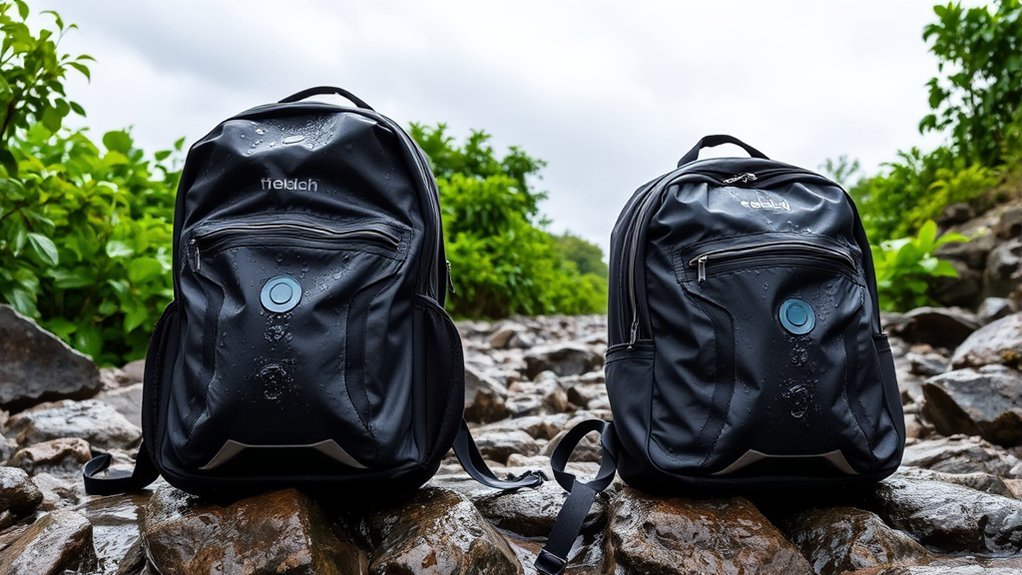
The main difference is the level and duration of water protection. A water-resistant backpack slows water entry during splashes, drizzle, or a short shower. A waterproof backpack is designed to keep water from passing through its main fabric and construction under the conditions stated by its maker.
That last phrase matters. A pack can use waterproof fabric but still leak through needle holes, untreated seams, zipper ends, hydration ports, or an open top. Likewise, a pack sold as waterproof may be rated for rain and water jets but not immersion. For example, one current waterproof roll-top model carries a non-submersible IPX6 rating.
| Feature | Water-Resistant Backpack | Waterproof Backpack |
|---|---|---|
| Typical protection | Light rain, splashes, and brief exposure | Heavy rain or stronger exposure within the product’s stated rating |
| Construction | Tightly woven or coated fabric; seams may be stitched and unsealed | Waterproof laminate or coating plus taped, bonded, or welded seams |
| Common opening | Standard or coated zipper, flap, or drawcord | Roll-top, watertight zipper, or another tested closure |
| Best for | Commuting, school, air travel, errands, and mild hikes | Paddling, bike touring, wet-weather fieldwork, and exposed trips |
| Submersion | No | Only when the maker specifically gives an immersion rating |
Note: “Waterproof,” “water-resistant,” and “weatherproof” are often used as marketing terms. A test rating, seam description, and closure instructions provide more useful evidence than the label by itself.
Characteristics of Water-Resistant Backpacks
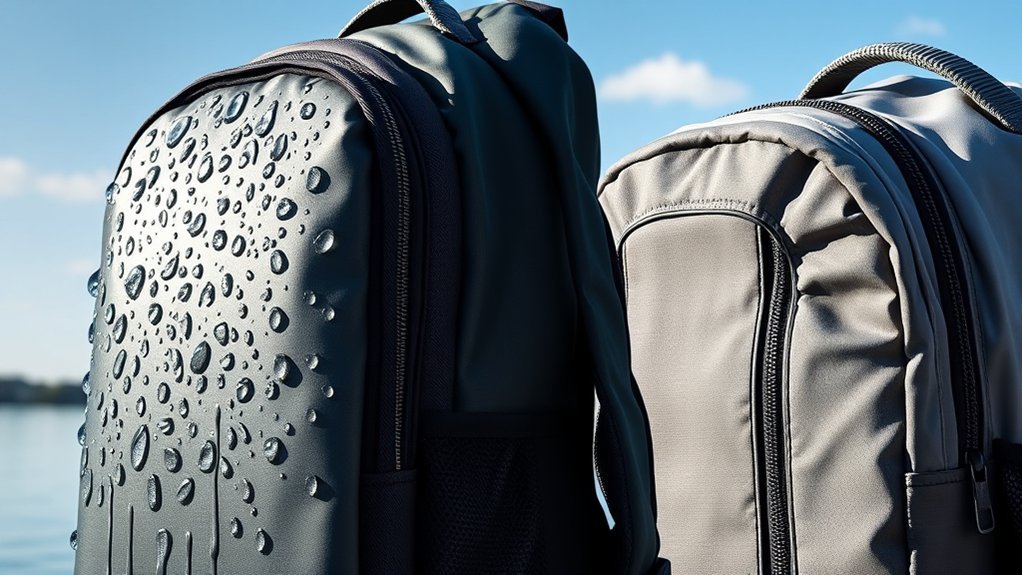
Water-resistant backpacks are usually designed for everyday convenience. They often have more pockets, easier zipper access, and lighter-feeling construction than dry-bag-style packs. Their protection depends on the fabric, surface treatment, seam design, and how long the bag stays wet.
Material Composition and Durability
Nylon and polyester are common because they can be woven for strength and paired with polyurethane, TPU, or other coatings. Some packs also use a durable water-repellent treatment, known as DWR, to help droplets bead and roll off the surface. DWR is not the same as a waterproof membrane or coating, and it can lose effectiveness as the pack becomes dirty or worn.
| Material or Treatment | What It Contributes | What to Check |
|---|---|---|
| Nylon | Good strength-to-weight potential and abrasion resistance, depending on denier and weave | Coating, seam treatment, and bottom reinforcement |
| Polyester | Durable everyday fabric that can accept coatings and DWR finishes | Fabric weight, backing, and seam construction |
| Ballistic nylon | High abrasion resistance for demanding daily use | It is not automatically waterproof; inspect the coating and seams |
| Canvas | Classic feel and good durability when properly treated | Wax or coating condition; untreated canvas absorbs water |
| DWR finish | Helps water bead on the outer surface | Care directions and whether the treatment needs restoration |
Ideal Usage Scenarios
A water-resistant backpack is usually the practical choice when exposure is brief and shelter is nearby:
- Daily commuting: A coated or tightly woven pack can handle a short walk between a car, station, office, or classroom.
- Casual day trips: It can protect snacks, spare layers, and small essentials from drizzle and splashes.
- Air and road travel: Easy-access pockets and standard zippers are often more convenient than a roll-top.
- Budget-conscious use: You can add a rain cover, pack liner, or small dry bags instead of paying for a fully waterproof build.
For electronics, passports, or medication, add a separate waterproof pouch when heavy rain is possible. The pack’s outer label should not be your only layer of protection.
Features of Waterproof Backpacks
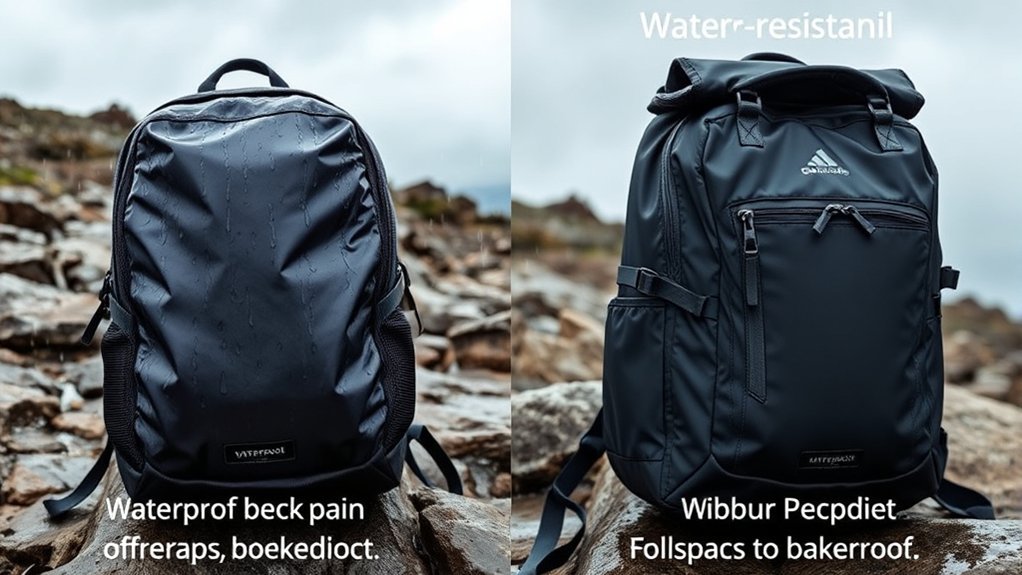
A true waterproof backpack combines water-blocking fabric with construction that limits entry through seams and openings. Common designs use TPU- or PVC-coated fabric, waterproof laminates, welded seams, and roll-top closures. The finished bag’s test rating is more important than the material name alone.
Complete Water Protection
The most reliable waterproof packs usually include three features:
- Waterproof fabric or laminate: The face material blocks water under the conditions for which it was tested.
- Sealed construction: Welded, bonded, or carefully taped seams close the needle holes that can leak on a stitched pack.
- A suitable closure: A correctly rolled top or a genuinely watertight zipper protects the largest opening.
Closure technique is part of the design. ORTLIEB, for example, instructs users to roll its closure at least three times, with specific guidance for immersion. Overfilling a roll-top can prevent the required number of folds and reduce protection.
Warning: Never assume a waterproof backpack is safe for submersion. Check the stated IP rating and the maker’s closure instructions. A non-submersible waterproof pack may handle hard rain yet still fail if dropped into deep water.
Specialized Material Use
Waterproof packs can use several material systems. TPU-coated nylon is flexible and common in modern roll-top packs. PVC-coated fabric is tough and widely used in dry bags and work gear, though it may feel stiffer. Laminates such as X-Pac performance pack fabrics are sold as waterproof fabrics, but the complete bag still depends on its seams, zipper, and closure.
| Material or Feature | Strength | Important Limitation |
|---|---|---|
| TPU-coated nylon | Flexible, abrasion-resistant, and suitable for welded construction | Performance varies by coating, fabric weight, seams, and closure |
| PVC-coated fabric | Tough water barrier commonly used in dry-bag designs | Can be heavier or stiffer than other options |
| X-Pac laminate | Waterproof laminate with a strong strength-to-weight focus | A bag made from it may still leak at unsealed seams or openings |
| Welded seams | Avoid rows of exposed stitch holes in the waterproof body | Weld quality and damage still affect performance |
| Coated zipper | Reduces water entry compared with many standard zippers | A zipper such as YKK AquaGuard is described by its maker as water-repellent, not waterproof or watertight |
How to Read Waterproof Ratings and Product Claims
Start with the complete product rating, not a fabric-only claim. The IEC IP system uses a two-character code to describe protection against solids and water. When the solids test is not stated, the first character may be shown as “X,” as in IPX6.
- IPX4: Protection against splashing water under the test conditions.
- IPX6: Protection against powerful water jets; this is not an immersion rating.
- IPX7: Protection during temporary immersion under defined test conditions.
An IP rating is useful because it applies to the finished item in a stated configuration. A hydrostatic-head figure, by contrast, normally describes fabric resistance under a laboratory water-column test. It does not tell you whether the backpack’s seams, zippers, lid, or ports will leak.
Pro Tip: On a product page, search for four phrases: “IP rating,” “welded or taped seams,” “closure instructions,” and “submersible or non-submersible.” These details are more useful than a large “waterproof” headline.
When to Choose a Water-Resistant Backpack
Choose a water-resistant backpack when you need convenient access and expect only short, low-pressure exposure to water. It is a good fit for urban commuting, school, office use, flights, gym trips, and fair-weather day hikes.
A water-resistant model may also be the better value if you already carry an umbrella or can add a rain cover. It usually offers more zipper access and organization than a sealed roll-top. Just remember that seams and zipper tracks can admit water during a long downpour.
When to Opt for a Waterproof Backpack
Choose a waterproof backpack when exposure is prolonged, shelter is limited, or wet contents could end a trip. Examples include kayaking, rafting, sailing, bike touring, motorcycle travel, wet-weather fieldwork, and hiking in sustained rain.
For activities where the pack could fall into water, use a model that is explicitly rated for immersion. A rain-rated pack and a submersible dry pack are not interchangeable. Also consider comfort: fully sealed materials and closures can reduce ventilation, and some waterproof packs trade quick pocket access for protection.
Rain Cover, Pack Liner, or Dry Bag?
You do not always need to replace a comfortable water-resistant backpack. An added barrier can match the protection to the trip:
- Rain cover: Shields most of the outer pack from rain but may leave the back panel and shoulder-side edges exposed. It is useful for hiking and commuting.
- Pack liner: Sits inside the main compartment and protects the contents even if the outer fabric becomes soaked. It works well for clothing and sleeping gear.
- Small dry bags or pouches: Separate electronics, documents, food, or medication and create backup protection.
- Rated dry-pack backpack: Best when the whole load needs strong protection and the pack may face spray, waves, or immersion.
Popular Materials Used in Water-Resistant and Waterproof Backpacks
Material names can help narrow your options, but they do not replace construction details:
- Nylon and polyester: Common base fabrics for water-resistant packs. A PU, TPU, or other coating can increase water resistance.
- Ballistic nylon and heavy canvas: Chosen mainly for durability. They need a coating, wax, liner, or other barrier for stronger water protection.
- TPU- and PVC-coated fabrics: Common in waterproof and dry-bag-style packs because they can be welded into sealed bodies.
- Waterproof laminates: Materials such as X-Pac can block water at the fabric level, but a stitched bag still needs sealed seams.
- DWR-treated outer fabrics: Designed to shed surface water. Some current products specify finishes made without intentionally added PFAS; check the product specification rather than assuming.
How to Choose the Right Backpack in Five Steps
- Define the worst likely exposure. Separate drizzle, sustained rain, spray, and possible immersion.
- Decide what cannot get wet. A spare shirt needs less protection than a laptop, camera, passport, or medication.
- Check the finished-bag rating. Look for an IP code or a clear maker statement about rain, water jets, and immersion.
- Inspect seams and openings. Confirm whether seams are welded or taped and whether the zipper is water-repellent or watertight.
- Match protection to comfort and access. Compare carry fit, ventilation, pockets, weight, and closure speed before buying.
The whole backpack is only as water-protective as its least protected seam, zipper, port, or closure.
Tips for Maintaining Your Backpack’s Water Protection
Follow the care label for your exact pack. As a general starting point, remove loose dirt, wash by hand with mild soap and warm water, rinse thoroughly, and air-dry in a ventilated place away from direct heat. Osprey’s current backpack-cleaning guidance, for example, advises hand cleaning and warns against machine washing its packs.
- Clean before retreating: Dirt and oils can stop water from beading and can hide damage.
- Restore DWR only when needed: Use a product compatible with the fabric and follow both the backpack maker’s and treatment maker’s directions.
- Inspect high-stress areas: Check the bottom, seam intersections, zipper ends, roll-top fold, and strap attachment points.
- Repair correctly: Use the maker’s patch kit or authorized repair process when available. Random tape, glue, or stitching can damage a coating or create new leak paths.
- Dry before storage: Store the pack loose, clean, and fully dry to reduce odor, mildew, and coating damage.
Common Mistakes to Avoid
- Assuming waterproof means submersible: Confirm an immersion rating.
- Trusting the face fabric alone: Check seams, zipper ends, ports, and the closure.
- Calling every coated zipper waterproof: Read the zipper maker’s exact description.
- Overfilling a roll-top: Leave enough material to complete the required number of rolls.
- Machine washing without permission: Agitation and heat can harm coatings, padding, frames, and seam treatments.
- Relying on one barrier for valuable electronics: Use a waterproof inner pouch when the consequences of leakage are high.
Frequently Asked Questions
Can I use a waterproof backpack for daily commuting?
Yes. A waterproof backpack can be useful for cycling or walking in frequent rain. Compare comfort, ventilation, organization, and opening speed, because a sealed roll-top may be less convenient than a standard commuter pack.
How do I clean my water-resistant backpack?
Check the care label first. For many packs, hand cleaning with mild soap, warm water, and a soft sponge is safer than machine washing. Rinse away all soap and air-dry the backpack fully in a ventilated area away from direct heat.
Are waterproof backpacks heavier than regular ones?
Sometimes, but not always. Coatings, welded construction, and heavy-duty closures can add weight, while lightweight waterproof laminates can keep it down. Compare the listed weight of specific packs rather than treating waterproof construction as automatically heavy.
Can I repair a damaged waterproof backpack?
Minor punctures may be repairable with a compatible patch, while failed seams, coatings, or watertight zippers may need professional service. Follow the backpack maker’s instructions so the repair does not damage the material or void the warranty.
Do water-resistant backpacks come with warranties?
Many do, but coverage varies by brand and model. A warranty may cover defects in materials or workmanship without covering normal wear, punctures, coating damage, or water-damaged contents. Read the written terms before relying on it.
Does waterproof mean a backpack can be submerged?
No. Some waterproof backpacks are rated only for rain or water jets. Choose a model with an immersion rating, such as IPX7 or IP67, when the pack could be dropped into water, and follow the exact closure instructions.
How should I protect a laptop in heavy rain?
Use a waterproof inner sleeve, pouch, or dry bag even inside a water-resistant pack. Keep the computer away from the zipper opening and pack bottom, and dry the backpack before removing the device so surface water does not drip inside.
Conclusion
A water-resistant backpack is the practical choice for everyday use, light rain, and brief exposure. A waterproof backpack is better for sustained rain, spray, and demanding outdoor conditions, but it is submersible only when its rating says so. Compare the whole system—fabric, seams, zipper, closure, and test rating—then add an inner dry bag for valuables when the cost of a leak is high.
Sources
- International Electrotechnical Commission: IP Ratings — explains the standardized ingress-protection rating system.
- Osprey Transporter Waterproof 25 — demonstrates a waterproof backpack with a non-submersible IPX6 rating and TPU-coated fabric.
- YKK AquaGuard Coil Zipper — confirms that AquaGuard is water-repellent rather than waterproof or watertight.
- ORTLIEB Roll Closure Guide — explains how correct rolling is required for waterproof performance.
- Dimension-Polyant X-Pac Pack Fabrics — describes X-Pac laminates and their fabric-level waterproof construction.
- Osprey Backpack Cleaning Guide — supports hand cleaning, thorough rinsing, air drying, and avoiding machine washing.

