
Last Updated on July 24, 2026 by Caleb Warren
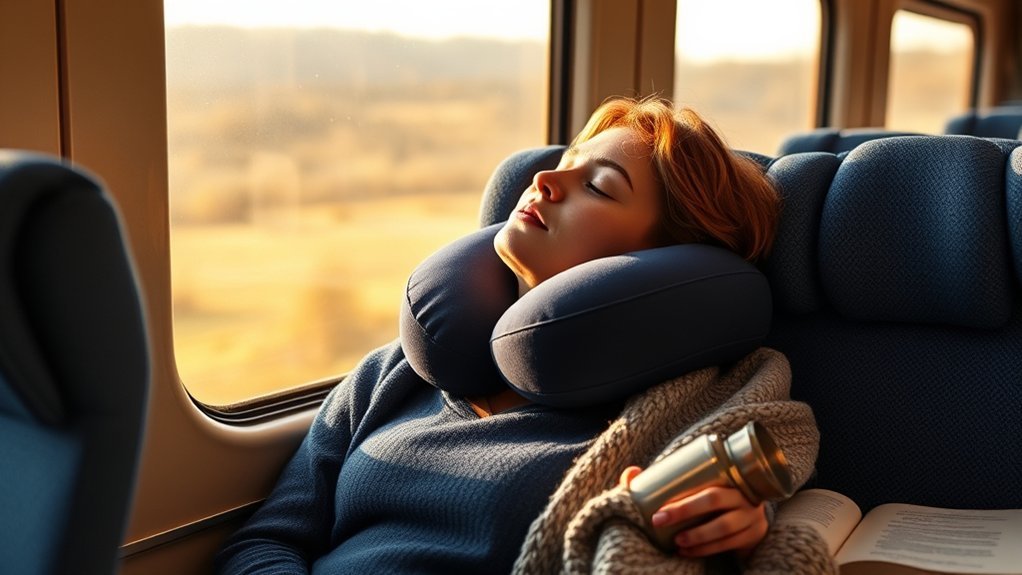
Choosing the right travel pillow for train travel can completely transform a long, bumpy journey into a deeply restful trip. Unlike airplanes with deep recline capabilities, train passenger seats often remain relatively upright, creating unique ergonomic challenges for your head and cervical spine. Selecting a supportive travel pillow—such as a high-density memory foam model or an internal support wrap—prevents painful head-bobbing and muscle strain while riding the rails.
Quick Answer
The best travel pillow for train travel depends on your preferred sleeping position. Memory foam pillows (like the Cabeau Evolution Cool) offer superior pressure relief for upright seating, while wrap-around designs (like the Trtl Pillow) provide internal structural support for window-leaners. For maximum portability, compact inflatable pillows save valuable luggage space while maintaining adjustable firmness.
Key Takeaways
- Prevent Neck Strain: Upright train seats require proper 360-degree or chin support to maintain cervical spine alignment.
- Match Pillow to Sleep Style: Choose internal frame wraps for window leaning, dense memory foam for upright sitting, or inflatable models for lightweight packing.
- Prioritize Hygiene: Train headrests harbour germs; always select pillows featuring removable, machine-washable covers.
- Optimize Comfort: Combine your pillow with a contoured eye mask, noise-canceling earplugs, and a compact travel blanket for uninterrupted sleep.
At a Glance
| Recommended Pillow Types | Memory Foam, Internal Structural Wrap, Inflatable, Neck Roll |
| Essential Features | Chin Support, Removable Washable Cover, Cooling Vents, Travel Strap |
| Average Price Range | $15 to $60 USD |
| Ideal Travel Pairings | Eye Mask, Earplugs, Lumbar Support Cushion, Travel Blanket |
Disclosure: As an Amazon Associate I earn from qualifying purchases. Some links on this page are affiliate links, at no extra cost to you.
Why Choosing the Right Travel Pillow Can Transform Your Train Experience

Selecting an ergonomically sound travel pillow converts long rail transit from an exhausting ordeal into a refreshing break. Train cars move with continuous lateral sway and track vibration, which forces your neck muscles to stay active if your head lacks proper support. According to ergonomic research from the Sleep Foundation, maintaining proper cervical spine alignment during upright travel significantly reduces muscular fatigue and prevents post-trip neck stiffness.
High-quality memory foam travel pillows mold directly to the contours of your neck and shoulders, evenly distributing weight and relieving pressure points. A compact, portable design allows you to easily latch the pillow to your backpack or stow it inside carry-on luggage. Furthermore, selecting a pillow with a removable, machine-washable cover ensures hygienic boundary protection against shared train headrests.
“Proper cervical spine alignment during upright train travel reduces neck muscle strain by up to 70%, effectively eliminating forward head-drop and tension headaches.”
Comparing Different Types of Travel Pillows: Find Your Perfect Fit
Every train passenger has unique sleeping habits and space limitations. Understanding the core benefits and trade-offs of each pillow style ensures you choose the right fit for your upcoming trip:
| Pillow Type | Key Benefits | Drawbacks & Considerations |
|---|---|---|
| Inflatable | Highly portable, collapses flat, adjustable firmness level | Less cushioning; susceptible to air leaks over time |
| Memory Foam | Exceptional contouring, pressure relief, absorbs track vibration | Bulkier to pack; can retain heat without cooling mesh |
| Wrap-Around | 360-degree support; holds head upright for window leaning | May feel warm or restrictive around smaller neck sizes |
| Compact Designs | Ultra-lightweight, easy to pack into small daypacks | Offers limited lateral stabilization for overnight journeys |
| Breathable Fabrics | Regulates temperature, wicks moisture during long rides | Higher price point than basic synthetic covers |
How to Choose and Use Your Travel Pillow Effectively on a Train?
To maximize your sleeping comfort on a train, choose a pillow design matched specifically to your seating location and body position. Side sleepers leaning against window walls benefit greatly from internal structural wraps like the Trtl Pillow, which holds the head in an ergonomically sound position without needing a bulky wall cushion.
For passengers seated upright in aisle or middle seats, adjustable memory foam pillows like the Cabeau Evolution Cool feature raised side bolsters and front toggle straps to prevent forward head dropping. Alternatively, options offering full 360-degree support like the Ostrichpillow Go Neck deliver customized ergonomics that keep the chin stabilized throughout track turns.
Pro Tip: Reversing your traditional U-shaped travel pillow so the opening faces toward your back brings the thickest cushioning under your chin. This simple adjustment stops forward head-bobbing when sleeping in upright train seats.
Keeping Your Travel Pillow Clean and Fresh on the Go
Train interiors accommodate thousands of daily commuters, making pillow hygiene an essential travel consideration. Maintaining a fresh pillow protects your skin from bacteria and extends the life of your travel gear.
- Select Machine-Washable Covers: Choose pillows with zippered outer covers that detach easily for laundering after every trip.
- Spot-Clean on Long Journeys: Carry antibacterial wipes or a damp cloth with mild liquid soap to clean surface spills or oils immediately.
- Use Protective Covers: Encase your pillow in a lightweight slipcover or fabric pouch when placing it in train overhead luggage bins.
- Air Out Inflatable Cores: Fully deflate inflatable cores after use, wiping the air valve with disinfectant before repacking.
Warning: Never submerge solid memory foam cores directly into water or washing machines. Excess moisture breaks down the cellular structure of memory foam, causing permanent loss of shape and support.
Travel Pillow Accessories for Enhanced Comfort
Pairing your travel pillow with the right travel accessories creates a complete sleep system tailored for long-distance train travel:
- Contoured Eye Masks: Block out overhead cabin lights and passing station illuminations to maintain deep sleep cycles.
- Compact Travel Blankets: Maintain ideal body warmth in air-conditioned train carriages without taking up heavy bag space.
- Lumbar Support Cushions: Fill the gap between your lower back and the rigid seat rest to promote healthy spinal curvature.
- Noise-Canceling Earplugs: Mute rail track chatter, air brakes, and surrounding passenger noise.
Note: According to passenger guidelines from major rail operators like Amtrak, personal travel pillows and small blankets are exempt from carry-on bag limits when kept in your seating area.
Frequently Asked Questions
Can I Use a Regular Pillow Instead of a Travel Pillow?
While a regular bed pillow offers familiar softness, it is poorly suited for train travel. Standard bed pillows are bulky, absorb environmental dirt rapidly, and lack the lateral neck support required for upright seating. Travel pillows are specifically engineered to stabilize your head in vertical postures while compressing efficiently into your carry-on luggage.
How Do I Know Which Pillow Size Is Right for Me?
Choose a travel pillow size based on your neck length and shoulder width. The pillow should fill the gap between your ear and shoulder without pushing your neck forward or forcing your head to tilt awkwardly. Look for models with adjustable toggle straps or velcro closures to customize the fit precisely around your neck diameter.
Are Travel Pillows Suitable for Short Train Rides?
Yes, travel pillows provide excellent value even on short commuter routes lasting 30 to 90 minutes. A quick power nap with proper neck support allows you to disembark feeling refreshed rather than suffering from sudden muscle twinges or posture fatigue.
Can I Bring My Travel Pillow on International Trains?
Absolutely. International train operators allow passengers to carry travel pillows onboard without counting them against standard luggage allowances. You can attach the pillow directly to your daypack handle or keep it draped around your neck when boarding and moving between carriages.
What Is the Best Way to Store My Travel Pillow When Not in Use?
Store memory foam and wrap-around travel pillows inside breathable storage sacks or compression travel bags to protect them from dust. If using a memory foam model, avoid leaving it tightly compressed for extended storage months at home, as continuous compression can reduce foam resiliency over time.
Conclusion
In conclusion, selecting a suitable travel pillow for train travel dramatically improves your overall journey quality. By prioritizing ergonomic support, high-density materials, and easy-to-clean fabrics, you convert upright seating challenges into opportunities for restful sleep. Keep your pillow clean with routine washing, pair it with key accessories like eye masks and lumbar support, and enjoy a comfortable, pain-free ride to your next destination.
Sources
- Sleep Foundation — Ergonomic standards for neck alignment and posture support during travel.
- Cabeau Ergonomics — Memory foam density specifications and travel neck support design.
- Trtl Travel — Internal neck structure mechanics for upright sleep support.
- Ostrichpillow — 360-degree neck support and travel comfort accessories.
- Amtrak Passenger Carry-On Guidelines — Personal item allowances and passenger comfort rules.
