
Last Updated on July 23, 2026 by Daniel Globe
Boeing has shaped commercial aviation since 1916, but not every airline uses Boeing aircraft. Several major carriers currently operate fleets made entirely or almost entirely from Airbus models. Their choices usually reflect fleet commonality, route needs, purchase agreements, delivery availability, and operating costs rather than a permanent rejection of Boeing.
Quick Answer
Major passenger airlines currently operating without Boeing aircraft include ITA Airways, easyJet, Frontier, JetBlue, Wizz Air, Vueling, and Spirit. Most use Airbus-only fleets to simplify training, maintenance, parts, and scheduling. This describes their current fleets, not their full histories: easyJet and Frontier previously operated Boeing 737s.
Key Takeaways
- ITA Airways, easyJet, Frontier, JetBlue, Wizz Air, Vueling, and Spirit are notable current examples of airlines without Boeing aircraft.
- “Boeing-free” describes the aircraft an airline operates now. It does not necessarily mean the airline has never used Boeing aircraft.
- Fleet commonality can simplify training, maintenance, spare-parts planning, and crew scheduling, especially within one aircraft family.
- Lufthansa and Qatar Airways do not qualify because both operate Boeing widebody aircraft.
- Southwest remains an all-Boeing operator, but Ryanair Group is not all-Boeing because its Lauda Europe fleet includes Airbus A320s.
- Aircraft assignments can change after booking, so check the operating carrier and scheduled aircraft for your exact flight.
What’s in This Article
- Why Some Airlines Skip Boeing Aircraft
- Airlines That Currently Operate Without Boeing Aircraft
- How These Airlines’ Fleets Compare
- Airlines at the Other Extreme
- Customer Experience and Safety
- How to Check the Aircraft for Your Flight
- What’s Next for These Airlines’ Fleets
- Impact on Boeing and the Aviation Industry
- Final Thoughts
- Frequently Asked Questions
Disclosure: As an Amazon Associate I earn from qualifying purchases. Some links on this page are affiliate links, at no extra cost to you.
Why Some Airlines Skip Boeing Aircraft
Airlines do not normally choose an aircraft based on the manufacturer’s name alone. They compare purchase or lease terms, fuel use, maintenance requirements, available delivery slots, passenger capacity, cargo space, range, airport performance, and how well a new model fits the aircraft they already operate.
Fleet commonality can create meaningful savings. Pilots qualified on the Airbus A320 family can operate the A319, A320, and A321 under a common type rating, subject to the airline’s approved training and operating procedures. Mechanics can also work with more common parts, tools, and systems across closely related models.
- Airlines can keep a smaller and more focused spare-parts inventory.
- Training can be simpler when aircraft share cockpits and operating procedures.
- Maintenance teams can develop deeper experience with a smaller number of aircraft families.
- Crew and aircraft scheduling can become more flexible.
- Large orders from one manufacturer may improve financing, support, and purchase terms.
Note: An all-Airbus fleet is not automatically a one-type fleet. The Airbus A220 and A320 families require different pilot qualifications, while the A319, A320, and A321 share much more operational commonality.
Trade-Offs of Relying on One Manufacturer
Standardization can lower complexity, but it also concentrates risk. A production delay, engine inspection, airworthiness directive, supply shortage, or model-specific grounding can affect a large share of the airline’s capacity at once.
A mixed fleet gives an airline more sourcing flexibility and may provide better aircraft for very different missions. However, it also requires additional pilot groups, simulators, maintenance programs, spare parts, tools, and support contracts.
A fleet can be Boeing-free today without reflecting a permanent manufacturer policy or the airline’s full operating history.
Pro Tip: Use an airline’s official fleet page or latest investor report when comparing fleets. Aircraft are delivered, returned, sold, leased, and temporarily removed from service throughout the year.
Airlines That Currently Operate Without Boeing Aircraft
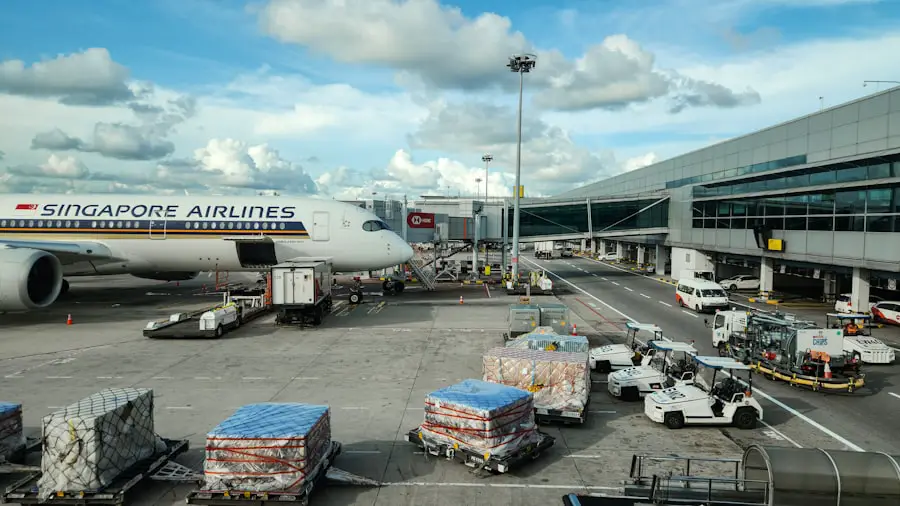
The following list covers notable passenger airlines whose current operated fleets contain no Boeing aircraft. It is not an exhaustive list of every small, regional, charter, or start-up airline worldwide.
Warning: An airline’s marketing brand does not always identify the company operating your flight. Regional affiliates, partner airlines, wet leases, and last-minute equipment substitutions may use a different aircraft type.
ITA Airways
ITA Airways operates an all-Airbus fleet. Its short- and medium-haul aircraft include A220 and A320-family models, while its long-haul fleet includes A330 and A350 aircraft.
The airline reported 99 aircraft in its fleet in 2026. Lufthansa Group owns 41% of ITA Airways, and ITA became a full Star Alliance member effective April 1, 2026. The airline has remained operationally Airbus-only during this integration.
easyJet
easyJet currently operates Airbus A319, A320, A320neo, and A321neo aircraft. The airline reported 359 aircraft after receiving its 100th A320neo-family aircraft in June 2026.
However, easyJet has not always been Boeing-free. The airline officially states that it began operations in 1995 with a leased Boeing 737. Its present Airbus-only fleet is therefore a current operating strategy, not a lifetime record.
Frontier Airlines
Frontier currently operates an all-Airbus A320-family fleet. Its March 31, 2026 investor report listed 183 aircraft: six A320ceos, 94 A320neos, 21 A321ceos, and 62 A321neos.
Frontier also has a Boeing history. It launched operations in 1994 with Boeing 737-200 aircraft before introducing Airbus aircraft and eventually moving to its present all-Airbus strategy.
JetBlue Airways
JetBlue completed its transition to an all-Airbus fleet on September 9, 2025, when it retired its final Embraer E190 from revenue service. Its fleet now centers on the Airbus A220 and A320 families, including A321 and longer-range A321 variants.
JetBlue’s A321LR aircraft support selected transatlantic routes, while A220s increasingly serve shorter and medium-distance markets previously flown by the E190.
Wizz Air
Wizz Air operates an Airbus A320-family fleet. Its corporate reporting listed 262 aircraft for its 2026 financial year, with A320 and A321 variants forming the core of its low-cost network.
Vueling
Vueling currently reports more than 100 Airbus A319, A320, and A321 aircraft. Its Boeing-free status is expected to change, however, because parent company IAG plans to allocate Boeing 737 MAX aircraft to Vueling, with the first deliveries scheduled for late 2026.
Spirit Airlines
Spirit operates Airbus A320-family aircraft. Because the airline is restructuring and rapidly reducing its fleet in 2026, its aircraft count is changing more quickly than those of most carriers on this list. Its March 2026 restructuring plan targeted a fleet of approximately 76 to 80 aircraft by the third quarter of 2026, primarily A320 and A321ceo models.
Note: Lufthansa and Qatar Airways sometimes appear in outdated lists of airlines without Boeing aircraft. Neither qualifies. Lufthansa operates Boeing 747 and 787 aircraft, while Qatar Airways operates a large Boeing 777 and 787 fleet.
How These Airlines’ Fleets Compare
| Airline | Current Aircraft Families | Latest Published Fleet Figure | Long-Haul Capability |
| ITA Airways | A220, A320 family, A330, A350 | 99 aircraft in 2026 | Yes, with A330 and A350 aircraft |
| easyJet | A319, A320, A320neo, A321neo | 359 aircraft in June 2026 | No conventional long-haul operation |
| Frontier | A320 and A321, including neo variants | 183 aircraft on March 31, 2026, before planned returns | No conventional long-haul operation |
| JetBlue | A220, A320, and A321 families | Average of 289 operating aircraft in Q1 2026 | Limited transatlantic flying with A321 aircraft |
| Wizz Air | A320 and A321 families | 262 aircraft reported for FY2026 | Primarily short- and medium-haul |
| Vueling | A319, A320, and A321 families | More than 100 Airbus aircraft | Primarily short- and medium-haul |
Fleet figures use the latest airline or investor data available before publication. The dates differ because airlines report fleet information on different schedules, and totals may exclude or include temporarily grounded aircraft.
Airlines at the Other Extreme: All-Boeing or Boeing-Heavy Fleets
Southwest Airlines operates an all-Boeing 737 fleet. Southwest ended the first quarter of 2026 with 800 aircraft after receiving ten 737-8s and retiring or selling 13 older aircraft during the quarter.
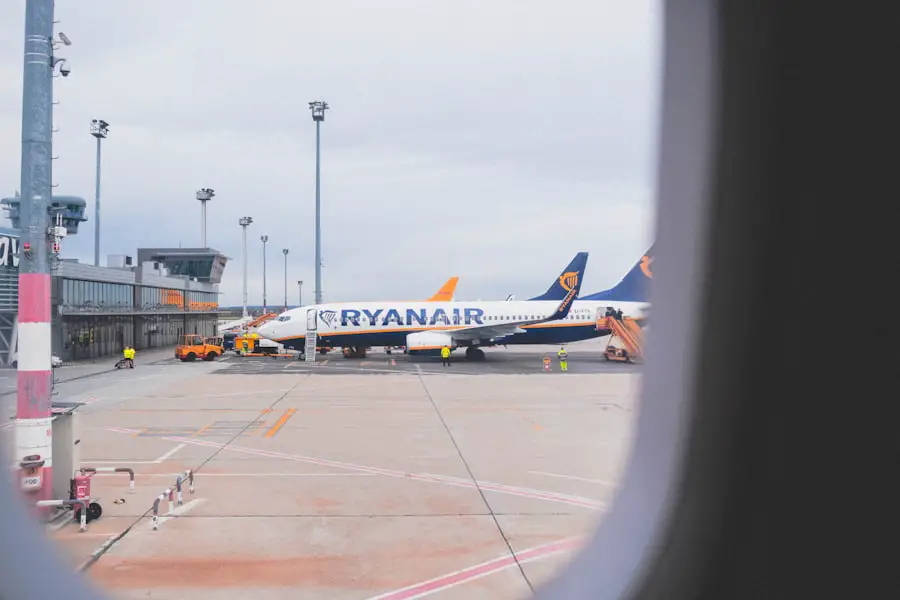
Ryanair requires more careful wording. Ryanair’s main operations are heavily standardized around Boeing 737 aircraft, but Ryanair Group’s official fleet page listed 26 Airbus A320s on July 1, 2026. Those Airbus aircraft are associated with Lauda Europe, one of the companies within the group.
Delta Air Lines and Lufthansa are mixed-fleet airlines. Both operate Airbus and Boeing aircraft, so neither belongs on a list of airlines that currently avoid Boeing.
Customer Experience and Safety Among Non-Boeing Carriers
Passenger experience depends more on the airline’s cabin layout, seat selection, fare rules, service model, and route than on whether the aircraft was built by Airbus or Boeing.
ITA Airways offers full-service cabins on its long-haul Airbus aircraft. easyJet, Frontier, Wizz Air, Vueling, and Spirit focus more heavily on low base fares and optional extras. JetBlue combines a low-fare model with free Wi-Fi and seatback entertainment on many flights, and it advertises generous standard economy legroom.
An Airbus-only fleet does not automatically make an airline safer. Aviation regulators evaluate aircraft design and continued airworthiness, while airlines remain responsible for maintenance programs, pilot training, operating procedures, risk management, and regulatory compliance.
The FAA describes aircraft certification as a multi-stage process involving design review, inspections, ground testing, flight testing, production approval, and continued operational safety. It separately certifies and oversees air carriers to confirm that their systems and procedures meet safety requirements.
How to Check the Aircraft for Your Flight
If you care about the aircraft type assigned to your trip, check the exact flight rather than relying only on the airline’s general fleet.
- Open the airline’s booking page or mobile app. Look for an aircraft name or equipment code beside the flight details.
- Check the operating carrier. A flight sold under one airline’s code may be operated by a partner, regional affiliate, or wet-lease provider.
- Review the seat map. The seat arrangement can help confirm whether the aircraft is an A220, A320-family jet, Boeing 737, or another model.
- Check again near departure. Airlines routinely substitute aircraft because of maintenance, weather, scheduling, or demand.
- Ask the airline when necessary. Customer service may confirm the scheduled equipment, but it normally cannot guarantee that the aircraft will not change.
Note: Booking a flight scheduled on an Airbus aircraft does not guarantee that the same model will operate on departure day. Equipment substitutions are common and are usually allowed under an airline’s conditions of carriage.
What’s Next for These Airlines’ Fleets
ITA Airways continues to renew its short-, medium-, and long-haul fleet around Airbus aircraft while integrating more closely with Lufthansa Group and Star Alliance.
easyJet is replacing smaller A319s with larger A320neo and A321neo aircraft. The airline plans to retire all remaining A319s by its 2029 financial year, increasing average seats per aircraft and reducing the number of older models in service.
Frontier announced a 2026 fleet-optimization plan involving the early return of 24 leased A320neos and the deferral of 69 future Airbus deliveries. These changes affect the size and timing of its fleet but not its Airbus-only strategy.
JetBlue continues to introduce A220s as part of its fleet-modernization program. Its final E190 retirement in September 2025 simplified the fleet to the A220 and A320 aircraft families.
Vueling is the clearest example of why Boeing-free lists need regular updates. It currently operates Airbus aircraft, but IAG plans to place Boeing 737 MAX aircraft with Vueling beginning in late 2026. Once those aircraft enter service, Vueling will no longer qualify as an Airbus-only airline.
Impact on Boeing and the Aviation Industry
Airline fleet choices affect both manufacturers, but a carrier selecting Airbus does not necessarily show a broad rejection of Boeing. Aircraft purchases are often decided years before delivery and may reflect pricing, financing, production slots, route requirements, engine availability, and the airline’s existing fleet.
Qatar Airways demonstrates the scale of continuing Boeing demand. In May 2025, it announced firm orders for 130 Boeing 787s and 30 Boeing 777-9s, plus options for another 50 Boeing widebody aircraft. Qatar Airways already operates more than 150 Boeing passenger and cargo aircraft.
Lufthansa Group also operates Airbus and Boeing aircraft and continues to order both. Its order book includes Boeing 787-9 and 777-9 aircraft alongside Airbus A220, A320neo, A321neo, and A350 models.
For airlines, relying on one manufacturer can reduce operational complexity. For manufacturers, it makes each major fleet campaign more valuable because one order can influence training, maintenance, financing, and future replacement decisions for decades.
Final Thoughts
The list of airlines without Boeing aircraft is broader than four carriers, but it must be defined carefully. ITA Airways, easyJet, Frontier, JetBlue, Wizz Air, Vueling, and Spirit are notable current examples. Some, including easyJet and Frontier, operated Boeing aircraft earlier in their histories.
Lufthansa and Qatar Airways clearly do not qualify because they operate substantial Boeing fleets. Ryanair Group also should not be described as entirely Boeing because its consolidated fleet includes Airbus A320s.
Fleet information changes whenever an airline receives, returns, leases, retires, or substitutes aircraft. Check the airline’s official fleet information and your exact booking before assuming which aircraft will operate your flight.
Aircraft type is only one part of planning a comfortable journey. For practical ways to secure valuables during a trip, see this guide to the best travel pants with hidden pockets.
Frequently Asked Questions
Which major airlines currently fly without Boeing aircraft?
Notable current examples include ITA Airways, easyJet, Frontier, JetBlue, Wizz Air, Vueling, and Spirit. The list can change as aircraft are delivered, leased, returned, or retired.
Has easyJet always operated an Airbus-only fleet?
No. easyJet currently operates an all-Airbus fleet, but it began operations in 1995 with a leased Boeing 737 and used Boeing aircraft during its earlier years.
Is JetBlue now an all-Airbus airline?
Yes. JetBlue retired its final Embraer E190 from revenue service on September 9, 2025. Its current fleet is based on the Airbus A220 and A320 families.
Are Lufthansa and Qatar Airways Boeing-free?
No. Lufthansa operates Boeing 747 and 787 aircraft and has additional Boeing aircraft on order. Qatar Airways operates a large fleet of Boeing 777s, 787s, and 777 freighters.
Which airlines operate only Boeing aircraft?
Southwest Airlines is a clear large-airline example because it operates an all-Boeing 737 fleet. Ryanair’s main fleet is Boeing-heavy, but Ryanair Group is not entirely Boeing because Lauda Europe operates Airbus A320s.
Does an all-Airbus fleet make an airline safer?
Not by itself. Safety depends on aircraft certification, maintenance, pilot training, operating procedures, safety management, and regulatory oversight. Manufacturer choice alone is not a reliable airline-safety ranking.
How can I tell which aircraft will operate my flight?
Check the flight details and seat map on the airline’s website or app, confirm the operating carrier, and check again close to departure. Airlines may substitute another aircraft even after you book.
Sources
- ITA Airways corporate profile — current ownership and fleet total.
- easyJet fleet update — June 2026 fleet size and A320neo-family milestone.
- Frontier first-quarter 2026 results — dated aircraft count and fleet breakdown.
- JetBlue E190 retirement announcement — date of its transition to an all-Airbus fleet.
- Ryanair Group fleet — current Boeing and Airbus aircraft totals.
- Federal Aviation Administration aircraft-certification process — regulatory design, testing, certification, and production oversight.
