
Last Updated on July 25, 2026 by Daniel Globe
Calling an airline one of the “worst” can mean several different things. One traveler may care most about safety oversight, while another is focused on delays, baggage problems, cramped seats, poor support, or unexpected fees. This guide uses current information available through July 2026 to explain how to compare airlines fairly before booking.
Quick Answer
There is no single official ranking of the worst airlines in the world. For safety, the strongest warning is a current government ban or restriction. For overall quality, compare safety oversight, route-specific punctuality, complaint data, cabin conditions, fare rules, and total trip cost instead of relying on one review score.
Key Takeaways
- Safety bans, passenger-service rankings, and online reviews measure different things and should not be treated as one list.
- The EU Air Safety List is one of the clearest official sources for identifying airlines facing serious safety-related restrictions.
- Punctuality must be tied to a date, route, region, and definition of “on time.”
- An older fleet is not automatically unsafe when aircraft are properly maintained and operated under strong oversight.
- The cheapest ticket may not offer the best value after baggage, seat, change, connection, and support costs are included.
Disclosure: As an Amazon Associate I earn from qualifying purchases. Some links on this page are affiliate links, at no extra cost to you.
How the Worst Airlines Should Be Evaluated
No regulator publishes a universal list combining safety, service, comfort, punctuality, and price. These categories require different evidence. An airline may have a strong safety record but basic cabins, or good service but weak punctuality on a particular route.
| Category | What to Check | Useful Evidence |
|---|---|---|
| Safety oversight | Government bans, restrictions, national oversight, audits, and recent serious incidents | European Commission and IATA reports |
| Reliability | On-time arrivals, cancellations, missed connections, and recovery during disruptions | Cirium and national transport data |
| Customer service | Communication, staff support, complaint handling, digital tools, and baggage service | Recent passenger studies and government complaint reports |
| Comfort | Seat pitch, width, aircraft type, cabin class, meals, power, Wi-Fi, and entertainment | Airline seat maps, cabin details, and recent route-specific reviews |
| Value | Fare, baggage, seat selection, changes, refunds, meals, and connection risk | The airline’s current fare rules and final checkout total |
Note: A low passenger rating does not automatically mean an airline is unsafe. It may reflect strict baggage rules, limited legroom, poor disruption support, or fees rather than operational safety.
Airlines With Current Official Safety Restrictions
The EU Air Safety List is a stronger safety reference than a casual “worst airline” roundup. Its June 9, 2026 update identified 154 airlines banned from EU skies and two additional airlines subject to operational restrictions.
The current list includes several different types of action:
- Countrywide oversight bans: The EU bans carriers certified in 16 states because their aviation authorities have not demonstrated adequate safety oversight. These states are Afghanistan, Angola with two exceptions, Armenia, Congo-Brazzaville, the Democratic Republic of the Congo, Djibouti, Equatorial Guinea, Eritrea, Liberia, Libya, Nepal, São Tomé and Príncipe, Sierra Leone, Sudan, Suriname, and Tanzania.
- Russian airlines: Twenty-two Russian carriers are individually included on the list.
- Other individually banned airlines: Air Express Algeria, Air Zimbabwe, Avior Airlines, Iran Aseman Airlines, Fly Baghdad, and Iraqi Airways.
- Operationally restricted airlines: Air Koryo and Iran Air may operate to the EU only under specified aircraft restrictions.
Warning: Check the operating carrier, not only the airline name printed most prominently on the ticket. A codeshare may be sold by one airline but flown by a different carrier with different aircraft, service standards, and regulatory status.
A countrywide ban does not prove that every airline in that country has the same individual record. It indicates that the national authority has not provided the level of oversight required by the EU. Travelers should therefore examine both the operating airline and the country responsible for regulating it.
Safety and Incident Records
Commercial aviation remains extremely safe overall, but airline comparisons should still use current evidence. According to the IATA 2025 Safety Report, airlines operated about 38.7 million flights in 2025. IATA recorded 51 accidents, producing an all-accident rate of 1.32 per million flights.
IATA reported one accident for approximately every 759,646 commercial flights operated in 2025.
IATA also reported an all-accident rate of 0.98 per million sectors among airlines on the IATA Operational Safety Audit registry, compared with 2.55 among non-IOSA carriers. This makes audit participation a useful data point, but it should not be treated as a guarantee that an airline will never experience an incident.
When checking safety, look for:
- Current government bans or operating restrictions
- National regulatory oversight concerns
- IOSA or another relevant operational audit
- Recent serious incidents and the airline’s response
- Training, maintenance, and safety-management practices
- The actual airline and aircraft operating the flight
Customer Service and Passenger Satisfaction
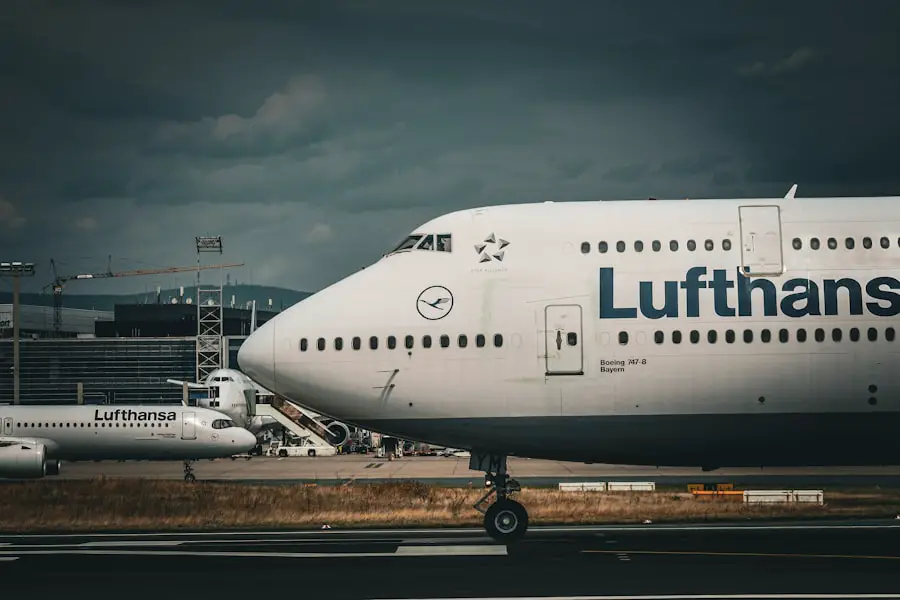
Customer service covers the full journey, including booking, check-in, boarding, communication during delays, cabin service, baggage delivery, refunds, and post-flight support. One unpleasant crew interaction should not define an entire airline, but repeated problems across a large passenger sample can reveal a pattern.
The 2026 J.D. Power North America Airline Satisfaction Study used responses from 10,914 recent passengers. It measured airline staff, digital tools, ease of travel, trust, onboard experience, pre- and post-flight experience, and value for the price paid.
JetBlue ranked highest in the first and business segment, Delta ranked highest in premium economy, and Southwest ranked highest in economy and basic economy. These results show why one airline cannot be labeled “best” or “worst” without identifying the cabin and type of traveler being measured.
Travelers in the United States can also review the U.S. Department of Transportation Air Travel Consumer Reports. These reports include delay, baggage, wheelchair, oversales, complaint, and animal-incident data.
On-Time Performance
Punctuality affects connections, hotel bookings, ground transportation, and the total stress of a trip. A useful on-time figure must identify the year and measurement method.
Cirium defines an on-time airline arrival as reaching the gate within 14 minutes and 59 seconds of the scheduled arrival. Its 2025 annual review reported the following results for the three U.S. airlines in the original comparison:
| Airline | 2025 On-Time Arrivals | North American Rank |
|---|---|---|
| Delta Air Lines | 80.90% | 1st |
| United Airlines | 78.77% | 4th |
| American Airlines | 76.43% | 6th |
These annual figures are useful for broad comparisons, but they do not predict every flight. Weather, airport congestion, air traffic restrictions, route length, aircraft scheduling, and the time of day can all affect an individual departure.
Pro Tip: Look beyond an airline’s systemwide average. Check recent performance for the exact flight number, departure airport, season, and connection you plan to book.
The complete figures and methodology are available in Cirium’s 2025 On-Time Performance Review.
Fleet Age and Maintenance
Fleet age can affect fuel efficiency, cabin design, noise, charging options, and maintenance demands. However, it should not be used as a simple safety score.
An older aircraft can operate safely when it receives proper inspections, approved replacement parts, required repairs, and effective continuing-airworthiness oversight. A newer aircraft can still experience mechanical or operational problems. Maintenance systems, regulator quality, crew training, and safety culture matter more than the number of years since the aircraft was built.
Airlines such as Emirates are often associated with modern long-haul cabins, but even within one airline, the seat and amenities may vary by aircraft type. Before booking, check whether the route uses an older or refurbished aircraft and whether an aircraft swap would materially change your seat or cabin.
Cabin Comfort and Amenities
Cabin comfort includes seat width, legroom, recline, aisle access, cabin noise, temperature, meals, charging ports, Wi-Fi, and entertainment. These features can differ significantly between economy, premium economy, business, and first class.
They may also differ between aircraft operated by the same airline. A carrier praised for a new business-class suite may still use an older cabin on another route. Check the scheduled aircraft, seat map, cabin photos, and recent reviews for the exact flight rather than relying only on the airline’s overall reputation.
Major service rankings frequently place Qatar Airways, Singapore Airlines, Cathay Pacific, and Emirates near the top. In the latest completed Skytrax World Airline Awards, those airlines ranked first through fourth for 2025. That result reflects passenger-experience voting, not a government safety determination.
Pricing and Overall Value
The lowest advertised fare is not always the least expensive trip. Compare the final checkout total and the services included in each fare.
| Cost Area | Questions to Ask |
|---|---|
| Baggage | Are a personal item, carry-on bag, and checked bag included? |
| Seat assignment | Must you pay to select a standard seat or sit with your group? |
| Changes and cancellation | Can the ticket be changed, credited, or refunded? |
| Food and onboard services | Are meals, drinks, Wi-Fi, or entertainment included? |
| Connection risk | Is the itinerary protected on one ticket, and how frequently does the airline operate the route? |
| Disruption support | How easy is it to reach an agent or obtain rebooking when a flight is canceled? |
Low-cost airlines can offer excellent value when their schedules and fare rules match the traveler’s needs. Full-service airlines may justify higher fares through checked baggage, meals, better connections, lounges, or stronger support. The right choice depends on the complete itinerary rather than the base price alone.
How to Avoid a Poor Airline Experience
- Identify the operating airline. Look for wording such as “operated by” on codeshare itineraries.
- Check official safety restrictions. Review the latest government list rather than an undated blog ranking.
- Review recent route-specific reliability. Compare the exact flight, airport, connection, and season.
- Check complaints and baggage data. Use government reports where they are available.
- Compare the full price. Add baggage, seats, meals, changes, and ground costs before deciding.
- Confirm the aircraft and cabin. Look at the seat map and recent photos for the scheduled aircraft.
- Leave connection margin. A slightly longer connection can be valuable at a congested airport or on a route with limited backup flights.
- Read fare and refund terms. Save the confirmation, receipts, and screenshots of services purchased.
Conclusion: Choosing an Airline With Better Evidence
The worst airlines in the world cannot be identified fairly through one universal list. Safety restrictions, punctuality records, customer surveys, cabin quality, and price measure different parts of the trip.
Start with official safety information and the actual operating carrier. Then compare current reliability, complaints, fare rules, cabin details, and total cost for your route. This approach is more useful than choosing or rejecting an airline because of one viral review or an undated ranking.
Small travel accessories cannot fix poor airline operations, but they may make a normal flight more comfortable. A portable white noise machine may reduce distracting cabin noise, while a travel toothbrush can be useful during a long connection. A scarf with a hidden pocket may also provide a convenient place for small valuables while moving through an airport.
Frequently Asked Questions
What are the worst airlines in the world?
There is no single official worldwide ranking because safety, service, delays, comfort, and value require different measurements. For safety-first research, begin with current government bans and restrictions. For service quality, compare recent passenger studies, complaints, route reliability, cabin details, and the final ticket cost.
Are Air Koryo, Nepal Airlines, and Ryanair all considered unsafe?
No. Air Koryo is subject to EU operational restrictions involving approved aircraft types. Nepal-certified airlines are covered by a countrywide EU ban linked to national regulatory oversight. Ryanair is not on the EU Air Safety List. Low-cost service complaints should not be treated as proof of unsafe operations.
Does an older aircraft mean an airline is unsafe?
Not by itself. Older aircraft can operate safely when they receive approved maintenance, inspections, repairs, and effective regulatory oversight. Fleet age is more useful for estimating cabin age, fuel efficiency, and maintenance demand than for making a simple safety judgment.
What factors can make an airline rank poorly?
Common factors include official safety restrictions, weak regulatory oversight, repeated delays, cancellations, baggage problems, poor disruption support, uncomfortable cabins, confusing fare rules, and high extra fees. The importance of each factor depends on the traveler and itinerary.
How can I avoid booking an airline that does not meet my needs?
Check the operating carrier, current government safety information, recent route performance, baggage and complaint data, aircraft type, seat map, fare restrictions, and total checkout price. Reviews are most useful when they are recent and describe the same route and cabin you plan to book.
What are some of the best-rated airlines?
Results depend on the ranking method. In Skytrax’s latest completed World Airline Awards, Qatar Airways ranked first for 2025, followed by Singapore Airlines, Cathay Pacific, and Emirates. These are passenger-experience results rather than an official safety ranking.
Sources
- European Commission EU Air Safety List — current airline bans, countrywide oversight findings, and operational restrictions.
- IATA 2025 Safety Report — global flight, accident, fatality, and IOSA comparison data.
- Cirium 2025 On-Time Performance Review — dated airline punctuality results and measurement method.
- J.D. Power 2026 North America Airline Satisfaction Study — current passenger-satisfaction dimensions and segment leaders.
- U.S. DOT Air Travel Consumer Reports — delays, baggage, wheelchairs, oversales, complaints, and other consumer data.
- Skytrax World’s Top 100 Airlines 2025 — current completed passenger-experience ranking referenced in the article.
