
Last Updated on July 27, 2026 by Daniel Globe
Airline seat width can make a noticeable difference in comfort, especially on a long flight. It controls side-to-side space around your hips, shoulders, and elbows, while seat pitch—not width—is the measurement that mainly determines how much front-to-back room you have for your knees and legs.
Quick Answer
Most standard economy seats are roughly 17 to 18.5 inches wide, although exact dimensions vary by aircraft, row, and armrest design. Current wider examples include JetBlue’s A220 at 18.5 to 19 inches, Delta’s A220 at 18.6 inches, and JAL’s SKY SUITE 787 at about 18.9 inches.
Seat width can matter even more for travelers with broader shoulders or hips because a fraction of an inch on each side changes how easily you can sit without pressing against an armrest or neighboring passenger. A wider seat also gives you more freedom to change your sitting position, although extra width should not be confused with extra legroom.
Personal items can further reduce usable space. Jackets, small bags, entertainment devices, fixed tray tables, and armrest hardware all affect how roomy a seat feels. That is why the published width alone does not tell the entire story.
Key Takeaways
- Most economy seats are around 17 to 18.5 inches wide, but aircraft-specific measurements can fall outside that range.
- Seat width measures side-to-side space; seat pitch measures the front-to-back spacing between rows.
- The exact aircraft and seating configuration matter more than the airline name alone.
- Extra-legroom, exit-row, and bulkhead seats are not automatically wider and may have fixed armrests.
- Long-distance travel can increase DVT risk because of prolonged immobility, not because narrow seat width itself has been proven to cause blood clots.
Disclosure: As an Amazon Associate I earn from qualifying purchases. Some links on this page are affiliate links, at no extra cost to you.
What Airline Seat Width Actually Means
Airlines commonly describe seat width as the usable distance between the armrests, although measurement methods are not perfectly standardized across every carrier. Japan Airlines, for example, explicitly lists its JAL SKY SUITE 787 economy width as approximately 48 cm between the armrests.
The published number is therefore best treated as a comparison tool rather than a guarantee of exactly that much unrestricted body space. A fixed armrest, tray table stored inside the armrest, entertainment controls, or the shape of the seat shell can make two seats with similar published dimensions feel different.
Note: Seat width and seat pitch are different measurements. Width describes side-to-side space, while pitch is the distance from a point on one seat to the same point on the seat directly in front of or behind it. A seat can have generous legroom without being any wider than standard economy.
Standard Seat Widths for Economy, Business, and First Class
There is no universal industry standard that assigns one width to economy, business, or first class. Aircraft fuselage width, seat design, cabin layout, aisle width, armrests, and the number of seats installed across each row all affect the final measurement.
| Cabin | What to Expect |
|---|---|
| Economy | Roughly 17–18.5 inches is common, but current aircraft-specific examples extend to about 19 inches and some individual seats can be narrower. |
| Premium Economy | Usually wider and more widely spaced than economy, but the improvement varies by airline and aircraft. |
| Domestic First / Business | Generally wider than economy. For example, Delta lists 20.5-inch First Class seats on its A220-100. |
| International Business / First | Lie-flat seats and suites vary too much for one meaningful standard. Airlines may quote seat width, bed width, or the dimensions of the surrounding suite, so compare the specific product. |
Because premium seats can be measured in different ways, broad claims such as “business class is always 18–22 inches” or “first class always exceeds 22 inches” can be misleading. Check the airline’s specification for the exact aircraft and cabin instead.
Note: As of July 2026, there is still no binding FAA minimum for passenger seat width or pitch in the United States. The FAA opened a public-comment process on minimum seat dimensions in 2022, and Section 519 of the FAA Reauthorization Act of 2024 again directed the agency to initiate the related rulemaking activity or explain to Congress why it would not do so.
How Seat Widths Vary Among Different Airlines
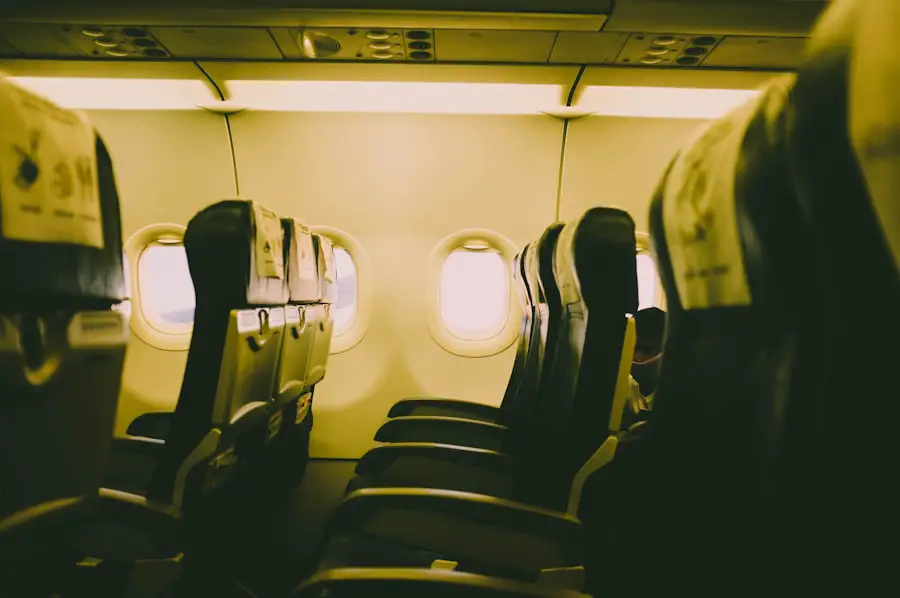
Seat width can vary substantially within the same airline because fleets contain different aircraft and sometimes multiple cabin layouts for one aircraft model. Higher-density configurations generally leave less room available for each seat, while fewer seats across the cabin can create a meaningful width advantage.
Current airline specifications show why checking the exact aircraft matters:
| Airline / Aircraft | Published Economy Width | Layout / Detail |
|---|---|---|
| JetBlue Airbus A220 | 18.5 in on A/C; 19 in on D/E/F | 2-3 economy layout |
| Delta Airbus A220-100 | 18.6 in | 2-3 Main Cabin layout |
| Japan Airlines SKY SUITE 787 | Approx. 48 cm / 18.9 in | 2-4-2, 8-abreast economy |
JetBlue therefore offers economy seats ranging from 17.8 inches on its older A320 configuration to as much as 19 inches on part of its A220 cabin. Delta’s A220 remains one of the roomier economy products in its fleet at 18.6 inches. Japan Airlines is another standout: its JAL SKY SUITE 787 keeps an 8-abreast 2-4-2 economy layout and publishes approximately 48 cm of armrest-to-armrest width.
Southwest also publishes relatively consistent standard-seat dimensions across its Boeing fleet, while international airlines such as Singapore Airlines and Cathay Pacific operate wider economy products on some aircraft. The important qualifier is “some aircraft”: an airline name alone does not guarantee a specific seat width.
Japan Airlines says its 8-abreast SKY SUITE 787 economy layout provides about 5 cm more seat width than the 9-abreast comparison configuration—roughly 48 cm versus 43 cm between the armrests.
Seat Width vs. Seat Pitch: Why the Difference Matters
Seat width answers, “How much room do I have from side to side?” Seat pitch answers, “How closely are the rows spaced?” They affect different parts of comfort, so comparing only one number can lead to a disappointing seat choice.
A traveler with broad shoulders or hips may care most about width. A tall traveler may care more about pitch and knee clearance. Many “extra-legroom” products increase pitch while keeping the same basic seat width as regular economy.
Exit-row and bulkhead seats can also create more legroom without providing more hip or elbow room. Some have fixed armrests containing a tray table or other equipment, which can actually reduce usable width around the hips.
Tips for Choosing the Most Comfortable Seat
| Factor to Check | Why It Matters |
|---|---|
| Exact aircraft type | The same airline can use several aircraft with different seat widths on one route. |
| Seat width | Shows approximate side-to-side room around your hips and elbows. |
| Seat pitch | Helps compare knee room and row spacing. |
| Fixed armrests | Can reduce usable width and prevent you from raising the armrest. |
| Recline and location | Rows near exits, bulkheads, lavatories, or cabin dividers may have special recline or storage restrictions. |
Selecting the most comfortable seat involves more than choosing a class of service. Airline aircraft pages and the live seat map shown during booking are the best places to start because they reflect the carrier’s own configuration. SeatGuru was once a popular resource for this purpose, but it is no longer an active seat-map service in 2026, so old SeatGuru references should not be treated as current configuration data.
Pro Tip: Check the aircraft type before paying for a seat, then compare the airline’s aircraft specification page with the seat map for your actual flight. Aircraft substitutions can still happen, so recheck the seat map closer to departure.
For a smoother ride, seats around the wing area generally experience less vertical motion than seats farther toward the tail. Cabin noise depends on the aircraft and engine location, so the front is not automatically quieter on every plane. An aisle seat makes it easier to stand and walk, while a window seat gives you a wall to lean against but requires disturbing neighbors when you leave the row.
Exit-row and bulkhead seats can provide extra legroom, but check the details before paying more. They may have fixed armrests, limited under-seat storage, different recline, or safety eligibility requirements. More pitch does not automatically mean more width.
The Impact of Seat Width on Passenger Comfort and Health
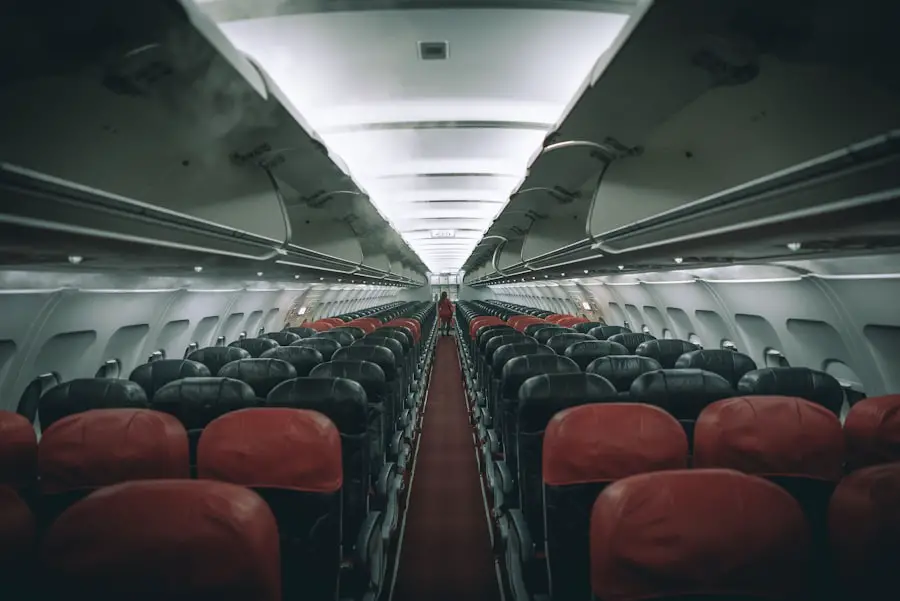
A narrow seat can increase pressure around the hips, shoulders, and armrests and make it harder to change position comfortably. Long periods of sitting can also lead to temporary stiffness and back discomfort. However, the health evidence around blood clots requires an important distinction.
According to the CDC Yellow Book, prolonged immobility during long-distance travel is the established concern for venous thromboembolism, which includes deep vein thrombosis (DVT) and pulmonary embolism. Risk also depends heavily on personal factors such as previous VTE, recent surgery, pregnancy, active cancer, obesity, age, and certain medications. Narrow seat width itself has not been established as an independent cause of DVT.
Warning: On trips lasting more than four hours, move your legs regularly and walk when it is safe to do so. The CDC recommends calf-muscle exercises and periodic movement to counter prolonged immobility. Staying hydrated is reasonable for general comfort, but it has not been proven to prevent travel-related DVT. Travelers with a previous blood clot or other major risk factors should speak with a healthcare professional before long-haul travel about individualized precautions.
An aisle seat can be helpful for travelers who want to stand and walk more often. The CDC notes that easier mobility may be one reason aisle seating has been associated with lower VTE risk in some research. Compression stockings or medication are not routine recommendations for every passenger; whether they are appropriate depends on individual risk.
The psychological side of cramped seating also matters. Travelers who already dislike confined spaces may find a narrow, crowded row more stressful. Choosing an aisle seat, booking a wider aircraft configuration, or purchasing additional space can make the journey feel less restrictive.
Seat Width Regulations and Guidelines
In the United States, the Federal Aviation Administration regulates aircraft safety but currently does not impose a binding minimum passenger seat width or pitch. The agency’s existing requirements include evacuation and other cabin-safety standards rather than a universal comfort dimension.
Congress addressed the issue in Section 577 of the FAA Reauthorization Act of 2018, which directed the FAA to establish minimum passenger-seat dimensions necessary for safety after notice and comment. The FAA opened a 90-day public-comment period in 2022 after publishing research on cabin evacuation.
The issue remained active after that process. Section 519 of the FAA Reauthorization Act of 2024 directed the FAA to initiate the rulemaking activity based on the earlier mandate or, if it decided not to pursue that rulemaking, brief the appropriate congressional committees on its justification.
As of July 2026, the FAA’s public statements still describe the agency as reviewing comments on whether current seat size and spacing affect passenger evacuation. There is therefore no U.S. federal minimum width that travelers can rely on when comparing tickets.
Internationally, there is also no universal IATA comfort rule establishing one minimum airline seat width for every carrier. Aircraft certification, safety regulations, airline specifications, and national rules determine the practical limits, while the actual commercial seating configuration remains airline- and aircraft-specific.
Innovations in Airline Seat Design to Improve Comfort
Modern “slimline” seats use thinner seatbacks, lightweight structures, and reshaped cushioning to preserve knee clearance while reducing the amount of cabin space occupied by the seat itself. They can improve usable leg space at a given pitch, but a thinner seatback does not automatically increase seat width.
Seat shells, sculpted sidewalls, adjustable headrests, improved cushions, and better storage can also make a cabin feel more usable without changing its basic dimensions. These refinements matter because published width is only one part of how a seat feels during several hours of travel.
A more direct way to create width is to install fewer seats across the cabin. Japan Airlines’ use of an 8-abreast layout on its SKY SUITE Boeing 787 is a clear example. JAL publishes an approximately 48 cm seat width in that configuration, compared with the approximately 43 cm figure it cites for a typical 9-abreast comparison layout.
What to Do If You Need More Seat Width
If a standard economy seat may not provide enough room, check the airline’s policy before purchasing the ticket rather than waiting until boarding. Many airlines allow travelers to buy an additional adjacent seat, and some carriers publish specific procedures for doing so.
Do not assume that an extra-legroom upgrade solves a width problem. On many aircraft, the extra charge buys more seat pitch while the seat itself remains the same width. Exit and bulkhead rows may also have fixed armrests, making the usable space more restrictive despite the extra legroom.
Travelers who need a particular seat because of a disability should also know that U.S. Department of Transportation rules provide certain seating accommodations. The DOT Seating Accommodation Guide explains circumstances involving movable aisle armrests, adjoining seats, and certain bulkhead or greater-legroom accommodations within the purchased class of service.
Note: Airline extra-seat and seating policies vary. Review the operating carrier’s current rules before booking, especially on codeshare trips where the airline selling the ticket may not be the airline operating the aircraft.
How to Advocate for More Comfortable Airline Seating
Passengers can give airlines useful feedback by being specific: include the aircraft type, route, seat number, published dimensions, and what made the seat difficult to use. Detailed reports are more useful than a general complaint that a seat “felt small.”
Travelers can also follow FAA seat-dimension rulemaking and passenger-rights organizations such as FlyersRights.org, which has participated in the debate over minimum seat dimensions. In conclusion, understanding seat width gives travelers a practical way to compare aircraft and avoid assuming that every economy seat—or every premium upgrade—offers the same amount of personal space.
For broader trip planning, you can also read this guide to traveling by boat or air. If you’re choosing resources for a destination, see how to choose the best travel guidebook. A compact travel setup can also improve comfort on longer trips, including practical items such as the options covered in this travel toothbrush guide.
Frequently Asked Questions
What is the standard width of an airline seat?
There is no single standard. Economy seats commonly measure about 17 to 18.5 inches wide, but exact dimensions vary by aircraft, row, seat design, and airline. Some current economy seats reach about 19 inches.
How is airline seat width measured?
Airlines commonly quote the usable width between the armrests, although measurement methods can vary. Fixed armrests, tray tables, and seat hardware can also change how much usable space you actually feel.
Which airlines offer wider economy seats?
It depends on the aircraft. Current wider examples include JetBlue’s Airbus A220 at 18.5 to 19 inches, Delta’s A220 at 18.6 inches, and Japan Airlines’ SKY SUITE 787 at approximately 48 cm, or 18.9 inches. Always verify the aircraft assigned to your flight.
Does an extra-legroom seat also give you more width?
Not necessarily. Extra-legroom seating usually increases seat pitch, which is the spacing between rows. The seat width may be identical to standard economy, and some exit-row or bulkhead seats have fixed armrests that reduce usable width.
Are there regulations for minimum airline seat width?
As of July 2026, the United States does not have a binding FAA minimum passenger seat width or pitch. Congress has directed the FAA to address minimum seat dimensions necessary for safety, and the agency has conducted research and collected public comments, but no universal minimum width is currently in force.
Can passengers request a wider seat or extra seat?
Airline policies vary. Travelers can often buy a premium cabin or an additional adjacent seat, but an extra-legroom seat is not automatically wider. Check the operating airline’s current extra-seat rules before purchasing your ticket.
Do narrow airline seats cause DVT?
Narrow seat width itself has not been established as an independent cause of DVT. The recognized travel-related risk comes mainly from prolonged immobility, especially on trips lasting more than four hours and in people with additional risk factors. Regular leg movement and periodic walking can help maintain circulation.
What can passengers do to make a narrow seat more comfortable?
Check the exact aircraft before booking, compare both width and pitch, avoid fixed-armrest seats when usable width is important, and consider an aisle seat if you want to stand more easily. On long trips, move your legs regularly and walk when safe to reduce prolonged immobility.
Sources
- Federal Aviation Administration — Minimum Seat Dimensions Request for Comments — FAA seat-dimension research, public-comment process, and regulatory background.
- CDC Yellow Book — Deep Vein Thrombosis and Pulmonary Embolism — long-distance travel risk, mobility, hydration evidence, and prevention guidance.
- U.S. Department of Transportation — Seating Accommodation Guide — disability-related seating rights, movable armrests, adjoining seats, and extra-seat guidance.
- JetBlue — Seats and Individual Seat Details — current aircraft-specific economy seat widths and layouts.
- Delta Air Lines — Airbus A220-100 Specifications — current Main Cabin and First Class width and pitch measurements.
- Japan Airlines — JAL SKY WIDER Economy Seats — 787 8-abreast configuration, armrest-to-armrest width, and pitch specifications.
