
Last Updated on July 27, 2026 by Tyler Morgan
Airline seat width isn’t fixed, and the airline name alone won’t tell you how much room you’ll get. Width can change with the aircraft, cabin, seat position, armrest design, and retrofit. Even two seats advertised at the same width can feel different. The best way to compare aircraft types is to check the exact configuration, seat width, and pitch for the flight you’re considering.
Quick Answer
Airline seat width varies by airline, aircraft, row, and measurement method. On current U.S. carrier pages, published economy or standard-seat figures run from about 15.5 inches in the narrowest locations to about 19 inches in some seats. For a fair comparison, check the exact aircraft, seat map, pitch, and whether the armrests are fixed.
Key Takeaways
- Seat width depends on the exact aircraft, cabin, row, and seat design—not just the airline.
- Current U.S. airline-published economy figures can range from roughly 15.5 inches in the narrowest seat locations to about 19 inches or slightly more in some configurations.
- Extra-legroom economy often adds seat pitch without adding seat width.
- A widebody aircraft is not automatically wider in economy than a narrowbody.
- Fixed armrests, bulkheads, exit rows, retrofits, and aircraft swaps can change how much usable space a seat actually provides.
Disclosure: As an Amazon Associate I earn from qualifying purchases. Some links on this page are affiliate links, at no extra cost to you.
How Airline Seat Width Is Measured
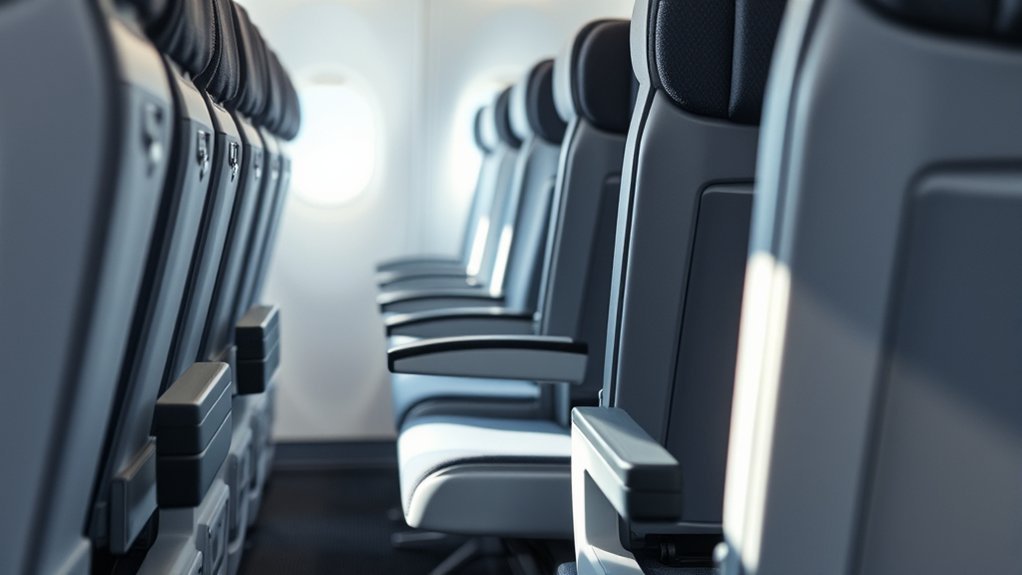
Seat-width numbers can be confusing because publishers do not always describe the measurement in the same way. For its 2022 passenger-seat-dimensions proceeding, the Federal Aviation Administration defined seat width as the distance between the inner faces of the armrests directly above the bottom seat cushion.
The A-through-D examples in the graphic above are useful for showing why different reference points can produce different numbers, but those lettered measurements are not an FAA or industry-wide standard. When comparing airlines, look for a stated methodology rather than assuming two published numbers were measured identically.
There is another source of confusion: some airlines separately publish a child-seat-fit width. That figure describes the opening available for a child restraint system and can be smaller than the advertised seat width because of fixed armrests or other seat hardware. For example, Delta lists its A320 Main Cabin seat width at 18 inches while also showing a smaller minimum dimension in its child-seat-fit guide.
Note: For an apples-to-apples comparison, use the airline’s stated seat-width figure and then check fixed armrests or child-seat-fit dimensions separately. A single advertised width does not tell you everything about usable space.
An advertised 18-inch seat can still have a narrower opening at certain rows when fixed armrests, tray tables, or other hardware take up space.
Airline Seat Width on Major U.S. Carriers
The most useful comparison is not a single fleet-wide number. Current airline specifications show meaningful differences between aircraft and even between seats on the same plane. The figures below are examples published by the airlines and should be treated as booking references rather than a universal measurement standard.
| Airline / aircraft | Published economy width | Useful context |
|---|---|---|
| American 737-800 | 16.6–17.8 in Main Cabin; 17.8 in Main Cabin Extra | 30-in Main Cabin pitch; 34 in or special-row spacing in Main Cabin Extra |
| Delta A320 | 18 in Main Cabin and Comfort+ | Main Cabin pitch is 30–31 in; Comfort+ is 34 in |
| Delta Connection E175 | 18.3 in Main Cabin | 2-2 economy layout means no middle seat |
| JetBlue A220 | 18.5 in at AC seats; 19 in at DEF seats | 2-3 layout; width changes by side of cabin |
| Southwest 737-800 / MAX 8 | 15.5–17.8 in | Airline publishes both narrowest and widest seat dimensions |
| Frontier A320 | 17.1–18 in window; 17.4–18 in aisle; 17.8–19.1 in middle | Seat position matters as much as aircraft type |
| Spirit A321neo | 16.5–18.5 in standard seats | Published range varies by seat location/configuration |
American Airlines Seat Width
American Airlines publishes unusually detailed width and pitch information on its aircraft specifications page. On the current Boeing 737-800 configuration, Main Cabin seats are listed at 16.6–17.8 inches wide with 30 inches of pitch. Main Cabin Extra is listed at 17.8 inches wide with 34 inches of pitch, bulkhead spacing, or exit-row spacing.
The Airbus family varies more. American currently publishes widths from the mid-16-inch range into the high-18-inch range depending on aircraft version and seat position. American is also introducing refreshed A319 and A320 interiors during 2026, so checking the actual configuration matters even more during the transition.
American’s widebody figures also show why aircraft size alone is a poor guide. On the Boeing 777-200, Main Cabin widths vary by configuration and seat position, while Premium Economy is wider. Its current 787-9 configurations likewise separate narrower Main Cabin seating from wider Premium Economy seats.
One older example should no longer be used for current bookings: American officially retired its Boeing 767 fleet in 2020. References to the 767-223ER or 767-300ER therefore describe historical American service, not a seat you can currently select on an American-operated flight.
Warning: Do not assume Main Cabin Extra, Comfort+, Premium Class, or another extra-legroom product is also wider. Many of these seats add pitch while keeping the same basic width as standard economy.
Delta Seat Width
Delta’s current aircraft pages show how much width can change within one airline. The Airbus A320 lists 18-inch seats in both Main Cabin and Delta Comfort+, but Main Cabin has 30–31 inches of pitch while Comfort+ has 34 inches. The A321-200 likewise lists 18-inch Main Cabin seats with 30–31 inches of pitch.
Delta’s Boeing 737-800 is narrower on paper at 17.3 inches in Main Cabin and Comfort+, while the Delta Connection Embraer E175 lists 18.3-inch Main Cabin seats. That E175 is also arranged 2-2 in economy, eliminating the middle seat.
The older Embraer 190 figure sometimes seen in seat-width comparisons is no longer the right current Delta reference. Delta’s published Embraer fleet now centers on the E170 and E175 operated by Delta Connection carriers.
Alaska Airlines Seat Width
Alaska’s fleet is another reason to check the exact plane rather than rely on one airline-wide number. Its July 2026 fleet listing includes passenger 737-700s, 737-800s, 737-900ERs, 737 MAX aircraft, and E175 regional jets, alongside aircraft associated with Hawaiian Airlines.
For the 737-800 and 737-8 MAX, Alaska publishes both pre-retrofit and post-retrofit layouts. The number of First, Premium, and Main Cabin seats can change between those versions, and Alaska’s aircraft pages include seat-width diagrams for the specific model. That makes the individual aircraft page more useful than a single fleet-wide “about 17 inches” claim.
- Check whether your flight shows a 737-700, 737-800, 737-900ER, 737 MAX, or E175.
- Open the matching Alaska aircraft page and inspect the current seat diagram.
- On the E175, every Main Cabin passenger gets either a window or aisle seat because the cabin uses a 2-2 layout.
- Recheck near departure because the assigned aircraft can change.
Other U.S. Airlines Worth Comparing
JetBlue publishes some of the clearest seat-width information by aircraft. Its A220 Core cabin is especially notable because seats AC are listed at 18.5 inches while seats DEF are listed at 19 inches. Restyled A320 seats are listed at 18 inches.
Southwest publishes narrowest and widest dimensions instead of one number. Its 737-700 ranges from 15.5 to 17 inches, while the 737-800 and MAX 8 range from 15.5 to 17.8 inches.
Frontier goes a step further and separates window, middle, and aisle widths. On its A320, published middle-seat widths reach as high as 19.1 inches. Spirit also publishes ranges by aircraft and seat type, including 16.5–18.5 inches for standard seats on its A321neo.
Why Aircraft Type Changes Seat Width
Aircraft structure sets the available cabin space, but the airline decides how that space is divided among seats, aisles, armrests, galleys, and other fixtures. That is why the same aircraft family can produce different passenger experiences—and why a narrowbody can sometimes have a wider economy seat than a widebody.
| Aircraft family | What current examples show |
|---|---|
| Boeing 737 | Current published U.S. examples range from narrow seat locations around 15.5 inches to roughly 17.8 inches in economy. |
| Airbus A320 | Delta lists 18-inch Main Cabin seats; JetBlue lists 17.8 or 18 inches depending on A320 version; Frontier publishes different widths by seat position. |
| Boeing 777 | American’s Main Cabin width varies by configuration and seat position, including figures below 18 inches. Check the specific airline layout rather than assuming every 777 is roomy. |
| Boeing 767 | Delta currently lists 18.1-inch Main Cabin seats on its 767-300ER and 767-400ER. American no longer operates the type. |
| Embraer E175 | Delta lists 18.3-inch Main Cabin seats, and the 2-2 layout removes the middle-seat issue entirely. |
| MD-80 family | This is now mainly a historical U.S. comparison rather than a useful major-airline booking reference; American retired its MD-80 fleet in 2019. |
The takeaway is simple: widebody does not automatically mean wider economy seating. American’s current 777 and 787 specifications include Main Cabin seats narrower than the 18-inch seats Delta publishes for its A320. Configuration matters more than the number of aisles.
How Seat Width Varies by Cabin Class
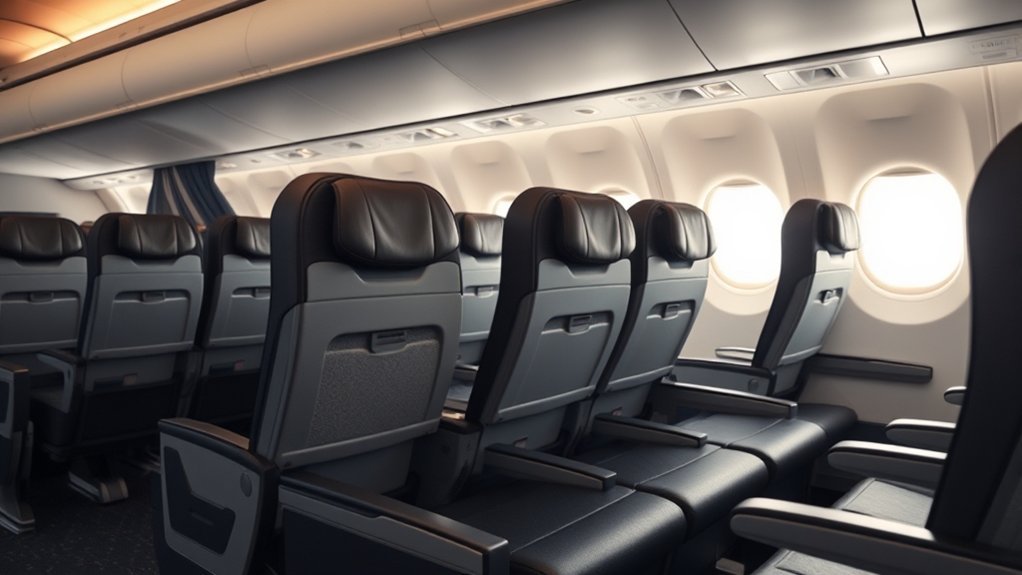
Cabin class can change seat width substantially, but the name of the cabin matters. An extra-legroom economy product may give you more front-to-back space without adding any shoulder room.
- Standard economy: usually has the least pitch and often the narrowest seat on the aircraft.
- Extra-legroom economy: commonly increases pitch while keeping the same or similar seat width.
- Premium economy: on long-haul aircraft is usually a physically wider seat with more pitch and a different seat shell.
- Domestic first class: current American and Delta narrowbody examples commonly reach roughly 20–21 inches.
- Long-haul business class: varies widely because seat shells, suites, staggered layouts, and lie-flat beds are measured differently from conventional economy seats.
American’s 737-800 makes the distinction clear: Main Cabin Extra is 17.8 inches wide, but some regular Main Cabin seats are also 17.8 inches. The main gain is pitch. Delta’s A320 shows the same pattern: Main Cabin and Comfort+ are both listed at 18 inches wide, while Comfort+ increases pitch from 30–31 inches to 34 inches.
True premium economy is different. American currently lists Premium Economy seats around 18.5–19 inches on several long-haul configurations, giving travelers both additional width and additional pitch compared with Main Cabin.
Seat Width vs. Seat Pitch vs. Usable Space
Seat width is only one part of comfort. Before booking, compare these measurements separately:
| Measurement | What it tells you |
|---|---|
| Seat width | Side-to-side space. The FAA’s seat-size proceeding defines it between the inner faces of the armrests above the seat cushion. |
| Seat pitch | Distance from a fixed point on one seat to the same point on the seat directly ahead or behind. It is not the same thing as usable legroom. |
| Child-seat-fit width | The opening available for a child restraint. Fixed armrests can make this smaller than the nominal seat-width figure. |
| Seat shape and hardware | Armrests, tray tables, entertainment boxes, sidewalls, and seat contours can affect how roomy a nominal width feels. |
Why Seat Width Numbers Differ by Source
Seat-width numbers can differ because one source may quote the airline’s nominal seat specification while another reports a narrower opening at a particular row or seat position. Airlines themselves sometimes publish more than one dimension. Southwest, for example, publishes both its narrowest and widest seat widths, while Frontier breaks width down by window, middle, and aisle position.
Delta’s pages illustrate another important distinction: the airline publishes a normal seat-width figure and a separate child-seat-fit dimension. A reader who copies one number from each column without noticing the labels could mistakenly conclude that two sources disagree.
The safest approach is to use the airline’s own aircraft page first, confirm the cabin and row, and then use third-party seat maps only for extra context such as window alignment, galley proximity, or passenger comments.
Pro Tip: Before booking, write down both the aircraft model and the seat configuration shown for your flight. Recheck the reservation before departure because airlines can substitute another aircraft or move a route to a different retrofit version.
Fixed Armrests, Bulkheads, and Exit Rows
A seat with extra legroom is not automatically wider. Bulkheads and some exit-row seats may place a tray table, entertainment control, or other hardware inside the armrest. That can make the armrest fixed and reduce the open space available at hip level.
This is particularly important when you are choosing a seat for a child restraint or because you need every available inch of lateral room. Airline aircraft pages that include movable-armrest locations or child-seat-fit dimensions are more useful than a generic fleet-wide width chart.
Note: Exit-row seats usually attract attention for extra pitch, not extra width. A fixed armrest can sometimes make the usable opening smaller even when the row provides significantly more legroom.
How to Choose the Widest Airline Seats
To choose a roomier airline seat, compare the actual flight rather than relying on an airline’s overall reputation.
- Identify the operating aircraft. Check the flight details for the aircraft model, not just the airline.
- Open the airline’s official aircraft page. Look for the exact configuration if more than one version exists.
- Compare width and pitch separately. A seat can have excellent legroom without being any wider.
- Check the row. Bulkheads, exit rows, and seats beside curved sidewalls can have different hardware or usable space.
- Look for fixed-armrest or child-seat-fit information. These details can reveal a narrower opening than the headline seat-width figure suggests.
- Recheck before departure. Equipment swaps can change both the seat map and the cabin configuration.
For example, Delta’s A320 provides 18-inch Main Cabin seats, while its 737-800 lists 17.3 inches. American’s 737-800 Main Cabin ranges from 16.6 to 17.8 inches. On longer trips, don’t assume the Boeing 787 automatically provides a wider economy seat: American currently lists Main Cabin widths around 16.5–17.6 inches on one 787-9 configuration, while Premium Economy reaches roughly 19–19.5 inches.
If You Need More Seat Space
If standard seat width may not provide enough room for you to travel comfortably, check the airline’s extra-seat policy before paying for a ticket. Policies differ in how an additional seat is booked, whether the armrest must lower, what happens after an aircraft swap, and whether the extra seat can be refunded.
For example, Frontier tells customers who cannot fully lower both armrests or who need additional neighboring space to book two seats. JetBlue also provides a specific process for booking an extra seat from its seat-information page.
Do not rely only on a third-party “passenger of size” summary. Check the operating airline’s current policy directly because procedures can change and partner-operated flights may follow different rules.
Frequently Asked Questions
Which airline seats are the widest?
There is no single widest airline because width changes by aircraft and seat position. Among current U.S. economy examples, JetBlue lists up to 19 inches on parts of its A220 cabin, while Frontier publishes widths up to 19.1 inches for some middle seats. Delta’s E175 Main Cabin is 18.3 inches. Compare the exact aircraft rather than airline averages.
Why avoid seat 11A on a plane?
There is no universal reason to avoid seat 11A. Row numbers mean different things on different aircraft and airlines. On one configuration 11A may be a normal window seat; on another it could have a fixed armrest, limited recline, an unusual window position, or be near an exit. Check the exact seat map for your flight.
What drinks are not recommended on a plane?
Seat width does not change which drinks are safe to consume. For routine comfort, water is a simple choice on a long flight. Alcohol, large amounts of caffeine, or carbonated drinks may make some travelers feel less comfortable or interfere with sleep, so choose according to your own tolerance and medical guidance.
What is a good airline seat width?
Around 18 inches is toward the wider end of many current U.S. standard-economy examples, while seats around 16–17 inches provide less lateral room. Personal comfort depends on your body dimensions, the armrests, seat shape, neighboring passengers, and how the airline measured the published width.
Is seat width the same as seat pitch?
No. Seat width measures side-to-side space. Seat pitch measures the distance from a fixed point on one seat to the same point on the seat directly ahead or behind it. A seat can have generous pitch and average width, or good width and relatively tight pitch.
Are exit-row seats wider?
Not necessarily. Exit rows are mainly known for additional pitch. Some exit-row seats have fixed armrests or other built-in hardware, so the usable opening can be the same as or narrower than another economy seat. Check the airline’s row-specific seat map before paying extra.
Are bulkhead seats narrower?
Sometimes. A bulkhead seat may store the tray table or entertainment controls inside a fixed armrest, which can reduce usable width even when the airline lists the same nominal seat width as nearby rows. The exact effect depends on the aircraft and seat design.
Conclusion
Airline seat width is more complicated than a single number beside an airline name. Current U.S. carrier-published figures range from roughly 15.5 inches in some narrow seat locations to around 19 inches or slightly more in others, but those numbers are not always measured or presented in exactly the same way.
For the best comparison, check the operating aircraft, cabin, row, seat width, pitch, and armrest design together. Extra-legroom economy does not necessarily mean a wider seat, and a widebody does not automatically beat a narrowbody for shoulder room. Rechecking the aircraft before departure is also worthwhile because retrofits and equipment swaps can change the seat you ultimately get.
Sources
- Federal Aviation Administration — Minimum Seat Dimensions — FAA seat-dimension research, safety context, and regulatory definitions.
- American Airlines — Aircraft Specifications — current seat width, pitch, cabin, and configuration figures for American aircraft.
- Delta Air Lines — Airbus A320 Specifications — Main Cabin, Comfort+, First Class, pitch, width, and child-seat-fit dimensions.
- Alaska Air Group — Current Fleet — current aircraft types and fleet counts as of July 2026.
- JetBlue — Seats — aircraft-specific Core seat widths, layouts, and seat characteristics.
- Southwest Airlines — Seat Specifications — current 737 seat-width and pitch ranges by aircraft type.
