
Last Updated on July 23, 2026 by Daniel Globe
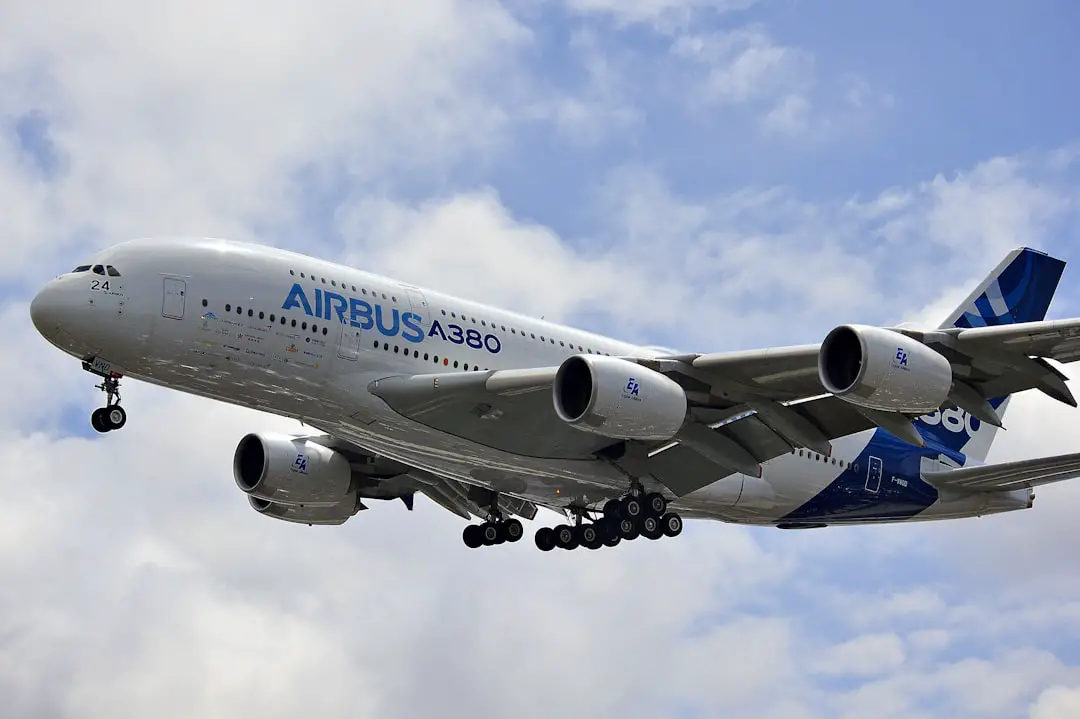
A six-hour flight can feel endless, yet the aircraft may already be moving through the air at close to 600 mph. Commercial jets are fast, but airlines normally choose a cruise speed that balances travel time, fuel use, engine life, passenger comfort, and safety margins.
Concorde showed that scheduled passenger flights could travel at twice the speed of sound. However, it was not the fastest passenger aircraft by top speed, and the economic and environmental costs of supersonic service helped bring that era to an end.
Understanding airliner speed also requires more than reading one mph figure. Pilots use airspeed, ground speed, knots, and Mach for different purposes, while wind and temperature can change the numbers passengers see on flight-tracking screens.
Quick Answer
Most jet airliners cruise at about Mach 0.78 to Mach 0.85, usually around 500 to 600 mph (805 to 965 km/h) through the air. Ground speed may be higher or lower because of wind. Concorde cruised near Mach 2, but no scheduled passenger airliner flies supersonically today.
Key Takeaways
- Most modern jet airliners cruise between roughly Mach 0.78 and Mach 0.85 rather than at their maximum certified speed.
- The Tupolev Tu-144 reached a higher top speed than Concorde, but Concorde operated a longer and more successful scheduled passenger service.
- Airspeed measures movement relative to the surrounding air, while ground speed includes the effect of wind.
- Aircraft design, weight, altitude, temperature, engine performance, turbulence, and air traffic restrictions all affect speed.
- NASA and private manufacturers are testing new supersonic technology, but no new supersonic passenger airliner has entered commercial service.
What’s in This Article
- How Fast Do Airliners Fly?
- The Fastest Airliners in the World
- Airliner Speed by Flight Phase
- Factors Affecting Airliner Speed
- The Role of Jet Engines in Airliner Speed
- The Impact of Weather on Airliner Speed
- Speed Records in Airliner History
- The Average Speed of Commercial Airliners
- How Pilots and Controllers Measure Airliner Speed
- Why Airliners Do Not Fly at Maximum Speed
- The Future of Airliner Speed
- Why Commercial Supersonic Flight Disappeared
- The Importance of Speed in Airliner Design
- How Airliner Speed Affects Travel Time
- Frequently Asked Questions
Disclosure: As an Amazon Associate I earn from qualifying purchases. Some links on this page are affiliate links, at no extra cost to you.
How Fast Do Airliners Fly?
A typical single-aisle jet, such as a Boeing 737 or Airbus A320-family aircraft, normally cruises near Mach 0.78 to Mach 0.80. Depending on altitude and air temperature, that usually represents a true airspeed of roughly 515 to 535 mph.
Long-haul aircraft may cruise slightly faster. Airbus lists a cruise speed of Mach 0.85 for the A350-900, while Boeing describes the 777 as a Mach 0.84 aircraft.
Turboprop airliners are slower, often cruising near 300 mph, but they can be more economical on short regional routes. Historic supersonic aircraft operated in a completely different speed range, with Concorde cruising at about Mach 2.
An airliner can maintain the same Mach number while its displayed ground speed changes by more than 100 mph because the surrounding air mass is moving too.
The Fastest Airliners in the World
Supersonic Passenger Airliners
The Soviet Tupolev Tu-144 reached a higher top speed than Concorde. The Smithsonian National Air and Space Museum lists the Tu-144 at Mach 2.15 and Concorde at Mach 2.04.
Concorde nevertheless became the better-known and more successful supersonic passenger aircraft. British Airways and Air France operated it on scheduled routes from 1976 until 2003. Its delta wing, narrow fuselage, powerful Olympus engines, and heat-resistant structure allowed it to cruise at approximately 1,350 mph and as high as 60,000 feet.
At that altitude, Concorde flew above most conventional airline traffic and much of the weather encountered by subsonic aircraft. High altitude did not eliminate every possibility of turbulence, but it gave the aircraft a relatively clear operating environment.
Fast Subsonic Airliners in Service
Modern scheduled passenger aircraft remain below the speed of sound. Faster long-haul designs generally cruise around Mach 0.84 to Mach 0.85, while many single-aisle aircraft cruise around Mach 0.78 to Mach 0.80.
The difference may look small, but pushing closer to Mach 1 causes drag to rise sharply. Airlines therefore gain more from an efficient aircraft that can hold a slightly lower speed for many hours than from one that burns substantially more fuel for a modest time saving.
Airliner Speed by Flight Phase
An airliner does not maintain its cruise speed for the entire journey. Its speed changes continuously according to altitude, weight, configuration, weather, traffic instructions, and the stage of flight.
| Flight Phase | Typical Speed Range | What Changes It |
|---|---|---|
| Takeoff | Roughly 130–180 knots | Aircraft weight, runway length, temperature, wind, flap setting, and elevation |
| Initial climb | Often 200–300 knots indicated | Airspace limits, climb profile, noise procedures, and traffic control |
| Cruise | About Mach 0.78–0.85 for most jets | Aircraft model, weight, altitude, temperature, wind, and airline cost settings |
| Descent and approach | Gradually reduced from cruise to about 140–180 knots | Traffic sequencing, turbulence, flap deployment, and approach design |
| Landing | Roughly 120–160 knots | Landing weight, aircraft model, flap setting, runway conditions, and wind |
These are broad examples rather than speeds pilots can choose freely. Flight crews calculate precise takeoff and landing speeds for each flight using the aircraft’s weight, configuration, weather, runway, and performance data.
Factors Affecting Airliner Speed
Aerodynamics and Drag
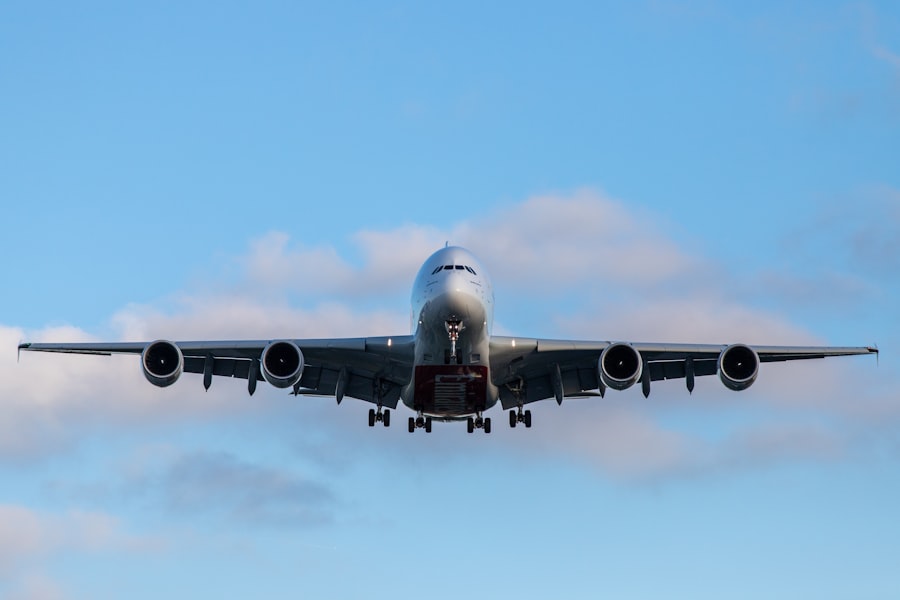
Aircraft shape plays a major role in speed. A smooth fuselage, efficient wing, carefully shaped engine nacelles, and clean control surfaces reduce the resistance created as the aircraft moves through the air.
According to NASA’s drag equation, aerodynamic drag depends partly on the square of velocity. That means drag can rise rapidly as speed increases, even before transonic effects are considered.
As a conventional jet approaches the speed of sound, local airflow over parts of the wing may become supersonic. Shock waves then form and produce a sharp rise in drag. Modern swept wings delay this effect, but they do not eliminate it.
Weight and Aircraft Configuration
A heavier aircraft needs more lift and generally produces more induced drag. It may also need a lower initial cruise altitude until enough fuel has been burned to climb efficiently.
Landing gear, flaps, spoilers, and open doors create additional drag. Airliners therefore fly much slower when these components are extended during takeoff, approach, and landing.
Altitude and Temperature
Air becomes thinner with altitude, reducing drag and allowing high true airspeeds. However, the wings and engines still need enough air density to perform safely, so every aircraft has a practical altitude limit.
Temperature also changes the speed of sound. This is why Mach 0.85 does not equal one permanent mph value. At normal jet-cruise altitudes, the speed of sound is lower than it is at sea level.
Operating Limits
Transport aircraft have maximum indicated-speed and Mach limits, commonly shown as VMO and MMO. These protect the aircraft from excessive aerodynamic loads, shock-wave effects, control problems, and structural stress.
Pilots normally leave a margin below those limits because turbulence or a sudden temperature change can briefly increase Mach or indicated airspeed.
Pro Tip: When comparing two flights, look at both the direction and strength of the upper-level winds. A strong tailwind can produce a high ground speed without making the aircraft exceed its normal airspeed or Mach limit.
The Role of Jet Engines in Airliner Speed
Engines provide the thrust needed to accelerate, climb, and overcome drag, but engine category alone does not determine an aircraft’s maximum speed. The wing, fuselage, inlets, operating altitude, structural limits, and intended mission are equally important.
| Propulsion Type | Airliner Example | Typical Cruise | Best Suited For |
|---|---|---|---|
| Turbojet with reheat | Concorde | About Mach 2 | Historic supersonic passenger travel |
| High-bypass turbofan | Boeing 737, Boeing 777, Airbus A320, Airbus A350 | About Mach 0.78–0.85 | Efficient short-, medium-, and long-haul service |
| Turboprop | ATR 72 | Around 300 mph | Efficient regional flights and shorter runways |
Modern turbofans move a large amount of air around the engine core. This produces efficient thrust at subsonic speeds and lowers fuel use compared with older pure turbojets.
Engines such as the Pratt & Whitney geared turbofan and Rolls-Royce Trent XWB focus mainly on efficiency, durability, noise reduction, and emissions rather than pushing conventional airliners close to Mach 1.
A high thrust-to-weight ratio helps an aircraft accelerate and climb, but cruise efficiency depends on the balance between available thrust and aerodynamic drag. Once thrust and drag are equal, the aircraft maintains a steady speed.
The Impact of Weather on Airliner Speed
Weather can change an airliner’s progress without greatly changing its speed through the surrounding air. Jet streams are fast-moving bands of upper-level wind that can produce strong tailwinds in one direction and headwinds in the other.
A tailwind raises ground speed and can reduce flight time. A headwind lowers ground speed and may require more fuel or a different route. This is why an eastbound transatlantic flight often takes less time than the westbound return.
Turbulence does not always force an aircraft to slow down, but pilots may select a recommended turbulence-penetration speed or request a different altitude. Thunderstorms can produce much larger delays by forcing deviations around unsafe areas.
Note: Airspeed is the aircraft’s speed relative to the air mass. Ground speed is its speed relative to the earth. NASA explains that wind is the vector difference between these values, which is why they can vary so widely.
Speed Records in Airliner History
Supersonic Speed Records
The Tu-144 reached a higher top Mach number, but Concorde established the most famous scheduled passenger speed records. Its fastest transatlantic crossing took place on February 7, 1996.
According to British Airways, Concorde completed the New York-to-London trip in 2 hours, 52 minutes, and 59 seconds. A normal subsonic schedule for that route takes much longer.
Subsonic Distance and Endurance Milestones
In August 1989, the Qantas Boeing 747-400 named “City of Canberra” flew nonstop from London to Sydney in 20 hours and 9 minutes. The approximately 11,000-mile demonstration was notable for range and endurance rather than maximum speed.
It showed how aircraft efficiency, fuel planning, favorable operating conditions, and long-range design could extend nonstop service. Later airliners built on those capabilities to make ultra-long-haul passenger routes more practical.
What an Aviation Record Measures
A speed record may refer to maximum airspeed, average ground speed, route time, or time between specific geographic points. Distance and endurance records measure different achievements, so they should not be compared as if they used the same standard.
The Average Speed of Commercial Airliners
Most commercial jet airliners cruise between approximately 500 and 600 mph in true airspeed, although smaller jets may sit near the lower end and faster long-haul aircraft may sit near the upper end.
A more useful aviation description is Mach 0.78 to Mach 0.85. Mach automatically relates the aircraft’s speed to the local speed of sound and therefore better represents the aerodynamic conditions around a high-altitude jet.
A flight-tracking app may show a ground speed above 600 mph, or occasionally much higher, when a strong tailwind is present. That does not mean the aircraft has exceeded its approved Mach limit.
How Pilots and Controllers Measure Airliner Speed
Pilots do not rely on one speed number. Different measurements answer different operational questions.
Indicated Airspeed
Indicated airspeed is the value shown on the primary flight display before all atmospheric and instrument corrections are applied. It is especially important during takeoff, climb, approach, and landing because it relates closely to aerodynamic performance.
True Airspeed
True airspeed is the aircraft’s actual speed through the surrounding air mass after corrections for altitude and temperature. It is normally much higher than indicated airspeed during high-altitude cruise.
Ground Speed
Ground speed measures movement across the earth. Navigation systems calculate it using position data, and air traffic systems use it to predict spacing and arrival times.
Mach Number
Mach number compares the aircraft’s true speed with the local speed of sound. Mach 0.85 means the aircraft is traveling at 85% of the speed of sound under the conditions around it.
Airliners commonly transition from controlling indicated airspeed during climb to controlling Mach at high altitude. During descent, they transition back to an indicated-speed target.
Why Aviation Uses Knots
A knot equals one nautical mile per hour. Aviation uses nautical miles because they relate directly to latitude, longitude, and worldwide navigation charts. One knot is about 1.15 statute mph.
Why Airliners Do Not Fly at Maximum Speed
An aircraft’s maximum certified speed is a safety boundary, not a recommended everyday target. Flying close to that boundary leaves less room for turbulence, temperature changes, wind variation, or descent errors.
Higher speed also creates more drag. Because drag rises rapidly with velocity, a small speed increase can require a disproportionately large increase in thrust and fuel flow.
The problem becomes greater in the transonic range. Shock waves form over the wing, drag rises sharply, airflow can separate, and control characteristics may change. A conventional subsonic aircraft is not shaped or powered to remain efficient near Mach 1.
Airlines instead select an economical cruise setting based on fuel price, schedule needs, aircraft weight, maintenance considerations, and the value placed on time. Pilots may fly slightly faster to recover a delay, but doing so consumes additional fuel.
The Future of Airliner Speed
Boom Overture
Boom Supersonic’s Overture is designed to cruise at Mach 1.7 and carry passengers on routes where supersonic operations are permitted. Boom lists orders and pre-orders from several airlines, but Overture remains under development and has not entered commercial passenger service.
Boom’s smaller XB-1 demonstrator exceeded the speed of sound in 2025. Those flights tested technology and operating concepts, but XB-1 was not a passenger airliner and was retired after its demonstration campaign.
NASA X-59 and Quiet Supersonic Research
NASA’s X-59 is designed to create a quieter sonic “thump” instead of the traditional loud boom. On June 12, 2026, the aircraft reached Mach 1.4 at 55,000 feet, the planned conditions for future community-response testing.
The X-59 is a research aircraft, not a future airline model. Its data may help regulators decide whether new noise standards can safely replace broad restrictions on civil supersonic flight over land.
Electric and hybrid-electric propulsion research is also advancing, but most of that work currently focuses on reducing emissions and improving regional-aircraft efficiency rather than matching the speed of large long-haul jets.
Regulatory Changes
As of July 24, 2026, civil flights above Mach 1 over U.S. land remain generally prohibited without special authorization. However, the FAA is developing noise-based rules intended to create a pathway for acceptable overland supersonic operations and aims to finalize the planned rules by mid-2027.
Why Commercial Supersonic Flight Disappeared
Concorde retired in 2003 because its speed came with difficult economic and operational tradeoffs. It burned large amounts of fuel, carried about 100 passengers, required specialized maintenance, and could fly supersonically on only a limited selection of routes.
Traditional sonic booms prevented routine supersonic operations over many populated land areas. That limited Concorde mainly to ocean-crossing services where the aircraft could accelerate after reaching open water.
The fatal Air France Flight 4590 crash in 2000 damaged confidence in the program. The aircraft returned to service after safety modifications, but weak demand following the September 11 attacks, rising costs, and the aging fleet also contributed to retirement.
Only a small fleet served British Airways and Air France, so operators could not spread development, training, parts, and maintenance costs across hundreds of aircraft. New projects must solve not only the sonic-boom problem but also certification, engine durability, airport noise, fuel use, ticket cost, and route economics.
The Importance of Speed in Airliner Design
Speed influences the wing sweep, wing thickness, fuselage shape, engine inlet, control surfaces, landing gear, materials, and structural loads of an aircraft.
An airliner optimized for Mach 0.85 will not be efficient at Mach 2. A supersonic aircraft needs a much narrower shape, different wing design, heat-tolerant structure, and engines that can operate efficiently across a wider speed range.
Engineers use wind tunnels, computational fluid dynamics, simulators, structural tests, and flight tests to evaluate the aircraft throughout its approved speed envelope.
Regulators also examine stall speed, takeoff and landing performance, climb capability, flutter margins, control response, maximum operating speed, and high-speed handling before an aircraft can enter passenger service.
How Airliner Speed Affects Travel Time
Cruise speed directly affects the airborne portion of a trip, but it does not determine the complete schedule. Taxi time, routing, climb, descent, weather deviations, holding, runway availability, and air traffic congestion all contribute.
Concorde could complete a typical London-to-New York crossing in a little under three and a half hours, compared with roughly seven or eight hours for many subsonic schedules. Its record flight was faster still, but that result was not a normal everyday schedule.
A difference of 20 or 30 mph between two modern airliners may save only a few minutes after climb and descent are included. Airlines may value better fuel efficiency, range, capacity, and reliability more than that small time saving.
Faster travel can still make an airline attractive to time-sensitive passengers, especially on long routes. However, ticket price and departure time often have a greater effect on the traveler’s total journey than a modest difference in cruise Mach.
On a long subsonic trip, cabin comfort, practical clothing, useful storage, and a convenient schedule may matter as much to passengers as a small difference in aircraft speed.
Frequently Asked Questions
What is the average speed of an airliner?
Most commercial jet airliners cruise at about 500 to 600 mph in true airspeed, or approximately Mach 0.78 to Mach 0.85. The exact figure depends on the aircraft, altitude, temperature, weight, and operating plan.
What is the maximum speed of a commercial airliner?
Most current passenger jets have maximum operating Mach limits below Mach 1, commonly somewhere around Mach 0.82 to Mach 0.92 depending on the model. Normal cruise speed is lower because airlines need safety margin and fuel efficiency.
How fast does a passenger plane go during takeoff?
Large passenger jets commonly lift off at roughly 130 to 180 knots, or about 150 to 207 mph. The exact takeoff speeds are calculated for each flight using aircraft weight, runway length, elevation, temperature, wind, and flap setting.
How fast does an airliner land?
A typical jet airliner crosses the runway threshold at roughly 120 to 160 knots, or about 138 to 184 mph. Landing weight, wind, flap setting, runway condition, and aircraft model determine the final approach speed.
Why does a flight tracker sometimes show more than 700 mph?
Flight trackers normally display ground speed. A strong tailwind can add well over 100 mph to the aircraft’s speed across the ground even though its airspeed and Mach number remain within normal limits.
How does airliner speed compare with other transportation?
Jet airliners are much faster than cars, buses, and conventional trains. High-speed rail can exceed 180 mph in regular service, while a jet airliner may cruise near 550 mph through the air.
What factors affect an airliner’s speed?
Aircraft design, engine thrust, drag, weight, altitude, temperature, wind, turbulence, air traffic instructions, route changes, and airline operating priorities can all affect airspeed or ground speed.
What is the speed of sound, and can airliners reach it?
Under standard sea-level conditions, Mach 1 is approximately 761 mph. The speed of sound falls as air temperature decreases and is closer to 660 mph around common jet-cruise altitudes. Current scheduled passenger airliners remain subsonic.
Why do pilots use knots instead of miles per hour?
A knot is one nautical mile per hour. Nautical miles connect directly to latitude, longitude, marine navigation, and aviation charts, making them practical for worldwide navigation and flight planning.
Airliner speed influences schedules, fuel use, aircraft design, route planning, and ticket economics. When you book a flight, the published arrival time already reflects much more than the aircraft’s cruise Mach, including expected winds, air traffic, airport operations, and schedule padding.
Projects such as Overture and NASA’s X-59 may help create a new supersonic era, but certification, community noise, operating cost, emissions, and commercial demand will decide whether high-speed passenger travel becomes common again.
Sources
- Federal Aviation Administration: Supersonic Flight — current U.S. regulatory pathway, typical airline speed, and proposed noise-based rules.
- NASA: Relative Velocity and NASA: Speed of Sound — airspeed, ground speed, wind, and Mach conversion.
- Smithsonian National Air and Space Museum: What Happened to the Concordes? and British Airways: Celebrating Concorde — Tu-144 comparison, Concorde specifications, service history, and transatlantic record.
- Airbus A350-900 Specifications and Boeing 777 Design Highlights — documented modern long-haul cruise Mach figures.
- NASA: X-59 Reaches Mission Speed and Altitude — June 2026 quiet-supersonic flight milestone.
- Boom Supersonic: Overture — manufacturer-stated design target and proposed passenger-aircraft program.
