
Last Updated on August 2, 2026 by Daniel Globe
The Stanley Hotel inspired Stephen King’s novel The Shining, but it was not the hotel used to film Stanley Kubrick’s 1980 movie. The screen version of the Overlook Hotel was assembled from several places: Timberline Lodge supplied exterior footage, large interior sets were built at Elstree Studios in England, and the Ahwahnee Hotel influenced parts of the set design.
Quick Answer
The exterior of the Overlook Hotel in The Shining was represented by Timberline Lodge in Oregon. Most interior scenes were filmed on sets at Elstree Studios in England. The Stanley Hotel inspired Stephen King’s novel and later hosted the 1997 television miniseries, but it was not used in Kubrick’s 1980 film.
Key Takeaways
- The Stanley Hotel in Estes Park inspired Stephen King’s original novel.
- Timberline Lodge on Mount Hood supplied exterior establishing footage for Kubrick’s film.
- The Overlook’s major interior rooms were sets built at Elstree Studios in England — those sets no longer exist, so there is no interior to visit.
- The Ahwahnee Hotel in Yosemite influenced several interior designs but was not the main filming site.
- Stephen King’s 1997 television miniseries was filmed at the Stanley Hotel.
The Stanley inspired the story, Timberline represented the exterior, and Elstree Studios contained most of the film’s Overlook Hotel.
Disclosure: As an Amazon Associate I earn from qualifying purchases. Some links on this page are affiliate links, at no extra cost to you.
The Shining: A Landmark Horror Film
Stanley Kubrick’s The Shining, released in 1980, adapted Stephen King’s 1977 novel into a psychological horror film starring Jack Nicholson, Shelley Duvall, Danny Lloyd, and Scatman Crothers. The story follows Jack Torrance, who accepts a job as winter caretaker of the isolated Overlook Hotel and moves there with his wife, Wendy, and son, Danny.
As snow cuts the family off from the outside world, Jack’s behavior becomes increasingly dangerous. Danny also experiences disturbing visions connected to the hotel and possesses a psychic ability known as “the shining.” Kubrick used long tracking shots, carefully constructed sets, repeated visual patterns, and an unsettling score to make the hotel feel disorienting and inescapable.
The movie also produced enduring images and lines, including the hallway encounters with the Grady twins, the elevator of blood, the hedge maze, and Jack Nicholson’s delivery of “Here’s Johnny!” However, the Overlook seen on screen was not one complete hotel. It was created from location footage, architectural references, studio sets, and a large exterior façade.
The Real-Life Inspiration for the Overlook Hotel
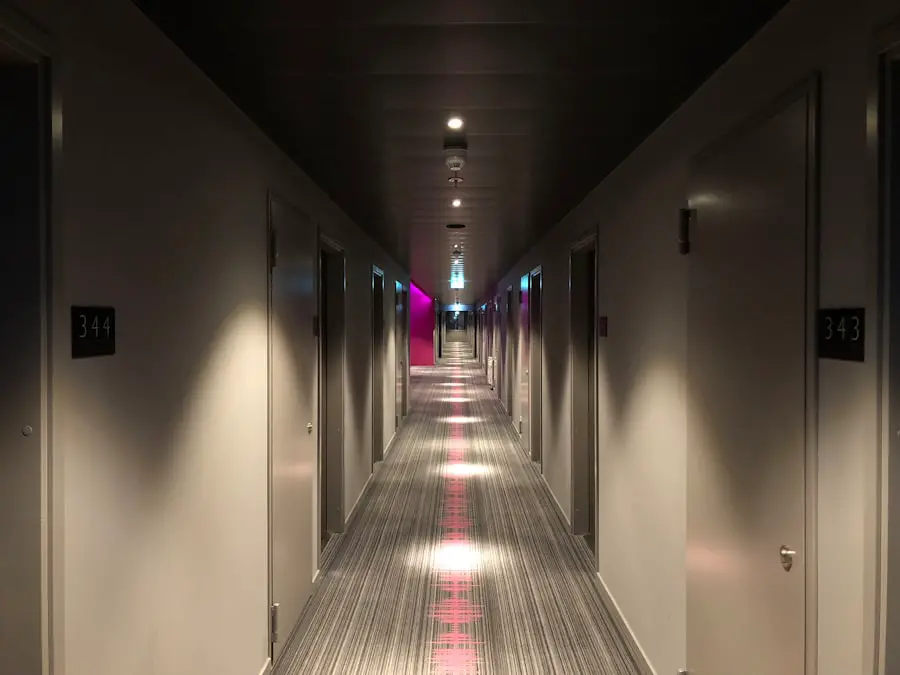
The Overlook Hotel is fictional, but Stephen King based much of its atmosphere on the Stanley Hotel in Estes Park, Colorado. The hotel opened in 1909 under Freelan Oscar Stanley and his wife, Flora. Its grand design, mountain setting, long corridors, and seasonal quiet helped make it a memorable resort.
According to Stephen King’s official account, he and his wife, Tabitha, stayed at the Stanley in late September 1974. They were the hotel’s only overnight guests before it closed for the winter. King wandered through the nearly empty corridors and dreamed that his young son was being chased through the hotel by a fire hose.
By the end of that night, King said he had developed the basic framework for the novel. The Stanley therefore has a direct and documented connection to the creation of the book, even though Kubrick later chose other locations and studio sets for his movie.
Note: The Stanley Hotel’s ghost stories are part of its folklore and are based largely on guest reports, guided-tour accounts, and personal experiences. They should not be treated as verified evidence of supernatural activity.
The Stanley Hotel: Inspiration, Not the 1980 Filming Location
The Stanley’s white exterior, remote mountain setting, and historical character make it easy to understand why people associate it with Kubrick’s film. However, the Stanley Hotel was not used as the Overlook in the 1980 production.
Production researchers did study the Stanley. The Stanley Kubrick Archive contains floor plans for the property and notes that it was apparently considered as a possible location. Kubrick’s production ultimately created the Overlook from other places instead.
The Stanley did become a genuine filming location for Stephen King’s The Shining, the 1997 television miniseries. That adaptation followed King’s novel more closely and restored Room 217, which Kubrick had changed to Room 237 in his movie.
Where The Shining Was Filmed: At a Glance
Filming Locations at a Glance
| Stanley Hotel, Colorado | Inspired Stephen King’s novel; used for the 1997 television miniseries, not Kubrick’s 1980 movie. |
| Timberline Lodge, Oregon | Supplied aerial and exterior establishing footage of the Overlook Hotel. |
| Elstree Studios, England | Contained the major interior sets, hedge maze, and a large exterior façade built for the production. |
| Ahwahnee Hotel, California | Served as a design reference for several Overlook interiors, including architectural and decorative details. |
| Glacier National Park, Montana | Provided opening aerial scenery, including footage around St. Mary Lake and Going-to-the-Sun Road. |
Timberline Lodge: The Exterior of the Overlook
Timberline Lodge sits on the southern slope of Mount Hood in Oregon. Built in 1937, the National Historic Landmark remains a functioning mountain lodge and year-round recreation destination.
Kubrick’s production used aerial views and exterior establishing footage of Timberline to represent the Overlook. The building’s steep roof, stone base, isolated position, and snowy surroundings created the recognizable outside appearance seen in the film.
The interior of Timberline does not match the rooms and corridors shown on screen. Those spaces were built in England, and the physical sets no longer exist — they were dismantled after production, so there is no surviving Overlook interior anywhere to visit. The lodge also does not have the movie’s hedge maze, which was created for the production.
In April 2024, an ember from the lodge’s fireplace sparked a fire that damaged part of the building. The lodge closed briefly, then reopened within days, and it has continued normal seasonal operations since, including lodging, dining, and its long ski season on Mount Hood. Travelers planning a visit in 2026 should still confirm current conditions directly with the lodge before arriving.
The Ahwahnee Hotel: An Interior Design Reference
The historic Ahwahnee Hotel in Yosemite National Park is sometimes incorrectly listed as another filming location. Its more accurate role was architectural inspiration.
Research preserved by the British Film Institute and Stanley Kubrick Archive shows that the production photographed the Ahwahnee’s interiors while planning the Overlook sets. Its large public rooms, stonework, Native American-inspired decorative patterns, wooden beams, and tall windows influenced several spaces seen in the movie.
The Colorado Lounge is one of the clearest examples of this influence. It resembles parts of the Ahwahnee’s public interior, but the movie scenes were filmed on a constructed set rather than inside the Yosemite hotel.
Behind the Scenes at Elstree Studios
Most of the Overlook’s interiors were built at EMI-Elstree Studios in Borehamwood, England. These sets included the lobby, Colorado Lounge, corridors, kitchen areas, the Gold Room, Room 237, the Torrance family’s apartment, and other connected spaces.
The production also constructed a large exterior façade on the studio backlot. This allowed Kubrick to combine the appearance of Timberline with controlled studio filming. Detailed plans, photographs, models, and lighting tests preserved in the Kubrick Archive show how carefully the fictional hotel was assembled.
The hedge maze was another production creation. It was not a feature of the Stanley, Timberline, or the Ahwahnee. The maze scenes were completed with constructed outdoor sections, studio work, and visual techniques that made the setting appear much larger.
Kubrick was known for demanding repeated takes and precise camera movement. This approach helped create the film’s long hallway shots and the gliding sequences that follow Danny’s tricycle through the Overlook.
The Impact of The Shining on the Stanley Hotel
Although the Stanley did not appear in Kubrick’s movie, the film’s success greatly increased public interest in the hotel that inspired the novel. Readers and viewers began visiting Estes Park to see the location connected to King’s original idea.
Room 217 remains central to that connection because King stayed there in 1974. In the novel, a supernatural encounter also takes place in Room 217. Kubrick changed the room number to 237 for the movie, reportedly after concerns that viewers might avoid a real room at Timberline. Room 217 is still one of the most requested rooms among guests booking a Stanley stay today.
The hotel also tells the story of housekeeper Elizabeth Wilson. According to the Stanley’s official history, Wilson entered a guest room during a 1911 power outage without knowing that gas had leaked into it. When she lit a lantern, an explosion threw her through the floor. She survived and later returned to work at the hotel.
Stories that Wilson, F.O. Stanley, Flora Stanley, and other figures still appear at the hotel are based on reported experiences and local folklore. The Stanley incorporates these accounts into its tours, rooms, and paranormal programs, but they are not established historical facts.
The property has also appeared in other productions. Parts of the 1994 comedy Dumb and Dumber, including scenes at the hotel’s bar, were filmed at the Stanley.
Exploring the Stanley Hotel
The Stanley offers several guided experiences covering its architecture, history, Stephen King connection, and reported paranormal activity. Its dedicated The Shining tour compares King’s novel, Kubrick’s 1980 movie, and the 1997 television miniseries.
The official tour page explains why Kubrick did not film his movie at the Stanley and why the later miniseries did. Current tour policies state that children under eight are not permitted on the dedicated Shining tour and that advance reservations are recommended.
Visitors should not expect a public tour to enter Room 217 or other occupied accommodations. The hotel’s general tour policies state that tours do not enter guest rooms. Anyone hoping to stay in Room 217 must reserve it as lodging, subject to availability.
The hotel also offers “spirited” rooms connected to its history and folklore. These rooms are regular guest accommodations rather than reproductions of Kubrick’s sets.
Pro Tip: Book Stanley tours and special rooms well in advance. Room 217 is one of the property’s best-known accommodations, and public tours do not provide access to occupied guest rooms.
Visiting Timberline Lodge
Movie-location fans who want to see the exterior associated with Kubrick’s Overlook should visit Timberline Lodge rather than the Stanley. Timberline remains open as a working lodge, ski area, dining destination, and recreation center on Mount Hood.
Visitors can view the exterior used in the film and explore the lodge’s Depression-era art, woodwork, stonework, and public rooms. The real interior looks very different from the Overlook sets, which makes the visit useful for understanding how several locations were combined on screen.
Mountain weather and road conditions can change quickly, particularly during winter. Check Timberline Lodge’s official website for current access, parking, lodging, dining, and operating information before traveling.
Warning: Timberline sits at roughly 6,000 feet on an active volcano with fast-changing mountain weather. Winter visitors should carry tire chains or traction devices and check road and Sno-Park permit requirements before driving up.
The Continuing Legacy of The Shining
The lasting link between The Shining and the Stanley Hotel comes from literary history rather than Kubrick’s production. King’s nearly empty stay gave him the setting and nightmare that helped form the novel. Kubrick then built a visually different Overlook from Timberline footage, Ahwahnee design references, Elstree sets, and Montana landscapes.
This layered history explains why several hotels are promoted as the “real” Overlook. Each one played a different role, and none alone represents everything shown in the movie.
The Stanley remains the destination most closely connected to Stephen King and the 1997 miniseries. Timberline remains the most recognizable exterior from Kubrick’s film. The Ahwahnee reveals where several design ideas came from, while the surviving archive materials document how the production turned those references into one fictional hotel.
Frequently Asked Questions
What hotel was The Shining filmed at?
Timberline Lodge in Oregon supplied exterior establishing footage of the Overlook Hotel. Most interior scenes were filmed on constructed sets at Elstree Studios in England, so there was no single hotel used for the entire movie.
Was The Shining filmed at the Stanley Hotel?
Stanley Kubrick’s 1980 film was not filmed at the Stanley Hotel. The Stanley inspired Stephen King’s novel and was later used for the 1997 television miniseries.
Were the hotel interiors filmed inside Timberline Lodge?
No. Timberline supplied exterior footage. The major interior rooms and corridors were sets built at Elstree Studios in England, and those sets were dismantled after filming.
Was the Ahwahnee Hotel shown in The Shining?
The Ahwahnee was primarily an architectural and decorative reference for several Overlook interiors. The finished rooms were recreated as studio sets rather than filmed inside the hotel.
Where was the opening driving sequence filmed?
The opening aerial sequence includes scenery in Glacier National Park, Montana, including St. Mary Lake and Going-to-the-Sun Road.
Can visitors stay at Timberline Lodge or the Stanley Hotel?
Yes. Both are operating hotels. Timberline offers lodging on Mount Hood and reopened quickly after a brief 2024 fire, while the Stanley offers several accommodation types in Estes Park. Availability, access, and tour policies should be checked on each hotel’s official website.
Why is Room 217 important?
Stephen King stayed in Room 217 at the Stanley Hotel during his 1974 visit, and the same room number appears in his novel. Kubrick changed the room to 237 for the 1980 movie, and Room 217 remains one of the Stanley’s most-requested rooms today.
Sources
- Stephen King — The Shining — King’s first-person account of his September 1974 stay at the Stanley Hotel.
- The Stanley Hotel — History — the hotel’s 1909 opening, founder, and Stephen King connection.
- The Stanley Hotel — The Shining Tour — distinction between Kubrick’s movie and the 1997 miniseries.
- Timberline Lodge — History — exterior footage used to represent the Overlook Hotel.
- British Film Institute — Exploring The Shining at the Kubrick Archive — Timberline, Ahwahnee, and Elstree production research.
- University of the Arts London — Stanley Kubrick Archive — surviving location research, photographs, and Stanley Hotel floor plans.
