
Last Updated on July 30, 2026 by Daniel Globe
Hotel sheets are selected for more than softness. A property must also consider repeated laundering, drying time, wrinkle control, stain visibility, mattress fit, replacement cost, and the feel it wants guests to remember. That is why there is no single fabric or thread count used by every hotel.
Quick Answer
Hotels commonly use white cotton, cotton-polyester, or cotton-lyocell sheets in percale or sateen weaves. Many recognizable hotel products fall near 300 thread count, but there is no universal hotel standard. Fiber quality, weave, fit, finishing, shrinkage, and wash durability matter more than the thread-count number alone.
Key Takeaways
- There is no single “hotel sheet” specification used by every property.
- Cotton and cotton blends are common because they balance comfort, durability, appearance, and laundry efficiency.
- Percale feels crisp and airy, while sateen feels smoother and has more sheen.
- A higher thread count does not automatically mean a softer, stronger, or longer-lasting sheet.
- Correct mattress size and pocket depth are essential, especially when a bed has a topper or pillow top.
- White linens make stains and wear easier to spot while creating a consistent, clean-looking bed.
Disclosure: As an Amazon Associate I earn from qualifying purchases. Some links on this page are affiliate links, at no extra cost to you.
What Sheets Do Hotels Actually Use?
Hotels use several types of sheets, depending on the property’s brand standards, climate, room rate, laundry system, and desired bed feel. White cotton and cotton blends are especially common, but weave and fiber content vary.
For example, the official Marriott Hotels sheet set is listed as a 300-thread-count cotton percale blend with a 14-inch fitted-sheet pocket. Westin lists a different construction: its hotel sheet set uses a 310-thread-count sateen blend of ring-spun cotton and lyocell.
The hotel feel comes from the complete sheet specification—not one large thread-count number.
Luxury properties may choose finer yarns, long-staple cotton, smoother sateen, distinctive embroidery, or custom finishes. Limited-service and high-turnover properties may place more weight on wrinkle recovery, drying time, stain removal, and replacement cost. Neither approach is automatically better; each serves a different operating need.
How Much Does Thread Count Matter?
Thread count is the number of lengthwise and crosswise threads woven into one square inch of fabric. It can provide limited information about fabric density, but it does not reveal the quality of the fiber, yarn, weave, finishing, or stitching.
A very high number can also be misleading when manufacturers count the individual strands in multi-ply yarns. That can produce an impressive label without delivering a stronger or more breathable sheet. In its current sheet-buying guidance, Consumer Reports notes that thread count is not a dependable indicator of overall quality and reports strong performance from some sheets with counts below 300.
Many recognizable hotel-branded products sit near 300 thread count, but this is an example rather than a rule. A well-made 250- or 300-thread-count percale can feel crisp, cool, and durable, while a poorly constructed sheet with a much higher advertised count may feel heavy or wear unevenly.
Pro Tip: When comparing sheets, check the fiber content and weave first. Then review thread count, pocket depth, return terms, shrinkage information, and care instructions. A wash-tested sample tells you more than the package number alone.
Material Matters: Choosing the Best Fabric for Hotel Sheets
The fiber blend affects softness, airflow, drying time, wrinkle resistance, and long-term appearance. Hotels therefore select materials according to both guest comfort and laundry performance.
| Material | Typical Strengths | Possible Tradeoffs |
|---|---|---|
| 100% cotton | Breathable feel, familiar hand, good moisture absorption, and a wide choice of weaves | May wrinkle or shrink more than a performance blend |
| Cotton-polyester blend | Often dries quickly, resists wrinkling, and can provide dependable service life | May feel less breathable or less natural than an all-cotton sheet |
| Cotton-lyocell blend | Smooth hand, good moisture management, and fluid drape | Care requirements and durability vary by blend and finish |
| Long-staple cotton | Can be spun into fine, smooth yarns with fewer exposed fiber ends | Premium labels such as “Egyptian cotton” do not by themselves guarantee construction quality |
Cotton is widely used because it can deliver a comfortable, breathable sheet in either a crisp or smooth construction. Polyester may be blended with cotton to improve wrinkle recovery and simplify finishing. Lyocell may be added for a smoother hand and moisture control. The final performance still depends on the percentages, yarns, weave, finish, seams, and laundering method.
Percale vs. Sateen: Which Weave Feels More Like a Hotel?
Percale and sateen describe the fabric’s weave, not its fiber. Either can be made with cotton or a blend, and either can be suitable for hotel use.
| Feature | Percale | Sateen |
|---|---|---|
| Feel | Crisp and smooth | Silky and supple |
| Appearance | Matte | Subtle sheen |
| Airflow | Often feels lighter and airier | Often feels denser and more enveloping |
| Best for | Sleepers who like a freshly pressed, cool hotel-bed feel | Sleepers who prefer a smoother, more polished luxury feel |
Percale is often associated with the crisp feel of a freshly made hotel bed. Sateen is frequently chosen when a property wants more drape, sheen, and surface smoothness. Personal preference matters more than claims that one weave is universally superior.
Durability and Longevity: What Hotels Look for in Sheets
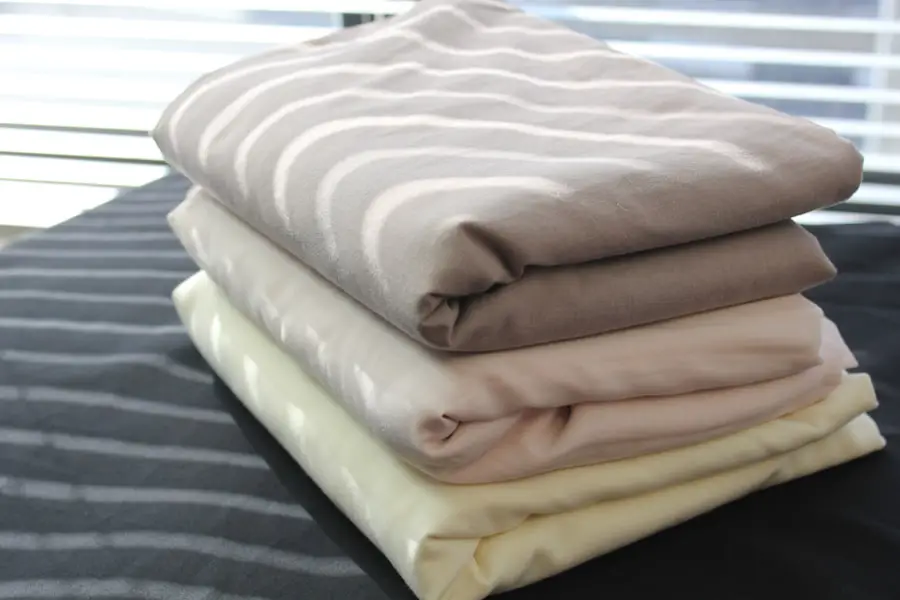
Hotel sheets must maintain an acceptable feel and appearance through repeated use. Procurement teams may therefore look beyond initial softness and consider shrinkage, seam strength, pilling, abrasion, stain release, drying time, wrinkle recovery, and the cost per use.
A sheet that feels exceptionally soft when new may be a poor commercial choice if it shrinks, twists at the seams, pills, or becomes difficult to finish after repeated laundering. Conversely, the longest-lasting fabric is not automatically the best if guests find it rough or uncomfortable.
Durability also depends on how the sheet is used and cared for. Overdrying, excessive heat, overloading equipment, unsuitable chemicals, and harsh stain treatment can shorten the life of both natural and blended fibers. Hotels using an outside linen service may also choose different specifications from properties operating an on-site laundry.
For home buyers, useful signs of construction quality include straight hems, secure stitching, substantial elastic, clear fiber labeling, realistic care instructions, and a return policy that allows the sheets to be washed and tested.
Why Hotels Often Choose White Sheets
White bedding is common because it gives the room a consistent, uncluttered appearance and works with changing décor. It also makes stains, discoloration, and wear easier for housekeeping staff and guests to see.
- Visible cleanliness: Marks are harder to hide on a white surface.
- Simpler coordination: Replacement pillowcases and sheets do not have to match a changing pattern or color lot.
- Flexible room design: White works with most headboards, throws, duvets, and wall colors.
- Consistent presentation: A property can create a recognizable bed style across many rooms.
- Laundry control: Similar white items can often be processed together when their fiber content and care requirements are compatible.
White sheets are not automatically cleaner than colored sheets. Cleanliness depends on proper handling, washing, drying, inspection, storage, and timely replacement.
The Perfect Fit: Sizing Sheets for Hotel Beds
Proper sizing prevents loose corners, exposed mattress edges, and uncomfortable bunching. The bed-size name is only the starting point because mattress height, toppers, pads, and manufacturing tolerances affect the required fitted-sheet pocket.
| Bed Size | Common U.S. Mattress Dimensions | Fitted-Sheet Label | What to Check |
|---|---|---|---|
| Twin | 38″ × 75″ | Twin | Do not confuse with Twin XL, which is longer |
| Full | 54″ × 75″ | Full or Double | Check width after laundering if the sheet is close-fitting |
| Queen | 60″ × 80″ | Queen | Measure the mattress plus any pad or topper |
| King | 76″ × 80″ | King | Split kings normally require two Twin XL fitted sheets |
| California King | 72″ × 84″ | California King | A standard king fitted sheet is wider but too short |
These are common mattress dimensions, not universal finished-sheet measurements. Manufacturers add different amounts of fabric for tuck-in, shrinkage, seam allowances, and pocket construction. Flat-sheet dimensions also vary considerably among brands.
Measure the mattress from seam to seam and measure its full height with the pad or topper installed. Choose a pocket that is deep enough to reach below the mattress without being so oversized that the fabric bunches. All-around elastic generally provides a more secure fit than elastic placed only at the corners.
Note: The stated pocket depth is not always the mattress height the sheet will fit comfortably. Seam design, elastic strength, fabric stretch, and shrinkage can change the usable depth.
Easy Care and Maintenance: Why Hotels Favor Practical Sheets
Hotels need linens that can be cleaned, dried, inspected, and returned to service efficiently. Cotton-polyester blends are often chosen where wrinkle recovery and faster drying are priorities, while all-cotton sheets may be selected for their feel and breathability.
No fiber should be assumed safe at any wash temperature. Care instructions vary by fiber blend, dye, finish, elastic, stitching, and manufacturer. Excessive heat can contribute to shrinkage, weakened elastic, surface damage, or set-in stains. The correct commercial process may also use a carefully controlled combination of time, temperature, mechanical action, and laundry chemistry rather than heat alone.
Warning: Do not copy a hotel laundry temperature at home or assume that hotter is always better. Follow the sheet’s care label, avoid overloading the washer, and remove sheets before they are overdried.
At home, wash sheets separately from rough items such as garments with zippers or hook-and-loop fasteners. Use the recommended detergent amount, treat stains promptly, and avoid pouring concentrated products directly onto the fabric unless the care instructions allow it.
The Luxury Factor: How Hotels Create a Five-Star Bed

Luxury hotel bedding is created through a combination of fabric, fit, finishing, layering, and presentation. A high-end property may use fine cotton yarns, long-staple cotton, cotton-lyocell blends, smooth sateen, decorative borders, or custom embroidery. Silk may appear in decorative or specialty bedding, but its care requirements make it less practical as a universal hotel sheet.
The finishing process also influences the first impression. Pressing, calendaring, softening treatments, and careful bed-making can make a sheet feel and look more polished. These finishes may change after repeated home washing, so buyers should judge a sheet after laundering rather than relying only on its out-of-package feel.
Luxury is not synonymous with the highest possible thread count. A well-fitted, breathable sheet with smooth seams and consistent finishing can provide a better sleep experience than a heavier sheet chosen mainly for an impressive number.
Eco-Friendly Options and Textile Labels
Sustainability claims need context. A sheet may use certified organic fiber, recycled content, a lower-impact manufacturing process, responsible forestry inputs, or packaging improvements. These features are not interchangeable, and none makes the entire product impact-free.
For organic textiles, look for a recognized finished-product certification and verify what the certification covers. The Global Organic Textile Standard covers textile processing and manufacturing requirements for products made with certified organic fibers, including environmental and social criteria.
Lyocell is a regenerated cellulose fiber made from wood pulp. TENCEL is a branded family of lyocell and modal fibers rather than a generic name for every similar sheet. The environmental profile of a finished sheet depends on the fiber source, manufacturing system, blend, dyes, finishing, durability, transport, and care.
Note: Under FTC textile guidance, most soft textiles derived from bamboo must be identified as rayon or viscose made from bamboo unless they contain actual bamboo fiber. The source plant does not prove that the finished fabric is antimicrobial or environmentally preferable.
For a more responsible purchase, prioritize durable sheets that fit correctly, follow credible fiber labels, and can be washed without excessive energy or premature replacement.
Budget Considerations: Finding Hotel-Style Sheets at a Fair Price
A high price does not guarantee strong performance, and “hotel-quality” is not a regulated performance grade. Some products use the phrase only as marketing. Compare measurable specifications rather than relying on the label.
Hotel-Style Sheet Buying Checklist
- Fiber content: Check the exact percentages instead of assuming the set is 100% cotton.
- Weave: Choose percale for a crisper feel or sateen for a smoother finish.
- Thread count: Treat it as one specification, not the final quality score.
- Mattress fit: Confirm width, length, total height, and pocket construction.
- Care: Review wash temperature, drying instructions, and restrictions on bleach or fabric softener.
- Construction: Inspect seams, elastic, hems, and fabric consistency.
- Testing period: Favor a return policy that permits washing when available.
- Replacement pieces: Check whether individual fitted sheets and pillowcases can be purchased later.
Hotels may reduce costs through volume contracts, standardized sizes, centralized purchasing, and predictable replacement schedules. Home buyers usually cannot match those operating economics, but they can use the same principle: compare the expected cost per use rather than buying solely on initial price.
If you’re curious about what sheets hotels use, you may also be interested in learning about the best travel gifts for her. Check out this article here to find the perfect gift for the female traveler in your life.
Sources
- Consumer Reports Sheet Buying Guide — thread count, fit, shrinkage, strength, and buying considerations
- Marriott Hotels Sheet Set — official example of a 300-thread-count cotton percale blend and 14-inch pocket
- Westin Hotel Sheet Set — official example of a 310-thread-count cotton and lyocell sateen blend
- Federal Trade Commission Bamboo Textiles Guidance — legally accurate fiber labeling and marketing guidance
- Global Organic Textile Standard Key Features — organic-textile processing, manufacturing, environmental, and social criteria
- Sleep Foundation Mattress Sizes Guide — common U.S. mattress dimensions
Frequently Asked Questions
What type of sheets do hotels use?
Hotels commonly use white cotton, cotton-polyester, or cotton-lyocell sheets. Percale is chosen for a crisp feel, while sateen provides a smoother surface and more sheen. The exact specification varies by brand, property, climate, laundry operation, and price level.
Why do hotels use white sheets?
White sheets create a consistent appearance, coordinate with most room designs, and make stains or discoloration easier to spot. They also simplify replacement because individual white pieces are easier to match than patterned or color-specific linens.
What thread count do hotel sheets have?
There is no universal hotel thread count. Some official hotel-branded products are around 300 to 310, while other properties use different counts. Fiber quality, yarn construction, weave, finishing, fit, and wash performance are more useful than thread count alone.
Do hotels use percale or sateen sheets?
Hotels use both. Percale has a crisp, matte, airy feel that many people associate with freshly pressed hotel bedding. Sateen has a smoother surface, more drape, and a subtle sheen. The better choice depends on the experience the property wants to create.
What is the difference between hotel sheets and regular sheets?
Hotel sheets are often specified for repeated laundering, predictable replacement, efficient finishing, and consistent room presentation. Household sheets may place more emphasis on color, pattern, exceptional softness, or seasonal use. A “hotel-quality” label alone does not prove better construction.
Are hotel sheets always 100% cotton?
No. Some hotels use 100% cotton, while others use cotton blended with polyester or lyocell. Blends may improve wrinkle recovery, drying time, drape, or moisture management. Always check the exact fiber percentages.
Can I buy the same sheets used by a hotel?
Many hotel brands sell bedding through official stores. However, specifications can change, and a retail set may not match every property or regional supplier. Confirm the fiber content, weave, pocket depth, included pieces, and care instructions before ordering.
