
Last Updated on July 28, 2026 by Daniel Globe
Wes Anderson’s The Grand Budapest Hotel has captivated audiences since its 2014 release, whisking viewers into the fictional Republic of Zubrowka through the misadventures of legendary concierge Gustave H. (Ralph Fiennes) and his protégé, Zero Moustafa (Tony Revolori). Although the Grand Budapest itself is fictional, much of its storybook world was created from real buildings in eastern Germany, especially the historic city of Görlitz.
Quick Answer
The Grand Budapest Hotel was filmed entirely in Germany, mainly in Görlitz and other parts of Saxony, with additional work at Studio Babelsberg near Berlin. The hotel’s famous lobby was created inside the 1913 Görlitzer Warenhaus department store, while the pink mountain-hotel exterior was a handmade miniature rather than a real hotel.
Key Takeaways
- The main filming base was Görlitz, Saxony, where the Görlitzer Warenhaus became the Grand Budapest’s lobby.
- Studio Babelsberg confirms that the movie was filmed entirely in Germany, mainly in Görlitz and elsewhere in Saxony.
- The hotel’s candy-pink mountain exterior was a detailed miniature combined with painted and composited scenery, not an existing full-size hotel.
- Dresden, the Bastei area, historic castles, Görlitz streets, the Stadthalle and the Freisebad supplied additional locations.
- The film was inspired by Stefan Zweig’s writing and by a mixture of Central European hotels, spa towns, historic architecture and archival imagery rather than one single real hotel.
Disclosure: As an Amazon Associate I earn from qualifying purchases. Some links on this page are affiliate links, at no extra cost to you.
Where Was The Grand Budapest Hotel Filmed?
Studio Babelsberg, a co-producer of the film, states that The Grand Budapest Hotel was filmed entirely in Germany. Production was centered on Görlitz and other parts of Saxony, with studio work at Babelsberg near Berlin.
Görlitz supplied many of the film’s most recognizable real-world spaces. The historic Görlitzer Warenhaus became the Grand Budapest’s lobby, the Stadthalle contributed hotel and other interior scenes, and streets across the old city doubled for the fictional town of Lutz. Dresden and several other Saxon locations supplied museums, castles, landscapes and additional interiors.
At a Glance
| Filming Period | January–March 2013, roughly ten weeks |
| Main Filming Base | Görlitz, Saxony, Germany |
| Hotel Lobby | Görlitzer Warenhaus, a historic department store opened in 1913 |
| Hotel Exterior | A detailed miniature combined with scenic artwork and visual effects |
| Other Major Locations | Dresden, Bastei/Saxon Switzerland, Waldenburg, Zwickau, Hainewalde and Studio Babelsberg |
| Academy Awards | 9 nominations and 4 wins |
The Real-Life Inspiration for The Grand Budapest Hotel
The literary inspiration for The Grand Budapest Hotel traces directly to Austrian writer Stefan Zweig. The film itself credits the writings of Zweig, and The Criterion Collection lists him among the film’s credited inspirations. Anderson drew particularly on the melancholy, cosmopolitan world associated with works such as Beware of Pity, The Post Office Girl and Zweig’s memoir The World of Yesterday.
Anderson and co-writer Hugo Guinness also drew from European travel, archival photographs and the grand hotels of Central Europe. Production designer Adam Stockhausen has identified the Grandhotel Pupp in Karlovy Vary, Czech Republic, as an important visual reference, but the fictional Grand Budapest was ultimately assembled from many buildings, photographs and design ideas rather than copied from one hotel.
The Stunning Architecture of The Grand Budapest Hotel
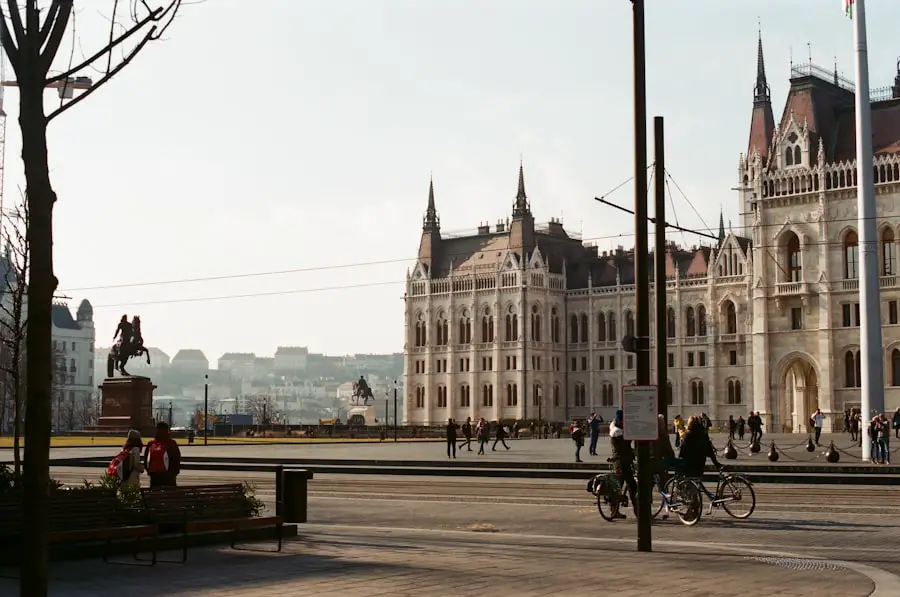
The hotel’s pink, cake-like exterior never existed as a full-size building. It was created as a large handmade miniature by a team led by Simon Weisse, then combined with painted scenery and visual effects to create the mountaintop resort seen in the movie.
The interiors were handled very differently. The hotel’s soaring lobby was built inside the atrium of the Görlitzer Warenhaus, a landmark Art Nouveau department store that opened in 1913. The building was vacant when the production arrived, giving production designer Adam Stockhausen and his team room to transform the space extensively.
The filmmakers redressed the atrium for the movie’s different periods, creating the lavish 1930s Grand Budapest and its less glamorous 1960s incarnation while retaining recognizable parts of the department store’s columns, galleries, staircases and glass-roofed central space.
The Grand Budapest is best understood as a cinematic collage: a real department-store lobby, purpose-built sets, historic buildings, miniature architecture and carefully composed landscapes all combine to create one fictional hotel.
Behind the Scenes: Filming The Grand Budapest Hotel
Principal photography began in January 2013 and continued into March. Studio Babelsberg’s production announcement identified Görlitz and other parts of Saxony as the main location base.
The winter schedule created practical problems. Cold weather and limited daylight affected exterior work, while the production’s concentration in eastern Germany allowed the cast, sets and locations to remain relatively close together.
The largest hotel interior was installed in the vacant Görlitzer Warenhaus. Miniature and model work was produced alongside location shooting, while costume designer Milena Canonero and her team created the film’s distinctive purple uniforms and period wardrobe. The production ultimately earned Academy Awards for costume design, makeup and hairstyling, production design and Alexandre Desplat’s original score.
The Grand Budapest Hotel Filming Locations by Scene
| Grand Budapest lobby | Görlitzer Warenhaus, Görlitz |
| Hotel entrance and dining spaces | Stadthalle Görlitz |
| Hotel baths | Freisebad, Görlitz |
| Mendl’s interior | Pfunds Molkerei, Dresden |
| Kunstmuseum sequences | Zwinger, Dresden, plus additional interiors |
| Schloss Lutz scenes | Locations including Hainewalde and Schloss Waldenburg |
| Prison sequences | Locations around Zwickau and elsewhere in Saxony |
| Mountain landscapes | Saxon countryside including the Bastei area and locations around Königshain |
Exploring The Grand Budapest Hotel’s Exterior Locations
Beyond the Warenhaus, the production made extensive use of Görlitz’s preserved streets and historic architecture. Areas around the old town, including Untermarkt, Brüderstraße, Kränzelstraße and other nearby streets, appear throughout the fictional city of Lutz. The official Görlitz film-location walk highlights many places connected with the production.
The Dreifaltigkeitskirche, or Holy Trinity Church, also appears in the film’s monastery sequence. Its real history as a former Franciscan monastery church made it a natural fit for Anderson’s fictional Central European setting.
The hotel’s baths were filmed at the Freisebad, not “Freibad.” Founded in 1887, the historic bathhouse once contained swimming, tub, steam and therapeutic bathing facilities. Germany’s official tourism portal confirms that the building later became a filming location for The Grand Budapest Hotel.
The production also traveled through Saxony. The regional film commission lists the Bastei area in Saxon Switzerland among locations used for the film, while other work took place around Königshain, Hainewalde, Waldenburg and Zwickau.
The Grand Budapest Hotel’s Interior: Where Was It Filmed?
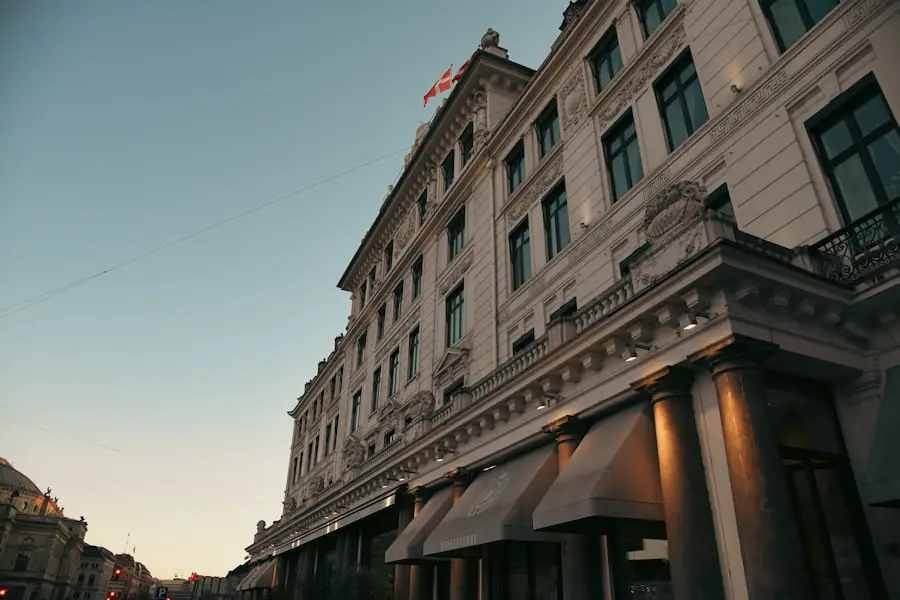
The Grand Budapest’s sweeping lobby is the real atrium of the Görlitzer Warenhaus. Its columns, open galleries and monumental central space provided the architectural shell, while the production added desks, elevators, signs, carpets, furniture, lighting and other details required for the fictional hotel.
The Stadthalle Görlitz provided additional spaces associated with the hotel and other locations in the story. The production repeatedly reused real buildings in different ways, allowing one structure to stand in for several fictional places.
Note: Mendl’s patisserie was also assembled from more than one place. The ornate interior was filmed at Pfunds Molkerei in Dresden, while other bakery-related shots used Görlitz locations and locally made pastries.
Is The Grand Budapest Hotel a Real Hotel?
No. There is no real Grand Budapest Hotel where guests can book the lobby, rooms and pink mountaintop exterior seen in the film.
The finished hotel is a combination of real architecture and filmmaking. The Görlitzer Warenhaus supplied the main lobby shell, other historic buildings supplied additional rooms and entrances, and the exterior resort was created with miniature work and scenic imagery.
That distinction also explains why photographs of the real Görlitz department store can look familiar without resembling the entire hotel shown on screen.
The Charming Town of Görlitz: A Key Filming Location
Görlitz sits on Germany’s border with Poland and is known for a remarkably rich concentration of historic architecture. Renaissance, Baroque, Gründerzeit and Art Nouveau buildings stand within a compact area, giving filmmakers many period looks without moving a production long distances.
That versatility helped earn the city the nickname “Görliwood.” More than 100 national and international productions have used Görlitz, according to the city’s film office, including Inglourious Basterds, The Reader, The Book Thief and The Grand Budapest Hotel.
The city remains closely associated with Anderson’s movie. Its current Walk of Görliwood marks filming locations and displays information about productions made around the old town.
Can You Visit The Grand Budapest Hotel Filming Locations?
Yes, but access varies by location. Many Görlitz street locations can be viewed freely on foot, and the city’s official tourism organization offers self-guided and guided Görliwood experiences.
The Görlitzer Warenhaus is different. The historic department store has been closed as a normal retail building since 2009. Visitors can see its exterior, but interior access is generally limited to occasional openings or selected guided tours rather than everyday admission.
The Freisebad is also not an ordinary public swimming facility. It has been closed in that role since 1996, although organized tours have periodically provided access.
Pro Tip: Check the official Görlitz tourism calendar shortly before your trip. Street locations are easy to explore independently, but interior access to buildings such as the Warenhaus can depend on special tours, events and restoration work.
The Influence of Central Europe on The Grand Budapest Hotel’s Aesthetic
The film’s imagined Republic of Zubrowka blends Central European influences rather than reproducing one country. Architectural and cultural references evoke places such as Austria, the Czech lands, Germany and Hungary, while Zweig’s writing gives the story a strong connection to the vanished cosmopolitan Europe of the early 20th century.
The production design followed the same approach. Historic photographs, European spa resorts, old department stores, grand hotels and purpose-built miniatures were combined into a fictional world that feels recognizable without belonging to one real city.
The Grand Budapest Hotel’s Connection to Wes Anderson’s Other Films
The Grand Budapest Hotel shares Anderson’s recurring interests with films such as Moonrise Kingdom and The Royal Tenenbaums: elaborate production design, ensemble casts, carefully controlled framing, eccentric humor and characters trying to preserve a disappearing way of life.
The production also pushed his interest in handmade filmmaking particularly far. Miniatures, painted scenery, practical sets, period props and changing frame shapes help separate the movie’s different time periods while maintaining its deliberately artificial storybook quality.
The Legacy of The Grand Budapest Hotel: Tourism and Pop Culture Impact
Görlitz continues to promote its movie history through the “Görliwood” identity, location walks and guided experiences. The city’s official tourism materials prominently feature The Grand Budapest Hotel alongside other productions filmed there.
The Görlitzer Warenhaus itself remains an important part of that legacy. In November 2025, the City of Görlitz reported that Saxony’s heritage authority had approved key conservation aspects of plans to reactivate and expand the historic building. That decision allowed planning for its restoration and renewed use to move forward.
The Grand Budapest Hotel also left a lasting pop-culture footprint through its pastel palette, graphic design, uniforms, miniature architecture and meticulously composed imagery, all of which remain closely associated with Anderson’s visual style.
The Grand Budapest Hotel: A Cinematic Masterpiece and Its Lasting Impact
The film received nine Academy Award nominations and won four: Best Costume Design, Best Makeup and Hairstyling, Best Production Design and Best Original Score. The Academy of Motion Picture Arts and Sciences confirms all nine nominations and four wins.
It also received eleven BAFTA nominations and won the 2015 Golden Globe for Best Motion Picture – Musical or Comedy. The recognition is especially fitting for a movie whose locations and production design are inseparable from its storytelling.
If you’re planning a trip to visit a famous hotel filming location, Görlitz is particularly easy to explore on foot once you reach the historic center. For organizing luggage on a longer European trip, this guide to 5 Must-Have Packing Cubes for Your Spring 2025 Getaway offers additional packing ideas.
Frequently Asked Questions
Where was The Grand Budapest Hotel filmed?
The movie was filmed entirely in Germany, mainly in Görlitz and other parts of Saxony, with additional work at Studio Babelsberg near Berlin. Görlitz supplied the famous hotel lobby and many of the fictional city’s streets.
Is The Grand Budapest Hotel a real hotel?
No. The hotel is fictional. Its lobby was built inside the Görlitzer Warenhaus department store, other real buildings supplied additional interiors, and the pink mountain exterior was created as a miniature.
Which specific locations in Germany were used for filming?
Major locations included the Görlitzer Warenhaus, Stadthalle and Freisebad in Görlitz; the Zwinger and Pfunds Molkerei in Dresden; locations around Waldenburg, Hainewalde and Zwickau; the Bastei area of Saxon Switzerland; and Studio Babelsberg.
Was The Grand Budapest Hotel actually filmed in Budapest?
No. Budapest is part of the fictional hotel’s name, but Studio Babelsberg states that filming took place entirely in Germany. The movie’s setting blends influences from several parts of Central Europe.
Why was Görlitz chosen for the film?
Görlitz offered a dense collection of well-preserved historic architecture and a vacant Art Nouveau department store large enough to become the hotel’s lobby. Its compact layout also allowed the production to use many different period-looking streets and buildings within a small area.
Can you visit the Grand Budapest Hotel filming locations?
Yes. Many Görlitz exterior locations can be explored freely, and official Görliwood tours cover filming sites. The Görlitzer Warenhaus is not normally open as a public attraction, however, so interior access depends on occasional openings or scheduled tours.
What hotel inspired The Grand Budapest Hotel?
There was no single real-world model. The filmmakers combined many Central European references, although production designer Adam Stockhausen has identified the Grandhotel Pupp in Karlovy Vary as one of the closest visual inspirations for the fictional hotel.
Sources
- Studio Babelsberg — The Grand Budapest Hotel — confirms that filming took place entirely in Germany, mainly in Görlitz and other parts of Saxony, with Studio Babelsberg production work.
- Official Görlitz Tourism — Film Locations — current information on the Görlitzer Warenhaus, filming locations and visitor access.
- City of Görlitz — Kaufhaus Görlitz Restoration Plans — 2025 update on heritage approval and plans to reactivate the historic department store.
- Academy of Motion Picture Arts and Sciences — 2015 Academy Awards — confirms the film’s nine Oscar nominations and four wins.
- BAFTA — 2015 Film Award Nominations — confirms the film’s eleven BAFTA nominations.
- Golden Globes — The Grand Budapest Hotel — confirms its 2015 Best Motion Picture – Musical or Comedy win.
