

Last Updated on July 24, 2026 by Daniel Globe
According to the biblical account, Israel’s journey from Egypt to Canaan lasted about 40 years. However, the people were not walking toward Canaan continuously for four decades. They reached Mount Sinai within the first few months, remained there for almost a year, and later approached Canaan at Kadesh-Barnea. Unbelief and rebellion then turned a relatively short route into a generation-long wilderness period.
Quick Answer
According to the biblical timeline, Israel’s journey from Egypt to entry into Canaan lasted about 40 years. The people reached Sinai in the third month after leaving Egypt, stayed there for almost a year, and then moved toward Kadesh-Barnea. Their refusal to enter Canaan led to the long wilderness period.
Key Takeaways
- The complete journey from the Exodus to Israel’s entry into Canaan is described as 40 years.
- Israel reached the wilderness of Sinai in the third month after leaving Egypt, or roughly six to seven weeks later.
- The often-quoted 11-day journey was from Horeb, another name for Sinai, to Kadesh-Barnea, not from Egypt all the way to Canaan.
- The Bible does not state that reaching the sea took 25 days, nor does it give a dependable modern mileage for the Exodus route.
Disclosure: As an Amazon Associate I earn from qualifying purchases. Some links on this page are affiliate links, at no extra cost to you.
How Long Was Israel’s Journey From Egypt to Canaan?
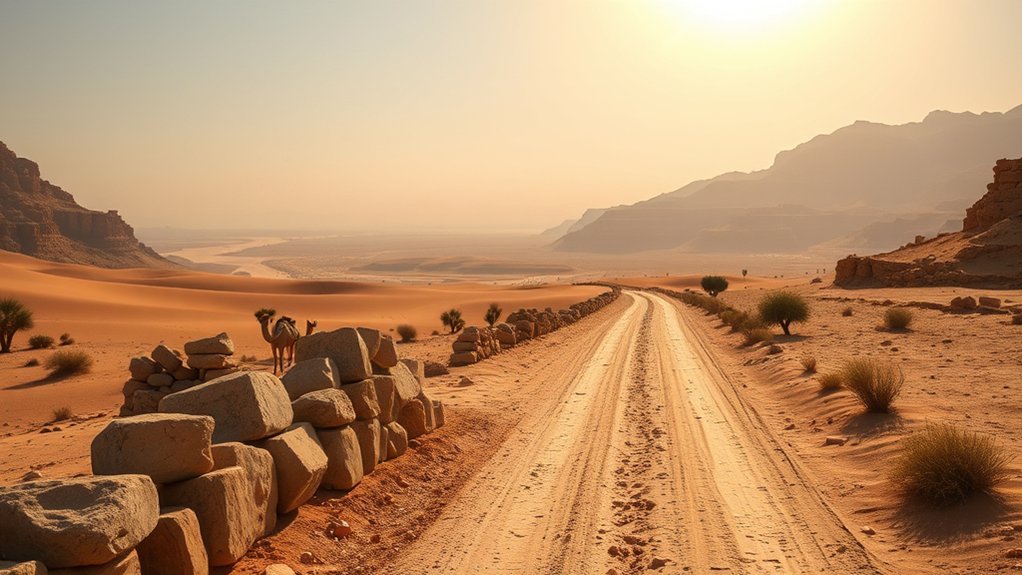
Israel’s journey from Egypt to Canaan lasted about 40 years in the biblical narrative. The people left Rameses on the fifteenth day of the first month, reached Sinai early in the third month, and crossed the Jordan into Canaan near the end of the wilderness period.
The 40 years included long encampments, worship at Sinai, the scouts’ mission into Canaan, the crisis at Kadesh-Barnea, and years spent moving through the wilderness. It should not be understood as 40 years of uninterrupted walking.
The route itself did not require 40 years of ordinary travel. In the biblical story, the long period resulted from Israel’s refusal to enter Canaan when the opportunity first came.
Biblical Journey Timeline
| Stage | Biblical timing | What happened |
| Departure from Egypt | 15th day of the first month | Israel left Rameses and camped at Succoth. |
| Arrival at Sinai | First day of the third month | The people reached the wilderness of Sinai roughly six to seven weeks after departure. |
| Departure from Sinai | 20th day of the second month in year two | Israel left after spending almost a year at Sinai. |
| Scouts return at Kadesh | After exploring for 40 days | Ten scouts discouraged the people, while Joshua and Caleb urged them to trust God. |
| Kadesh to the Wadi Zered | 38 years | The older generation died during the extended wilderness period. |
| Entry into Canaan | 10th day of the first month near the end of the period | Joshua led Israel across the Jordan near Jericho. |
The Exodus Route to Sinai
The biblical itinerary begins at Rameses and continues through Succoth, Etham, Pi-hahiroth, the sea crossing, Marah, Elim, the wilderness of Sin, Rephidim, and the wilderness of Sinai. Numbers 33 records these stages but does not give a complete modern distance or the number of days spent at every stop.
Israel left Egypt on the fifteenth day of the first month. Exodus 19:1 says the people arrived in the wilderness of Sinai on the first day of the third month. That places the arrival roughly six to seven weeks after departure, depending on how the ancient calendar and inclusive counting are handled.
Note: Precise mileage cannot be calculated confidently because the locations of several camps, the sea crossing, and Mount Sinai remain debated. The biblical text is more useful for tracing the sequence of stops than for creating a modern turn-by-turn map.
Why Did Israel Not Take the Shortest Road?
The shortest road to Canaan followed the Mediterranean coast through the land of the Philistines. However, Exodus 13:17–18 says God did not lead Israel that way because the people might face war, become afraid, and return to Egypt.
Instead, they were led toward the wilderness and the sea. In the story, this indirect route became the setting for the sea crossing, the provision of manna and water, and the covenant at Sinai.
How Many Days Did It Take Israel to Reach the Red Sea?
The Bible does not give an exact number of days between Israel’s departure from Egypt and the sea crossing. It records several camps before the crossing, but it does not say that this part of the journey lasted 25 days.
According to Numbers 33, Israel traveled from Rameses to Succoth, then to Etham, and then turned toward Pi-hahiroth near Migdol and Baal-zephon. From there, the people crossed through the sea. Any exact day total goes beyond the information supplied in the biblical itinerary.
The body of water is commonly called the Red Sea in English translations. Some translations and scholarly discussions use Sea of Reeds for the Hebrew name. This translation question is one reason modern maps show different proposed crossing points.
Why Did the Journey Take 40 Years?
The journey took 40 years because Israel refused to enter Canaan after hearing the scouts’ report. The people focused on the fortified cities and powerful inhabitants rather than trusting the promise that the land would be given to them.
Numbers 14:33–34 connects the 40 years with the 40 days the scouts spent exploring Canaan. One year was assigned for each day, and the unbelieving adult generation would die in the wilderness before the next generation entered the land.
Faith and Rebellion
The twelve scouts agreed that Canaan was productive, but they disagreed about whether Israel should enter it. Joshua and Caleb urged the people to move forward. The other ten scouts emphasized the danger and spread a discouraging report.
The community responded with fear, complaints, and a desire to return to Egypt. This rebellion at Kadesh-Barnea became the immediate reason the first generation lost its opportunity to enter Canaan.
The golden calf had already shown a similar pattern at Sinai. The people had been freed from Egypt, but they continued to struggle with fear, impatience, and distrust. The biblical story therefore presents freedom as more than leaving slavery. The people also had to learn covenant faithfulness.
Wilderness Preparation
The wilderness years were both judgment and preparation. During that time, a new generation grew up outside Egypt. The people received laws, learned forms of worship, organized their community, and depended on daily provision.
Deuteronomy 2:14 says 38 years passed between Israel’s departure from Kadesh-Barnea and the crossing of the Wadi Zered. By then, the former generation of fighting men had died.
This 38-year figure describes one defined part of the journey. It fits within the broader biblical description of a 40-year wilderness period.
What Happened at Mount Sinai?

At Mount Sinai, Israel’s story shifted from escape to covenant life. The people had left Pharaoh’s rule, but they now needed laws, worship practices, and a shared identity.
Moses received the Ten Commandments and other covenant instructions. The people also built the tabernacle, established the priesthood, and received directions for worship and community life.
Israel remained at Sinai for almost a year. The people arrived in the third month of the first year and departed on the twentieth day of the second month in the second year, as recorded in Numbers 10:11–12.
This long stay explains why the route to Canaan cannot be measured simply by walking time. A large part of the first year was spent encamped at Sinai rather than traveling.
Why Was Kadesh-Barnea So Important?
Kadesh-Barnea was important because it stood near Canaan’s southern approach and became the place where Israel had to decide whether to enter the land. Moses sent twelve scouts from the region to examine Canaan.
After 40 days, the scouts returned with fruit and a report about the land. All twelve recognized its richness, but only Joshua and Caleb believed the people should advance.
Kadesh-Barnea as a Turning Point
Kadesh-Barnea became a decisive turning point because Israel was close to the land but refused to proceed. The crisis was not caused by a lack of information. The people had seen the land’s fruit and heard that it was good. Their failure came from fear and distrust.
The decision carried consequences for the whole community. The older generation would remain in the wilderness, while their children would eventually enter Canaan under Joshua.
The Scouts and the Wilderness Delay
The scouts explored Canaan for 40 days, according to Numbers 13:25–26. Ten scouts warned that Israel could not defeat the land’s inhabitants. Joshua and Caleb gave a different recommendation and urged the people to trust God.
The people accepted the fearful report. Numbers 14 then connects the scouts’ 40 days with the 40-year wilderness judgment.
It is important not to call this “40 additional years” without qualification. The biblical writers describe the overall wilderness era as 40 years, while Deuteronomy identifies a 38-year period from Kadesh-Barnea to the Wadi Zered.
What Israel’s Journey Teaches Us Today
Israel’s journey offers spiritual lessons about freedom, faith, patience, and responsibility. The people left Egypt quickly, but learning to live as a covenant community took much longer.
- Freedom requires more than a change of location. Israel left slavery behind, but fear and old habits continued to shape the people’s decisions.
- Fear can delay wise action. The scouts saw the same land, yet Joshua and Caleb interpreted the situation differently from the other ten.
- Waiting can include preparation. Sinai and the wilderness became places where the community received laws, built forms of worship, and developed a shared identity.
- Leadership matters during uncertainty. Moses, Joshua, and Caleb continued to guide the people when the wider community became discouraged.
The story does not teach that every personal delay is punishment. Its direct message concerns Israel’s covenant history. Its broader application is that trust, obedience, and responsible choices affect how people respond to opportunity and hardship.
Frequently Asked Questions
How many days did the Israelites travel from Egypt to Canaan?
The Bible describes the complete period as 40 years rather than giving an exact modern day total. Converting it to 14,600 days creates false precision because ancient calendar years were not identical to modern 365-day years.
How long did it take Israel to travel from Egypt to Mount Sinai?
Israel left on the fifteenth day of the first month and arrived in the wilderness of Sinai on the first day of the third month. This was roughly six to seven weeks, although Scripture does not state a single calculated total.
Was the journey to the Promised Land supposed to take 11 days?
Not from Egypt. Deuteronomy 1:2 says the route from Horeb, another name for Sinai, to Kadesh-Barnea was an 11-day journey by way of Mount Seir. The verse is often quoted without this important starting point and destination.
Why did Israel wander for 40 years?
The 40-year period followed Israel’s refusal to enter Canaan after the scouts returned. Numbers 14 assigns one year for each of the 40 days spent exploring the land, and the unbelieving adult generation was not allowed to enter.
Did Moses lead the Israelites into Canaan?
No. Moses viewed the land before his death, but Joshua led Israel across the Jordan. Joshua 4:19 says the people came up from the Jordan on the tenth day of the first month and camped at Gilgal near Jericho.
Conclusion
Israel’s journey from Egypt to Canaan lasted about 40 years according to the biblical timeline, but the route did not require four decades of ordinary travel. Israel reached Sinai within the first few months and later came close to Canaan at Kadesh-Barnea.
The 11-day figure in Deuteronomy describes the route from Sinai to Kadesh-Barnea, not the entire journey from Egypt. The long wilderness period followed Israel’s refusal to enter the land and continued until a new generation was ready to cross the Jordan under Joshua.
Sources
- USCCB Bible: Exodus 13 — explains why Israel did not take the nearest coastal road.
- USCCB Bible: Exodus 19 — records Israel’s arrival in the wilderness of Sinai.
- USCCB Bible: Numbers 10 — dates Israel’s departure from Sinai in the second year.
- USCCB Bible: Numbers 14 — connects the scouts’ 40 days with the 40-year wilderness period.
- USCCB Bible: Deuteronomy 1 and Deuteronomy 2 — support the 11-day route and the defined 38-year interval.
- Yale Bible Study: Sinai Study Guide — discusses uncertainty surrounding the location of Mount Sinai.

