
Last Updated on July 27, 2026 by Daniel Globe
Hiking can be a practical way to support weight loss because it combines sustained movement with terrain that can make your body work harder than it would during an easy walk on level ground. It can also improve cardiovascular fitness, build hiking-specific strength and make regular exercise more enjoyable for people who prefer being outdoors.
The important catch is that hiking does not guarantee weight loss on its own. Body weight changes over time when your overall food intake and energy expenditure create the right balance. Hiking can increase the calories you use, while a sustainable eating pattern helps keep total intake aligned with your goal.
Quick Answer
Yes. Hiking can support weight loss by increasing physical activity and energy expenditure, especially on longer or hillier routes. For lasting results, combine regular hiking with an eating pattern that creates a manageable calorie deficit. Start with trails that match your fitness, progress gradually, and prioritize safety over trying to burn the maximum number of calories.
Key Takeaways
- Hiking can help with weight management, but an overall calorie deficit is still required to lose weight.
- Body weight, pace, elevation gain, trail surface, distance and pack weight all affect how much energy a hike requires.
- Adults should generally work toward 150–300 minutes of moderate aerobic activity each week plus muscle-strengthening activity on at least 2 days.
- Use the talk test instead of chasing a special “fat-burning zone.”
- Build hiking duration and elevation gradually. Do not add a heavy pack simply to burn more calories when you are still developing basic trail fitness.
- Good trail preparation, hydration, food and recovery matter just as much as workout intensity.
At a Glance
| Time Required | Beginners can start with 20–30 minute hikes and gradually build toward a weekly activity total that fits their health and weight goals. |
| Difficulty | Beginner to advanced; choose distance, elevation and terrain that match your current fitness. |
| Tools Needed | Supportive footwear, weather-appropriate clothing, water, navigation, food as needed and appropriate emergency essentials. |
| Cost | Many local trails are free. Parking, park admission, footwear and other gear costs vary by location and what you already own. |
Note: This article provides general fitness information, not individualized medical or nutrition advice. If you have a health condition, significant injury, exercise restrictions, or have been inactive for a long time, ask a qualified health professional what level of activity is appropriate for you.
Disclosure: As an Amazon Associate I earn from qualifying purchases. Some links on this page are affiliate links, at no extra cost to you.
Can Hiking Help You Lose Weight?
Yes, hiking can be part of an effective weight-loss routine. Physical activity makes your body use more energy, and hiking can provide a substantial amount of moderate or vigorous activity depending on your pace and the trail.
However, hiking should not be treated as a way to cancel out unlimited food intake. The Centers for Disease Control and Prevention explains that weight loss occurs when increased energy use is combined with a reduction in the calories consumed so that an overall calorie deficit develops.
That does not make exercise less valuable. Regular physical activity provides cardiovascular, metabolic, muscular and mental-health benefits even when weight loss is slower than expected. It can also help people maintain weight they have already lost.
CDC estimates that a 154-pound person uses about 370 calories per hour while hiking, but the real number can be higher or lower depending on body weight and how demanding the hike is.
How Many Calories Does Hiking Burn?
There is no single accurate calorie number for every hiker. The CDC’s 154-pound example is a useful reference point, not a promise about what your own hike will burn.
The 2024 Adult Compendium of Physical Activities assigns different metabolic-equivalent values to different types of hiking and loaded walking. For example, normal hiking through fields and hillsides is listed at a lower intensity than cross-country hiking, brisk hill climbing or backpacking with a load.
What Changes Your Calorie Burn?
- Body weight: Moving a larger body generally requires more energy for the same activity.
- Elevation gain: Climbing makes your legs work harder and can raise the intensity quickly.
- Pace: A brisk continuous hike usually requires more energy per minute than easy strolling.
- Trail surface: Rocks, roots, sand, mud and other uneven surfaces may require more stabilization than a smooth path.
- Pack weight: Carrying a load increases the work required, especially uphill.
- Duration: A longer hike generally produces greater total energy expenditure than a shorter session at the same intensity.
Pro Tip: Treat smartwatch and fitness-app calorie numbers as estimates. Use the same device and method consistently to compare your own hikes rather than assuming every displayed calorie was measured precisely.
How to Get Started with Hiking for Weight Loss
Assess Your Current Fitness Level
If you are new to exercise or have been inactive for a while, begin with short routes on predictable terrain. A 20- to 30-minute hike can be enough for a first session. Finish feeling as though you could have continued a little longer rather than pushing yourself to exhaustion.
Increase one challenge at a time. You might first add time, then distance, then elevation. Trying to make every hike longer, steeper and faster at once makes it harder to tell whether your body is adapting well.
Current federal Physical Activity Guidelines recommend that adults work toward 150–300 minutes of moderate-intensity aerobic activity per week and muscle-strengthening activity on at least 2 days each week. People who are currently inactive can build toward that amount gradually.
A Simple Four-Week Beginner Progression
This is an example progression rather than a requirement. Repeat a week when needed instead of advancing while unusually sore, exhausted or struggling to recover.
| Week | Hiking Goal | Focus |
|---|---|---|
| 1 | 2 hikes of about 20–30 minutes | Comfortable pace, footwear and trail confidence |
| 2 | 2–3 hikes of about 25–35 minutes | Add gentle hills if recovery is good |
| 3 | 3 hikes of about 30–45 minutes | Build steady moderate-intensity time |
| 4 | 3–4 hikes, including one longer outing if comfortable | Work toward a sustainable weekly routine |
Include strength work on 2 days when possible. Exercises such as squats, step-ups, hip hinges, calf raises, rows and presses can complement hiking by training muscles that hiking alone may not challenge through a full range.
Equip Yourself for Hiking
Comfortable footwear is one of the most important pieces of hiking gear. Choose hiking shoes, trail shoes or boots that fit well and suit the terrain rather than buying the heaviest boot available. Poor fit can contribute to hot spots and blisters regardless of price.
Wear clothing appropriate for the weather and carry enough water for the route and conditions. Navigation, food, sun protection, insulation, illumination and first-aid supplies become increasingly important as routes become longer or more remote.
The National Park Service recommends carrying the Ten Essentials and telling someone where you are going and when you expect to return.
Warning: Weight loss is never a reason to ignore trail conditions or physical warning signs. Turn around when weather, heat, terrain, fatigue, pain or available daylight makes continuing unsafe. If you become faint or weak in heat, stop the activity and move to a cooler place.
Keep Your Routine Fresh
As your fitness improves, rotate between easy local trails, hillier routes and longer outings instead of making every hike a maximum-effort workout. Variety can keep the routine interesting while giving your body different challenges.
How to Choose Hiking Trails for Weight Loss
A useful trail for fitness does not need to be famous or extremely steep. The best choice is a route that challenges you enough to raise your breathing and heart rate while remaining appropriate for your experience, footwear, weather and available time.
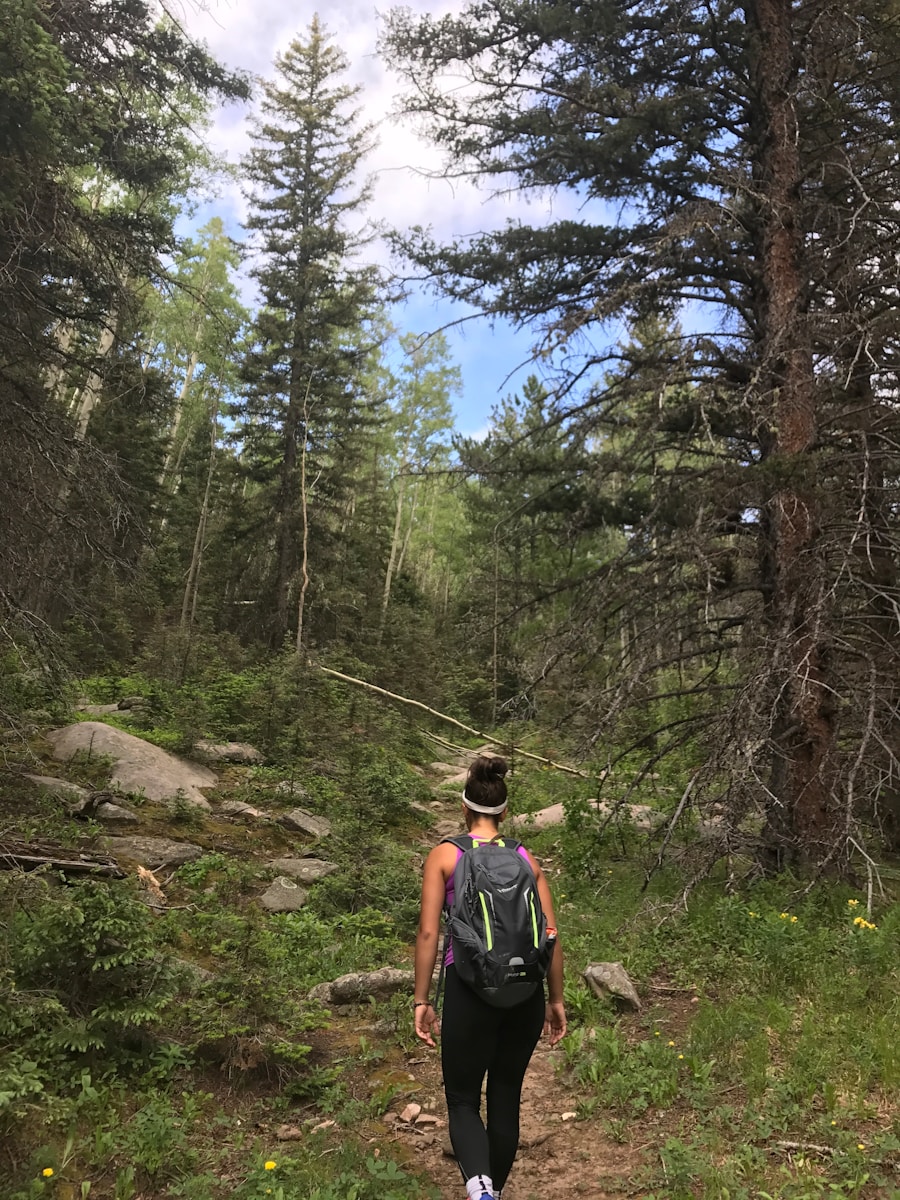
When comparing trails, look at more than mileage. Check:
- Distance: Make sure you have enough time to complete the route before dark.
- Elevation gain: A short climb can be more demanding than a much longer flat route.
- Terrain: Loose rock, roots, mud, snow and scrambling can increase both effort and risk.
- Route type: Loops, out-and-back trails and routes with bailout points have different planning needs.
- Weather and exposure: Heat, direct sun, wind, storms and altitude can make the same mileage much harder.
- Your experience: Do not choose technical terrain merely because it may burn more calories.
The Appalachian Trail contains sections with a wide range of distances and elevation profiles, while the Pacific Crest Trail crosses many different landscapes and elevations. These famous routes illustrate how varied hiking terrain can be, but you do not need a long-distance trail to get an effective workout. Local parks and greenways are often easier places to build consistency.
Tips for Maximizing Weight Loss While Hiking
| Tip | How to Use It |
|---|---|
| Choose an appropriate challenge | Gradually use longer routes, hills or varied terrain as your fitness improves instead of jumping straight to difficult trails. |
| Use the talk test | At moderate intensity you should generally be able to talk but not sing. You do not need to stay in a special “fat-burning zone.” |
| Stay hydrated | Start hydrated and carry enough fluid for the weather, elevation, duration and remoteness of the route. |
| Plan trail food | Bring enough food for longer outings, but remember that calorie-dense trail mix, bars and sweets can add up quickly when weight loss is the goal. |
| Use trekking poles when useful | Poles can improve stability and confidence on uneven or steep terrain. Treat them as a trail tool rather than a guaranteed calorie-burning shortcut. |
| Add intervals selectively | Use short periods of faster or uphill hiking followed by easier recovery when the trail is safe and your fitness is ready. |
A sustainable moderate pace is more useful than repeatedly starting too fast and becoming exhausted. The CDC talk test is an easy way to judge intensity without calculating a target heart-rate zone.
You can increase the challenge over time by adding distance, elevation or pace. Carrying a heavier pack also increases the work required, but beginners should first become comfortable hiking with the equipment and safety supplies they genuinely need.
Pro Tip: Increase one main training variable at a time. Add duration before you add major elevation, or add hills before you add extra pack weight. Gradual progression makes it easier to recover and identify what caused new soreness.
Incorporating Interval Training into Your Hiking Workout
Intervals are an optional way to make part of a hike more vigorous. They are not required for weight loss, but they can provide a time-efficient cardiovascular challenge when you already have a basic fitness foundation.
For example, after warming up, hike briskly uphill for about 1–2 minutes, then return to a comfortable pace for 2–3 minutes. Repeat a few times while maintaining good footing and control.
Beginners can use shorter work periods and longer recovery periods. As fitness improves, gradually extend the brisk sections rather than immediately turning every hill into an all-out effort.
Use terrain wisely. An uphill section with reliable footing is generally a better place to raise effort than a technical descent where speed increases the consequences of a fall.
Caution: Do not perform hard intervals while navigating exposed cliffs, loose rock, stream crossings, ice, crowded trails or other terrain that requires your full attention.
The Importance of Proper Nutrition for Hiking and Weight Loss
Nutrition has two jobs when you are hiking for weight loss: it must support your health and activity while also helping you maintain an overall energy intake that matches your goal.
The current Dietary Guidelines for Americans, 2025–2030 emphasize nutrient-dense foods, including protein foods, vegetables, fruits, dairy, healthy fats and whole grains.
Before the Hike
You do not need a special pre-workout meal for every short hike. If you are hungry or planning a longer outing, a familiar meal or snack containing carbohydrates and some protein can provide convenient fuel. Examples include oatmeal with fruit, yogurt and fruit, or a whole-grain sandwich with a protein filling.
During the Hike
Short recreational hikes may require only water, depending on conditions and when you last ate. For longer hikes, carry food that is easy to eat and that you know your stomach tolerates.
Fruit, sandwiches, nuts, dried fruit and bars can all be practical. Trail mix is energy dense, so portioning it before the hike can be useful when weight loss is the goal rather than eating directly from a large bag.
After the Hike
After a demanding or long hike, eat a normal meal or snack containing protein, carbohydrate and fluids when practical. There is no need for most recreational hikers to race a rigid 30-minute deadline. A consistent overall diet and adequate recovery matter more than hitting an exact minute on the clock.
Avoiding Common Mistakes While Hiking for Weight Loss
Trying to Burn the Maximum Calories on Every Hike
More difficult is not always better. A routine works only when you can recover and repeat it. Mix challenging hikes with easier outings instead of turning every trip into a test of endurance.
Overestimating Exercise Calories
Fitness trackers are useful for recording distance, time, elevation and trends, but calorie figures are estimates. Automatically eating back every calorie shown by a device can make an intended calorie deficit disappear.
Underfueling Long or Difficult Hikes
Weight loss should not mean going into a long, remote hike without enough food. Fatigue, poor concentration and inadequate supplies can become safety problems far from the trailhead.
Overeating Afterward
Long hikes can make you hungry. A large restaurant meal, sugary drinks and unplanned snacks can contain more energy than expected. Decide what you will eat after the hike before you become extremely hungry.
Ignoring Hydration and Weather
There is no universal fluid amount that fits every hike. Heat, humidity, altitude, exertion and hike duration change fluid needs. Start hydrated, bring adequate water and adjust your plan for the environment. The National Park Service provides location-specific hiking-safety guidance and recommends paying attention to how you feel throughout the hike.
Adding Too Much Pack Weight Too Soon
A backpack does increase the physical demand of walking, particularly on hills, but unnecessary load is not required for weight loss. Start by carrying normal trail essentials. Add training load only after you have developed the strength and conditioning to handle it comfortably.
Skipping Strength and Recovery
Hiking trains the legs repeatedly, but it is not a complete strength program. Include muscle-strengthening work on at least 2 days per week when appropriate, and allow adequate recovery between harder sessions.
How to Stay Motivated and Consistent with Your Hiking Weight-Loss Routine
Consistency matters more than finding the single toughest trail. Set goals you can measure without making every goal about the scale.
Useful targets include:
- completing a certain number of hikes each month;
- reaching a weekly activity-minute goal;
- hiking a familiar hill with less fatigue;
- gradually increasing comfortable distance or elevation;
- building a consistent strength routine;
- exploring one new trail each month.
Joining a hiking group or arranging regular hikes with friends can create accountability. Exploring different parks and trail types can also prevent the routine from feeling repetitive.
Track Progress Beyond Body Weight
Body weight naturally fluctuates from water, food and other factors. Along with any weight trend you choose to monitor, pay attention to improvements in endurance, recovery, pace, elevation tolerance and how difficult familiar routes feel.
Keep a simple hiking log with the date, route, distance, time, elevation gain, effort and any discomfort. That gives you useful information for planning future hikes without requiring obsessive calorie tracking.
Useful Gear for Longer Hiking Trips
The right gear can make regular hiking more comfortable. Footwear should fit properly and match the terrain; this waterproof sneaker guide provides additional footwear ideas.
For longer or more remote outings, carrying suitable emergency and overnight equipment becomes increasingly important. You can also review this solar-powered camping lantern guide and this guide to hiking backpacks for multi-day treks.
Frequently Asked Questions
What is hiking?
Hiking is outdoor walking on trails, paths or natural terrain. It can range from an easy walk in a local park to steep mountain routes and multi-day backpacking trips.
Can you lose weight by hiking?
Yes. Hiking increases physical activity and energy expenditure and can support a calorie deficit. Weight loss is not guaranteed by hiking alone, however, because overall food intake and other factors also affect body weight.
How many calories can you burn while hiking?
CDC estimates about 370 calories per hour of hiking for a 154-pound person. Your actual expenditure may be lower or higher depending on body weight, pace, elevation, trail surface, pack weight and other factors.
What are the benefits of hiking for weight loss?
Hiking can increase weekly aerobic activity, use energy, improve cardiovascular fitness and challenge the legs and core. Outdoor activity may also support mood and stress management. These benefits remain valuable even when changes on the scale are modest.
How often should you hike to lose weight?
There is no universal number of hikes that guarantees weight loss. Adults should generally work toward 150–300 minutes of moderate aerobic activity each week plus muscle-strengthening activity on at least 2 days. Hiking can provide some or all of the aerobic minutes, while your exact weight-loss needs depend on total activity, food intake, health and other individual factors.
What pace should you hike for weight loss?
A sustainable moderate pace is a good starting point. Using the talk test, moderate intensity generally means you can talk but not sing. Harder hiking can be useful when your fitness and trail conditions allow it, but you do not need to stay in a special heart-rate “fat-burning zone.”
Is hiking better than walking for weight loss?
Not automatically. Hills, uneven terrain and a faster hiking pace can make hiking more demanding per minute than an easy level walk. However, regular walking may be easier to do frequently. The better choice is usually the activity you can perform safely and consistently while progressing over time.
Should you carry extra weight to burn more calories while hiking?
A heavier load can increase exercise intensity, but beginners do not need extra weight for an effective hike. First become comfortable with normal hiking essentials. If loaded hiking later becomes part of your training, increase the load gradually rather than suddenly carrying a heavy pack.
What are the best ways to maximize weight loss while hiking?
Build a consistent routine, gradually increase duration or elevation, use a sustainable moderate-to-vigorous pace, include strength training, plan food portions and avoid relying on exercise calories as permission to overeat. Most importantly, choose terrain that is challenging without sacrificing safety.
Sources
- Centers for Disease Control and Prevention — Physical Activity and Your Weight and Health — calorie expenditure, weight management and physical activity.
- U.S. Office of Disease Prevention and Health Promotion — Physical Activity Guidelines — weekly aerobic and muscle-strengthening recommendations.
- 2024 Adult Compendium of Physical Activities — Walking and Hiking — MET values for hiking, hills, backpacking and loaded walking.
- National Park Service — Ten Essentials — hiking preparation, navigation and emergency supplies.
- Dietary Guidelines for Americans, 2025–2030 — current federal healthy-eating guidance.
- National Institute of Diabetes and Digestive and Kidney Diseases — Safe and Successful Weight Loss — sustainable weight-management and activity guidance.

