
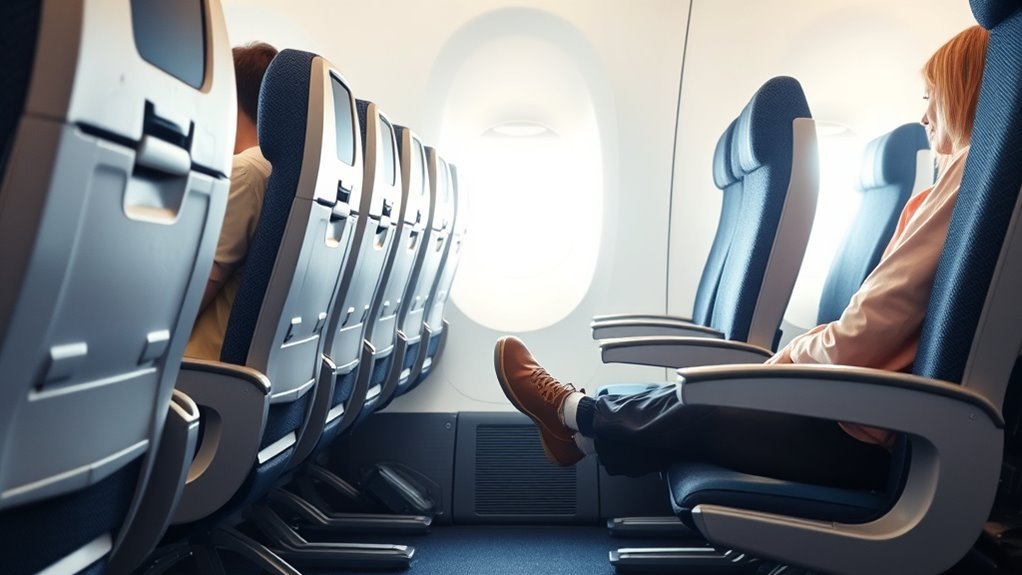
Seat pitch is the distance between your seat and the one in front, and it’s a key driver of legroom, posture, and recline comfort. In economy, you’ll often see 28 to 34 inches, while premium cabins usually give you more space. Tighter pitch can squeeze your knees and limit movement on long flights. Before you book, check the aircraft and seat map, because the numbers can vary more than you’d expect, and the details matter.
What Seat Pitch Really Means

Seat pitch is the distance from one point on a seat to the same point on the seat ahead of it, usually measured in inches, and it directly shapes how much room you have for your knees, shins, and feet.
You should treat it as a core part of seat dimensions, not a minor spec. In economy, airlines usually set it between 28 and 34 inches, and that range can change your passenger experience fast.
When pitch drops, you lose usable space, especially if you’re taller. Your legs have less clearance, your posture gets boxed in, and your movement becomes limited.
On long flights, tighter spacing can also amplify swelling, stiffness, and pressure across your hips and lower back.
If you want more freedom, you can compare pitch before booking and look at premium economy or exit rows for added room.
Why Seat Pitch Affects Comfort
When you get more seat pitch, you gain legroom and knee space, which directly improves how comfortably you can sit.
More pitch also lets you recline and adjust your posture without crowding the person in front of you, and that difference shows up in comfort scores.
On long-haul flights, tighter pitch limits movement, increases stiffness, and can make the trip feel much harder on your body.
Legroom and Knee Space
Legroom is where seat pitch becomes most noticeable, because it measures the distance from one seat to the one in front of it and usually falls between 28 and 34 inches in economy class.
Your legroom measurements shape knee space considerations directly: at 29 inches, comfort can match a standard 32-inch setup, but 27 inches often feels unacceptably tight.
If you’re tall, smaller pitch can trap your knees, limit movement, and make the cabin feel oppressive. Thicker seatbacks and bulky entertainment hardware can shrink usable space further, so the published number doesn’t always tell the full story.
On long flights, that reduced room can raise DVT risk because you can’t shift easily. You deserve space that lets your body move freely, not just fit.
Recline and Posture Fit
Recline matters just as much as knee space, because seat pitch also controls how much your seatback can move before it starts taking over the room you need.
When pitch drops, your recline mechanics get constrained, and your posture alignment suffers because you can’t settle into a natural angle without crowding the space behind you.
At 27 inches, comfort scores often fall sharply; 29 to 31 inches usually feel more workable and closer to traditional layouts.
In tighter rows, every inch matters: a reclined seat ahead can press into your zone, limit movement, and make it harder to shift positions or reach personal items.
You deserve a setup that lets your body rest without negotiating for space.
Long-Haul Comfort Impact
| Pitch | Impact |
|---|---|
| 28 in | Tight fit, faster fatigue |
| 30 in | Manageable, still constrained |
| 32 in | Better movement |
| 34 in | Clearer relief |
| Extra legroom | Highest comfort payoff |
When seat pitch shrinks, you feel it in your knees, hips, and lower back. Tighter rows reduce freedom to shift, making swelling and stiffness more likely on long flights. Taller you’ll notice seatbacks press harder when the seat ahead reclines. Data consistently links smaller legroom dimensions with lower comfort scores. Airlines chase seat density, but your passenger preferences point toward space and mobility. If you want liberation in the air, prioritize extra legroom options whenever you can.
How Airline Seat Pitch Varies
Seat pitch varies widely across airlines and aircraft, so the number you see on a booking page only tells part of the story.
In economy, you’ll usually see 28 to 34 inches, while business and first class give you more room.
But a real seat pitch comparison has to account for airline configurations, not just the headline figure. A budget carrier may squeeze spacing to add seats and lower fares, which can leave you boxed in.
Even within one airline, different aircraft can offer different pitch, so your experience isn’t fixed by the brand alone.
Advertised numbers can also overstate usable space when thicker seat backs or entertainment boxes cut into the room your legs actually get.
If you want more control, check the aircraft type before you book. That lets you move beyond marketing and judge the cabin on the space you’ll truly have.
How Much Seat Pitch You Need
Once you know how seat pitch varies by airline and aircraft, the next question is how much you actually need for a comfortable flight.
In economy, 28 to 34 inches is the typical range, but your minimum requirements depend on your body and trip length. For many travelers, 29 to 31 inches delivers acceptable comfort. If you’re tall, aim for at least 30 inches; that extra space helps your knees and reduces strain on long flights.
At 27 inches, comfort usually drops fast, especially when the seat ahead reclines and cuts into your freedom to move. Passenger preferences also matter: some people accept tighter spacing, while others need room to shift posture and stay relaxed.
If you want a clearer sense of ease, premium economy often starts at 34 inches or more, and airlines charge for that relief. Your best choice balances cost, legroom, and the level of control you want over your body.
How to Judge Seat Pitch Before You Book
Before you book, check the seat pitch for your exact flight, not just the airline’s average. Seat pitch usually falls between 28 and 34 inches in economy, and that gap can define your comfort.
Use seat maps on the airline’s site to verify the aircraft type, then compare it with third-party databases. Those travel tips help you spot budget carriers that advertise low fares but pack rows at 28 inches or less.
- Compare the listed pitch across airlines
- Check whether the plane uses thick seatbacks or entertainment screens
- Read recent seat map data, not marketing copy
Remember: advertised pitch isn’t the whole story. A thicker seatback can steal usable space, so two flights with the same number may feel different.
If you value freedom of movement, treat seat pitch like a measurable variable, not a vague promise. Pick the option that gives you the most room for your route.
Ways to Stay Comfortable in Tight Rows
You can improve comfort in tight rows by choosing an aisle seat, which makes standing breaks easier and reduces stiffness on long flights.
Compression socks, a neck pillow, and a light blanket can lower swelling, neck strain, and cold-related discomfort when seat pitch is limited.
Regular leg stretches and posture shifts also help offset the reduced movement space that cramped rows create.
Smart Seat Choices
- Check seat pitch before booking.
- Review aircraft type and layout.
- If you’re over 6 feet tall, avoid smaller pitches.
A travel pillow or lumbar support can help you keep posture stable in cramped seats.
In-Flight Comfort Tips
To stay comfortable in tight rows, focus on adjustments that improve circulation, posture, and temperature control.
Choose an aisle seat when possible; you’ll stand more often, cut stiffness, and lower swelling risk on long flights.
Before booking, compare seating arrangements and seat pitch: 29 to 31 inches usually feels noticeably better than 27-inch rows.
Use travel pillows or neck supports to keep your head aligned and reduce strain, especially if you want to sleep.
Dress in layers so you can adapt to cabin heat without getting trapped in discomfort.
Pack compression socks to support circulation and help reduce DVT risk.
Treat in-flight amenities as tools, not perks, and use them strategically to preserve mobility, alignment, and comfort.
Frequently Asked Questions
Is the Seat Pitch of 31 Good?
Yes, 31 inches is good for airline seating; you’ll usually enjoy a better passenger experience with more legroom, less stiffness, and fewer knee-space complaints, especially on longer flights, compared with 27 or 29 inches.
Is a 38 Seat Pitch Good?
Yes—a 38-inch seat pitch is excellent; like getting an extra six inches over standard economy’s 32-inch midpoint, you’ll gain long haul comfort and better legroom preferences, so you can move, work, and rest freely.
Is a 35 Seat Pitch Good?
Yes, 35 inches is good. You’ll get above-average legroom importance versus standard economy, boosting travel comfort on longer flights. If you’re tall or hate cramped seating, you’ll likely notice real relief and better mobility.
Conclusion
Seat pitch is one of the clearest predictors of how comfortable you’ll feel in flight. When you compare rows, look beyond price and check the inches that separate your seat from the one ahead. A few extra inches can feel like a deep breath after a long day, while tighter rows can quickly wear you down. If you book with seat pitch in mind, you’ll make a more informed, less cramped choice.