Last Updated on September 10, 2026 by Daniel Globe
Scramble hiking—more commonly called scrambling—sits between ordinary hiking and rock climbing. A scramble may involve steep rock, boulder fields, narrow ridges, exposed ledges, and sections where you need your hands for balance or upward movement. It can be exciting and physically demanding, but the consequences of a slip can be much greater than on a normal hiking trail.
Quick Answer
Scramble hiking involves using your hands as well as your feet to travel over steep or rocky terrain. Start on low-grade routes, wear footwear with dependable grip, carry normal hiking essentials, check weather and route conditions, and turn back before the exposure or technical difficulty exceeds your skills.
Key Takeaways
- Scrambling is more technical than hiking and can involve serious exposure, loose rock, and difficult retreat.
- Difficulty grades are regional. In the United States, scrambling commonly overlaps Yosemite Decimal System Classes 2–4, while British scrambling guides commonly use Grades 1–3 or 3(S).
- Good footwear, navigation, water, food, weather protection, a first-aid kit, and emergency equipment remain essential even when the route is short.
- A helmet may be sensible on loose, steep, or exposed terrain. Rope and harness systems should only be used by people with the skills to belay, build anchors, and manage them correctly.
- Choose a route below your maximum ability, especially when learning. Wet rock, ice, wind, fatigue, and poor route finding can make the same scramble far more serious.
- Follow Leave No Trace principles and local regulations to protect fragile mountain environments.
At a Glance
| Time Required | Route-dependent. A short scramble may take less than an hour, while mountain routes can require most of a day. |
| Difficulty | Ranges from easy hands-on hiking to steep, exposed terrain where a fall could be fatal. |
| Tools Needed | Grippy footwear, navigation, water, food, layers, rain protection, first aid, light source, emergency supplies, and route-specific safety equipment. |
| Cost | Varies widely. Many routes need only normal hiking equipment, while helmets, technical equipment, permits, instruction, or professional guiding can add cost. |
Warning: Scrambling can involve falls with severe or fatal consequences, rockfall, difficult retreat, sudden weather changes, and terrain that becomes much harder when wet or icy. This guide does not replace current local route information, sound judgment, or professional instruction for technical ropework.
Disclosure: As an Amazon Associate I earn from qualifying purchases. Some links on this page are affiliate links, at no extra cost to you.
What Is Scramble Hiking?
Scrambling is hands-on mountain travel over terrain more technical than ordinary hiking but generally below sustained technical rock climbing. The U.S. National Park Service describes scrambling as movement over second-, third-, and fourth-class rocky terrain, with increasingly frequent use of the hands as difficulty rises.
The line between hiking, scrambling, and climbing is not perfectly sharp. An easy scramble might feel like a steep hike with occasional handholds. A harder scramble may involve sustained hands-on movement, exposed ledges, difficult downclimbing, and places where experienced parties consider using a rope.
Scrambling Grades and Classes
There is no single worldwide scrambling scale. Always use the grading system in the guidebook or official route information for the area you are visiting.
| System | General Meaning |
| YDS Class 2 | Rough or off-trail travel where hands may occasionally help with balance. |
| YDS Class 3 | True scrambling with regular use of the hands. Exposure may be significant. |
| YDS Class 4 | Steep, exposed simple climbing. Considerable skill is required, ropes may be used, and a fall can have fatal consequences. |
| UK Grade 1 | Generally straightforward for experienced hillwalkers, with occasional hand use and usually manageable holds. |
| UK Grade 2 | More sustained hands-on movement, greater exposure, and potentially difficult retreat. |
| UK Grade 3 / 3(S) | Advanced scrambling that can approach easy rock-climbing difficulty and may justify rope protection for competent parties. |
Mountaineering Scotland stresses that scrambling grades are approximate and normally assume dry summer conditions. Wet rock, ice, snow, high winds, poor visibility, or route-finding errors can make a route considerably more serious.
Note: Do not try to convert British scrambling grades directly into U.S. Yosemite Decimal System classes. The systems describe terrain differently, and exposure, route length, rock quality, and retreat options matter as much as the hardest individual move.
Physical and Mental Benefits of Scramble Hiking
Scramble hiking engages more of the body than walking on a smooth trail. Steep ascents challenge the legs and cardiovascular system, while balancing, stepping over rocks, and stabilizing on uneven ground recruit the core. Sections that require pulling, pushing, or steadying with the hands also involve the shoulders and arms.
Regular hiking and walking can improve aerobic fitness and several cardiovascular risk factors. A recent review of outdoor hiking research indexed by PubMed also found evidence of psychological benefits such as reduced stress and improved mood. The exact effect depends on the individual, the intensity of the activity, and how often it is performed.
Scrambling adds another mental challenge: you must pay close attention to your route, footholds, handholds, balance, and changing terrain. That focus can pull attention away from everyday distractions and create a strong sense of engagement with the immediate environment.
Successfully completing a route that is challenging but still within your ability can also create a sense of accomplishment and confidence. Nature-exposure research suggests possible benefits for mental well-being and attention, although claims that scrambling itself directly improves creativity or cognitive performance should be treated cautiously.
A good scramble should challenge your movement and judgment without forcing you into terrain where one mistake exceeds your ability to manage the consequences.
Essential Gear and Safety Tips for Scramble Hiking
Footwear With Reliable Grip
Footwear should fit securely and provide dependable traction on the type of rock and trail surface you expect. Traditional hiking boots can work well, especially where ankle coverage, rough approaches, mud, or heavy packs are involved. On dry rock, many scramblers prefer approach shoes because their sticky rubber and firmer edging can improve confidence on small footholds.
The National Park Service specifically recommends sturdy, grippy footwear for scrambling and notes that approach shoes may be preferable on more technical rocky terrain.
Comfortable and Functional Clothing
Wear clothing that allows unrestricted movement. Moisture-wicking base layers can help manage sweat during steep climbs, while an insulating layer and weatherproof shell protect you if conditions deteriorate.
Abrasion-resistant pants can be useful where knees and hips brush against rough rock. Avoid loose straps or clothing that can snag on branches or rock features.
Backpack and Hiking Essentials
A well-fitted backpack should be large enough for the essentials without becoming so bulky that it interferes with balance or movement. Pack water, food, navigation, weather protection, first aid, sun protection, a headlamp or flashlight, and emergency supplies appropriate to the route.
Do not rely entirely on a phone for navigation. Download offline mapping when appropriate, preserve battery power, and carry a map and compass when the route or remoteness justifies them.
Helmet, Rope, and Harness
A climbing helmet can be sensible where there is loose rock, significant exposure, people moving above you, or a meaningful chance of striking your head during a fall. On more serious scrambling terrain, helmets become increasingly important.
A rope and harness are different. Carrying them does not automatically make a difficult scramble safe. Effective rope protection requires skills such as choosing anchors, belaying, managing the rope, protecting a crux, and knowing when rope use creates rather than reduces risk.
Warning: Do not improvise technical climbing protection because a route feels frightening. If a scramble requires ropework beyond your experience, choose an easier route or learn from a qualified instructor or guide first.
Preparation and Planning
Check the route description, current weather, recent conditions, access restrictions, closures, and expected daylight before leaving. Identify the normal ascent, descent, major route-finding points, water availability, and places where retreat becomes difficult.
Leave a trip plan with someone who is not on the hike. Include your destination, intended route, who is going, where you parked, and when they should expect you back.
Hiking with a capable partner can add another layer of judgment and support, especially while developing scrambling skills. However, every member of the group still needs to be comfortable with the terrain.
Knowing Your Limits
Understanding your limits is one of the most important scrambling skills. A route that is technically easy may still be a poor choice if it is highly exposed, wet, loose, difficult to reverse, or longer than your current fitness allows.
If the terrain is harder than expected, weather worsens, someone in the group freezes with fear, or navigation becomes uncertain, turning around is often the best decision. The summit is optional; returning safely is not.
How to Move Safely on a Scramble
Use Deliberate Hand and Foot Placement
Move slowly enough to confirm each important foothold before transferring your weight. On steeper terrain, maintaining three points of contact—two feet and one hand or two hands and one foot—can improve stability while you move the fourth point.
Use your legs for most upward movement instead of repeatedly pulling yourself upward with your arms. Keeping your weight balanced over your feet reduces fatigue and makes slips less likely.
Test Rock Before Trusting It
Loose rock is a major scrambling hazard. Before pulling hard on a block or weighting an uncertain foothold, test it gently. Avoid vegetation, wet moss, loose gravel, and detached rocks whenever a more secure option exists.
Never deliberately dislodge rocks. If a rock does come loose, immediately warn people below.
Give Other Scramblers Space
Do not crowd the person ahead of you on steep or loose terrain. Allow enough spacing that one person’s slip or dislodged rock is less likely to affect another member of the group.
Where a short section is particularly loose or exposed, moving through it one person at a time may be safer.
Learn to Downclimb
Going up often feels easier because you can see the handholds directly in front of you. Descending can be harder because useful footholds may be below your field of view.
On steep sections, turn toward the rock when that provides better balance. Lower one foot at a time, find a secure foothold before committing your weight, and avoid jumping down rock steps.
Pro Tip: Before climbing a difficult step, pause and ask, “Can I reverse this move?” The National Park Service warns scramblers not to climb terrain they cannot get back down.
Choosing the Right Scramble Hiking Trail for Your Skill Level
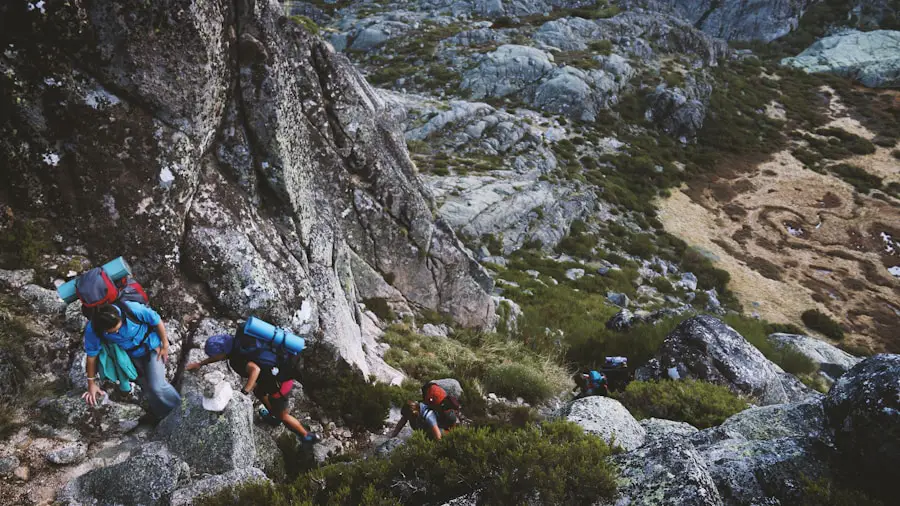
Selecting an appropriate route is essential for a safe and enjoyable scramble. Beginners should start with straightforward, well-documented routes where the hands-on sections are short, the exposure is manageable, and retreat is relatively easy.
Do not judge difficulty only by distance or elevation gain. Scrambling difficulty also depends on steepness, exposure, rock quality, route finding, the length of technical sections, whether downclimbing is required, and how easily you can retreat.
Beginner Scramblers
Start with low-grade terrain and practice moving over rock in places where a slip has limited consequences. Build confidence with secure foot placement, balance, simple route finding, and controlled downclimbing before seeking exposed ridges.
Intermediate Scramblers
More experienced hikers may progress to steeper or more sustained routes involving loose rock, exposed steps, narrower ridges, or more complicated navigation. Progress gradually instead of choosing the hardest route you believe you might complete.
Advanced Scramblers
High-end scrambling can approach easy rock climbing in technical difficulty while still involving long approaches, loose terrain, complicated retreat, and major exposure. Competence in route finding, risk assessment, ropework, and mountain weather becomes increasingly important.
Note: A grade describes the route under assumed conditions, not how safe it will feel to you. Wet rock, high wind, ice, a heavy backpack, fatigue, or taking the wrong line can turn a familiar grade into a much more serious outing.
The Importance of Leave No Trace Principles in Scramble Hiking
| Leave No Trace Principle | Why It Matters |
|---|---|
| Plan Ahead and Prepare | Helps you follow regulations, avoid unnecessary hazards, and reduce preventable environmental damage. |
| Travel and Camp on Durable Surfaces | Protects vegetation and reduces erosion on fragile mountain terrain. |
| Dispose of Waste Properly | Keeps litter and food waste away from wildlife and natural areas. |
| Leave What You Find | Protects natural features, plants, rocks, and cultural resources. |
| Minimize Campfire Impacts | Reduces fire scars, wildfire risk, and unnecessary damage. |
| Respect Wildlife | Reduces disturbance to animals and avoids changing their natural behavior. |
| Be Considerate of Other Visitors | Helps everyone share trails, routes, summits, and natural areas responsibly. |
The Leave No Trace principles provide a framework for reducing human impact outdoors. This matters on scrambling routes because fragile alpine vegetation, loose soil, and informal paths can be easily damaged.
Plan ahead by learning local rules and checking whether off-trail travel is allowed. Where established trails or durable rock surfaces exist, use them instead of trampling vegetation or creating shortcuts.
Respect wildlife by observing animals from a distance and never feeding them. Pack out trash, leftover food, and other waste. Leave rocks, plants, artifacts, and other natural features where you find them.
Responsible scrambling protects the landscape while also helping prevent a web of unnecessary social trails from forming around popular routes.
How to Prepare for a Scramble Hiking Adventure
Preparation begins with honest assessment of your fitness and movement skills. Regular cardiovascular exercise can build endurance for long approaches and steep climbs, while strength and balance work can make uneven terrain easier to manage.
Running, cycling, stair climbing, hiking, and climbing can all contribute to conditioning. However, gym fitness alone does not replace experience moving on exposed mountain terrain.
Research the Entire Route
Do not study only the ascent. Learn the approach, scrambling line, summit area, descent, escape routes, and any points where navigation is confusing. Check whether the descent is easier, equal to, or harder than the climb.
Check Weather and Recent Conditions
A scramble graded for dry conditions can become dramatically harder when wet. Rain can make polished rock slippery, while wind may make narrow ridges uncomfortable or dangerous. Snow and ice can transform a summer scramble into mountaineering terrain requiring completely different skills and equipment.
Check the latest local forecast and route reports shortly before leaving, then continue watching the sky and conditions during the outing.
Make an Emergency Plan
Tell a reliable person your route and expected return time. Know the emergency procedure for the area you are visiting and do not assume you will have cellular service.
Carry enough light, insulation, food, and other emergency supplies to cope with an unexpected delay. A satellite communicator or personal locator device may be worth considering for remote objectives, but it does not replace preparation and self-sufficiency.
Practice Before Committing to Exposure
Develop movement skills on low-consequence terrain first. Practice secure foot placement, balance, three points of contact, route reading, and controlled downclimbing before trying those skills hundreds of feet above the ground.
For higher-grade routes, formal scrambling or climbing instruction can teach ropework, anchors, belaying, and retreat techniques in a controlled setting.
The Thrill of Conquering Challenging Terrain in Scramble Hiking
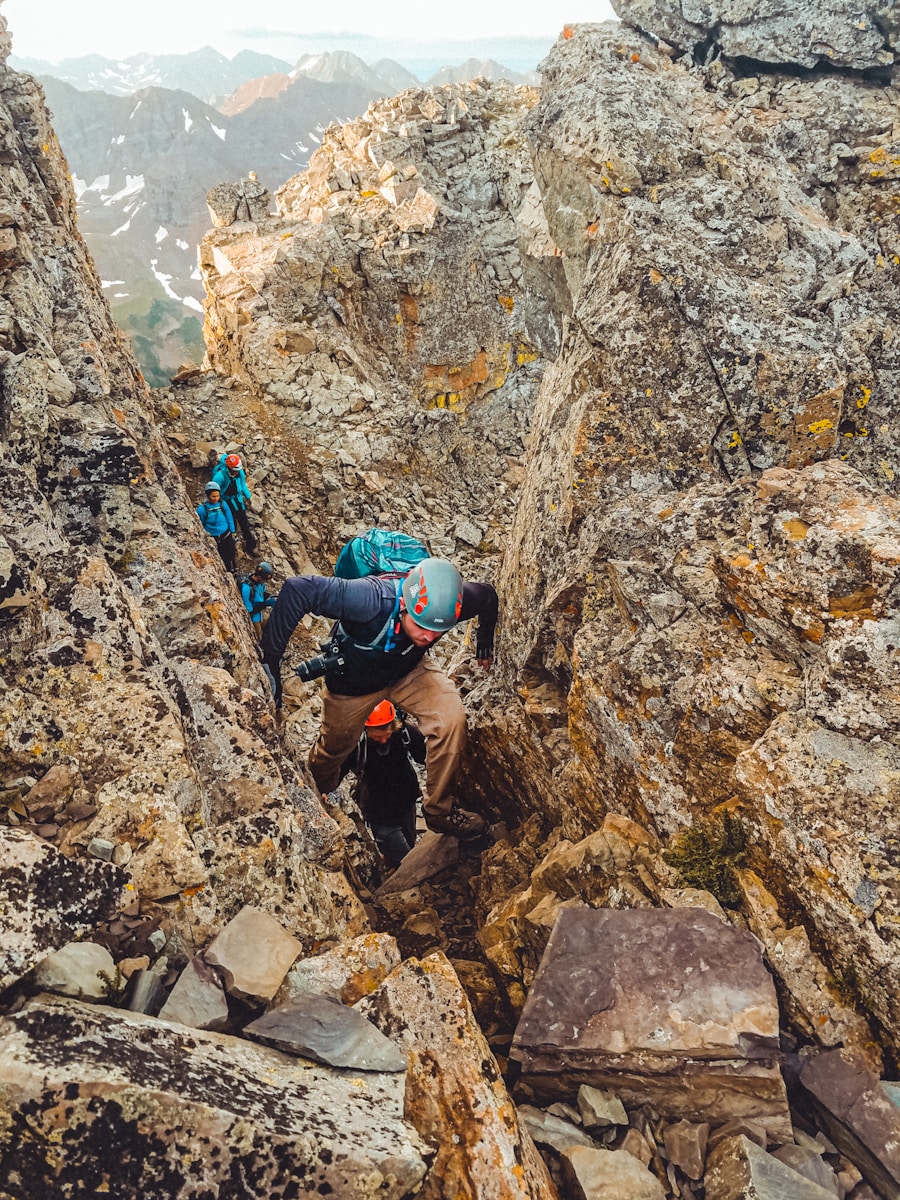
The exhilaration of moving through challenging terrain is one of scrambling’s biggest attractions. Steep rock steps, narrow ridges, and hands-on movement can make a route feel more adventurous and engaging than a standard trail.
Reaching a summit or ridge after carefully working through difficult terrain can create a strong sense of achievement. The effort required to reach remote viewpoints can also make the scenery feel especially rewarding.
Scrambling often demands concentration for long periods. You must read the terrain, choose holds, manage fatigue, and continually decide whether the route remains within your ability. These challenges can develop patience, judgment, and confidence when approached gradually.
The goal, however, should never be to chase adrenaline at the expense of safety. Strong scramblers are not simply people who keep moving upward; they are people who recognize when conditions, exposure, or difficulty make retreat the better choice.
Exploring Scramble Hiking Routes Around the World
Scrambling exists in mountain and desert regions around the world, although terminology and grading vary by country.
North America
In the United States, Joshua Tree National Park provides a clear example of the progression from hiking into scrambling. The National Park Service describes terrain there across Classes 2, 3, and 4, with Class 3 requiring regular use of the hands and Class 4 carrying potentially fatal fall consequences.
Grand Teton National Park in Wyoming also offers spectacular mountain terrain, but hikers should be careful about labeling its routes as simple scrambles. The park’s climbing and mountaineering guidance warns that many Teton peaks are technical climbs requiring appropriate experience and equipment.
The famous Exum Ridge on Grand Teton, for example, belongs in a technical climbing and mountaineering context rather than a list of ordinary beginner scrambling routes. Anyone considering objectives of that seriousness should use detailed climbing information and have the necessary technical skills.
Scotland
Scotland has a strong scrambling tradition. Routes range from accessible Grade 1 outings to serious exposed ridges requiring advanced judgment.
The Aonach Eagach Ridge in Glen Coe is a famous example. It is commonly described as a Grade 2/3 scramble, with sustained exposure, difficult sections, and limited opportunities for an easy escape once committed. It is appropriate for experienced scramblers in suitable conditions, not as a first scrambling route.
The Dolomites and Via Ferrata
The Italian Dolomites offer spectacular rocky mountain travel, but via ferrata should not be confused with ordinary scrambling. A via ferrata is an equipped route using fixed steel cables, ladders, anchors, and sometimes bridges.
Official Trentino via ferrata safety guidance calls for a helmet, climbing harness, suitable footwear, and an approved via ferrata set with an energy absorber and two connectors. Anyone without experience should learn proper progression and safety technique before attempting these routes independently.
Via ferrata can provide the same dramatic mountain scenery and hands-on movement that attracts scramblers, but the equipment, fall dynamics, and safety system make it a distinct activity.
Joining a Scramble Hiking Community for Support and Camaraderie
Joining a scrambling, hiking, mountaineering, or climbing community can make learning safer and more enjoyable. Clubs and organized groups may offer beginner outings, navigation practice, skills workshops, and access to experienced members who can explain how route grades feel in real terrain.
Group experience is especially useful when progressing from straightforward hiking into exposed scrambling. Watching an experienced scrambler choose a line, test holds, manage spacing, and decide when to retreat can teach lessons that are difficult to learn from written descriptions alone.
For more serious scrambling, professional instruction can provide structured training in route finding, ropework, belaying, anchors, and descent techniques. A qualified guide can also help you experience terrain beyond your current independent ability while learning how those risks are managed.
Many outdoor communities also participate in trail maintenance and conservation projects. That creates another way to support the landscapes that make scrambling possible while building friendships through shared time outdoors.
When hiking, having the right gear helps make a trip more comfortable and organized. A dependable pair of hiking boots or other terrain-appropriate footwear can improve support and traction. For travel logistics around a hiking trip, a reliable backpack such as the best travel camera backpack can help carry photography equipment and travel essentials. Packing cubes, including the options discussed in this guide to packing cubes for travel, can keep clothing and gear organized. A compact travel toothbrush, such as those covered in the guide to the best travel toothbrush, is also useful for overnight or multi-day trips.
Love travel? Join Our Facebook Community For More Tips.
Frequently Asked Questions
What is scrambling in hiking?
Scrambling is movement over steep or rocky terrain where you regularly use your hands as well as your feet. It generally sits between ordinary hiking and technical rock climbing, although harder scrambles can involve substantial exposure and serious fall consequences.
What are the key features of a scramble?
A scramble commonly includes steep rock, uneven ground, boulders, ridges, ledges, or gullies where hands are needed for balance or upward movement. Exposure, loose rock, route finding, and difficult downclimbing often matter as much as the hardest climbing move.
What equipment is needed for scrambling?
At minimum, carry normal hiking essentials plus footwear with dependable traction and clothing suitable for the weather. A helmet can be appropriate on loose, steep, or exposed routes. Rope and harness systems belong on routes where they are justified and should only be used by people competent in the required ropework.
What are the risks associated with scrambling?
Risks include slips and falls, rockfall, loose handholds, difficult retreat, route-finding errors, sudden weather changes, dehydration, exposure, and becoming stranded after climbing terrain that is harder to descend. The consequences increase quickly on steeper and more exposed routes.
What skills are required for scrambling?
Useful skills include balance, secure foot placement, route finding, testing handholds, controlled downclimbing, reading weather and terrain, and knowing when to turn back. Higher-grade scrambles may also require climbing, ropework, belaying, anchor, and retreat skills.
Can beginners go scramble hiking?
Yes, but beginners should choose low-grade, well-documented routes with limited exposure and straightforward retreat. Practice hands-on movement and downclimbing on low-consequence terrain before progressing to narrow ridges or steep routes where a fall would be serious.
Do I need a rope for scrambling?
Not for every scramble. Easier routes are commonly completed without ropes, while higher-grade or exposed terrain may lead competent parties to use protection. A rope is only useful when the group knows how to belay, select anchors, manage the rope, and use an appropriate system safely.
Sources
- U.S. National Park Service — Scrambling — scrambling definition, Yosemite Decimal System classes, footwear, helmets, movement, route selection, and safety.
- Mountaineering Scotland — Scrambling — UK scrambling grades, exposure, loose rock, weather, and risk.
- Leave No Trace — The 7 Principles — minimum-impact outdoor practices.
- PubMed — Integrative Review of Outdoor Hiking Benefits — evidence concerning physical and psychological benefits associated with hiking.
- Grand Teton National Park — Climbing & Mountaineering — technical mountain hazards, experience, equipment, weather, and route conditions.
- Visit Trentino — Via Ferrata Safety — current equipment and safety guidance for protected via ferrata routes.