

Last Updated on July 24, 2026 by Ethan Caldwell
Yes, you can usually pay for a hotel with money from your checking account by using a debit card linked to that account. However, hotels may place a temporary authorization hold for the room, taxes, fees, and incidentals. Confirm the property’s exact payment and deposit policies before booking so the hold does not leave you short of available funds.
Quick Answer
Most hotels let you pay with a debit card connected to your checking account. Direct payment with an account and routing number is much less common. Before booking, ask how much the hotel will authorize, when the hold is released, and whether you must present the physical card at check-in.
Key Takeaways
- The normal way to pay from checking is with a debit card, not by entering your bank account and routing number.
- A hotel may authorize the full room cost, taxes, fees, and an additional amount for incidentals.
- The hold reduces your available checking-account balance until your bank removes it.
- Hold amounts, accepted cards, deposit rules, and release times vary by hotel and financial institution.
- Keep enough extra money in the account to cover the hold without triggering declined payments or overdraft fees.
Disclosure: As an Amazon Associate I earn from qualifying purchases. Some links on this page are affiliate links, at no extra cost to you.
How to Use Your Checking Account for Hotel Payments
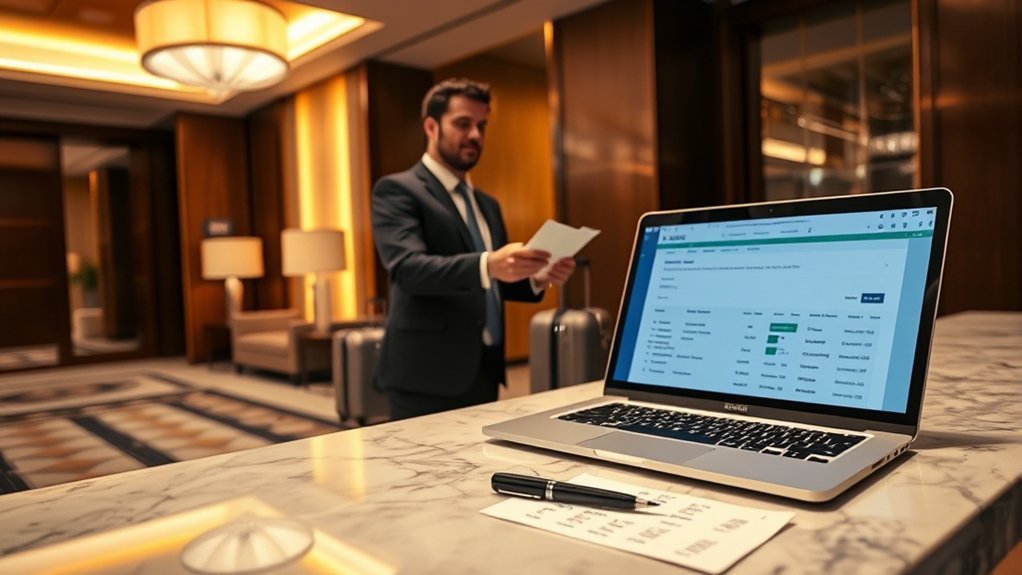
When people say they are paying for a hotel with a checking account, they usually mean they are using a Visa, Mastercard, or other debit card connected to the account. Major hotel companies commonly accept debit cards, although the exact rules can vary by property, rate, and booking channel.
A direct ACH payment using only an account and routing number is not a standard option on most consumer hotel-booking pages. Never send bank details by email or text unless you have independently verified the hotel and received secure payment instructions directly from it.
At a Glance
| Time Required | About 5–10 minutes to check the hotel’s payment and deposit policies |
| Difficulty | Easy |
| Tools Needed | Debit card, government-issued photo ID, booking confirmation, and access to your bank balance |
| Cost | No separate setup cost, but you must cover the stay and any temporary authorization hold |
- Check the accepted payment methods. Review the policy section on the hotel’s website or call the property directly. Do not assume that every location in the same chain follows identical rules.
- Ask what will be authorized. Find out whether the hotel will hold room and tax, resort or destination fees, parking, and a separate incidental amount.
- Confirm when the authorization occurs. A prepaid rate may be charged during booking, while a flexible rate may be authorized at check-in and settled at checkout.
- Check your available balance. Include scheduled bills and daily travel spending when deciding whether the account has enough money.
- Bring the physical debit card and photo ID. Some hotels require the cardholder’s name to match the reservation and identification.
- Review the final folio. At checkout, make sure the hotel has removed incorrect minibar, parking, restaurant, or other incidental charges.
- Monitor the account after checkout. Watch for the final posted charge, release of the pending authorization, or any duplicate transaction.
Note: The card used to reserve a room is not always the card the hotel will accept for final payment. Some prepaid or nonrefundable reservations have stricter rules, so review the rate terms before changing cards.
Key Hotel Payment Policies for Checking Account Transactions
Hotel payment policies can differ by property even when two hotels belong to the same brand. Hilton’s payment guidance, for example, says that major credit and debit cards are accepted for online reservations, but individual locations may accept different payment types.
| Policy to Confirm | What to Ask |
|---|---|
| Debit-card acceptance | Do you accept my debit-card network at booking and check-in? |
| Authorization amount | Will you authorize room, tax, fees, and a separate incidental amount? |
| Deposit or prepayment | Will any amount be charged before arrival, and is it refundable? |
| Physical-card requirement | Must I present the physical card used for the reservation? |
| Name matching | Must the reservation, debit card, and photo ID show the same name? |
| Release timing | When will the hotel release unused funds after checkout? |
| Alternative payments | Can I pay the final bill with cash or another card after providing a card for authorization? |
Booking, Check-In, and Checkout May Be Separate Transactions
The card entered during booking may only guarantee the reservation. At check-in, the hotel may request the card again and authorize it for the expected stay. At checkout, the hotel completes the final charge and releases any unused portion of the authorization.
Advance-purchase and nonrefundable rates work differently. The hotel or booking platform may charge the room cost immediately, but the property can still require another card for incidentals when you arrive. Marriott’s current reservation guidance states that guests may be asked for a credit or debit card at check-in even when a card was already used to hold the reservation.
Paying for Someone Else’s Stay
If the cardholder will not be present, contact the property before arrival. Hotels may require a secure third-party payment authorization form and may let the cardholder specify whether the card covers room and tax, incidentals, or all charges. Do not email card numbers or photographs of a card unless the hotel provides an approved secure process.
How Security Holds Impact Your Hotel Payments
A hotel authorization hold is a temporary reservation of money or available credit. It helps the hotel confirm that the card is valid and that funds are available for expected charges. With a debit card, the held amount reduces the money you can spend from your checking account.
The amount is not standardized. Under IHG’s mobile check-in terms, a card linked to a checking account may be authorized for the total room price, taxes, and estimated incidentals. Other properties use a fixed amount per night or per stay.
For example, suppose the hotel expects $600 for room, taxes, and fees and adds a $150 incidental authorization. The bank may temporarily show $750 as unavailable. If your account contained $1,000, only about $250 would remain available for meals, transportation, scheduled bills, and other purchases until the authorization changes.
A debit-card hotel hold does not merely reduce a credit limit. It can make real money in your checking account temporarily unavailable.
Warning: Do not budget only for the advertised room price. A hold that includes taxes, fees, parking, and incidentals can cause other debit-card purchases or automatic payments to be declined. Overdraft handling depends on your bank and account settings.
A Hold Is Not Always a Refund
A pending authorization and a posted charge are different:
- Pending authorization: The hotel reserves an estimated amount, but the transaction has not been fully settled.
- Posted charge: The hotel completes the transaction for the final amount owed.
- Refund: Money from a previously settled charge is returned after a cancellation, billing correction, or other adjustment.
When the hotel releases an unused authorization, it may not issue a separate refund because the held amount was never a completed charge. Your bank updates the available balance after processing the release or after the authorization expires.
How Long Can a Hotel Hold Last?
There is no single release period. Hilton says its hold is normally released within 72 hours after checkout, although the card provider may take longer. Marriott’s digital-entry terms say an issuing bank may keep a hold for up to five business days after departure, while Marriott’s separate billing guidance notes that some releases or refunds can take 7–14 days.
Individual property policies may be longer. For example, Hyatt Regency Orlando International Airport warns that the original hold may remain for up to 10 business days with a U.S. institution and up to 30 days with an international institution. Treat these as examples rather than universal deadlines.
What to Do If the Hold Remains
- Check whether the transaction is still pending or has become a posted charge.
- Compare the bank transaction with the final hotel folio.
- Contact the hotel’s front desk or accounting department and request confirmation that the authorization was released.
- Ask whether the hotel can provide an authorization or release reference for your bank.
- Contact your bank and provide the checkout date, merchant name, amount, and final folio.
- If an incorrect or duplicate charge has posted, dispute it promptly with the hotel and your card issuer.
Pros and Cons of Using Your Checking Account for Hotels
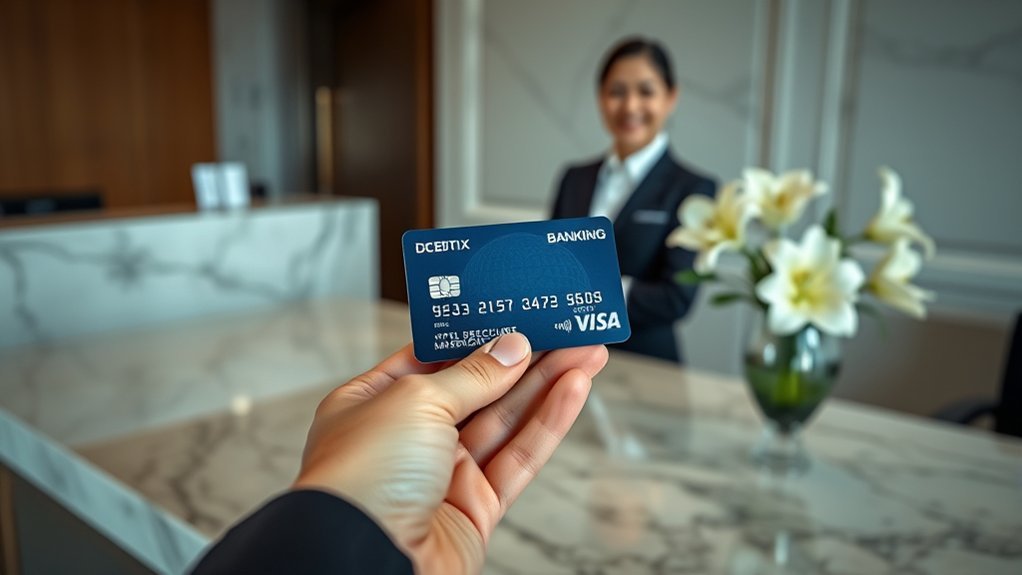
Using a debit card can work well when you prefer to spend money already in your checking account. However, it can reduce your available cash during the trip and may offer less flexibility when a billing dispute occurs.
| Advantages | Disadvantages |
|---|---|
| You spend directly from available funds instead of adding credit-card debt. | The hotel hold can make part of your checking balance unavailable. |
| Debit cards are accepted by many hotels. | Some properties have stricter debit-card, prepaid-card, or cash policies. |
| You avoid credit-card interest when you would otherwise carry a balance. | Scheduled bills may compete with the hotel authorization for the same funds. |
| Your bank app may make it easy to monitor pending and posted transactions. | Credit cards generally provide stronger billing-dispute protections than debit cards. |
The Federal Trade Commission explains that legal protections for credit cards are generally stronger than those for debit cards. Debit cards still carry protections against unauthorized electronic transfers, but your responsibility can depend on how quickly you report the problem.
A practical compromise is to use a credit card for the hotel authorization and pay the final bill with a debit card at checkout, but only when the property allows it. This keeps the temporary hold away from your checking balance while letting you settle the final amount from checking.
Tips for Smooth Hotel Payments Using Your Checking Account
A few checks before arrival can prevent declined cards, duplicate-looking transactions, and unexpected limits on your travel budget.
| Tip | What to Do |
|---|---|
| Confirm acceptance | Verify that the specific property accepts debit cards for both check-in and final payment. |
| Ask for the hold formula | Request the exact room, tax, fee, and incidental amount the hotel expects to authorize. |
| Keep a buffer | Leave enough money for transportation, meals, emergencies, and scheduled account payments. |
| Check transaction limits | Make sure your daily purchase limit is high enough for the hotel’s authorization request. |
| Bring the physical card | Do not rely only on a stored card number, screenshot, or digital wallet unless the property confirms it is accepted. |
| Save your documents | Keep the confirmation, rate rules, cancellation terms, deposit policy, and final folio. |
| Monitor the account | Watch pending and posted transactions before, during, and after the stay. |
| Report problems promptly | Contact the hotel and bank immediately if you see an unauthorized, incorrect, or duplicate posted charge. |
Pro Tip: Call the actual hotel rather than relying only on a chain’s general customer-service answer. Ask, “What amount will you authorize on a debit card at check-in, and how soon do you release the unused authorization after checkout?”
Can You Pay With an Account and Routing Number?
Usually, not through a standard consumer hotel-booking form. Most hotels request a credit or debit card number because card networks support reservation guarantees, authorizations, adjusted final amounts, and cancellation charges.
A hotel may arrange an ACH or bank transfer for a company account, group booking, event, extended stay, or other specially invoiced reservation. Such an arrangement should be confirmed directly with the property’s accounting or sales department.
PayPal and Digital Wallets
PayPal, Apple Pay, Google Pay, and other digital wallets may appear for certain booking platforms, countries, or properties. Their availability at booking does not guarantee that the hotel will accept the same method for the incidental authorization at check-in. Read the checkout page carefully and contact the hotel when no physical card will be available.
Cash Payments
Some hotels accept cash for the final bill, but many still require a credit or debit card at check-in. Others require a larger cash deposit or do not accept cash deposits at all. Never assume that a prepaid online reservation removes the check-in deposit requirement.
Prepaid and Reloadable Cards
A hotel may reject a prepaid card, gift card, or card without the guest’s name. Even when accepted, the card must have enough available value for the entire authorization, not only the final room price. Reloading the card after the authorization request may not prevent an initial decline.
Frequently Asked Questions
Can I Pay for a Hotel With an Account and Routing Number?
Usually not through a normal consumer booking form. Hotels generally request a credit or debit card. A direct ACH or bank transfer may be available only when the property specifically arranges it for a business account, group, event, extended stay, or invoiced reservation.
Can I Use a Debit Card to Check Into a Hotel?
Many hotels accept debit cards, but the property may authorize room, tax, fees, and incidentals against your checking balance. Confirm acceptance and the expected amount before arrival, and bring the physical card with matching photo identification.
How Much Will a Hotel Hold on My Debit Card?
There is no standard amount. The authorization may include the full room price, taxes, resort or destination fees, parking, and an additional incidental amount. Some hotels use a nightly incidental amount, while others use one amount for the entire stay.
How Long Does a Hotel Debit-Card Hold Last?
The hotel may release the authorization soon after checkout, but the bank controls when your available balance updates. Published property guidance ranges from about 72 hours to several business days, and some international institutions may take longer.
Can I Use a Different Card at Check-In?
Often, yes, but the answer depends on the rate and property. A prepaid or nonrefundable reservation may remain charged to the original card, while the hotel requests another card for incidentals. Contact the hotel before arrival if the original cardholder will not be present.
What Is the 10/5 Rule in Hotels?
The 10/5 rule is a hospitality-service guideline. Staff acknowledge a guest with eye contact or a smile at about 10 feet and offer a verbal greeting at about 5 feet. It is unrelated to debit cards, authorization holds, or hotel payment policies.
What Is Your Most Clever Hotel Room Hack?
For payment planning, the most useful hack is to ask for the exact debit-card authorization before arrival and keep the answer with your confirmation. You can also politely ask about available upgrades at check-in, but upgrades are never guaranteed.
What Sites Let You Pay With an Account and Routing Number?
Direct account-and-routing-number payment is not a standard hotel-booking option. Use only the payment methods shown on the booking page. When a hotel offers ACH, wire transfer, direct billing, or another bank-payment method, obtain verified instructions from the property’s accounting or sales department.
Sources
- Hilton Payment FAQs — accepted payment methods, incidental authorizations, and hold-release guidance.
- Marriott Digital Entry Terms of Use — room, tax, fee, and incidental authorizations and bank-release timing.
- IHG Mobile Check-In Terms — checking-account card authorizations and estimated incidentals.
- Hyatt Regency Orlando International Airport Policies — a property-specific example of debit-card authorization and release timing.
- Federal Trade Commission: Disputing Credit and Debit Card Charges — differences between credit- and debit-card dispute protections.
- Consumer Financial Protection Bureau: Unauthorized Bank Transactions — reporting deadlines and protections for unauthorized debit transactions.
Conclusion
You can usually pay for a hotel with your checking account by using its linked debit card. The main risk is not whether the card works, but how much of your balance becomes temporarily unavailable. Confirm the hotel’s accepted cards, authorization formula, ID requirements, and release policy before arrival. Keep a financial buffer, review the final folio, and monitor your account until the correct charge posts and the unused hold disappears.
